
1. Executive Summary
Checkout is no longer a back-end payment function. It has become a measurable expression of customer intent, operational maturity, and revenue discipline. Retailers spend heavily to attract demand, personalize journeys, and improve product discovery, yet many still lose customer intent at the final stage because checkout systems remain fragmented across e-commerce, mobile, point of sale systems, digital wallets, BNPL, fraud controls, and in-store queue management.
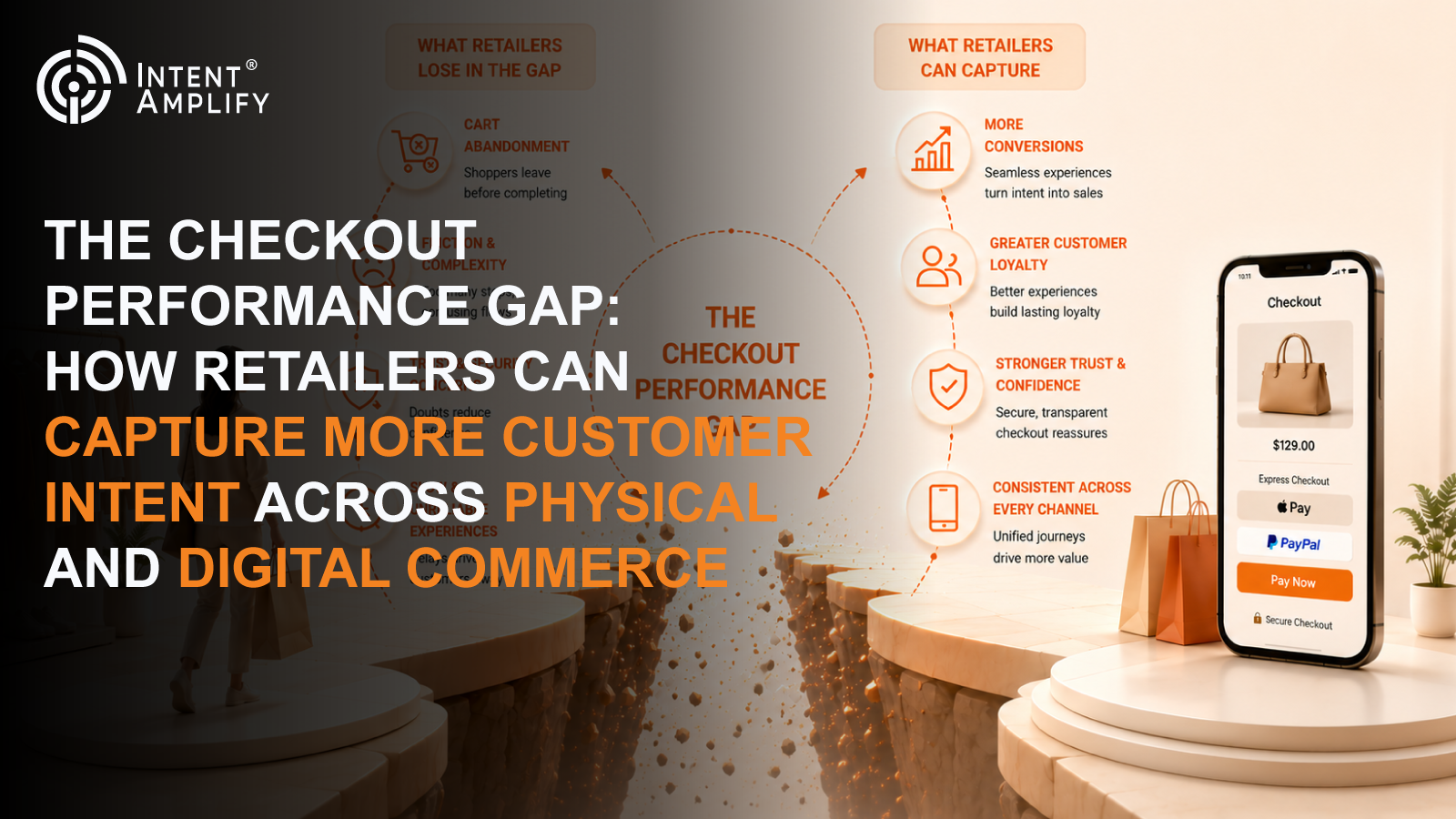
The checkout performance gap is the distance between a customer’s willingness to buy and a retailer’s ability to convert that intent without friction, delay, confusion, or trust loss. The issue is visible in e-commerce cart abandonment, mobile checkout drop-off, in-store wait times, payment latency, false declines, and inconsistent payment methods across channels. It is also becoming more complex as AI assistants, digital wallets, stablecoin payments, and agentic commerce reshape how consumers discover, evaluate, and complete purchases.
The evidence suggests that payment infrastructure is entering a new operating environment. McKinsey reports that the global payments industry generated $2.5 trillion in revenue from $2.0 quadrillion in value flows and 3.6 trillion transactions worldwide, indicating the scale at which payment performance now influences commercial outcomes.1
For retailers, the implication is direct: checkout performance should be treated as a revenue optimization discipline, not a narrow technical metric. Approval rates matter, but they are not sufficient. Leaders should also evaluate checkout friction, payment processing speed, mobile checkout performance, abandoned cart recovery, queue duration, fraud review rates, alternative payment method coverage, and customer trust signals. Retailers that improve these metrics can recover lost revenue, protect margin, and capture more demand across both physical and digital commerce.
2. Why Checkout Performance Has Become a Strategic Retail Issue
Retailers have historically optimized checkout through isolated interventions: reducing form fields, adding digital wallet buttons, improving payment gateway uptime, or upgrading POS software. These measures remain useful, but they are no longer enough. Customer journeys now cross ecommerce sites, mobile apps, marketplaces, physical stores, call centers, social commerce environments, and AI-driven discovery surfaces. Checkout performance must therefore be assessed as an enterprise-wide capability.
Deloitte’s 2026 retail trends research indicates that retail is moving from shoppers manually searching and comparing products toward shoppers delegating decisions to AI assistants. The report highlights “from prompt to purchase” as a next conversion shift, showing that checkout will increasingly begin before the customer reaches a retailer-owned digital storefront. 2
Checkout optimization now extends beyond transaction completion and into machine-readable commerce execution. Retailers need to ensure that product availability, pricing, incentives, payment methods, identity checks, and fulfillment options are machine-readable, consistent, and execution-ready. When customers or AI agents encounter conflicting inventory, limited payment choices, slow authorization, or unclear delivery promises, intent can dissolve before the retailer recognizes the revenue leakage.
The practical challenge is not only digital. Physical commerce is also under pressure. A slow checkout lane, an unavailable mobile POS device, a failed contactless transaction, or a disconnected loyalty profile can create the same loss of intent as e-commerce checkout abandonment. In both environments, friction affects conversion rate optimization, customer satisfaction, and repeat purchase behavior.
Retailers should therefore define checkout performance as a cross-functional measure of how efficiently the business converts purchase intent into completed, trusted, and profitable transactions. That definition brings e-commerce, payments, fraud, store operations, finance, IT, and customer experience teams into the same performance conversation.
3. The Checkout Performance Gap Across Physical and Digital Commerce
The checkout performance gap usually emerges from four structural weaknesses.
First, many retailers still operate a fragmented payment infrastructure. E-commerce payment gateways, store POS systems, mobile payment solutions, and call center payment workflows may use different providers, data models, fraud rules, and reporting structures. This fragmentation limits visibility into checkout performance metrics and makes it difficult to identify where conversion is being lost.
Second, retailers often measure checkout too narrowly. Approval rate is important, but it does not fully explain checkout abandonment or payment friction. A transaction may be approved after a long delay, an avoidable step-up authentication, a confusing payment screen, or a failed first attempt. Each of these events affects customer confidence and can create hidden revenue leakage.
Third, physical and digital checkout experiences are frequently inconsistent. A customer may see BNPL online but not in store, use a digital wallet in store but not through a mobile checkout flow, or encounter loyalty and promotion rules that differ across channels. These gaps weaken unified commerce and reduce the retailer’s ability to carry customer intent from one environment to another.
Fourth, risk controls can unintentionally suppress revenue. Fraud prevention, checkout security, digital identity verification, and age verification software are necessary, especially for regulated or high-risk retail categories. However, excessive friction, false declines, or redundant verification steps can convert legitimate customers into abandoned sessions.
Microsoft’s July 2025 retail payments analysis argues that retailers should treat digital wallets, BNPL, Pay by Link, and mobile SoftPOS as components of a cohesive payment strategy rather than isolated tools. The same analysis notes that success depends on integrating multiple options around customer preferences and operational needs. 3
Checkout performance improves when retailers reduce unnecessary choice architecture, not when they simply add more payment methods. The objective is not to offer every possible option everywhere.
The objective is to align payment methods, fraud controls, identity verification, and fulfillment logic with customer segment, channel, basket size, geography, device, and risk profile.
4. Payment Choice, Speed, and Security as Conversion Levers
Payment choice has become a core conversion lever because customers increasingly expect payment methods to match their habits, financial preferences, and device context. Digital wallet adoption, buy now pay later options, alternative payment methods, and emerging stablecoin payments all indicate that checkout is becoming more plural, not more standardized.
For retailers, this creates a design problem. More payment methods can improve conversion, but unmanaged complexity can increase reconciliation burden, dispute exposure, fraud risk, and operational cost. The mature approach is to evaluate payment methods through four criteria: customer adoption, conversion impact, operational cost, and risk exposure.
Payment processing speed is equally important. Payment latency may appear minor at the transaction level, but at scale, it affects queue management, mobile checkout conversion, associate productivity, and customer confidence. In-store, slow authorization can lengthen lines and reduce throughput during peak periods. Online, slow redirects, failed wallet handoffs, or delayed authentication can increase checkout abandonment.
Security must be integrated without becoming a conversion barrier. Checkout security should protect transactions while preserving legitimate customer intent. Digital identity verification, tokenized wallets, fraud scoring, step-up authentication, and age verification technology should be applied proportionately. High-risk transactions require more scrutiny; low-risk returning customers should not experience unnecessary repeated friction.
Accenture’s 2026 banking trends research estimates that $13 trillion in transaction value could shift to alternative payment methods by 2030, putting $13 billion in payment fees at risk. Although the research is banking-focused, the retail implication is significant: consumer payment preferences are shifting toward more flexible payment ecosystems, and merchants must adapt without losing control of margin, routing, and customer experience. 4
Retailers should therefore move from payment acceptance to payment orchestration. Payment orchestration allows the business to route transactions intelligently, support local and alternative payment methods, manage fraud decisioning, and improve resilience across payment providers. This is particularly important for retailers with cross-border operations, high mobile commerce volume, or complex omnichannel payment requirements.
5. Unified Commerce and POS Modernization
A unified commerce platform is increasingly central to checkout performance because the customer does not experience channels as separate systems. A shopper may research online, compare through an AI assistant, reserve through mobile, pay in store, return through a different location, and expect loyalty recognition throughout the journey. When payment infrastructure, inventory, promotions, and customer identity remain disconnected, retailers lose both intent and insight.
Gartner’s September 2025 Market Guide states that POS applications anchor unified commerce platforms for seamless customer experiences across retailer touchpoints. This confirms that modern POS is no longer only a store transaction system; it is becoming part of the commerce operating system. 5
This is why POS modernization should be evaluated through checkout performance, not only hardware replacement. Android POS, smart POS terminals, cloud-based POS solutions, mobile POS, and integrated payment architecture can help retailers improve throughput, associate mobility, and in-store customer service. The business case should include reduced checkout wait times, improved queue management, higher payment method coverage, faster exception handling, better data capture, and stronger consistency with e-commerce checkout flows.
Unified commerce also improves measurement. Retailers cannot reduce revenue leakage if they cannot see where it occurs. A modern commerce operating system should provide visibility into checkout completion rates, payment failures, authorization latency, tender mix, fraud interventions, refunds, disputes, queue patterns, and abandoned digital sessions. This data allows leaders to move from anecdotal customer experience improvement to quantified revenue recovery.
The most advanced retailers will treat checkout data as a strategic signal. Failed payment attempts may indicate a payment method mismatch. Long in-store queues may indicate staffing or POS capacity issues. High mobile checkout abandonment may indicate form complexity or wallet integration problems. Elevated false declines may indicate fraud model calibration issues. In each case, checkout performance analysis reveals where customer intent is being blocked.
6. Digital Identity, Trust, and the Next Phase of Agentic Commerce
As checkout becomes more automated and AI-mediated, trust will become a competitive requirement. Agentic commerce will compress discovery, comparison, selection, and payment into shorter decision cycles. Retailers will need to prove to customers and agents that their product data, pricing, inventory, payment options, and fulfillment promises are reliable.
Accenture’s agentic commerce research argues that agent-mediated transactions can reduce hidden digital commerce costs such as abandoned carts, reacquiring customers, returns, restocking expenses, and support calls caused by confusion. It also states that payment performance will be key to boosting conversions, reducing disputes, limiting fraud exposure, and being selected by agents. 6
The implication is that checkout optimization will increasingly depend on structured intent capture. Retailers must understand not only what a customer bought, but what they intended to do, why the transaction succeeded or failed, and which barriers shaped the outcome. This requires better integration between customer identity, consent, fraud intelligence, product data, payment routing, and post-purchase experience.
Digital identity verification will play a larger role in this environment. Retailers selling regulated goods, age-restricted products, high-value merchandise, or fraud-sensitive categories need verification methods that are accurate, fast, and proportionate. The goal is not to remove verification; it is to make verification context-aware. Returning customers, low-risk baskets, trusted devices, and tokenized payment methods should not face the same experience as anomalous, high-risk transactions.
Agentic commerce also raises a new visibility challenge. If AI agents become shopping intermediaries, retailers may have fewer opportunities to recover customers after friction occurs. A failed authorization, unclear return policy, limited payment method, or missing delivery commitment could cause an agent to select another retailer. Checkout performance, therefore, becomes part of discoverability, not merely transaction completion.
7. A Practical Framework for Checkout Optimization
Retailers should approach checkout optimization through a structured performance model rather than isolated fixes.
1. Measure intent leakage across the full journey.
Track cart abandonment, checkout abandonment, failed payment attempts, payment latency, false declines, queue duration, mobile checkout drop-off, and return-to-cart behavior. Separate customer-driven abandonment from system-driven failure.
2. Segment checkout friction by channel and context.
Analyze e-commerce, mobile checkout, in-store POS, call center, marketplace, and social commerce flows separately. Each channel has different friction patterns, risk signals, and conversion constraints.
3. Modernize payment infrastructure selectively.
Prioritize payment infrastructure modernization where it improves measurable outcomes: faster authorization, broader payment choice, better payment orchestration, reduced fraud losses, lower routing cost, and higher checkout completion.
4. Align payment methods with customer intent.
Evaluate digital wallet, BNPL, alternative payment methods, stablecoin payments, Pay by Link, and mobile POS based on customer adoption, basket economics, risk profile, and operational readiness.
5. Integrate security without over-verifying.
Use digital identity verification, checkout security controls, tokenization, fraud prevention, and age verification software according to transaction risk. Reduce redundant friction for trusted customers.
6. Treat POS as part of unified commerce.
Modern POS systems should support inventory visibility, loyalty recognition, flexible payments, queue management, associate mobility, and omnichannel returns. The POS should not be a disconnected endpoint.
7. Build an executive dashboard for checkout performance.
Leadership should review checkout performance metrics alongside revenue, margin, traffic, conversion rate optimization, customer satisfaction, fraud loss, and operational throughput.
This framework changes the executive conversation. Checkout is not only a CX issue, an IT issue, or a payment operations issue. It is a commercial performance system that requires shared ownership across digital, store operations, payments, fraud, finance, and technology leadership.
8. How Intent Amplify Can Help
Retailers and commerce technology providers need stronger market intelligence to understand where checkout friction is emerging, which buyer segments are prioritizing payment modernization, and how customer intent shifts across physical and digital channels. This is where Intent Amplify can support the go-to-market and research agenda.
Intent Amplify helps organizations translate market signals, buyer behavior, content engagement, and campaign intelligence into actionable demand insights. For teams targeting retail decision-makers, commerce leaders, payment executives, POS buyers, and digital transformation stakeholders.
This intelligence can clarify which accounts are actively researching checkout optimization, unified commerce, payment infrastructure, fraud prevention, mobile POS, Android POS, BNPL integration, and revenue recovery strategies.
The report provides a focused asset for understanding how checkout performance affects revenue, customer intent, and retail execution.
Download the report.
Organizations looking to build stronger content, account intelligence, or demand generation programs around checkout performance, payment modernization, and unified commerce can contact Intent Amplify here.
The strategic takeaway is straightforward: checkout is where customer intent becomes revenue, or disappears into friction. Retailers that measure, modernize, and govern checkout performance as an enterprise capability will be better positioned to capture demand across physical stores, ecommerce, mobile commerce, and the emerging agentic commerce layer.
9. References
[1] McKinsey & Company (2025) The 2025 McKinsey Global Payments Report: Competing systems, contested outcomes. Available at: https://www.mckinsey.com/industries/financial-services/our-insights/global-payments-report (Accessed: 12 June 2026).
[2] Deloitte (2026) Quarterly retail and consumer trends. Available at: https://www.deloitte.com/us/en/Industries/consumer/articles/retail-consumer-trends.html (Accessed: 12 June 2026).
[3] Microsoft (2025) Next-Gen Retail Payments: Trends, Tech, and Transformation using Dynamics 365 Commerce + Adyen. Available at: https://www.microsoft.com/en-us/dynamics-365/blog/it-professional/2025/07/16/retail-payments-innovations-trends-tech-and-transformation-using-dynamics-365-commerce-ayden/ (Accessed: 12 June 2026).
[4] Accenture (2026) Top banking trends for 2026. Available at: https://www.accenture.com/us-en/insights/banking/accenture-banking-trends-2026 (Accessed: 12 June 2026).
[5] Gartner (2025) Market Guide for Unified Commerce Platforms Anchored by POS for Tier 1 Retailers. Available at: https://www.gartner.com/en/documents/6994666 (Accessed: 12 June 2026).
[6] Accenture (2026) Agentic Commerce: Make Your Brand Unmissable. Available at: https://www.accenture.com/us-en/insights/song/agentic-commerce (Accessed: 12 June 2026).