
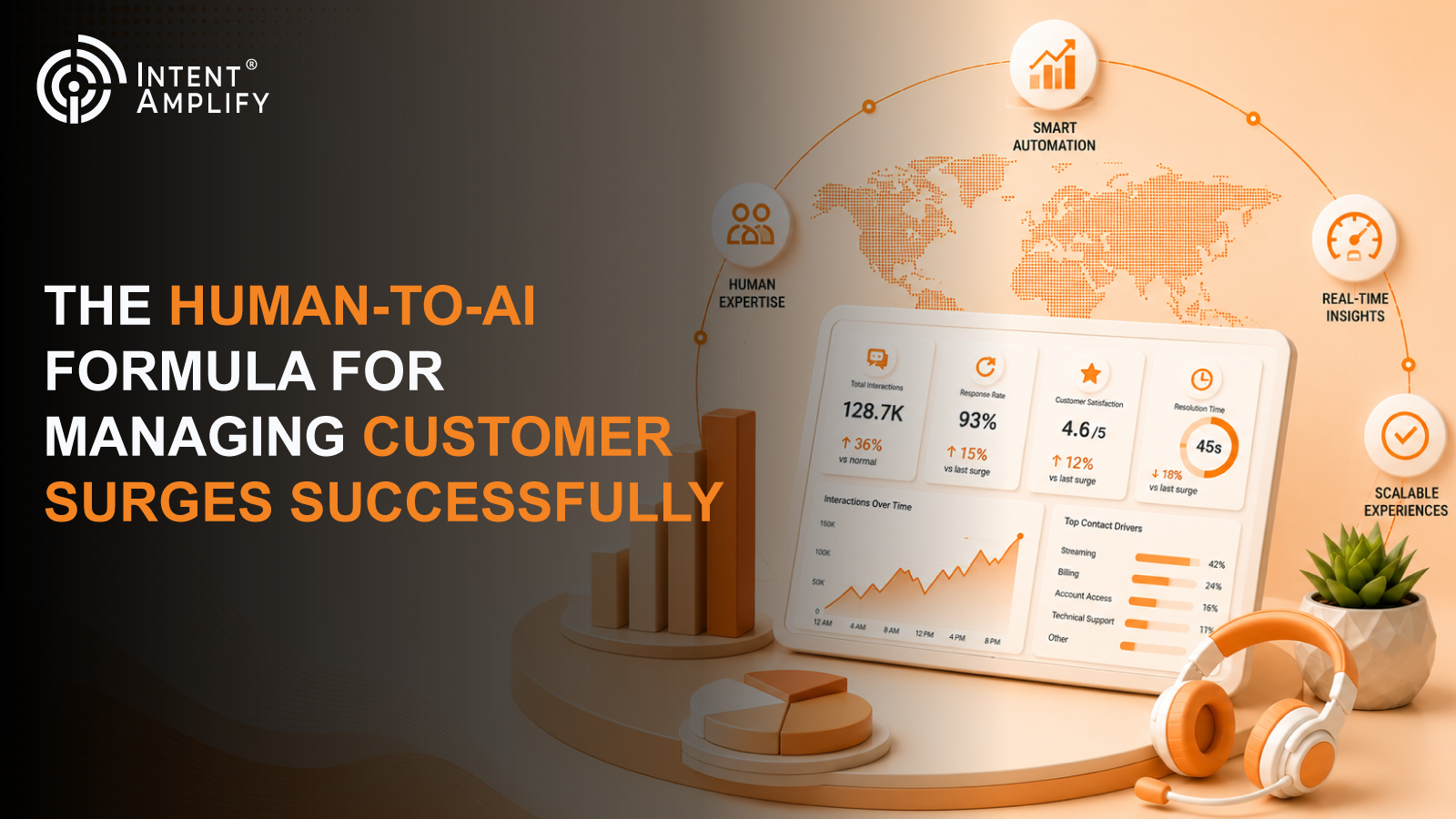
Customer surges have become defining moments for service organizations because they expose whether a brand can preserve trust when demand, emotion, and urgency rise together. For media, entertainment, streaming, live events, digital platforms, and subscription businesses, a surge may arrive throughout a premiere, playoff, ticket release, service outage, payment issue, breaking news cycle, or audience event that concentrates customer attention into a narrow window. The challenge is that customers do not judge the brand by how difficult the surge was to forecast internally; they judge it by whether the experience felt informed, responsive, and fair when they needed help most.
Zendesk’s Turning High-Stakes Surges into Successes webinar is built around this practical operating challenge. The webinar focuses on helping service leaders prepare for peak demand, manage high-volume customer service surges, protect audience loyalty, and balance AI customer service with human expertise through critical moments. ¹
The core insight is that surge management cannot depend only on more staffing or more automation. The stronger model is a human-to-AI formula that assigns AI to scaling, pattern recognition, and repetitive support while reserving human expertise for judgment, empathy, exception handling, and brand-sensitive recovery. When that balance is designed before the surge arrives, service teams can protect resolution quality, customer trust, agent productivity, and brand reputation at the same time.
Why Surges Need a New Operating Model
Traditional peak demand management often starts with workforce planning, queue monitoring, and extended support coverage. Those tools remain important, but they are no longer enough because customer expectations have changed. Customers now expect service continuity across channels, faster issue recognition, clearer updates, and fewer repeated explanations, even when the business is under pressure.
Zendesk’s CX Trends 2026 report states that 83% of CX leaders view memory-rich AI agents as essential to personalized customer journeys, while 85% believe customers will leave brands over unresolved issues, even on first contact. Zendesk also reports that 74% of consumers now expect around-the-clock service because of AI².
Those figures matter because customer surges increase the cost of every weak handoff. If AI does not preserve context, the human agent starts behind. If the knowledge base is outdated, automation scales confusion. If escalation rules are unclear, high-value or emotionally sensitive customers may wait too long for the right support.
KEY FIGURES AT A GLANCE
Microsoft’s 2026 Work Trend Index surveyed 20,000 AI-using workers across 10 countries and analyzed trillions of anonymized Microsoft 365 productivity signals, reinforcing that AI impact depends on redesigned work systems rather than tool access alone.³
Gartner predicts that by 2029, AI will resolve 80% of common customer service issues without human intervention, which makes governance, escalation design, and human oversight critical before service teams automate at scale.⁴
Microsoft reports that only 19% of AI users sit in the “Frontier” zone, where individual capability and organizational readiness reinforce each other, while many organizations remain blocked or stalled because their operating models have not caught up with AI adoption. ³
The Formula: AI for Scale, Humans for Trust
The most practical human-to-AI formula begins with issue segmentation. AI should handle interactions that are repetitive, policy-based, time-sensitive, and low in emotional complexity. Human agents should handle interactions that involve ambiguity, distress, relationship value, compensation decisions, public escalation, or complex troubleshooting.
In the course of a streaming outage, AI can recognize the issue pattern, confirm the service incident, share approved status updates, and reduce duplicate tickets. Through a ticketing surge, AI can answer queue, account, availability, and payment status questions while human specialists focus on failed transactions, accessibility needs, VIP issues, and emotional escalations. During a live event disruption, AI can classify contacts and summarize context, while human experts provide recovery guidance that protects audience trust.
The operating model reserves human expertise for interactions where judgment, trust, and relationship value have the greatest impact.
|
Surge Interaction Type |
Recommended Owner |
Why It Matters |
|
Known outage status update |
AI first |
Customers need consistent information at high volume |
|
Account access or password guidance |
AI first |
The issue is repeatable and process-driven |
|
Refund dispute or compensation request |
Human with AI context |
The issue requires judgment, tone, and policy interpretation |
|
VIP customer escalation |
Human specialist |
Relationship value and reputational exposure are higher |
|
Social complaint during a live event |
Human with AI sentiment support |
Public tone and timing affect brand reputation |
|
Complex technical troubleshooting |
AI triage and human resolution |
AI gathers context while human expertise solves exceptions |
Knowledge Quality Decides Whether AI Helps or Hurts
AI customer service throughout surges depends heavily on knowledge quality. If customer-facing articles, incident updates, routing rules, or compensation policies are outdated, AI can scale incorrect answers more quickly than a human team could ever deliver them manually. Therefore, AI readiness assessments should begin with knowledge readiness before tool readiness.
A surge-ready knowledge base should include approved event language, known issue updates, product or platform status guidance, customer eligibility rules, escalation thresholds, refund or credit policies, and internal instructions for human agents. It should also be owned by a clearly identified team in the course of the surge window, because customer support operations cannot afford confusion over who updates the source of truth when conditions change.
Effective AI support systems retrieve accurate knowledge, preserve context, recognize confidence limits, and route customers appropriately when human judgment is required.
Workforce Optimization Needs Human Expertise by Design
A hybrid customer support team works best when leaders design roles before pressure rises. AI agents can absorb repeatable volume, AI assistant tools can summarize customer history, and contact center analytics can show where queues, sentiment, and repeat contacts are worsening. Human agents then become more effective because they receive cleaner context, better knowledge, and clearer escalation of ownership.
Microsoft’s research reinforces the importance of redesigning work around people, agents, and systems rather than deploying AI into existing workflows. ³
For service leaders, that means AI should not be placed on top of old queues while agents are left to manage the gaps. It should be embedded into workflows that reduce cognitive load, improve agent productivity, and give supervisors better visibility into surge performance.
Through a high-stakes customer surge, the right human-to-AI ratio should be based on issue complexity, emotional intensity, customer value, compliance sensitivity, and public visibility rather than on volume alone. High volume should move toward AI containment when issues are routine, but high stakes should move toward human expertise when trust is at risk.
Surge Metrics Must Move Beyond Speed
Response time and average handle time still matter, but they are not enough to measure customer support surge performance. A fast answer that fails to resolve the issue can increase repeat contacts, weaken customer trust, and make the next interaction more expensive. A bot that contains volume but frustrates customers can look efficient in a dashboard while damaging brand experience in the real world.
A modern surge scorecard should measure resolution quality, first contact resolution, repeat contact rate, escalation accuracy, AI containment quality, customer sentiment, agent productivity, and post-surge customer retention. These metrics help leaders understand whether automation is improving the experience or simply hiding unresolved issues until they return through another channel.
For media and entertainment brands, the scorecard should also include audience management and brand reputation signals because customer experience during high-profile events affects audience loyalty. A poor service moment during a major event may carry more emotional weight than a routine interaction on a quiet day.
AI Governance Protects the Surge Experience
As AI agents handle more customer interactions, governance becomes part of service quality. Gartner’s prediction that AI will resolve 80% of common customer service issues without human intervention by 2029 makes the direction clear, but it also raises the importance of oversight, escalation design, and risk controls.⁴
NIST’s AI Risk Management Framework emphasizes trustworthy AI across design, development, use, and evaluation.⁵
In customer service, that should translate into approved knowledge sources, pre-event testing, privacy controls, human escalation paths, model monitoring, audit trails, and clear accountability for AI-assisted outcomes.
Governance matters most when customer pressure is highest. In the course of a surge, a poorly routed escalation, an outdated answer, or an insensitive automated response can move quickly from service problem to brand reputation issue.
What Zendesk Brings to the Conversation
Zendesk is positioned for this conversation because the webinar focuses on turning high-stakes customer surges into moments of managed confidence rather than temporary service disruption. The webinar is especially relevant for media, entertainment, and high-traffic digital businesses where audience engagement, customer loyalty, and public trust can shift quickly through critical events.
The practical value of the session is that it encourages leaders to think beyond staffing levels and ask more strategic questions: which interactions should AI handle, where should human expertise intervene, how should surge performance be measured, and what readiness gaps must be fixed before the next high-traffic moment arrives.
Reserve Your Spot for Turning High-Stakes Surges into Successes
Zendesk’s webinar helps customer experience and support leaders prepare for high-pressure demand spikes by combining AI, human expertise, better planning, and smarter performance measurement.
About Intent Amplify
Intent Amplify helps organizations move from market insight to measurable growth through GTM strategy, demand intelligence, pipeline activation, executive roundtables, sponsored research, targeted content, webinars and panels, vendor intelligence, and strategic consulting. For teams that need sharper positioning, stronger executive engagement, and more effective activation, Intent Amplify connects strategy, content, and market intelligence into a practical growth engine.
Executive Takeaway
The human-to-AI formula for managing customer surges successfully is not a fixed staffing ratio. It is an operating model that assigns AI to repeatable scale, humans to judgment, and leaders to continuous measurement. When knowledge quality, escalation design, workforce optimization, contact center analytics, and AI governance work together, service organizations can manage demand spikes without sacrificing resolution quality or customer trust.
The next generation of surge management will belong to teams that understand one simple principle: AI can carry volume, but human expertise protects the relationship.
References
- Zendesk and IntentTechPub (2026). Turning High-Stakes Surges into Successes. Available at: https://intenttechpub.com/webinar/turning-high-stakes-surges-into-successes/
- Zendesk (2026) CX Trends 2026. Available at: https://cxtrends.zendesk.com/
- Microsoft (2026). 2026 Work Trend Index: Agents, Human Agency, and the Opportunity for Every Organization. Available at: https://www.microsoft.com/en-us/worklab/work-trend-index/agents-human-agency-and-the-opportunity-for-every-organization
- Gartner (2025). Gartner Predicts Agentic AI Will Autonomously Resolve 80 Percent of Common Customer Service Issues Without Human Intervention by 2029. Available at:https://www.gartner.com/en/newsroom/press-releases/2025-03-05-gartner-predicts-agentic-ai-will-autonomously-resolve-80-percent-of-common-customer-service-issues-without-human-intervention-by-20290
- National Institute of Standards and Technology (2026). AI Risk Management Framework. Available at: https://www.nist.gov/itl/ai-risk-management-framework