
logo
logo
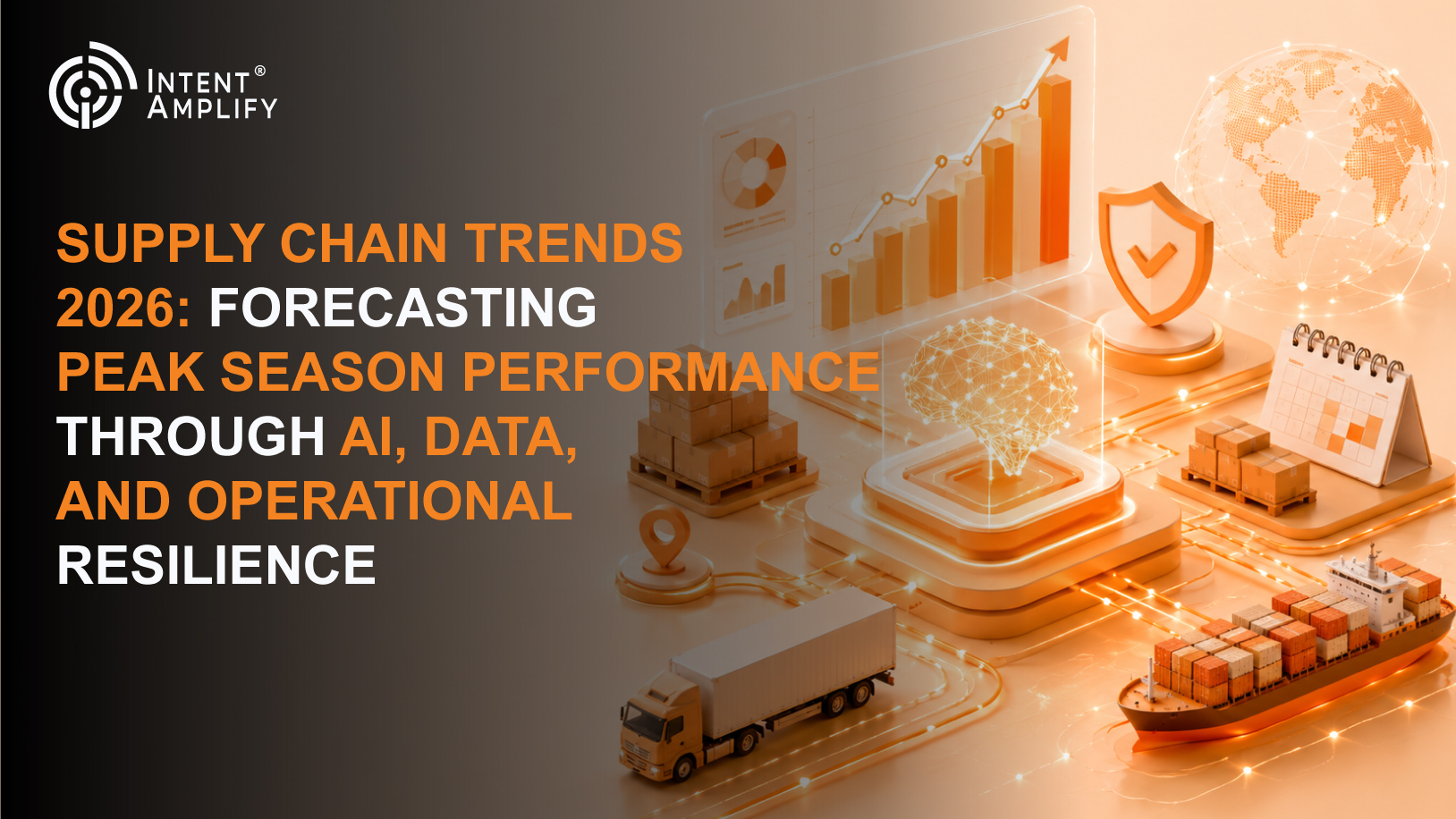
Supply Chain Trends 2026: Forecasting Peak Season Performance Through AI, Data, and Operational Resilience

REPORT

Supply Chain Trends 2026: Forecasting Peak Season Performance Through AI, Data, and Operational Resilience

Explore 2026 supply chain trends and learn how AI forecasting, scenario planning, logistics resilience, and data governance improve peak season performance.

Executive Summary

Peak season is no longer a narrow logistics event. It tests how well an enterprise converts demand signals, inventory positions, freight constraints, supplier risk, and customer commitments into timely decisions. For senior leaders in consumer goods and services, media and entertainment, automotive, and healthcare, the 2026 planning cycle will expose a familiar weakness: visibility has improved faster than decision design.

The central thesis is straightforward. Peak season planning in 2026 will be won by organizations that move beyond forecast generation and build an integrated operating discipline around AI demand forecasting, scenario planning, inventory planning, logistics planning, and operational resilience. AI can improve forecast accuracy and exception detection, but it cannot compensate for weak data governance or fragmented ownership.

Gartner's 2026 supply chain AI research found that only 17% of supply chain organizations are pursuing immediate transformational redesign of processes and workflows around AI, while 83% are applying AI incrementally or scaling it gradually into integrated processes. [1]

That finding matters because peak season pressure rarely fails in one function. It usually fails across the handoffs between planning, fulfillment, transportation, inventory, finance, and customer operations.

For 2026, the strongest peak season strategy will be the plan stress-tested against demand volatility, transportation risk, inventory distortion, supplier exposure, and regional constraints before the surge begins.

Intent Amplify Perspective

According to Intent Amplify research and analysis, peak season resilience is no longer defined by forecast accuracy alone. The stronger differentiator is how quickly organizations convert demand, inventory, supplier, freight, and customer signals into governed decisions.

For 2026, competitive advantage will come from decision discipline: clear ownership, scenario planning, logistics risk visibility, inventory governance, and accountable execution before peak pressure begins.

Why Peak Season Is Becoming a Decision-System Problem

Peak season planning places supply chain networks under simultaneous commercial, operational, and regulatory pressure. Demand, inventory, transportation capacity, sourcing, pricing, and customer commitments interact continuously, making execution dependent on coordinated decisions rather than sequential planning activities.

Trade policy, consumer spending, regional manufacturing strategies, and regulatory requirements each influence peak season execution in different ways. Tariffs affect sourcing decisions and landed costs. Price-sensitive consumers increase demand volatility. European cross-border fulfillment combines high service expectations with regulatory complexity. Automotive manufacturers balance parts availability with regional production strategies, while healthcare supply chains operate within stringent compliance, expiry, and cold-chain requirements. Media and entertainment organizations experience demand spikes driven by live events, streaming releases, and audience behavior.

McKinsey's 2025 Supply Chain Risk Survey reflects these operating conditions. Eighty-two percent of respondents reported that new tariffs affected their supply chains, with 20% to 40% of supply chain activity influenced across different operating areas. The survey also found that 39% experienced higher supplier and material costs, while 30% reported weaker customer demand.² These pressures extend across inventory positioning, sourcing strategy, transportation planning, pricing, and margin management rather than remaining isolated within procurement.

Peak season performance increasingly depends on the organization's ability to evaluate multiple demand scenarios, understand cross-functional trade-offs, and execute coordinated responses before operational disruptions affect service, cost, compliance, or customer commitments.

Current Market Landscape: AI Adoption Is Rising, but Execution Maturity Is Uneven

AI has moved into mainstream supply chain planning, especially transportation and analytics-led decision support. Breakthrough's 2025 Peak Shipping Season Pulse found that 49% of U.S. transportation leaders said AI reshaped how they managed Q4 peak season. Respondents cited AI's value in anticipating shifting freight demand and managing transportation and fuel costs. A related finding showed that 96% of transportation leaders use AI for planning, operations, and decision-making, most often for analytics and reporting, route and load optimization, and freight forecasting. [3]

That adoption signals progress, but it should be interpreted carefully. AI in transportation can stabilize part of the operating model, but peak season performance depends on whether those insights connect to demand planning, inventory placement, warehouse throughput, and customer promises.

PwC's 2026 Digital Trends in Operations Survey highlights the maturity gap. 89% of operations leaders said technology investments have not fully delivered expected results, and 87% said poor data quality has affected their organization's ability to achieve value from digital initiatives. PwC also reported that 94% of organizations are likely to shift toward a more horizontal, networked operational structure. [4]

The direction is clear: function-by-function optimization is too limited, but many organizations have not built the data and governance foundations required to execute horizontally.

A model can identify demand movement, but the organization still needs trusted master data, current lead times, usable inventory positions, carrier performance data, and defined exception ownership.

Intent Amplify Research Desk Observation

According to Intent Amplify research and analysis, AI forecasting creates value only when it improves decision execution. Peak season risk often emerges when demand volatility, supplier delays, carrier constraints, inventory imbalance, and regional variation converge.

The next maturity step is connecting predictive insight with scenario planning, logistics readiness, inventory governance, and accountable cross-functional action.

Key Findings

1. Peak season readiness is shifting from forecasting to orchestration

Forecast accuracy remains important, but leaders also need to know which decisions must change when the forecast changes, from allocation and safety stock to freight capacity and escalation thresholds.

2. Logistics risk management is moving upstream

Transportation risk can no longer be treated as a late-stage issue. Carrier capacity, lane volatility, fuel cost exposure, appointment availability, and customs complexity should inform the plan before commitments are locked.

3. AI talent is becoming a leadership constraint

Gartner reported that demand for supply chain roles requiring AI skills increased 387% from Q1 2023 to Q1 2026 [5]. This indicates that AI fluency is becoming a management requirement for planning, logistics, fulfillment, and inventory roles, not only a data science specialization.

4. Resilience must be measured, not asserted

Operational resilience should be expressed through recovery time, service exposure, inventory quality, supplier concentration, capacity optionality, exception closure speed, and margin-at-risk.

Analysis: From Forecast Accuracy to Decision Accuracy

Forecast accuracy remains an important performance indicator, but it provides only a partial view of peak season readiness. Enterprise performance ultimately depends on execution quality under changing conditions rather than predictive precision alone.

Forecasting evaluates how closely projected demand aligns with actual demand. Operational performance depends on the quality of decisions made once uncertainty enters the network. Aggregate forecasts may prove statistically accurate while execution deteriorates because inventory is positioned in the wrong location, demand materializes in unexpected markets, transportation capacity is committed to the wrong lanes, or replenishment priorities fail to match customer requirements.

AI demand forecasting should therefore be evaluated by its contribution to decision quality. Does the model identify demand shifts early enough to change inventory placement, transportation capacity, or margin exposure?

Gartner's 2026 technology trends place agentic AI and physical AI among the top supply chain technology trends, within broader themes of autonomy, specialization, intelligence, trust, and governance. The important word is governance. As AI systems become embedded in planning and execution, leaders will need policies that define when AI can recommend, automate, or require human approval.

For healthcare, governance may involve clinical priority and cold-chain exceptions. For automotive, it may involve production-critical parts and supplier escalation. For consumer goods and media, it may involve channel allocation, margin protection, and time-definite event readiness.

Industry Implications for 2026 Peak Season Strategy

Consumer Goods and Services

Consumer goods organizations face the most visible peak season pressure. Promotions, marketplace activity, digital demand, returns, and fulfillment promises converge in a short operating window. NRF forecasted that U.S. holiday sales would exceed $1 trillion for the first time in 2025, with November and December retail sales expected to grow 3.7% to 4.2% over 2024.[7]

The implication for 2026 is that modest forecast error can create material cost when applied to a trillion-dollar seasonal market. Inventory planning should focus on profitable availability rather than blanket stock expansion.

Media and Entertainment

Media and entertainment organizations operate with fast-moving demand signals. Content releases, sports events, concerts, creator-driven attention, limited merchandise, and venue schedules can create short-lived operational surges. Deloitte's 2025 Digital Media Trends research notes that video entertainment has been disrupted by social platforms, creators, user-generated content, and advanced modeling for content recommendations and advertising.

That shift has supply chain consequences. Demand is increasingly shaped by attention patterns, not only fixed release calendars. Scenario planning should account for event dates, merchandise availability, venue requirements, and regional fulfillment constraints.

Automotive

Automotive peak season does not always resemble retail peak season, but the operational stakes are high. Production schedules, parts availability, aftermarket demand, dealer inventory, and regional sourcing decisions create surge dynamics. The AMS/ABB Automotive Manufacturing Outlook Survey 2025 found that supply chain disruption, parts shortages, and inventory management ranked as the leading automotive supply chain challenge, cited by 45% of respondents. [9]

For automotive leaders, transportation planning should be tied to supplier visibility and production-critical inventory. AI scenario planning can evaluate supplier delays, regional routing constraints, and parts shortages before they affect production continuity.

Healthcare

Healthcare supply chains have narrower tolerance for planning error. Drug shortages, temperature excursions, delayed clinical supplies, and constrained substitutions can affect care delivery. ASHP's 2025 drug shortages report found 89 new shortages in 2025, the lowest number since 2006, while also reporting 216 active drug shortages at year-end. [10]

For healthcare organizations, resilience requires demand planning connected to product criticality, supplier qualification, expiry management, cold-chain handling, and regulatory evidence. AI recommendations must be explainable, auditable, and aligned with clinical and compliance priorities.

Regional Planning Priorities Across North America and Europe

Regional variation changes the operating model. In the United States and Canada, tariff exposure, domestic freight cost, labor availability, and consumer price sensitivity are central variables. In Europe, cross-border fulfillment, carrier performance, customs requirements, sustainability expectations, and regulatory complexity make network planning more granular.

EuroCommerce's European E-commerce Report 2025 covers digital commerce developments across 38 European countries, with a focus on the EU-27, and highlights e-commerce turnover, e-shopper penetration, sustainability, and AI in Europe's digital market.[11]

For multinational organizations, supply chain forecasting best practices cannot be copied uniformly across regions.

Intent Amplify Enterprise Peak Season Resilience Framework

Demand Intelligence
Combines historical demand, current order signals, promotions, market events, weather, channel behavior, pricing, and external risk indicators.

Supply Feasibility
Assesses supplier readiness, production capacity, lead times, material availability, and substitution rules before demand scenarios are finalized.

Inventory Quality
Evaluates where stock is located, whether it is usable, and whether it aligns with priority demand.

Logistics Execution
Reviews carrier commitments, lane exposure, warehouse throughput, appointment constraints, accessorial risk, and contingency routing.

Decision Governance
Defines exception ownership, approval thresholds, escalation rules, evidence requirements, and accountability.

Outcome
A peak season operating model that converts forecasting insight into coordinated decisions, faster mitigation, and stronger service continuity.

Peak Reality Check for 2026 Planning

The 2026 planning window is already narrowing. For logistics, fulfillment, inventory, transportation, and supply chain leaders, this webinar offers a focused view of what shippers, analysts, and AI models are predicting for Peak 2026. The discussion is designed for teams evaluating AI forecasting, logistics risk management, freight capacity planning, and ways to reduce disruptions before assumptions harden into budgets, carrier commitments, and customer promises.

Reserve your seat for Peak Reality Check for 2026 Peak Season Planning

Strategic Recommendations for Supply Chain Leaders

First, build the peak season strategy around decision points. Which products require service protection? Which lanes need early freight commitments? Which suppliers are most exposed? Which exceptions require finance, operations, or executive approval? This gives AI systems a clearer role: informing defined decisions with known owners and measurable outcomes.

Second, treat data readiness as a logistics risk management issue. Before peak season, leaders should validate SKU hierarchies, lead times, supplier attributes, location data, inventory availability, carrier performance, and shipment-status feeds. If these inputs are unreliable, AI demand forecasting will look precise but remain operationally weak.

Third, stress-test the plan through scenario planning. Teams should examine demand upside, demand downside, supplier delay, freight capacity shortage, labor constraint, tariff movement, warehouse bottleneck, and inventory imbalance. The goal is to identify where the network becomes fragile and what mitigation options preserve service, margin, and continuity.

Fourth, establish human-governed AI workflows. Each AI-enabled process should include a named owner, decision logic, confidence thresholds, data inputs, escalation paths, and audit requirements. In regulated or production-critical environments, governance is not a slowing mechanism. It is what makes scale defensible.

Enterprise Peak Season Resilience Readiness Assessment

Peak season planning now requires leaders to connect AI forecasting with scenario planning, inventory governance, logistics execution, and accountable decision-making.

The assessment evaluates:

  • AI forecasting maturity
  • Scenario planning readiness
  • Inventory governance
  • Logistics execution risk
  • Supply feasibility
  • Decision accountability
  • Service continuity readiness

Start your Enterprise Peak Season Resilience Readiness Assessment

Conclusion: Peak Season 2026 Will Reward Operational Interpretation

Supply chain trends in 2026 point to a sharper operating reality. AI adoption is accelerating, but maturity is uneven. Data quality remains a binding constraint. Tariffs, regional variation, supplier disruption, and transportation risk are changing planning assumptions. Industry-specific requirements are becoming harder to manage with generic playbooks.

Peak season planning in 2026 should be treated as an enterprise decision system. AI demand forecasting can improve visibility, but visibility only matters if leaders can convert it into inventory moves, logistics decisions, supplier actions, customer prioritization, and governed exceptions. Supply chain forecasting must connect to logistics planning. Scenario planning must connect to business continuity. Operational resilience must be measured, not merely asserted.

For senior leaders, the priority is to make the plan usable when conditions change.

References

  1. Gartner (2026) Gartner Survey Shows AI Is Not Driving Supply Chain Operating Model Transformation. Available at: https://www.gartner.com/en/newsroom/press-releases/2026-05-06-gartner-survey-shows-ai-is-not-driving-supply-chain-operating-model-transformation.
  2. McKinsey & Company (2025) Tariffs Reshuffle Global Trade Priorities in 2025. Available at: https://www.mckinsey.com/capabilities/operations/our-insights/supply-chain-risk-survey.
  3. Breakthrough (2025) Nearly Half of U.S. Transportation Leaders Say AI Saved Their Peak Season. Available at: https://www.breakthroughfuel.com/newsroom/transportation-leaders-say-ai-saved-their-peak-season/.
  4. PwC (2026) PwC's 2026 Digital Trends in Operations Survey. Available at: https://www.pwc.com/us/en/services/consulting/supply-chain-operations/library/digital-trends-operations-survey.html.
  5. Gartner (2026) Gartner Says There Is an Outsized Need for AI Talent in Supply Chain. Available at: https://www.gartner.com/en/newsroom/press-releases/2026-06-15-gartner-says-there-is-an-outsized-need-for-ai-talent-in-supply-chain.
  6. Gartner (2026) Gartner Identifies Top Supply Chain Technology Trends for 2026. Available at: https://www.gartner.com/en/newsroom/press-releases/2026-06-30-gartner-identifies-top-supply-chain-technology-trends-for-2026.
  7. National Retail Federation (2025) NRF Expects Holiday Sales to Surpass $1 Trillion for the First Time in 2025. Available at: https://nrf.com/media-center/press-releases/nrf-expects-holiday-sales-to-surpass-1-trillion-for-the-first-time-in-2025.
  8. Deloitte (2025) 2025 Digital Media Trends. Available at: https://www.deloitte.com/us/en/insights/industry/technology/digital-media-trends-consumption-habits-survey/2025.html.
  9. ABB / Automotive Manufacturing Solutions (2025) Automotive Supply Chain Outlook 2025: Resilience, Regionalisation, and Digital Transformation. Available at: https://www.automotivemanufacturingsolutions.com/logistics/fractured-supply-chains-force-automotive-sector-to-rebuild-from-scratch/2609713.
  10. American Society of Health-System Pharmacists (2025) National Drug Shortages: 2025 Drug Shortages Report Q4. Available at: https://www.ashp.org/-/media/assets/drug-shortages/docs/2025-Drug-Shortages-Report-Q4.pdf.
  11. EuroCommerce (2025) European E-Commerce Report 2025. Available at: https://www.eurocommerce.eu/2025/09/european-e-commerce-report-2025/.
Prabhanshi   Singh

Prabhanshi Singh

Research Analyst

Contact us for Report