
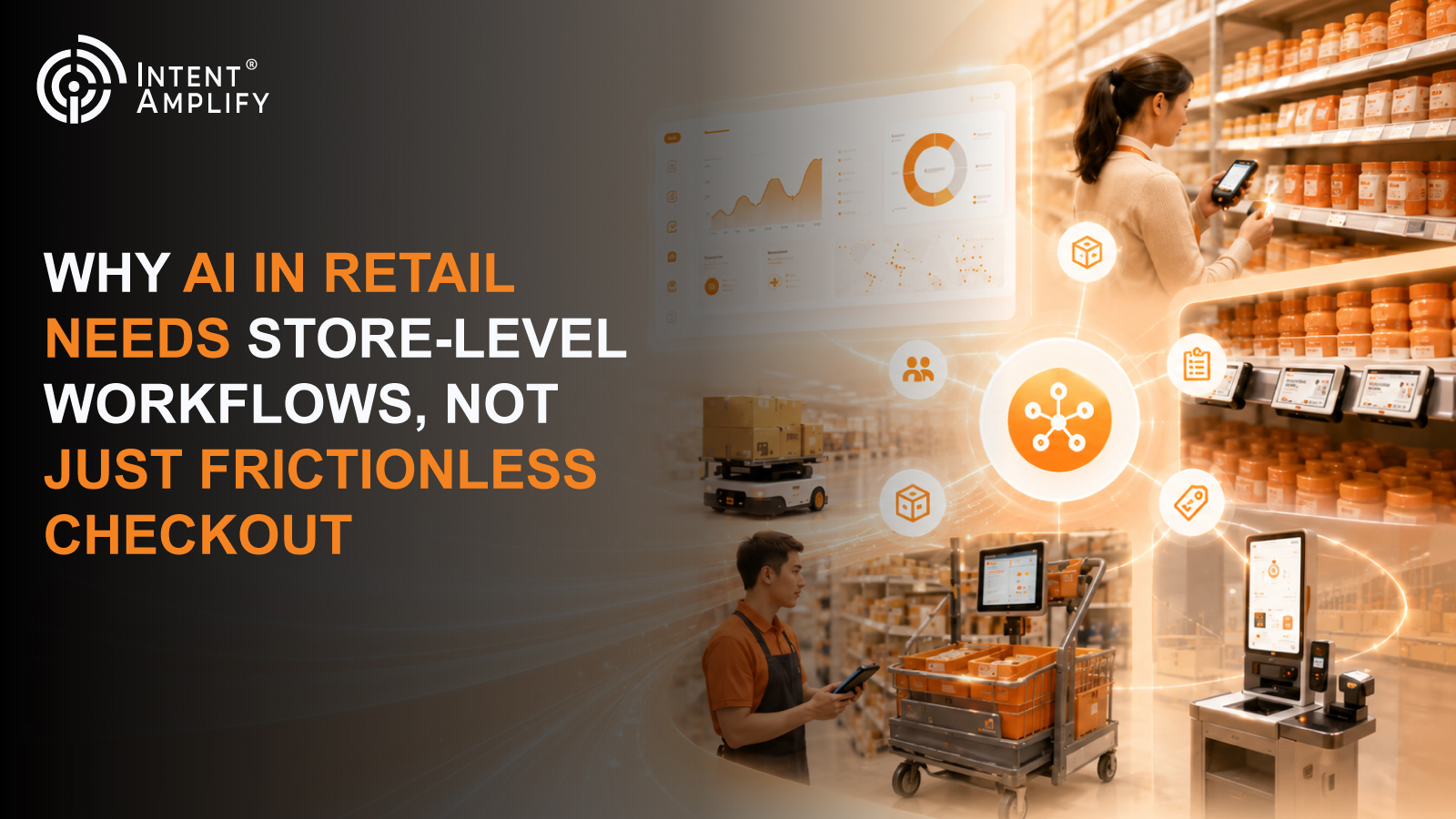
Retail innovation has historically focused on accelerating the checkout experience. Self-checkout, scan-and-go, digital wallets, mobile payments, loyalty-integrated promotions, and cashierless formats have reduced transaction friction and improved purchasing convenience. While these capabilities strengthen a highly visible customer interaction, they address only one element of store operations.
Physical stores operate as dynamic execution environments where workforce management, inventory, merchandising, customer service, fulfillment, loss prevention, returns, promotional activity, and localized execution continuously interact. Performance depends on how effectively these operational workflows are coordinated. Faster checkout alone does not resolve shelf availability, associate productivity, product information accuracy, service recovery, inventory integrity, or emerging demand patterns.
Retail competitiveness increasingly depends on store workflow intelligence. AI delivers greater enterprise value when operational signals are translated into coordinated actions across merchandising, replenishment, workforce deployment, customer engagement, and fulfillment, enabling stores to respond to changing conditions with greater speed, consistency, and operational discipline.
Deloitte’s 2026 Global Retail Industry Outlook reports that 68% of retail executives expect agentic AI adoption in the next 12 to 24 months, while chat-based tools are already driving 15% to 20% of referrals for some retailers.1
This signals a shift in the retail AI agenda. AI is no longer only a digital-commerce layer. It is becoming an operating capability that can reshape how stores sense demand, support associates, prioritize work, and improve customer experience.
For U.S. enterprise executives, the strategic question is clear. Should retail AI remain focused on making checkout faster, or should it help physical stores make better operational decisions before the customer ever reaches payment?
Intent Amplify Research Perspective:
The next phase of retail AI maturity will not be defined by transaction speed alone. It will be defined by how effectively retailers connect AI agents to store-level workflows that affect availability, associate performance, customer confidence, and operational consistency. Checkout optimization may reduce wait time, but workflow intelligence improves the conditions that determine whether a store visit succeeds at all.
Why Checkout-Centric AI Has Reached Its Limit
Frictionless checkout became a powerful innovation narrative because it is easy to demonstrate. A customer enters, scans, pays, and leaves with fewer interruptions. The experience feels modern, measurable, and efficient. Yet checkout is only the final step in a longer journey.
A customer may leave disappointed because the desired product was not on the shelf. An associate may be unable to answer a product question because the information is buried across disconnected systems. A manager may miss a replenishment issue because alerts are not prioritized by business impact. A promotion may fail because the store team does not have enough context to execute it correctly. None of these problems begin at checkout.
Salesforce reported in June 2026 that AI influenced 20% of global online sales, worth $262 billion, and that retailers running their own shopper agents grew sales 59% faster than retailers still on the sidelines.2
These figures show how quickly AI is influencing discovery, conversion, and customer intent. However, the physical store must still fulfill the promise created by AI-enabled digital engagement.
If AI helps a customer decide what to buy but the store cannot locate, explain, substitute, replenish, or service that product effectively, the retailer has only shifted friction from checkout to operations.
Intent Amplify Research Observation:
Retailers should treat checkout friction as a symptom, not the full problem. In many physical stores, the larger performance gap sits in the workflow layer: how teams identify exceptions, assign work, guide associates, resolve customer issues, and keep inventory records aligned with physical reality.
From Frictionless Checkout to Store-Level Workflow Intelligence
The physical store is becoming a decision network. Store leaders decide where to allocate labor. Associates decide which customer needs support first. Inventory teams decide whether to replenish, adjust, transfer, or investigate. Asset protection teams decide which signals deserve escalation. Customer experience teams decide how to recover from a service issue without damaging margin or trust.
McKinsey’s The State of AI in 2025 found that 88% of surveyed organizations regularly use AI in at least one business function, while 62% are at least experimenting with AI agents, including 23% scaling agentic systems and 39% experimenting.3
The implication for retailers is direct. AI adoption is no longer the differentiator. Workflow integration is.
Store-level AI should not be designed as a disconnected assistant or another dashboard. It should support the operating moments where decisions are repetitive, time-sensitive, customer-facing, and financially meaningful.
Level AI Workflow Intelligence Model
|
Store-Level Workflow |
Common Retail Challenge |
How AI Agents Can Support the Workflow |
Business Outcome |
|
Shelf availability |
Products appear available digitally but are missing from the floor |
Check backroom inventory, sales velocity, replenishment status, and task ownership |
Higher availability, fewer missed sales, stronger customer trust |
|
Associate enablement |
Store teams lack real-time product, promotion, or policy context |
Provide guided answers, substitution options, product details, and service scripts |
Better service quality and faster issue resolution |
|
Task prioritization |
Managers receive too many alerts without a clear business ranking |
Rank tasks by customer impact, margin exposure, demand urgency, and risk |
More disciplined labor allocation |
|
Service recovery |
Customer issues are handled inconsistently across locations |
Recommend approved resolution paths based on loyalty, policy, and context |
Improved retention and lower escalation risk |
|
Loss prevention |
Exception signals are fragmented across systems |
Connect transaction, movement, inventory, and behavioral signals for review |
Better risk visibility without overburdening teams |
|
Local execution |
Promotions, planograms, and fulfillment tasks vary by store |
Translate enterprise priorities into location-specific actions |
Stronger execution consistency |
This is the shift from retail automation to intelligent retail. Automation completes a task. Store-level intelligence improves how work is selected, sequenced, explained, and governed.
Where AI Agents Create Operational Value Inside the Store
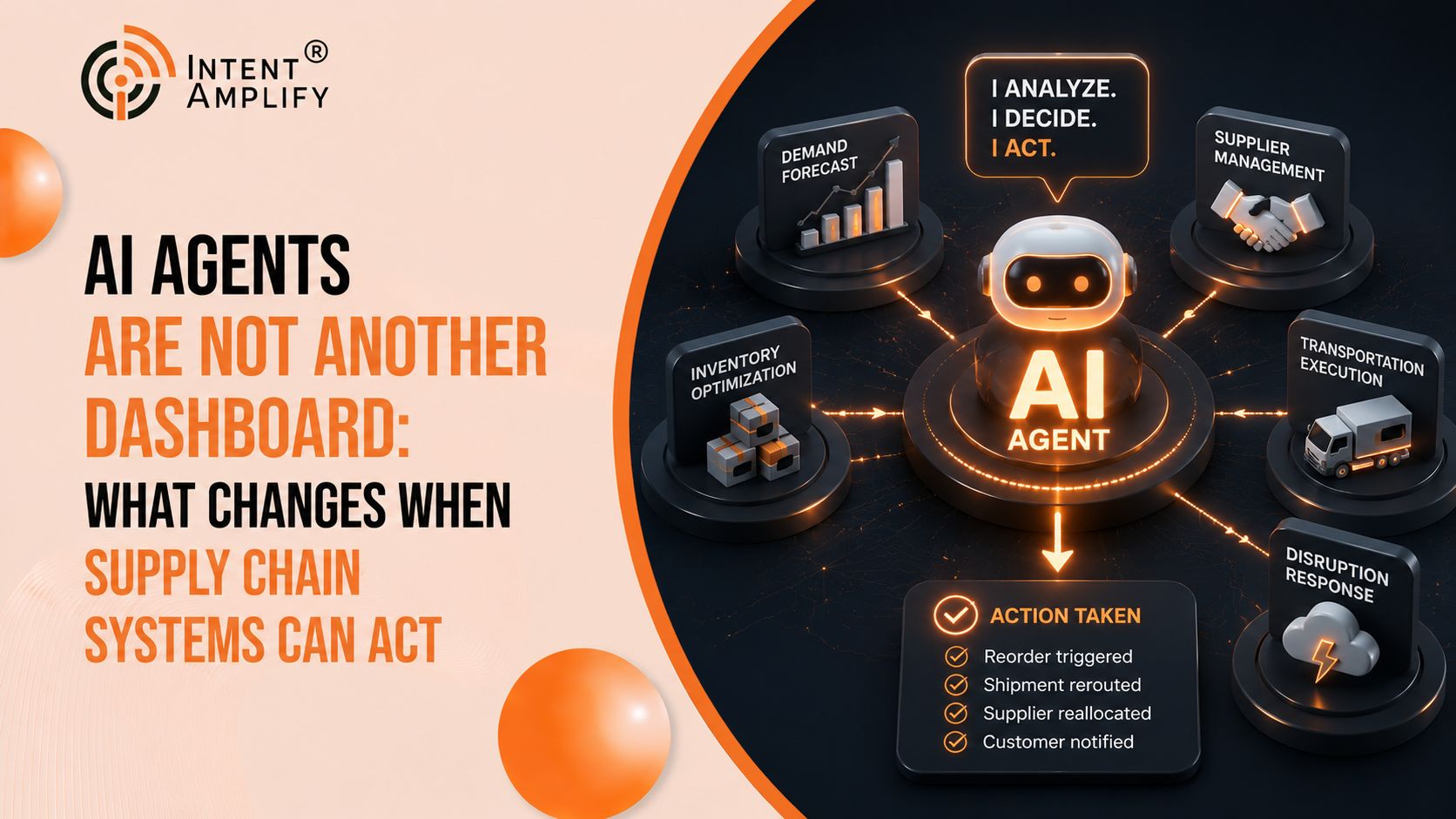
The most valuable AI agents in retail stores will not be generic chatbots placed near product aisles. They will operate as workflow copilots for store managers, associates, inventory teams, and customer experience leaders.
For store operations teams, an AI agent can prioritize opening tasks by local risk: delayed replenishment, unresolved pickup orders, missing shelf labels, labor shortages, shrink-sensitive categories, or high-demand products. For associates, it can provide product information, location guidance, substitution options, service policies, and promotion rules in real time. For managers, it can summarize exceptions and recommend which issues require immediate action.
McKinsey’s January 2026 retail merchandising analysis argues that agentic AI can move merchants away from repetitive reporting and toward strategy by continuously analyzing performance data, flagging issues, and producing actionable recommendations.4
The same principle applies inside the physical store. AI becomes valuable when it reduces manual investigation and improves frontline decision quality.
Consider on-shelf availability. A traditional alert may tell the store that an item is out of stock. A governed AI workflow can go further by checking whether inventory exists in the backroom, whether replenishment is delayed, whether the product is part of an active promotion, whether nearby stores have stock, and whether an associate should be assigned to act. The value is not the alert. The value is the decision package.
The same applies to customer service. If a loyal customer cannot find an advertised item, an associate-facing agent can verify product availability, identify substitutes, check promotion eligibility, and recommend a resolution aligned with policy and margin rules. That is not just AI customer experience. It is customer experience supported by operational context.
Intent Amplify Research Perspective:
The strongest AI use cases in physical retail will be those that combine customer context with operational feasibility. Personalization without inventory accuracy creates disappointment. Store alerts without task ownership create noise. AI agents become useful when they help the store convert context into accountable action.
Store-Level AI Readiness Framework
Retail executives should not evaluate AI readiness only by model capability or vendor functionality. The more important question is whether the store environment has the data, workflow clarity, governance discipline, and measurement structure required to use AI responsibly.
|
Readiness Dimension |
Executive Question |
Why It Matters |
|
Workflow clarity |
Which store-level decisions are slow, recurring, high-impact, and suitable for AI support? |
Prevents AI from being applied to vague or low-value use cases |
|
Data reliability |
Are inventory, labor, promotion, customer, and task records accurate enough for AI-assisted action? |
Reduces flawed recommendations and weak associate trust |
|
Role accountability |
Who approves, rejects, overrides, or escalates AI-supported recommendations? |
Keeps humans accountable for decisions that affect customers and operations |
|
Associate adoption |
Will frontline teams view AI as support, surveillance, or another system to manage? |
Determines whether AI improves productivity or creates resistance |
|
Governance controls |
Are role permissions, audit trails, escalation thresholds, and exception rules embedded? |
Protects compliance, fairness, and operational discipline |
|
Outcome measurement |
Can leaders track service quality, availability, task completion, shrink exposure, and conversion impact? |
Connects AI adoption to measurable business value |
This framework helps retailers avoid treating AI as a technology rollout. Store-level AI is an operating-model change. It requires clarity about which workflows should be supported, which actions require human approval, and which outcomes must be measured over time.
Customer Experience Depends on Operational Memory
Retail leaders often define AI customer experience through personalization, search, recommendation, and digital engagement. In physical stores, customer experience is more operational. Shoppers judge the brand through product availability, associate confidence, queue management, returns handling, price accuracy, pickup readiness, and the feeling that the store understands the purpose of their visit.
Accenture’s Talk to My AI Agent: The New Rules of Brand Value surveyed 25,590 consumers across 16 countries in January 2026 and found that 74% would delegate routine tasks to an AI agent if the agent acted strictly on instruction, while 32% would let an agent decide what to buy if they make the payment themselves.5
These findings matter because AI-assisted shopping will create more specific expectations before the customer enters the store.
If a shopper’s agent has already compared products, checked prices, reviewed availability, and narrowed choices, the store must be ready to deliver precise support. Associates need context. Inventory systems need reliability. Fulfillment workflows need coordination. Service recovery needs consistency.
Without store-level workflows, AI-led discovery may increase operational pressure rather than improve loyalty. Customers will arrive with clearer expectations, while stores may still operate with fragmented task systems, inconsistent visibility, and limited frontline guidance.
Intent Amplify Research Observation: Physical retail will need operational memory to match AI-shaped customer intent. The store must understand what the customer was promised, what inventory is actually available, who can assist, and how exceptions should be resolved. Without that memory, AI may accelerate demand faster than store teams can fulfill it.
Governance Becomes the Scaling Test
Store-level AI introduces real governance demands because it influences labor allocation, customer treatment, inventory movement, service recovery, and risk response. An agent that recommends substitutions, flags suspicious activity, escalates associate tasks, or guides customer resolution must operate within clear boundaries.
IBM’s Where AI Breaks, or Breaks Through report states that 77% of technology leaders say AI adoption is moving faster than current governance capabilities.6
For retailers, this is not an abstract technology concern. A poorly governed recommendation can affect customer fairness, associate trust, inventory accuracy, pricing interpretation, and loss-prevention escalation.
Governance should be embedded directly into AI-powered retail operations. Leaders need role-based access, approval thresholds, override paths, audit logs, data-quality checks, model monitoring, and escalation rules. AI should support associates, not pressure them into unexamined compliance.
Store-Level AI Governance Control Model
|
Governance Area |
Retail Risk if Ignored |
Control Requirement |
|
Customer treatment |
Inconsistent service recovery or unfair recommendations |
Approved resolution rules and audit trails |
|
Associate workflow |
AI recommendations feel like surveillance or pressure |
Clear role design, transparency, and override rights |
|
Inventory action |
Incorrect transfers, replenishment, or substitutions |
Data validation and human approval thresholds |
|
Loss prevention |
Over-escalation or biased exception handling |
Review protocols and accountable escalation paths |
|
Promotion execution |
Conflicting offers or incorrect customer promises |
Policy alignment and real-time promotion validation |
|
Data access |
Sensitive customer or workforce data is exposed |
Role-based permissions and monitoring |
The scaling test is not whether the AI agent can generate an answer. It is whether the retailer can trust, explain, govern, and improve the workflow that follows the answer.
Where the Rethink Retail Report Fits
The report AI Agents Inside the Physical Store is relevant because it focuses on the retail issue that checkout-centric innovation often overlooks: stores need intelligence at the workflow level. The report helps enterprise leaders examine where AI agents can support associates, improve product discovery, strengthen customer experience, enhance operational visibility, and create a more responsive store environment.
For Directors and above across IT, store operations, retail operations, customer experience, asset protection, loss prevention, digital transformation, and innovation, the report provides a practical lens for evaluating intelligent retail store technology. Its value is not in presenting AI as a universal answer. Its value is in showing how physical retailers can connect AI to real store work: task orchestration, associate enablement, customer assistance, operational alerts, and governed execution.
Rethink Retail’s perspective is especially useful for leaders who want to move beyond frictionless checkout as the primary innovation narrative. The stronger strategic message promise is store intelligence. Retailers need AI that understands the floor, supports the associate, improves the customer journey, and helps leaders act on the operational signals that define performance.
Download the report: AI Agents Inside the Physical Store to explore how AI agents can help physical retailers move from isolated automation to store-level workflow intelligence.
Conclusion
The next stage of AI in retail will not be won by retailers that treat the store as a checkout optimization problem. It will be won by organizations that understand the physical store as a complex workflow environment.
Checkout matters, but it is only one endpoint. The deeper value sits in the moments before checkout: product discovery, shelf execution, associate guidance, service recovery, inventory accuracy, labor prioritization, and exception handling. AI must be designed for those moments because they determine whether the store delivers on the promise that digital channels, loyalty programs, and AI discovery engines create.
For United States enterprise retailers, the mandate is clear. Move from transaction acceleration to workflow intelligence. Build governance before scale. Equip associates rather than bypassing them. Use AI agents where they can improve judgment, coordination, and execution at the store level.
That is where retail AI becomes more than a customer-facing feature. It becomes an operating advantage.
Turn Retail AI Interest into Enterprise Demand
For organizations bringing retail technology, AI agents, customer experience, store operations, or intelligent automation solutions to market, Intent Amplify helps translate technical value into executive-ready demand generation.
Our work supports B2B technology brands with content strategy, audience intelligence, strategic essaging, account-based engagement, and pipeline activation designed for complex enterprise buying cycles. In markets where retail buyers are evaluating AI carefully, the right message must do more than describe innovation. It must clarify business urgency, build trust, and connect the solution to measurable store-level outcomes.
If your team is looking to engage enterprise retail, store operations, IT, customer experience, or transformation leaders with sharper strategic narratives and decision-relevant content, connect with Intent Amplify.
References
- Deloitte, 2026 Global Retail Industry Outlook, 2026
https://www.deloitte.com/global/en/Industries/consumer/perspectives/global-retail-industry-outlook.html - Salesforce, Agentforce Commerce Announcement, June 2026
https://www.salesforce.com/news/stories/agentforce-commerce-announcement/ - McKinsey & Company, The State of AI in 2025: Agents, Innovation, and Transformation, November 2025
https://www.mckinsey.com/capabilities/quantumblack/our-insights/the-state-of-ai - McKinsey & Company, Merchants Unleashed: How Agentic AI Transforms Retail Merchandising, January 2026
https://www.mckinsey.com/industries/retail/our-insights/merchants-unleashed-how-agentic-ai-transforms-retail-merchandising - Accenture, Talk to My AI Agent: The New Rules of Brand Value, January 2026
https://www.accenture.com/us-en/insights/consulting/talk-my-ai-agent - IBM Institute for Business Value, Where AI Breaks, or Breaks Through, June 2026
https://www-api.ibm.com/adobe/assets/urn%3Aaaid%3Aaem%3A4f945ea8-2828-42c0-916b-36e946351df1/original/as/where-ai-breaks-or-breaks-through.pdf