
Most enterprise agreements receive their closest attention before anyone signs them. Legal reviews the language. Procurement negotiates the commercial position. Finance checks the numbers. Compliance looks for exposure. Then the agreement is executed, filed, and quietly moved out of daily view.
That is often when the real leakage begins.
A signed document is not a dead record. It contains obligations, renewal windows, service commitments, pricing triggers, data-handling terms, escalation rights, and risk allocations that continue to affect the business long after the negotiation ends. When those details sit inside shared drives, email attachments, or disconnected repositories, the organization is not managing contractual value. It is hoped someone remembers where the important terms are.
That model is increasingly hard to defend.
McKinsey has found that suboptimal terms and poor contract management can erode sourcing value by 9% of annual revenues. For an enterprise with $500 million in contracted spend, that exposure can represent $45 million in value sitting inside agreements that have already been negotiated, approved, and filed.1
The issue is not that enterprises lack contract data. They have plenty of it. The problem is that much of that data remains unread when it matters most.
The Real Failure Starts After Signature
Most contract risk is not dramatic at first. It accumulates slowly. A renewal date passes. A supplier misses a service-level agreement. A pricing clause activates without review. A data-processing obligation becomes outdated after a regulatory change. A termination right exists, but no one sees it soon enough to use it.
Individually, these moments may look like administrative oversights. Together, they become a pattern of preventable loss.
Historically, post-signature contract management has been treated as back-office housekeeping. The document is stored. A calendar reminder is set. A spreadsheet may track obligations if the team has enough discipline and time. But this approach depends heavily on manual follow-through, institutional memory, and fragmented ownership.
That is a fragile way to manage commitments that affect revenue, supplier performance, compliance posture, and customer trust.
The uncomfortable truth is simple: enterprises often negotiate carefully and monitor loosely. Artificial intelligence-powered contract lifecycle management, or CLM, changes that equation by making signed agreements readable, searchable, and operationally useful at scale.
What AI Does That Storage Cannot
A repository can tell a team where an agreement lives. It cannot reliably explain what the agreement means.
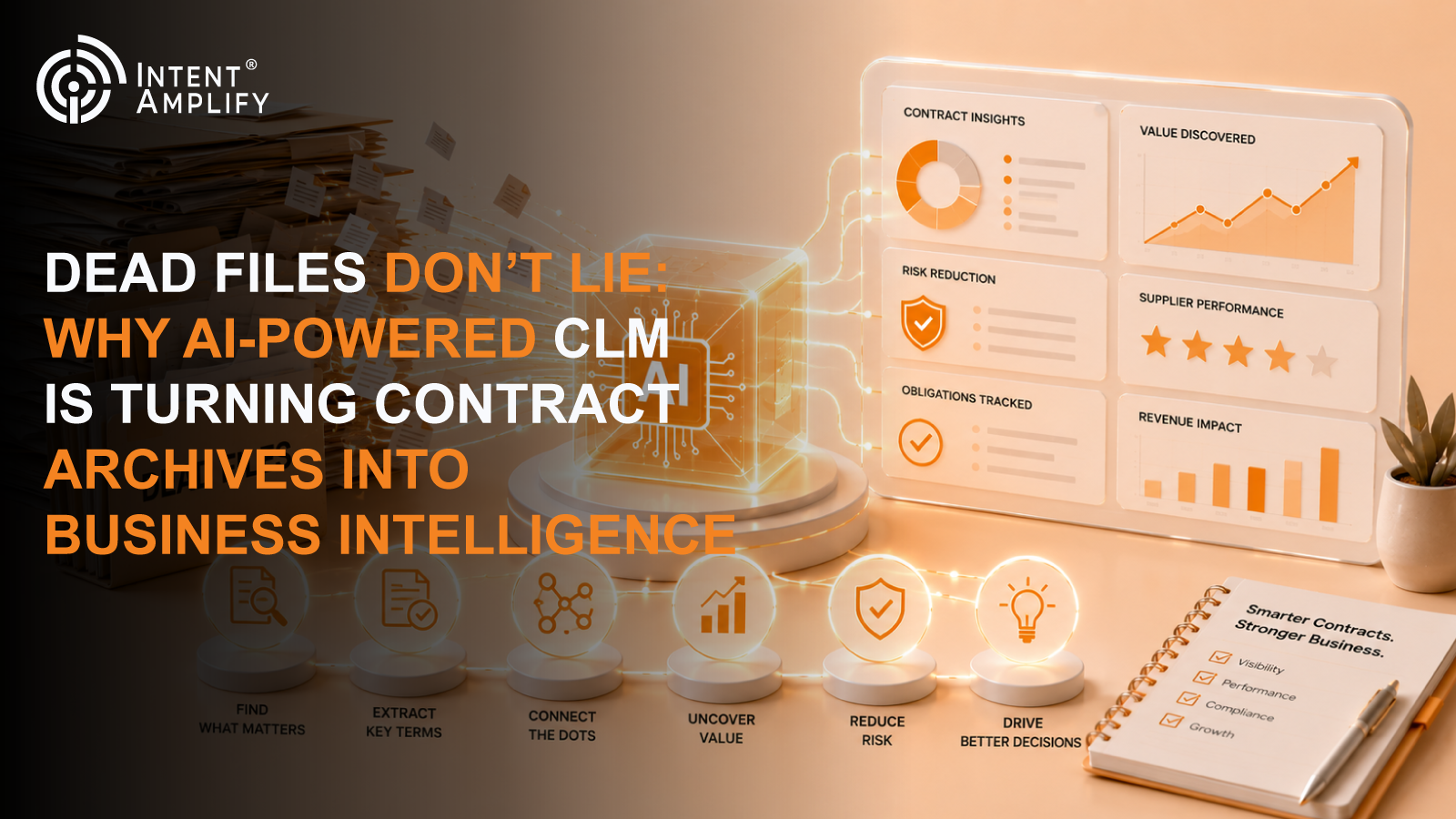
AI-powered CLM applies natural language processing and machine learning to contract portfolios so that clauses, renewal dates, obligations, risk language, pricing terms, and service commitments can become structured data. Once that happens, the archive begins to behave less like storage and more like an intelligence layer.
Procurement can identify vendor agreements with auto-renewals approaching in the next quarter. Finance can see where escalation clauses may affect margins. Compliance can locate data-handling terms that require review after a regulatory update. Legal can compare non-standard language across regions or supplier categories without manually reading every file.
McKinsey reported that AI-enabled procurement tools can reduce time spent on procurement-related activities by 25% to 40%.2
That efficiency gain matters, but the deeper value is visibility. When agreement data becomes structured, teams stop depending on memory and start working from evidence.
Explore Agiloft’s guide, CLM + AI: From Locked Files to Living Intelligence, to understand how AI-powered CLM can help enterprise teams turn static contract files into searchable, structured, and actionable business intelligence.
From Hidden Terms to Decision-Ready Intelligence
This is where Agiloft’s role becomes important. The platform is built around a practical idea: contracts should not become invisible after signature. They should keep informing of business decisions.
With AI-powered CLM, renewal windows can become proactive alerts. Obligations can trigger workflows. Risk-heavy clauses can move into review queues. Contract data can flow across legal, procurement, finance, and compliance teams rather than staying locked inside static files.
That difference is more than operational convenience. It changes how executives manage exposure.
A chief legal officer can see which agreements carry unusual liability language. A procurement director can negotiate based on actual term visibility rather than supplier history alone. A chief financial officer can understand where underperforming agreements may be affecting value. A compliance leader can identify obligations before an audit or incident forces the issue.
In a mature CLM environment, the question is no longer, “Where is the agreement?”
The better question becomes, “What is this agreement telling us now?”
Agiloft’s CLM + AI: From Locked Files to Living Intelligence guide shows how contract data can move beyond storage and become decision-ready intelligence for legal, procurement, finance, compliance, and sales teams.
The Business Case Is Now Measurable
The case for AI-powered agreement management is no longer limited to process improvement. It has moved into measurable business performance.
Deloitte and DocuSign reported that organizations using AI-powered agreement management achieved nearly 30% higher return on investment than those relying on automation alone. 3
The same research found that legal teams using agentic contract management reclaimed 37% of their working time. 3
For legal departments already asked to support faster business cycles without proportional headcount growth, that is not merely an efficiency number. It is capacity returned to judgment, negotiation, and risk strategy.
Procurement teams in the study reported a 33% reduction in vendor spend, while sales teams saw 43% time savings on agreement-related work and 29% fewer deal delays tied to contracting friction.3
Those outcomes reveal why CLM should not be treated as a legal department tool alone. Contract intelligence affects revenue velocity, supplier economics, compliance readiness, negotiation quality, and executive confidence.
The Compliance Cost of Unread Agreements
Financial leakage is only part of the problem. Dormant agreements also carry regulatory consequences.
Vendor contracts often contain privacy obligations, breach notification terms, audit rights, data-processing requirements, service commitments, and security expectations. In healthcare, financial services, technology, and other regulated sectors, those terms shape real compliance exposure.
IBM reported that the global average cost of a data breach reached USD 4.44 million in 2025. 4
Strong internal policies mean little if contractual obligations remain invisible. When supplier commitments are scattered across disconnected records, organizations can lose sight of what is enforceable, monitored, and ultimately at risk.
The greatest exposures are rarely found in obvious clauses. They emerge from overlooked exceptions, service thresholds, renewal terms, indemnity provisions, privacy requirements, and obligations that have not been reviewed since signature. Effective contract intelligence brings those risks into view before they become costly problems.
Agiloft’s CLM + AI: From Locked Files to Living Intelligence guide is designed around a sharper enterprise challenge: signed agreements should not become passive records after execution. With AI-powered CLM, contract data can become searchable, structured, and actionable, helping teams surface obligations, renewal windows, pricing terms, service commitments, and risk language before those details are lost in static files.
Risk Minimization Requires More Than Good Drafting
Strong drafting matters, but a clause only creates value when the business can monitor, enforce, and act on it.
Too often, contract risk comes not from weak language but from weak post-signature infrastructure. Escalation rights may exist, but procurement still needs visibility when supplier performance drops below agreed thresholds. Privacy obligations may be clear, but compliance needs to know which commitments apply. Finance needs early warning on price changes. Legal needs to see non-standard terms before they become dispute triggers.
AI-powered CLM closes this gap by connecting contract language to action. It does not replace professional judgment; it gives teams the timely, reliable information they need to use that judgment well.
What Leaders Should Do Before Investing
A successful CLM program is not just a software deployment. It is an operating model decision.
The first step is visibility. Leaders should know how many active agreements exist, where they are stored, who owns them, which obligations are tracked, and how renewals are managed.
The second step is data readiness. AI performs best when files are centralized, searchable, classified, and governed. Poor metadata, inconsistent repositories, missing ownership, and weak access controls can slow value realization.
The third step is workflow alignment. Legal, procurement, finance, compliance, and sales should not operate from separate versions of contractual truth. Each function needs role-specific insight, but the underlying data must be trusted and consistent.
The fourth step is executive sponsorship. CLM succeeds when the business case connects to measurable outcomes: fewer missed renewals, faster reviews, stronger negotiations, improved compliance visibility, and lower value leakage.
For leadership teams evaluating AI-powered CLM, Agiloft’s CLM + AI: From Locked Files to Living Intelligence guide provides a focused view of how contract intelligence can improve visibility, decision-making, and measurable business value after signature.
About Intent Amplify
Intent Amplify helps B2B technology brands connect with the right decision-makers through intent-led demand generation, content strategy, account-based marketing, lead generation, and performance-focused digital campaigns.
We support cybersecurity, technology, software as a service, cloud, artificial intelligence, and enterprise solution providers by turning market insight into measurable pipeline opportunities. Through strategic content, targeted outreach, and data-driven campaign execution, Intent Amplify helps brands improve visibility, strengthen buyer engagement, and accelerate growth.
To learn more or connect with our team, visit: Intent Amplify
Conclusion
Dead files do not lie. They wait.
Every signed agreement contains value, risk, rights, and obligations. The issue is not that enterprises lack information. The issue is that too much of that information remains silent after signature.
AI-powered CLM changes the economics of visibility. It gives legal, procurement, finance, compliance, and sales teams a way to read across the portfolio continuously rather than occasionally. It turns dormant language into operational intelligence.
For executives, the message is clear. Agreements should not disappear after signing. They should keep informing the business.
Organizations that make that shift will negotiate with stronger evidence, manage suppliers with greater discipline, reduce compliance blind spots, and recover value hidden in plain sight. Those who do not will continue carrying risk inside documents they already own but no longer truly read.
References
-
McKinsey & Company, Contracting for Performance: Unlocking Additional Value, 2018
-
McKinsey & Company, Transforming Procurement Functions for an AI-Driven World, October 2025
-
Deloitte and DocuSign, Capitalizing on AI: How Automated Agreement Workflows Drive ROI, April 2026
-
IBM, Cost of a Data Breach Report 2025, July 2025