
Executive Overview
Contracts define how an enterprise buys, sells, renews, complies, performs, takes risks, and protects value. Yet in many large organizations, the contract portfolio still behaves like a collection of locked files rather than a source of living business intelligence. Agreements may be stored in a contract repository, sourcing platform, enterprise resource planning system, shared drive, or legal archive, but the data inside those agreements is often difficult to search, validate, analyze, or act on when legal, procurement, finance, or executive teams need answers quickly.
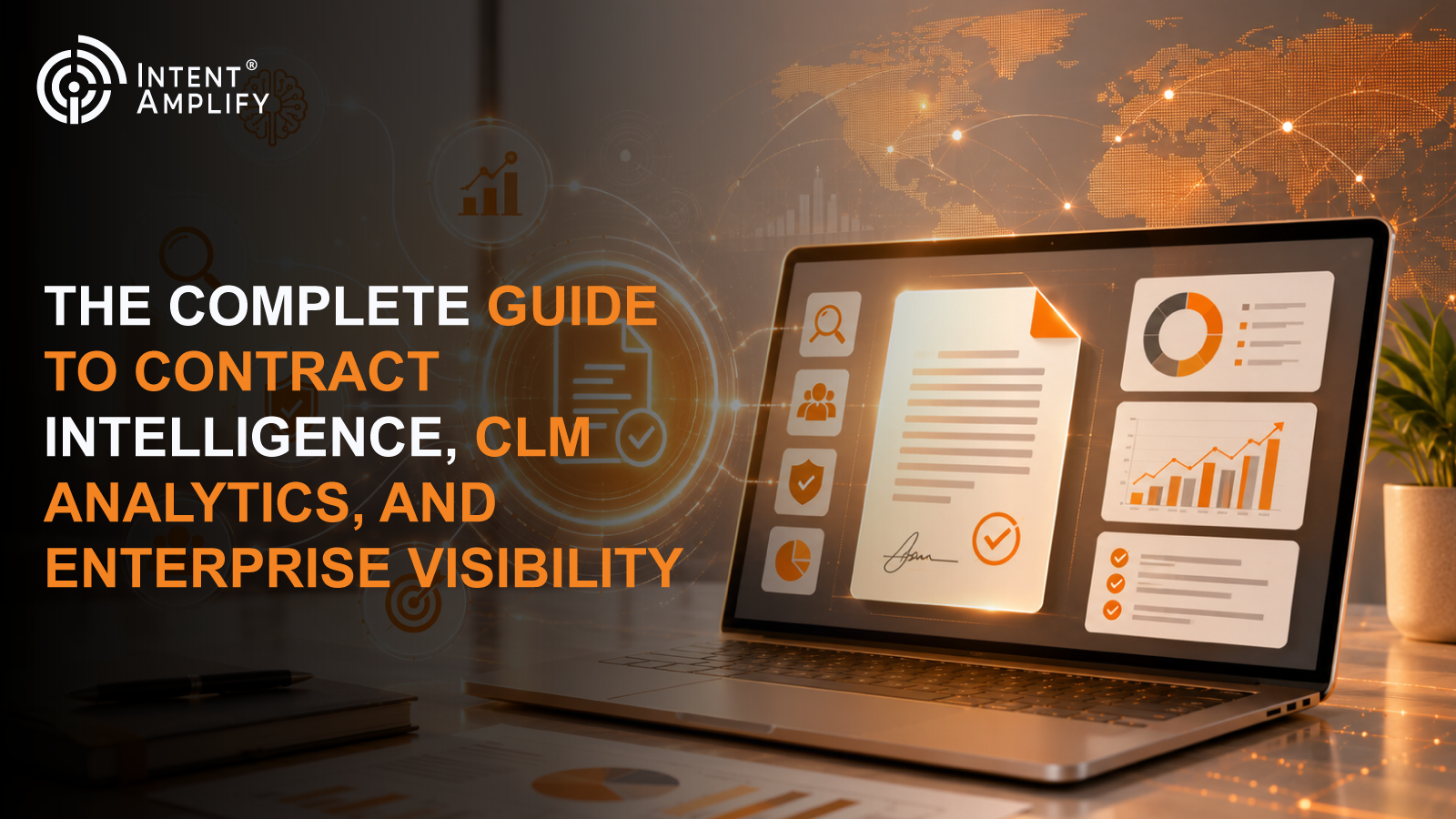
Agiloft’s CONTRACTING DATA YOU CAN TRUST report is built around this exact challenge. The message is clear: modern contract lifecycle management should not stop at document storage. It should turn trusted contract data into actionable intelligence that helps teams surface obligations, track renewals, flag contract risk, monitor compliance, and improve enterprise visibility. Download Now
This guide explains how contract intelligence, CLM analytics, and AI contract management can help enterprises move from reactive contract administration to proactive contract governance. The focus is practical: legal teams need better risk visibility, procurement teams need supplier contract intelligence, and executives need a dependable view of obligations, commitments, and exposure across the business.
1. The Shift from CLM Storage to CLM Intelligence
Traditional contract management focused heavily on getting agreements into one place. That was a necessary step, but it is no longer enough. A centralized contract repository can answer where a contract is located. It does not automatically answer what the contract requires, what obligations are approaching, which clauses create risk, which renewals need attention, or where value is being lost.
Contract intelligence changes that operating model.
Instead of treating contracts as static documents, contract intelligence treats them as structured business data. It makes contracts searchable, measurable, and connected to the workflows where decisions are made. This matters because legal operations, procurement analytics, vendor contract management, compliance monitoring, and executive reporting all depend on trustworthy contract data.
Modern CLM software must therefore support more than authoring, approvals, and storage. It must enable contract data extraction, contract search, AI contract review, clause management, renewal tracking, obligation management, contract dashboards, and cross-functional reporting.
Table 1: From Contract Storage to Contract Intelligence
|
Legacy Contract Management |
Modern Contract Intelligence |
|
Stores signed agreements |
Extracts obligations, clauses, dates, and commitments |
|
Helps teams find documents |
Helps teams understand what contracts require |
|
Relies on manual review |
Uses AI contract management to surface insights faster |
|
Supports one department |
Connects legal, procurement, finance, and executives |
|
Tracks activity |
Measures risk, compliance, renewal, and performance signals |
|
Answers to a question are urgent |
Alerts teams before risk, cost, or missed value appears |
2. Why Trusted Contract Data Is the Foundation
AI-powered CLM is only as reliable as the contract data beneath it. If contract records are incomplete, clause libraries are inconsistent, metadata is missing, or ownership is unclear, AI may create faster answers without creating dependable answers. That is a dangerous outcome for enterprise contract management because contracts contain sensitive commercial, legal, financial, and compliance information.
Trusted contract data requires more than digitization. It requires governance.
Organizations need clear rules for what data is extracted, how it is validated, who owns it, where it flows, how it is updated, and how it connects with ERP, CRM, sourcing, procurement, and legal operations systems. Without that discipline, contract analytics becomes difficult to trust, and AI contract review becomes difficult to scale.
McKinsey’s 2025 State of AI research found that 88% of organizations report regular AI use in at least one business function, while 62% of respondents say their organizations are at least experimenting with AI agents. Yet McKinsey also notes that most organizations remain in experimentation or pilot stages, with only about one-third reporting scaled AI programs across the enterprise.²
For CLM leaders, the signal is important: AI adoption is moving quickly, but enterprise value depends on data readiness, workflow redesign, and governance.
Flowchart: The Trusted Contract Data Path
Contract Documents
↓
AI Contract Data Extraction
↓
Validated Metadata and Clause Data
↓
Centralized Contract Intelligence Layer
↓
CLM Analytics and Contract Dashboards
↓
Legal, Procurement, Finance, and Executive Decisions
3. CLM Analytics: Turning Contracts into Business Visibility
CLM analytics allows organizations to move beyond individual contract review and understand patterns across the entire contract portfolio. This is where contract lifecycle management becomes strategically valuable.
For legal leaders, CLM analytics can show clause deviations, nonstandard language, indemnity exposure, renewal risk, compliance gaps, and contract risk trends. For procurement leaders, it can show supplier obligations, renewal windows, spend commitments, vendor consolidation opportunities, and supplier performance terms. For executives, it can show portfolio-level exposure, governance issues, and contractual commitments across the enterprise.
Contract dashboards should not simply display activity counts. They should answer business questions.
Which high-value contracts renew in the next quarter? Which suppliers have obligations that are not being monitored? Which agreements contain nonstandard risk terms? Which contracts create compliance exposure? Where does the business lack visibility into commitments? Which contracts support vendor consolidation or procurement optimization?
These are the questions that turn contract analytics into decision intelligence.
Table 2: CLM Analytics by Persona
|
Persona |
Visibility Need |
CLM Analytics Use Case |
|
Legal and Contract Leadership |
Risk, clauses, obligations, and compliance |
Clause deviation tracking, contract risk management, and compliance monitoring |
|
Procurement and Supply Chain |
Supplier commitments, renewals, and spend |
Vendor contract management, renewal alerts, and supplier obligation tracking |
|
Finance |
Spend exposure and commercial commitments |
Contract dashboards, renewal forecasting, and commitment visibility |
|
Executives |
Governance, risk, and board-level reporting |
Enterprise visibility into obligations, exposure, and contract performance |
|
Compliance and Risk |
Regulatory and contractual controls |
Contract compliance tracking, audit readiness, and obligation management |
4. Procurement Intelligence: From Supplier Files to Supplier Insight
Procurement teams often feel the cost of weak contract visibility first. Supplier contracts may be scattered across sourcing platforms, ERP systems, inboxes, shared folders, and contract repositories. Renewal tracking may depend on spreadsheets. Supplier obligations may only become visible when a dispute, audit, or performance issue forces the team to search.
That model is reactive.
Contract intelligence gives procurement teams a more proactive operating model. With trusted contract data, procurement can monitor renewal windows, compare supplier commitments, identify duplicate vendor contracts, support vendor consolidation, reduce procurement costs, and improve supplier performance management. Procurement analytics becomes stronger because it is informed by the actual contract terms, not just spend records or supplier profiles.
This matters for supply chain resilience. A supplier relationship is not fully understood unless the business can see what the supplier committed to, what service levels apply, what compliance obligations exist, and what rights the enterprise has when performance breaks down.
Flowchart: Procurement Contract Intelligence Model
Supplier Contract Portfolio
↓
Contract Data Extraction
↓
Obligation, Renewal, and Spend Commitment Mapping
↓
Procurement Analytics and Supplier Visibility
↓
Vendor Consolidation, Risk Reduction, and Better Negotiation Timing
5. Legal Operations: Earlier Risk Insight and Less Manual Search
Legal teams are often asked to manage rising agreement volume while providing faster business support. Providing support becomes difficult when risk management depends on manual search, clause comparison, spreadsheet tracking, and ad hoc reporting.
AI review and contract intelligence can reduce the burden when the underlying data is reliable. Legal teams can identify non-standard clauses, compare language against approved positions, summarize key terms, support clause management, and monitor compliance. AI does not replace legal judgment; it helps apply that judgment earlier and with better context.
A legal operations leader may need to know which agreements contain unusual limitation-of-liability language, which require upcoming data protection reviews, or which business units still use outdated templates. Without contract intelligence, those answers can require significant manual effort. With AI-powered CLM, they become portfolio visibility questions rather than document-hunting exercises.
The strategic result is a legal team that spends less time reconstructing facts and more time advising the business.
6. Executive Visibility: Contract Intelligence as Governance Infrastructure
Executive sponsors care about contract intelligence because contracts define material business commitments. A CEO, CFO, COO, chief compliance officer, or chief risk officer may not need to review every agreement, but they do need confidence that the organization can answer high-stakes questions quickly.
What obligations has the enterprise accepted? Which renewals create financial exposure?
Where are suppliers underperforming against contractual commitments?
Which contracts create compliance or audit risk?
Which obligations matter during M&A, restructuring, market expansion, or regulatory review?
Microsoft’s 2026 Work Trend Index surveyed 20,000 workers using AI across 10 countries and analyzed trillions of anonymized Microsoft 365 productivity signals, concluding that organizations need to redesign operating models around human judgment, AI execution, and better work systems. ³
Contract management is part of the same transformation.
AI-powered CLM delivers the greatest value when embedded within redesigned legal, procurement, and executive workflows rather than deployed as a standalone search layer.
Table 3: Executive Contract Visibility Questions
|
Executive Question |
Contract Intelligence Response |
|
What have we committed to across the enterprise? |
Portfolio-level obligation and commitment visibility |
|
Where are contract risks concentrated? |
Risk dashboards by clause, supplier, region, or business unit |
|
What renewals may affect cost or continuity? |
Automated renewal tracking and financial exposure reporting |
|
Are suppliers meeting contractual obligations? |
Supplier performance and obligation monitoring |
|
Are we prepared for an audit or board review? |
Governed contract inventory and compliance visibility |
7. AI Governance and Trustworthy Contract Intelligence
Contract data contains sensitive information: pricing, liabilities, customer commitments, supplier terms, compliance duties, payment obligations, data protection language, and dispute provisions. Applying AI to that information requires governance from the beginning.
NIST’s AI Risk Management Framework is designed to improve the ability to incorporate trustworthiness considerations into the design, development, use, and evaluation of AI systems.⁴
For CLM leaders, that principle translates into practical controls: approved data sources, validated extraction rules, human review for high-risk clauses, role-based permissions, audit trails, explainability for AI-assisted outputs, and clear accountability for contract intelligence workflows.
Trustworthy AI matters because contract intelligence must support decisions that may affect cost, compliance, supplier relationships, and legal exposure. If teams cannot explain where a contract insight came from, how it was generated, or whether it was reviewed, the insight may not be dependable enough for enterprise decision-making.
Table 4: Governance Controls for AI-Powered CLM
|
Governance Area |
Practical Control |
|
Data source control |
Use approved repositories and validated contract records |
|
Extraction reliability |
Validate key dates, obligations, clauses, and commercial terms |
|
Human review |
Require legal or procurement review for high-risk outputs |
|
Access management |
Apply role-based permissions by function and sensitivity |
|
Auditability |
Maintain logs for AI-assisted search, review, and outputs |
|
Continuous improvement |
Review accuracy, exceptions, and missed obligations regularly |
8. Building the Enterprise Contract Intelligence Roadmap
A strong contract intelligence strategy should start with business outcomes, not technology features. Legal leaders may prioritize risk visibility and clause control. Procurement may prioritize supplier obligations and renewal tracking. Finance may prioritize spend commitments and contract dashboards. Executives may prioritize governance, audit readiness, and enterprise visibility.
The roadmap should connect those goals into a single CLM operating model.
First, organizations should assess contract data readiness. This includes contract inventory, metadata quality, repository structure, clause libraries, renewal data, ownership, and system integrations. Second, leaders should identify high-value use cases where contract intelligence can reduce risk or improve performance quickly. Third, teams should define governance rules for AI contract review, data extraction, access, and validation. Fourth, CLM analytics should be designed around executive, legal, and procurement questions rather than generic reporting.
Finally, the organization should measure outcomes. Useful measures include renewal risk reduction, faster contract search, improved compliance visibility, fewer missed obligations, better supplier tracking, reduced manual review effort, and more timely executive reporting.
Flowchart: Contract Intelligence Roadmap
Assess Contract Data Readiness
↓
Prioritize High-Value Use Cases
↓
Define AI and Data Governance
↓
Connect CLM, ERP, CRM, and Procurement Systems
↓
Build Role-Based Dashboards
↓
Measure Risk, Renewal, Compliance, and Procurement Outcomes
9. What Agiloft Brings to the Conversation
Agiloft is positioned for this conversation because its campaign is centered on moving contracts from locked files to living intelligence. That distinction matters for enterprises that already store contracts but still lack visibility into obligations, renewals, risks, and commitments.
For legal and contract leaders, the value is reduced manual review, earlier contract risk visibility, and stronger compliance monitoring. For procurement and supply chain leaders, the value is supplier contract intelligence, automated renewal alerts, and clearer visibility into commitments across the supplier base. For executive sponsors, the value is a trusted view of contract governance, risk exposure, and business commitments.
Modern CLM decisions rarely belong to one function. The strongest contract lifecycle management strategy supports legal operations, procurement optimization, contract compliance, finance visibility, and executive governance together.
Access Contracting Data You Can Trust
Agiloft’s guide gives enterprise legal, procurement, and executive teams a practical framework for turning static contracts into trusted business intelligence. The guide explores how AI-enabled CLM can help surface obligations, track renewals, flag risks, and build contract visibility without adding manual review burden.
About Intent Amplify
Intent Amplify helps organizations move from market insight to measurable growth through GTM strategy, demand intelligence, pipeline activation, executive roundtables, sponsored research, targeted content, webinars and panels, vendor intelligence, and strategic consulting. For teams that need sharper positioning, stronger executive engagement, and more effective activation, Intent Amplify connects strategy, content, and market intelligence into a practical growth engine.
Conclusion
Contract intelligence is becoming a business operating capability because contracts contain the commitments that shape enterprise risk, cost, compliance, and performance. A contract repository can store documents, but only trusted contract data. CLM analytics and AI-powered contract management can help the enterprise understand what those documents require.
Legal teams gain earlier risk insight. Procurement teams gain better supplier visibility. Finance teams gain clearer commitment data. Executives gain a stronger governance view of the business.
The complete guide to modern contract intelligence begins with a simple principle: contracts should not remain locked files. They should become trusted, governed, and actionable intelligence that helps the enterprise make better decisions before risk, cost, or missed value appears.
Presented for Agiloft
Published and Distributed by Intent Amplify
References
-
Agiloft and IntentTechPub (2026). Contracting Data You Can Trust. Available at: http://intenttechpub.com/POC/agiloft/contracting-data-you-can-trust.html
-
McKinsey and Company (2025). The State of AI in 2025: Agents, Innovation and Transformation. Available at: https://www.mckinsey.com/capabilities/quantumblack/our-insights/the-state-of-ai
-
Microsoft (2026). 2026 Work Trend Index: Agents, Human Agency and the Opportunity for Every Organization. Available at: https://www.microsoft.com/en-us/worklab/work-trend-index/agents-human-agency-and-the-opportunity-for-every-organization
-
National Institute of Standards and Technology (2026) AI Risk Management Framework. Available at: https://www.nist.gov/itl/ai-risk-management-framework