
logo
logo
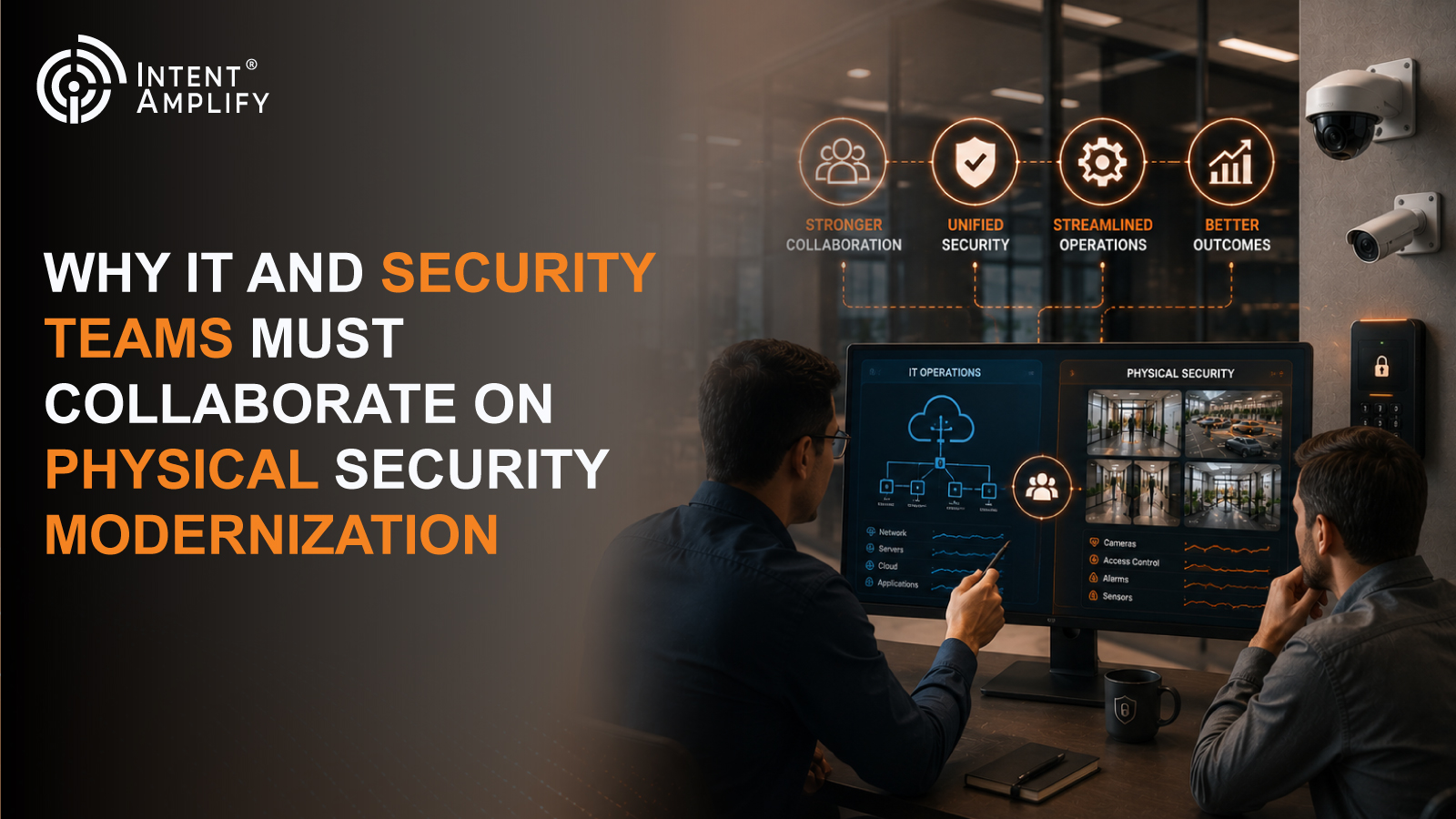
Why IT and Security Teams Must Collaborate on Physical Security Modernization

EXPERT INSIGHT

Why IT and Security Teams Must Collaborate on Physical Security Modernization

Learn why IT and security collaboration is essential for modernizing cloud-based physical security, AI video, access control, and enterprise resilience.

Physical security used to sound like a hardware conversation. Replace the cameras. Upgrade the badge readers. Add coverage in the warehouse. Fix the lobby access point. Maybe retire the ancient NVR humming in a closet, like it has seen too much.

That version of the problem is outdated.

Modern physical security now lives inside the enterprise technology stack. Cameras connect to cloud platforms. Access control depends on identity workflows. AI video search turns footage into operational data. Alerts move through communication tools. Evidence needs retention rules. Admin rights need governance. Every "physical" system now creates a digital footprint, and that footprint eventually touches IT, risk, compliance, or operations.

This is why IT and security teams can no longer modernize separately. Security understands threats, incident response, investigations, and site realities. IT understands architecture, identity, integrations, network resilience, and cyber exposure. One team knows what must happen in the field. The other knows whether the infrastructure can support it without becoming a fragile, expensive science project.

Physical Security Has Outgrown the Silo

Legacy physical security systems were built as separate environments. Video lived in one place. Access control lived somewhere else. Alarms, visitor workflows, and incident documentation often followed their own paths. That worked when systems were local, reactive, and mostly disconnected.

It does not work well for modern enterprises managing offices, warehouses, campuses, retail sites, healthcare facilities, plants, hotels, and distributed properties. These environments need centralized visibility, faster response, consistent access policies, and reliable evidence retrieval.

Genetec's 2025 State of Physical Security report found that 49% of end users still operate fully on-premises physical security deployments. That means many enterprises are modernizing from fragmented infrastructure, not from a clean cloud-ready baseline. The same report found that 57% of end users cite aging physical security and/or IT infrastructure as a top challenge. That pairing matters because the weakness is no longer only the camera or the badge reader. It is also the network, server dependency, patching model, access governance, and integration layer behind it.1

Collaboration Is Already Happening, Just Not Always Well

The industry has already moved toward convergence. Genetec reported that 77% of end users say physical security and IT departments already work collaboratively, with IT involved in more than half of purchasing decisions. The question is no longer whether collaboration is needed. The question is whether it is structured or improvised after something breaks. 1

There is a big difference between asking IT to approve a network requirement at the end of a project and involving IT before the pilot begins. The first approach creates delays, rework, and surprise constraints. The second builds a modernization plan around actual operating realities: identity management, bandwidth, cloud access, device security, remote administration, audit logs, and integration needs.

Security leaders should not have to become network architects. IT leaders should not have to define guard workflows. But both sides need to shape the roadmap together, because cloud-based physical security now depends on both operational and technical decisions.

AI Video Raises the Stakes

AI video security has changed what organizations expect from surveillance. Footage is no longer just something teams review after an incident. It is becoming searchable, alert-driven intelligence that can support faster response and better situational awareness.

The demand is rising fast. Genetec found that 37% of end users planned to implement AI-powered features in 2025, up from 10% in 2024. HID's 2025 research also found that 64% of security leaders were using or planning to implement AI-powered solutions. 2 |3

Those numbers are not just proof of interest. They reveal why governance matters. AI video creates questions around who can search footage, how metadata is handled, what events trigger alerts, how long data is retained, and how video connects with access logs or incident workflows. Without IT involvement, AI-powered physical security can become another unmanaged data layer with impressive demos and uncomfortable policy gaps.

The value is still clear. AI video can reduce manual footage review, accelerate investigations, and help teams identify relevant events faster. But AI without governance is just automation with a confidence problem.

Access Control Is Becoming Identity Infrastructure

Access control used to be simple to describe: badge in, door opens. That world is fading too.

Modern access control now connects with mobile credentials, biometrics, visitor systems, user permissions, employee lifecycle processes, and cross-site policy management. HID's 2025 report found that 61% of security leaders identify mobile identity proliferation as a top trend, with 37% already deploying and 32% planning to deploy mobile credentials. 3

This is where IT and security collaboration becomes very practical. Security defines who should access which spaces, under what conditions, and with what escalation rules. IT helps ensure provisioning, deprovisioning, authentication, logs, and integrations do not turn into a glorious mess of exceptions. Facilities and operations care about whether the system works smoothly at the actual door, where strategy meets people who just want to enter the building without a five-minute credential drama.

The Case for Platform Thinking

Point solutions may offer a quick resolution to problems, but may end up leaving an organization with fragmented systems that become increasingly complex to manage each year. As more elements such as video surveillance, access control, alarm systems, visitor management, AI, and cloud services become part of physical security, the importance of integrated management emerges. HID's Future of Physical Security Report 2025 revealed that 67% of security professionals and 73% of integrators and consultants noticed a trend toward software-based solutions that integrate video surveillance, access control, and intruder detection in a single package.3

Not every organization should move everything to the cloud at once. Hybrid models will remain common, especially where legacy infrastructure, bandwidth, regulation, or site complexity requires a phased approach. The real goal is not cloud for its own sake. It is manageability, resilience, and usable intelligence.

For teams moving from strategy to evaluation, it can help to see how cloud-managed video security, access control, and centralized administration function together across enterprise environments. Access the demo deck.

What Breaks Without Shared Ownership

Risk Area

What Happens

What Collaboration Improves

Ownership

Teams assume someone else owns standards or rollout decisions

Clear governance and decision rights

Integration

Video, access, identity, and alerts remain disconnected

Architecture planning before deployment

Access governance

Admin rights and footage permissions become inconsistent

Role-based access, SSO, audit logs, and reviews

Legacy drag

Old servers, NVRs, and controllers slow modernization

Phased migration and coexistence planning

Exposure risk

Remote access or management interfaces are misconfigured

IT-led security controls and monitoring

Weak business case

Modernization looks like replacement spending

Metrics tied to response, resilience, and efficiency

The exposure risk deserves special attention. CISA's 2025 Internet Exposure Reduction Guidance warns that critical infrastructure operators face heightened risk from internet-exposed systems. Physical security modernization cannot ignore that reality. A cloud-connected or remotely managed environment needs disciplined identity, configuration, monitoring, and access controls. A cleaner interface does not automatically mean a safer system. Annoying, but true.4

A Better Modernization Model

Strong modernization programs do not begin with a shopping list. They begin with sharper questions.

Which incidents take too long to investigate? Which sites are hardest to manage remotely? Where is access control inconsistent? What evidence is difficult to retrieve? Which legacy systems are creating risk? Which integrations would remove the most friction? What controls must be in place before AI video or mobile credentials scale?

From there, it's easier to determine their respective responsibilities. The security organization determines operational success criteria. The information technology organization confirms requirements around architecture, identity, exposure, and integration. The facilities and operations groups stress test the solution against actual site environments. Risk and compliance establish retention, privacy, and audit expectations. Finally, leadership must decide if it's worth funding and scaling.

The proper metrics ensure accountability: time to find video footage, time to confirm incident validity, credential issuance time, number of exposed interfaces, number of users on identity management, audit log coverage, and site management automation. In their absence, any discussion of modernization amounts to nothing more than a mood swing for enterprises.

The Strategic Case for Cross-Functional Physical Security Modernization

IT and security collaboration is not about inviting more people into meetings for ceremonial suffering. It is about recognizing that modern physical security now depends on shared infrastructure, shared data, shared risk, and shared outcomes.

For security leaders, the payoff is faster response and better visibility. For operations and facilities teams, it is smoother multi-site management. For risk and compliance leaders, it is stronger governance. For executives, it is a modernization case tied to resilience instead of another hardware refresh with a nicer invoice.

Enterprises that treat physical security as a connected platform will be better positioned to manage incidents, govern access, search video intelligently, and scale protection across complex environments. Those who keep treating cameras and doors as isolated assets will keep building silos with better branding.

The future of physical security modernization is cross-functional by design. Security defines the mission. IT protects the architecture. Operations keeps it grounded. Leadership measures whether it improves the business. That is how modernization becomes more than an upgrade. It becomes a safer, smarter, more resilient way to run the enterprise.

For more expert perspectives on cybersecurity, AI security, cloud risk, and enterprise technology trends, explore the latest insights from Cyber Technology Intelligence.

References

  1. Genetec -- State of Physical Security 2025 Report -- 2025
  2. Genetec -- New 2025 State of the Physical Security Industry Report Shows Accelerating Hybrid Cloud Adoption and Its Growing Strategic Influence -- December 2024
  3. HID -- 2025 State of Security and Identity Trends Report -- 2025
  4. Cybersecurity and Infrastructure Security Agency (CISA) -- Exposure Reduction Guidance -- 2025
Prabhanshi   Singh

Prabhanshi Singh

Research Analyst

Let us connect for more

IT & Security Collaboration for Physical Security