
Many operational delays emerge not because organizations lack information, but because decisions move through multiple reviews, approvals, and coordination steps before action occurs. As supply chains become more dynamic, the speed at which organizations interpret signals and respond to change is becoming increasingly important.
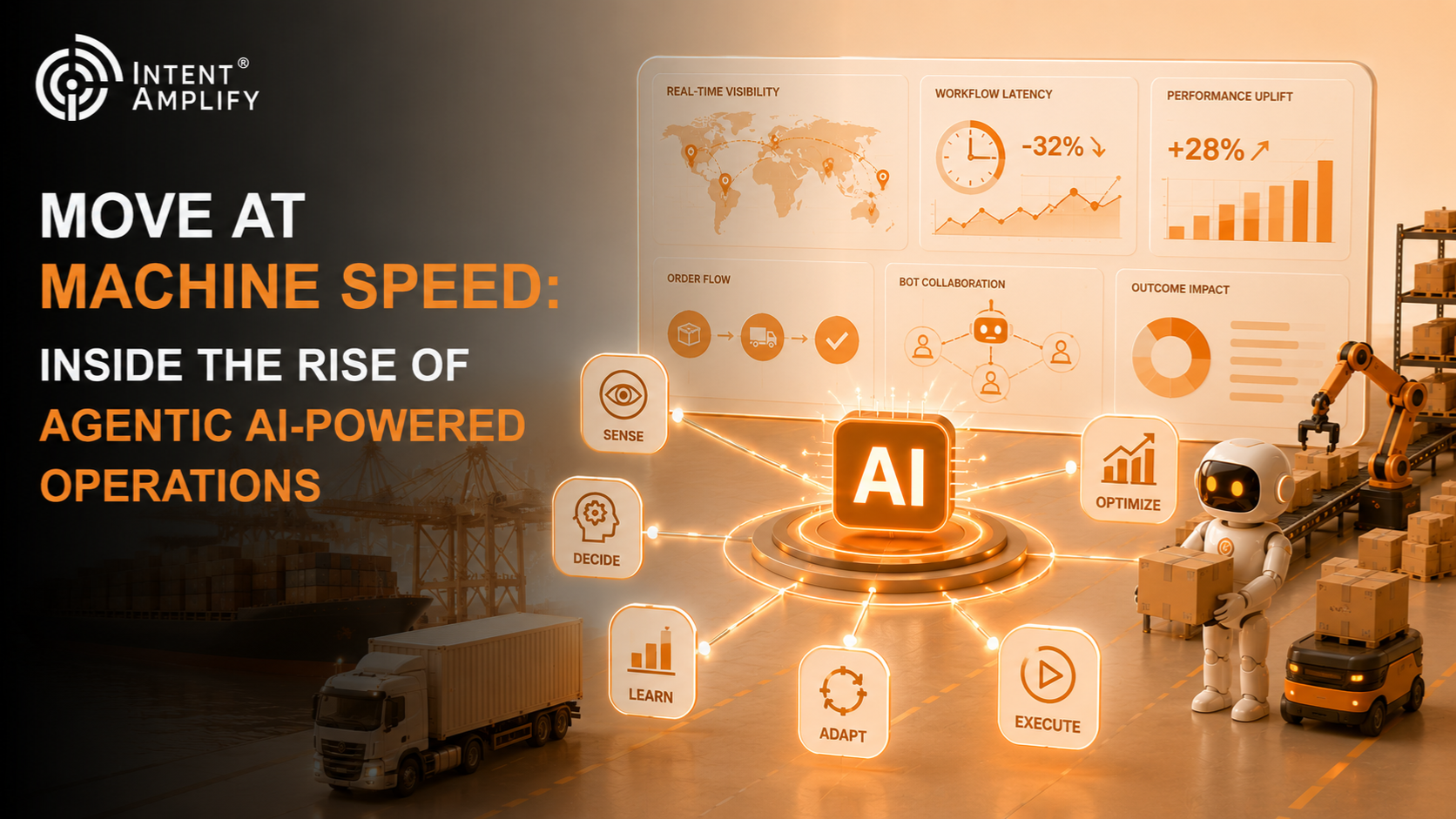
This challenge helps explain why agentic AI is attracting growing attention across supply chain and operations organizations. They shift supply chain work from passive monitoring to active orchestration. Instead of only showing what changed, agents can watch signals, reason through context, recommend actions, and route work to the right decision owner.
Supply Chain Now’s webinar, “AI That Moves at Velocity: Cut Through Latency with Agentic Workflows,” frames the operating problem clearly: many planning processes still run weekly or monthly, even though demand, supply, and financial conditions can shift hourly. The session brings together Zero100 and OMP to explore Signal-to-Plan and Inventory-to-Service workflows. 1
View the Supply Chain Now webinar
The discussion highlights a broader operational challenge: many organizations are still working to reduce the gap between recognizing a change and responding to it effectively.
Key Figures at a Glance
PwC’s 2026 Digital Trends in Operations Survey of 767 operations and supply chain leaders found 85% say they are ahead of competitors in digital transformation, yet 89% say technology investments have not delivered expected results. 2
Microsoft describes agentic supply chain architecture as connecting data, decisions, and actions.3
Microsoft describes a global pharmaceutical company using agentic architecture to unlock multi-million euro annual productivity gains. 4
OMP’s UnisonIQ brings always-on agents, optimization, machine learning, and explainable AI into supply chain planning workflows.
Viewed collectively, these findings suggest that organizations continue investing heavily in AI, automation, and digital transformation while still facing challenges in converting information into timely operational decisions. The emerging opportunity may be less about generating additional insights and more about improving the speed and quality of organizational response.
Figure: What Machine-Speed Operations Change
|
Old Operating Pattern |
Agentic Operating Pattern |
Business Benefit |
|
Wait for reports |
Monitor signals continuously |
Faster awareness |
|
Escalate manually |
Prioritize exceptions automatically |
Less drag |
|
Replan after disruption |
Refresh scenarios as conditions shift |
Better readiness |
|
Review trade-offs late |
Surface impact earlier |
Cleaner decisions |
|
Handoff across silos |
Route actions through connected workflows |
Faster execution |
Why Workflow Responsiveness Matters
Many organizations already have substantial visibility into operational performance. The challenge is often less about identifying issues and more about responding quickly enough when conditions change.
Agentic AI is increasingly being positioned as a way to reduce delays between signal detection, evaluation, and action. Agents can monitor demand, supply, inventory, cost, service, and financial signals. They can recognize when something has changed enough to matter, generate scenarios, compare options, and move the decision to the right team.
Rather than replacing human decision-makers, these systems are intended to provide earlier visibility, stronger context, and more timely recommendations.
Why Workflow Design Is Receiving More Attention
Workflow design is receiving greater attention because delays often emerge where planning, execution, and decision-making activities intersect. Organizations increasingly seek ways to reduce friction across these connected processes. Signal-to-Plan connects market, demand, supply, and financial signals to planning updates. Inventory-to-Service connects stock positioning to availability, replenishment, fulfillment, and customer promises.
Zero100’s Power Threads concept helps leaders see where AI value concentrates across end-to-end workflows. OMP’s UnisonIQ provides the planning layer: always-on agents, optimization, machine learning, and explainable AI embedded into supply chain decisions. The broader lesson is that organizations often achieve stronger outcomes when AI initiatives focus on high-impact workflows where delays already create measurable business consequences.
Why Faster Decisions Still Require Governance
Organizations are seeking faster decision-making without sacrificing accountability, visibility, governance, or operational control. Improving responsiveness while maintaining decision quality remains a central objective.
By reducing the time required to gather information, prioritize exceptions, evaluate scenarios, and coordinate responses, organizations may improve both operational responsiveness and workforce productivity.
Figure: Client Value from Agentic Operations
|
Client Need |
Agentic Capability |
Business Outcome |
|
Faster response |
Always-on signal monitoring |
Less delay |
|
Better service |
Inventory-to-Service coordination |
Stronger availability |
|
Planner capacity |
Automated exception prioritization |
More time for judgment |
|
Executive clarity |
Scenario comparison |
Faster alignment |
|
Governed speed |
Human-in-the-loop decisions |
Confidence before action |
Bottom Line
Machine-speed operations are not about removing people from supply chain decisions. They are about removing the waiting around people.
Agentic AI helps teams monitor, interpret, prioritize, and act faster while keeping governance and human accountability in place.
The winners will not be the organizations with the most dashboards. They will be the ones who turn signals into decisions before volatility turns into loss.
Reserve your seat to explore Signal-to-Plan and Inventory-to-Service workflows
Be Ready for What’s Next
Subscribe to Intent Amplify for insightful analysis of the adoption of artificial intelligence and digital transformation powered by data.
Key Executive Takeaways
-
Operational delays often emerge across planning, execution, and coordination activities.
-
Agentic AI is increasingly being applied to improve workflow responsiveness rather than simply automate tasks.
-
Faster decisions remain valuable only when supported by governance and accountability.
-
Organizations may achieve stronger outcomes when AI adoption begins with high-impact workflows where delays are already measurable.
References
-
Supply Chain Now and IntentTechPub (2025) AI That Moves at Velocity. Supply Chain Now and IntentTechPub, 2025.
-
PwC (2026) 2026 Digital Trends in Operations Survey. PricewaterhouseCoopers (PwC), 2026.
-
Microsoft (2025). From Intelligence to Impact. Microsoft Corporation, 2025.
-
Microsoft (2024) Supply Chain 2.0. Microsoft Corporation, 2024.