If you think a Go-to-Market (GTM) strategy is just about launching a new product, think again. In B2B, your GTM plan is the engine that drives customer acquisition, market relevance, and revenue growth. Whether youe launching a new product, entering a new market, or just trying to stay ahead of the curve, strong GTM strategies connect your product to the right people, at the right time, with the right message.
83% of B2B companies say their GTM strategies have become more data-driven in 2025, up from 68% in 2023 - Forrester B2B Revenue Survey 2025.
Most businesses treat GTM like a one-off event. That"s a mistake. The most successful B2B companies include GTM in their culture. It"s how they map messaging, pricing, distribution, and acquisition into one focused plan. So, how do you make sure your GTM strategy delivers results? Let"s break down three proven B2B GTM strategies that can double your ROI in 2025.
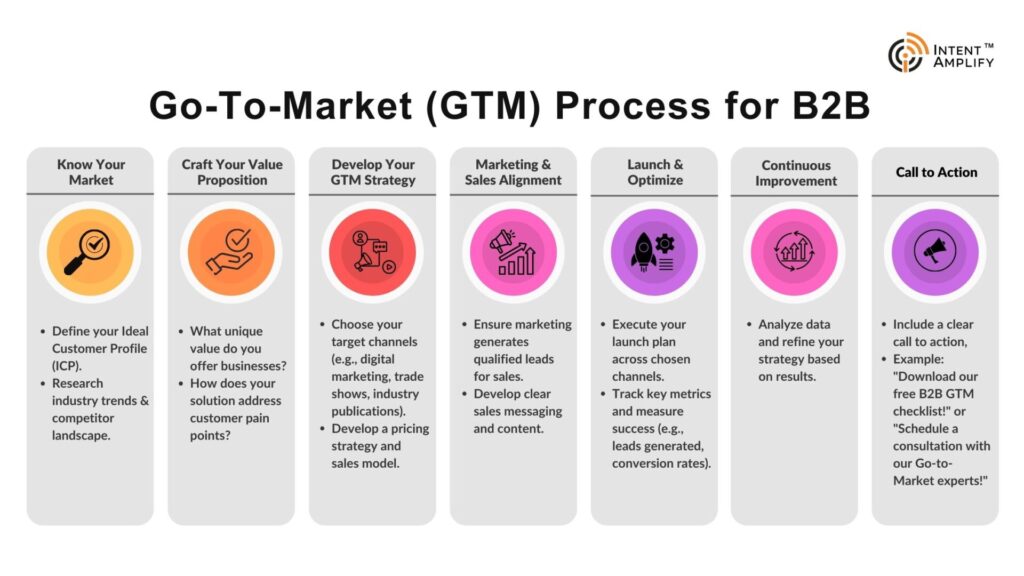
1. Know Your Buyer Better Than They Know Themselves
If you don"t deeply understand your buyer, your GTM strategy won"t get far. Let"s talk specifics:
a) Build Laser-Focused Buyer PersonasDon"t just ask who your customer is - ask what they"re struggling with. Start by building buyer personas that go beyond job titles and demographics. What are their pain points? What keeps them up at night, and what does their buying process look like?
Talk to your sales team. Interview customers. Dig into CRM data. When you understand how your buyers think and act, you can speak their language, and that"s where real traction begins.
b) Speak Directly to Their Pain PointsNobody wants to hear about your features. They want to know, "How will this help me hit my targets or solve my problems"
So leave the generic sales pitch. Focus on value. If your tool shortens sales cycles or increases MQLs by 30%, say that. Use real outcomes. Real words. Speak like you"re solving their problem, not selling a product.
c) Show Benefits, Not SpecsDon make your prospects do the math. Spell it out. Yes, your tool may have smart integrations or AI-powered engines, but what does that mean for the buyer? Frame every feature as a benefit. Will it save them time? Help them close more deals? Reduce churn? Lead with impact. That"s what land deals are.
2. Use Data to Power Every Move You Make
The best GTM strategies don"t guess and they analyze. You"ve got data. Use it. From automation to A/B testing, here"s how to make data your GTM cheat code:
a) Automate and Segment Like a ProMarketing automation isn optional anymore. It"s the backbone of precise targeting. Tools like HubSpot, Marketo, or Pardot let you segment audiences by behavior, persona, and lifecycle stage. This way, you"re not sending the same email to everyone. Instead, youe delivering personalized content based on where they are in the journey and what they care about.
b) Track the Metrics That MatterAre you tracking web traffic but ignoring your demo conversion rate? Set your GTM metrics with intent. Track key KPIs like lead-to-opportunity rate, sales velocity, customer acquisition cost (CAC), and content engagement. These tell you what"s working and what"s not. Monitor performance regularly instead of waiting until the quarter ends.
c) A/B Test EverythingIf youe not testing, youe assuming, and assumptions kill performance. Run A/B tests on your landing pages, email subject lines, CTAs, ad creatives - you name it. Even small changes can lift conversion rates dramatically. Let your audience tell you what works. With data on your side, your GTM plan becomes smarter, sharper, and far more profitable.
3. Get Sales and Marketing on the Same Page Finally
You can have the best strategy in the world, but if sales and marketing aren"t aligned, you"re losing revenue. Here"s how to fix that.
a) Define Expectations with SLAsStart by creating a Sales-Marketing Service Level Agreement (SLA). This isn"t just paperwork, it"s clarity. Come to an agreement on the criteria for a qualified lead. Define follow-up timelines. Set shared KPIs. That way, marketing doesn"t just dump leads over the fence, and sales doesn"t ignore them either. When both teams speak the same language, they close more deals. Period.
b) Use Content to Nurture, Not Just AttractSales can"t do all the heavy lifting, especially when buyers aren"t ready to buy yet. That"s where content marketing shines. Create content that supports every stage of the funnel: educational blogs, ROI calculators, industry benchmarks, comparison sheets. By the time a lead talks to sales, they"ve already bought into your story. Now it"s just about the close.
c) Equip Sales with the Right ToolsSales enablement isn"t about stuffing reps with decks - it"s about making them confident and consistent. Give them updated one-pagers, product briefs, use-case-driven pitch templates, and training. Arm them with real value so they can build trust from the first call. Aligned teams don"t just sell better, they scale better.
Common GTM Mistakes to Avoid
Even the best B2B teams trip up when rushing a Go-to-Market plan. GTM strategies aren"t easy. But most failures come down to a few repeatable (and avoidable) mistakes. Here what to watch for:
a) Skipping Buyer ResearchIf you build messaging without deeply understanding your buyer, you"re gambling with your results. Don"t assume you know what your audience wants; validate it. Talk to your customers. Look at behavioral data. Research the decision-makers. Guesswork here leads to missed connections and wasted spend.
b) Misaligned TeamsSales says the leads are junk. Marketing says sales isn following up. Sound familiar? Without tight alignment, your GTM machine falls apart. If sales and marketing don"t share goals, tools, and communication, your leads won"t convert, no matter how good your campaigns are.
c) One-Size-Fits-All MessagingYour buyers are not all the same. A CTO at an enterprise firm doesn"t think the same way as a startup founder. Tailoring your content and offers by segment isn"t optional - it"s the difference between ignored messages and booked demos.
d) Launching Without a Feedback LoopYou can"t just "set it and forget it." If you"re not collecting performance data and making adjustments mid-campaign, your GTM strategy will stall. Track. Analyze. Tweak. Then repeat. That"s how you stay relevant and competitive.
e) Ignoring the Post-Sale ExperienceGTM doesn"t end when the deal closes. Customer success and onboarding are part of your go-to-market engine. If users churn after the first month, your CAC skyrockets and ROI tanks. Focus on retention early - it pays long-term.
Choose the Right GTM Model for Your Product and Market
The right GTM model depends on your product type, customer base, deal size, and how your buyers prefer to engage. Are you selling a complex SaaS solution with a long sales cycle? Or a plug-and-play tool with a quick onboarding process? Your approach should reflect those realities.
Here are three common GTM models to consider:
- Product-Led GTM: The product sells itself through freemium plans, free trials, or self-serve onboarding. Great for SaaS with low friction.
- Sales-Led GTM: Reps drive the sale through demos, consultations, and relationship-building. Ideal for high-ticket B2B offerings.
- Channel-Led GTM: You rely on partners or resellers to bring your solution to market. Best for scaling across industries or geographies.
Don"t just choose a model because it"s trending"align it with your audience"s buying behavior. A mismatch can drain resources and confuse your market. But when does your GTM model match your buyer journey? That"s where the magic happens.
Your GTM Strategy Is Only as Strong as Your Execution
You don"t need a brand-new strategy. You need to understand your customer, use data like a weapon, and align your internal teams. Do that, and your GTM strategy won"t just launch products, it"ll launch revenue. The most effective GTM strategies are the ones that are continually tested, optimized, and scaled with purpose.
Ready to Build a High-Impact GTM Strategy?
If youe looking to scale your B2B business with a go-to-market strategy that delivers, Intent Amplify can help. We specialize in data-driven, buyer-focused GTM strategies that boost ROI from day one. Let"s talk about GTM that works.