

You've put in the effort to write valuable blog content. It's driving traffic. But here's the circle ends, and readers come, scroll, and leave without taking action. That means you're missing opportunities to build your sales pipeline. In B2B marketing, a blog should be more than informative. It should be strategically designed to convert.
This article will show you exactly how to turn blog readers into leads. From smart content structure to lead magnet placement and CTAs that work, we'll walk through methods that top-performing companies use to drive consistent lead generation from their blogs. Let's turn passive readers into your next warm leads.
1. Know Who You're Writing For: Define Your Ideal Customer Profile (ICP)
Before trying to convert blog visitors, you need clarity on who they are. Are they decision-makers? Users? Researchers? Knowing your Ideal Customer Profile (ICP) helps you tailor every piece of content for the right audience.
An effective blog lead-gen strategy starts with:
- Industry-specific problems
- Role-based solutions
- Buyer journey alignment (awareness → consideration → decision)
For example, if your ICP is a SaaS CMO, your blog should address growth metrics, ROI of tools, and campaign strategy. Generic content won't engage, much less convert.
Use CRM data, LinkedIn insights, and customer interviews to build a well-defined profile. When your blog speaks directly to your ICP's pain points, the lead conversion rate naturally increases.
2. Optimize for Search Intent: Align Content With What Readers Want
Readers arrive with questions. If your blog answers them well, they'll stick around and trust you more. That's why optimizing for search intent matters. Someone searching "best B2B lead gen tools" isn't ready to buy but is exploring options. A blog on that topic can lead to a lead magnet offering a comparison checklist or case study.
Match your blogs with user intent:
- Informational → Guides, how-tos (top-of-funnel)
- Navigational → Brand or product mentions (middle-of-funnel)
- Transactional → Demos, free trials, pricing (bottom-of-funnel)
Use tools like Google Search Console or SEMrush to spot intent-based queries. Embed relevant CTAs at the right stage. Meeting intent is the first step toward conversion.
3. Offer Lead Magnets Readers Want
You've earned a reader's attention. Now trade something of value for their contact info. Enter lead magnets - downloadable assets or tools that solve a specific problem. Top-performing lead magnets include:
- Checklists (e.g., "10-Point B2B Content Audit")
- eBooks and whitepapers
- ROI calculators or templates
- Email courses or webinars
The key? Relevance. The magnet must relate closely to the blog content. A blog about email outreach shouldn't offer a Facebook ads guide - it creates friction. Place lead magnet CTAs:
- Mid-article as slide-ins
- End-of-post banners
- In-line text prompts (e.g., "Want this as a checklist? Download here.")
Also, use gated forms with clear benefit statements and minimal fields. Keep the exchange simple: Value in return for an email.
4. Craft Compelling CTAs That Nudge Action
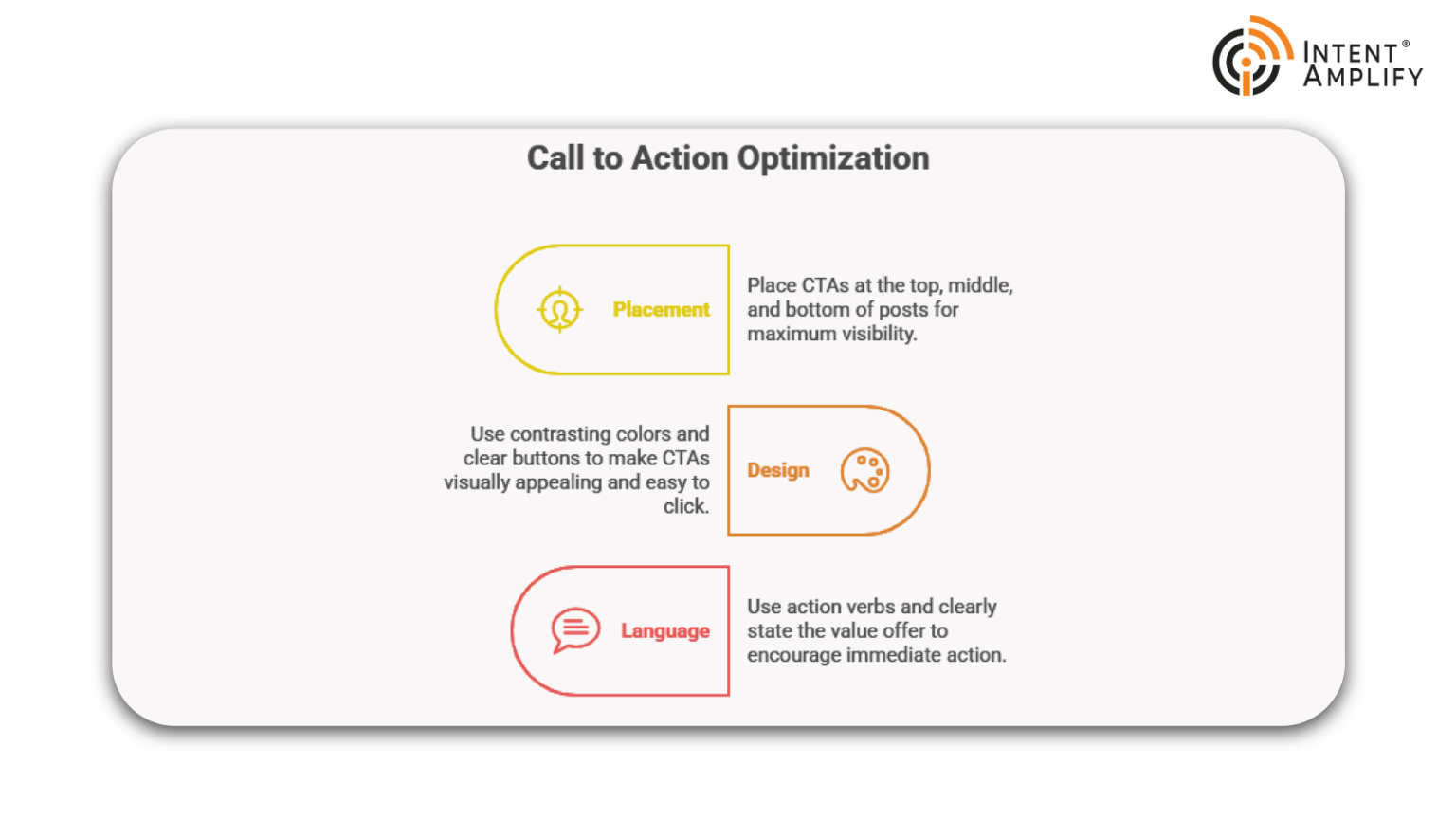
Not all CTAs are created equal. A weak "Click here" won't move your reader. A strong Call-to-Action is specific, benefit-focused, and aligned with user intent.
Use phrases like:
- "Get your free B2B campaign template"
- "Download the ROI calculator"
- "Access our lead scoring cheat sheet"
Best practices for CTAs:
- Placement: Top, middle, and bottom of posts
- Design: Use contrasting colors, clear buttons
- Language: Action verbs + value offer
A/B test CTA wording, size, and colors to see what converts best. Subtle tweaks often yield major improvements. And remember, CTAs shouldn't feel pushy. They should feel like the next logical step for a reader who found your content helpful.
5. Embed Lead Gen Forms Strategically
You don't have to wait until the end of a post to ask for info. Inline forms and popups can be powerful when used wisely. Types of blog form placements that convert:
- Mid-content embedded forms: Contextual and natural
- Exit-intent popups: Appear when a user tries to leave
- Scroll-based slide-ins: Triggered when a user reaches 60-70% of the content
Keep forms short - name, email, and one qualifier field at most. The more friction, the more drop-offs. Use tools like HubSpot, ConvertFlow, or OptinMonster to automate triggers based on reader behavior. When forms match intent and timing, lead capture rises.
6. Use Internal Links to Guide the Journey
Think of internal links as conversation guides. Each blog should naturally point the reader to the next step, whether that's a related article or a product page. Here's how to do it effectively:
- Link to middle-funnel content (case studies, comparison blogs)
- Link to bottom-funnel CTAs (demos, contact forms)
- Use anchor text that promises value ("See how Company X doubled leads")
Avoid overstuffing links. Instead, focus on leading the reader down a structured path. Strategic linking increases time-on-site and nudges visitors toward conversion.
7. Personalize the Experience With Smart Content
With tools like Clearbit or HubSpot Smart Content, you can show personalized messages based on who's visiting. For example:
- If a visitor is from a SaaS company, show SaaS-specific lead magnets.
- Returning visitors can see case studies or demo CTAs instead of beginner guides.
Personalization works because it feels tailor-made. Even changing headlines or CTA buttons based on industry or stage in the funnel can improve conversion by 30 - 50%. Use dynamic content to treat each blog visitor like a unique prospect. It builds trust and boosts results.
8. Retarget Visitors Who Don't Convert (Yet)
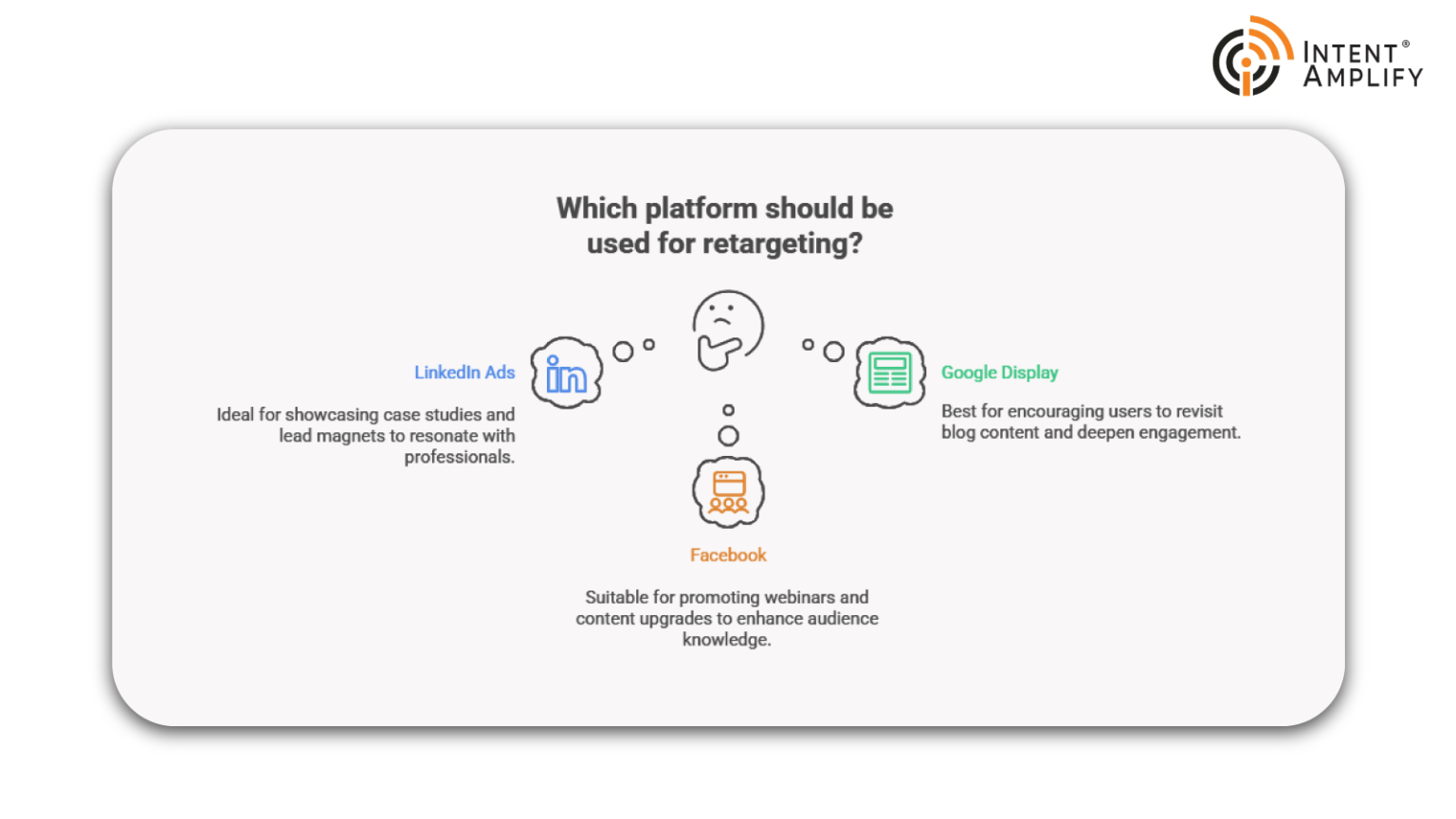
Even with the best content, most readers won't convert on the first visit. That's where retargeting comes in. Set up pixel-based retargeting with:
- LinkedIn ads: Show relevant case studies or lead magnets
- Google Display: Serve blog revisit prompts
- Facebook: Promote webinars or content upgrades
Segment your audience based on what they read:
- Read TOFU blogs → Show middle-funnel content
- Engaged 2+ posts → Show lead gen offer or demo CTA
A second or third visit often does the trick. Retargeting keeps your brand top-of-mind while subtly nudging conversion.
9. Analyze What's Working (and What's Not)
You can't improve what you don't track. To optimize lead generation, use tools like:
- Google Analytics: Check time-on-page, bounce rate, conversion paths
- HubSpot or ActiveCampaign: Track form submissions and lead sources
- Heatmaps (e.g., Hotjar): See where users scroll or drop off
Metrics to track:
- CTA click-through rates
- Lead magnet conversion rates
- Blog-to-lead attribution paths
Double down on top-performing posts. Repurpose or rework underperforming ones. Data tells you where readers lose interest and where they say "yes."
10. Build Trust With Social Proof and Testimonials
B2B buyers are cautious. Adding social proof within or near your blogs reduces hesitation. Examples:
- "Trusted by 1,000+ B2B teams" badge
- Testimonials from satisfied clients
- Case study snippets
- "As featured in" logos
You can even embed quotes or logos as sidebars within blog posts. These subtle elements make your brand more credible, encouraging visitors to engage and convert.
Turn Your Blog into a B2B Lead Engine
Your blog isn't just a content hub - it's a growth lever. But it needs the right setup. At Intent Amplify, we help B2B marketers transform content into qualified leads using tailored strategies, intent-driven campaigns, and multichannel outreach. Want to see how your blog can start converting today? Book a Free Content Audit now and let's unlock your next 100 leads.