

Youe publishing blogs, running ads, and optimizing pages, yet the leads aren qualified, and the bounce rates stay high. As a B2B marketer, youe likely felt the frustration of driving traffic that doesn convert. The problem? Youe targeting keywords that are too broad, too competitive, and too disconnected from actual buyer intent.
That's where long-tail keywords come in. These hyper-specific phrases let you meet your audience at the exact moment they're searching for a solution like yours, not weeks before, not when they're just browsing.
With the right strategy, you don't just increase visibility, you align your content with buying stages, shorten the sales cycle, and turn organic search into a pipeline engine. At Intent Amplify, we build long-tail keyword strategies that transform traffic into conversions and guesswork into ROI.
What Are Long-Tail Keywords?
Long-tail keywords are very specific search terms of three words or more. Unlike broad, competitive terms like "CRM software" or "marketing automation," long-tail keywords attempt to strike at niche searches like "affordable CRM for remote B2B sales teams." Such terms might have less search volume, but they bring visitors with high intent.
They derive their name from the "long tail" of the search demand curve, accounting for the staggering number of low-frequency, low-volume searches that comprise the majority of online searching. For B2B marketing, where buying entails complexity and value, long-tail keywords facilitate mapping your content to precise buyer searches. They are not keyword stuffing; they drive qualified traffic, enhance content relevancy, and promote deeper funnel engagement.
Why Long-Tail Keywords Matter for B2B Lead Generation?
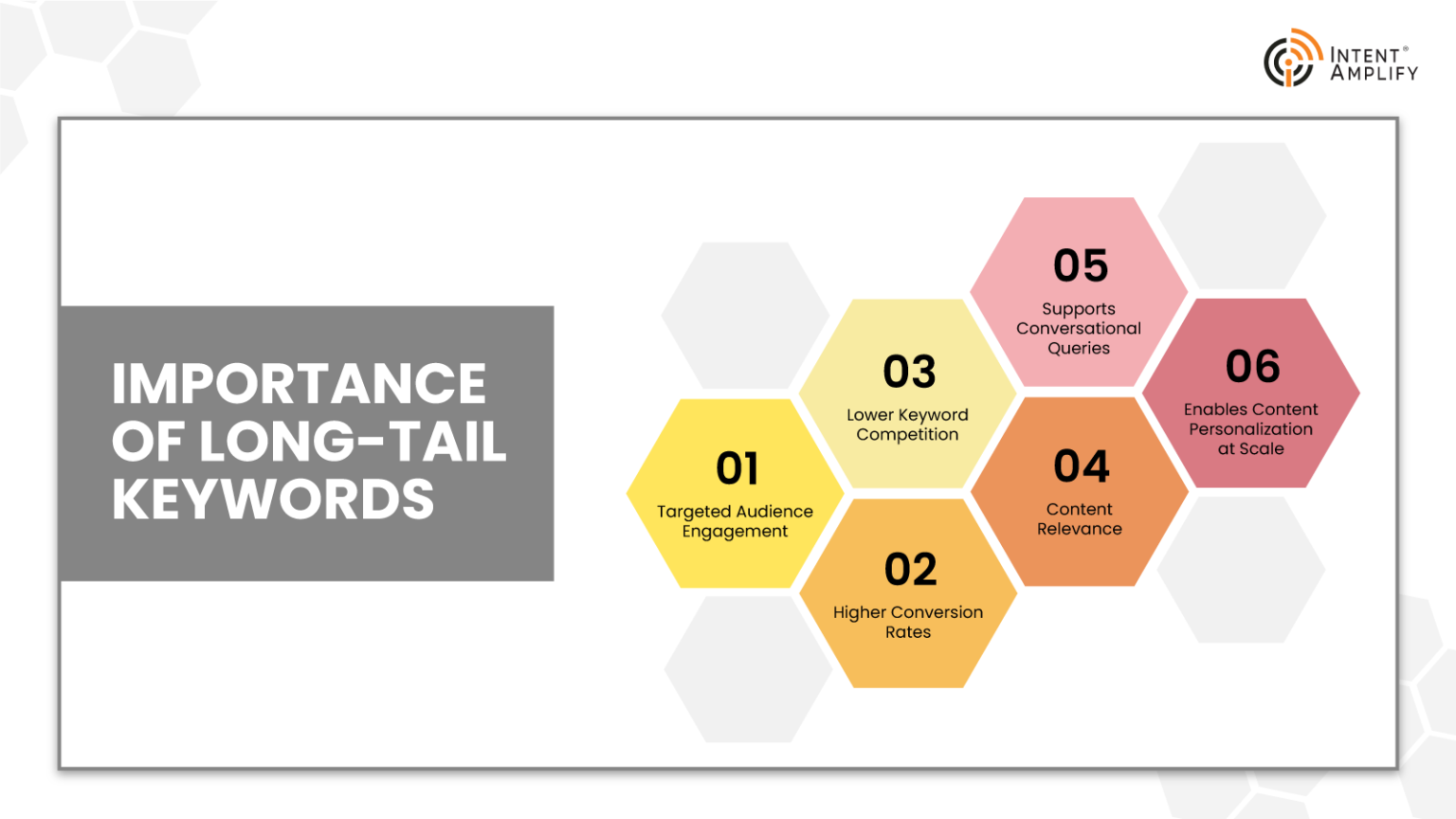 In B2B, stakes are high sales cycles are lengthy, buying committees are large, and the average deal size is large. Long-tail keywords are important because they enable brands to address decision-makers with problem-conscious, particular intent. An example would be a buyer looking for a "data compliance platform for fintech firms" who is already considering solutions.
The benefits of long-tail keywords are:
- Less Competition: Long-tail keywords are less competitive to rank for, particularly in niches that are highly competitive, such as SaaS, cybersecurity, and manufacturing.
- More Relevance: They align more closely with user intent, providing higher on-page behavior and dwell time.
- Better Conversions: Searchers using specific terms are closer to a purchasing decision.
- Supports Conversational Queries: Long-tail keywords often mirror how real users ask questions, making them ideal for voice search and conversational content formats.
- Enables Content Personalization at Scale: These keywords help create tailored content for specific buyer personas, industries, or stages of the funnel, enhancing relevance and engagement.
Strategic use of long-tail keywords can provide higher-quality traffic, lower customer acquisition costs, and authority for niche niches.
How Long-Tail Keywords Align with the B2B Buying Journey
B2B buying is no longer linear. It about various stakeholders browsing at various levels: awareness, consideration, and decision. Long-tail keywords enable marketers to target content exactly to these levels.
- Awareness Stage: Phrases such as "Why supply chain visibility is important in 2025" cater to users conducting initial research. These queries signal a desire to understand challenges and trends before narrowing down solutions.
- Consideration Stage: Searches like "best ERP systems for mid-size manufacturers" indicate the buyer is comparing available options, signaling deeper engagement with the problem and potential solutions.
- Decision Stage: Terms such as "buy AI-powered ERP for manufacturing companies" reflect transactional intent and are often used by stakeholders closer to the purchase decision.
Using long-tail keywords strategically across this journey improves content alignment with buyer intent, reduces bounce rates, and increases qualified engagement. It's not simply about generating traffic it's about providing content that directly answers real, contextual questions buyers have as they move toward conversion.
Building a Long-Tail Keyword Strategy for B2B Lead Generation
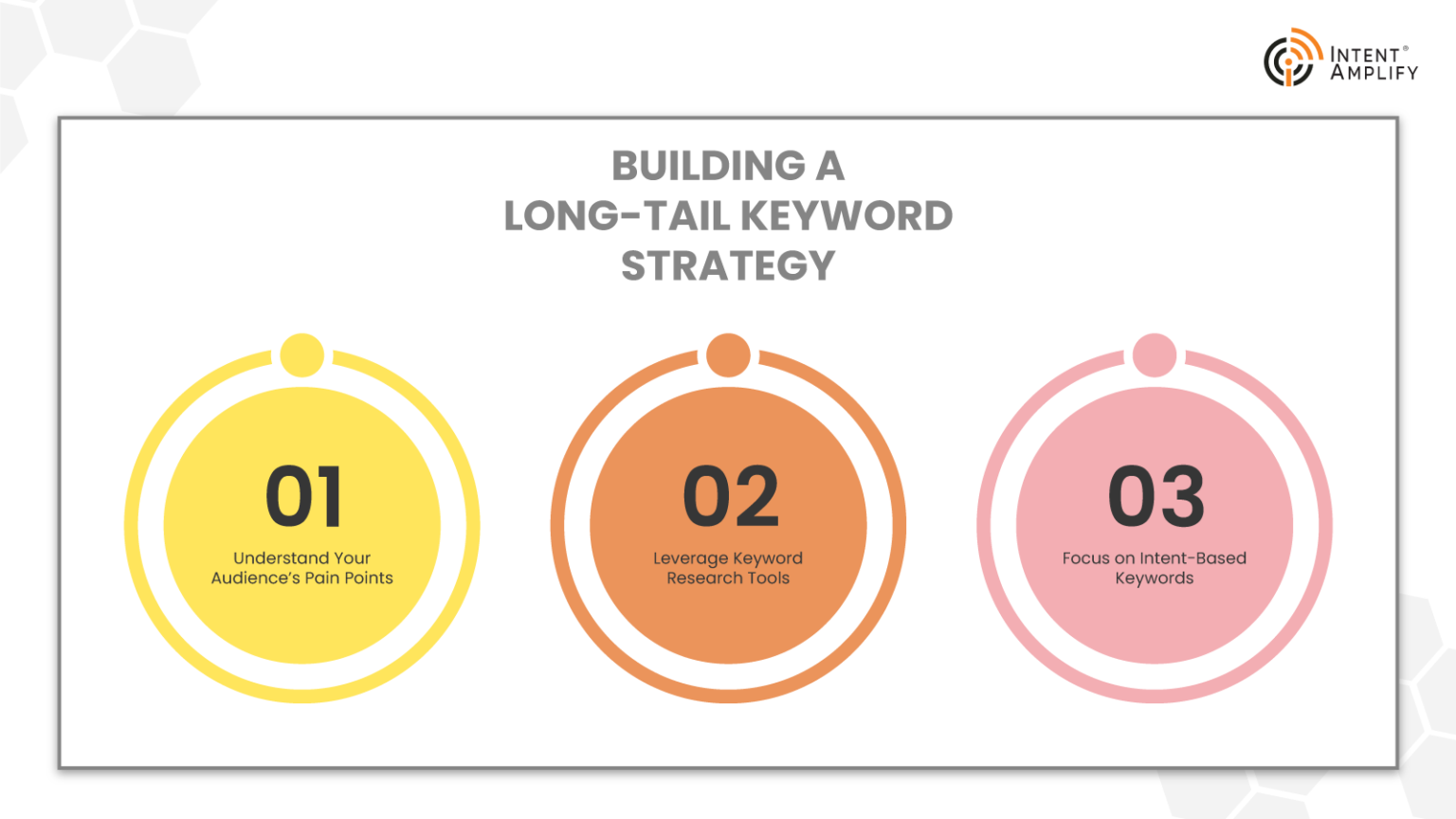 There is more to creating a good long-tail keyword strategy than stuffing keywords. It takes knowing your audience, competition spaces, and SEO strategies. Here is a tried-and-tested process:
- Begin with Core Themes: Determine the broad themes that are at the core of your products or services, such as "automating sales" or "compliance management."
- Use Keyword Research Tools: SEMrush, Ahrefs, and Google Search Console to assist you in discovering related long-tail variations with minimal effort.
- Assess Search Intent: Categorize keywords by intent informational, navigational, and transactional.
- Match Keywords with Content Types: Informational long-tails are best for blogs and guides, and transactional ones are best for product pages and landing pages.
- Build a Keyword Hub: Organize groups of content around long-tail keywords and link them internally to establish authority.
This process establishes a strong SEO foundation while addressing your B2B audience complicated needs.
Get to Know Your Audience Pain Points
The success with long-tail keywords is a matter of how effectively they target the audience pain points. B2B buyers aren browsing lazily they're searching to fix particular pains, be it "SaaS billing churn reduction" or "GDPR and HIPAA compliance tools."
To discover these pain points:
- Interview your sales reps.
- Examine support tickets and CRM comments.
- Scan forums like Reddit or Quora for authentic phrasing.
Once they discover and dig into them, they turn pain points into long-tail keyword opportunities. For instance, a CFO experiencing financial reporting issues would look for "top financial reporting tools for mid-sized technology firms." Constructing content from this keyword provides you with a competitive advantage in search and credibility.
Use Keyword Research Tools for Smarter Targeting
Hand-brainstorming won work only trusty keyword research tools will do. These tools expose variations your team won dream up themselves. Employ tools like:
- SEMrush: Provides long-tail keyword suggestions, difficulty levels, and SERP analysis.
- Ahrefs: Perfect for competitor keyword opportunity and content performance analysis.
- Ubersuggest or AnswerThePublic: Perfect for discovering question-based search intent.
- Google Autocomplete and People Also Ask: Perfect for lightning-fast, intent-packed keyword suggestions.
The beat volume considers keyword difficulty, CPC, SERP attributes, and trend numbers. Optimize for keywords that fit your audience needs but have space to rank.
Optimize Intent-Based Keywords That Fit the Funnel
All long-tail keywords are not equal. Some create top-funnel awareness; others drive conversions. Which is why going by search intent is a requirement.
- Informational Intent: These searches seek information. Example: "What is zero trust security"
- Navigational Intent: These search for a certain brand or website. Example: "Salesforce integrations for nonprofits."
- Transactional Intent: These show intent to act. Example: "Request demo for predictive analytics tool."
Your copy will trend like this:
- Educational blogs for high-funnel questions.
- Product comparison pages for mid-funnel intent.
- CTAs, demos, or landing pages for transactional keywords.
Bounce rates fall and conversion rates increase when long-tail keywords and intent are blended together.
Use Long-Tail Keywords in High-Impact Content
Long-tail keywords are not to be concealed they're to determine the content, intent, and tone of content. Use them in multiple content forms:
- Blog Posts: Develop informative or how-to content based on particular long-tail searches.
- Landing Pages: Develop focused pages that connect long-tail searches with buying intent.
- Case Studies: Depict specialized customer success stories related to keyword themes.
- Whitepapers & Ebooks: Address industry-specific challenges with downloadable content.
- Email Campaigns: Employ search terms that drive nurture streams and subject lines.
Each piece of content must speak to a certain segment of your audience, and long-tail keywords provide targeted specificity. Placed naturally, such keywords get content ranking higher and engaging more deeply.
Optimize Your Content Structure for SEO Performance
It isn just what you say, but how you present it that determines SEO impact. Content optimization around long-tail keywords demands structural and technical precision to help both search engines and users find value quickly.
- Use Keywords in H1, H2s, and Meta Tags: Incorporate your long-tail keywords naturally in key structural elements. This signals topical relevance to search engines and enhances scannability for users.
- Include FAQs: Embedding frequently asked questions using relevant long-tail queries can boost visibility in Google "People Also Ask" section and enhance snippet eligibility.
- Optimize Image Alt Text and URLs: Every asset on the page contributes to SEO. Embed keywords in image alt tags and URLs to support accessibility and search indexing.
- Internal Linking: Strategically link related content to strengthen site architecture and build topical authority across keyword clusters.
Example Implementation:
- Long-tail keyword: best email automation for B2B SaaS
- H1: Top Email Automation Platforms for B2B SaaS Businesses
- H2: The Things That Matter Most to SaaS Teams
- Meta Description: Learn the top email automation tools for B2B SaaS businesses aiming to grow..
Quality Over Quantity Keyword Targeting
Better to have less if it is better. Resist the temptation to stuff content with non-descriptive long-tail keywords. Instead, build descriptive, useful content around fewer high-intent keywords. Best practices:
- Cap each page at 1-2 central long-tail keywords.
- Don cannibalize keywords assign each one its content bed.
- Prioritize E-E-A-T: Expertise, Experience, Authoritativeness, and Trustworthiness.
- High-performing B2B content receives recommendations, inspires organic behavior, and nourishes quality leads, not quantity, but quality.
- Monitor, Analyze, and Optimize Keyword Performance
Long-tail keywords only work if they perform. Monitor their performance continuously to adjust your strategy:
- Organic Rankings: Monitor keyword changes with Moz, Ahrefs, or SERanking.
- Traffic Insights: Examine Google Analytics for time on page, source, and bounce rate.
- Lead Quality: Tie keyword-focused landing pages to CRM data to determine lead fit.
- Conversion Rates: Identify which keywords have a high MQL-to-SQL conversion rate.
Build dashboards to monitor clusters of keywords, pages, and conversion paths. Utilize these to double down on winners and pivot off non-performers.
Long-Tail Keywords Are a B2B Lead Generation Driver
Long-tail keywords create more than SEO success they provide deliberate visibility where it is most valuable: in front of decision-makers seeking specific solutions. If youe targeting mid-market SaaS buyers, enterprise IT managers, or niche verticals such as fintech or medtech, long-tail keywords help you:
- Modify content to reflect actual buyer intent
- Rank higher on low-competition, high-conversion keywords
- Build domain authority in micro-niches
To battle it out in the 2025 B2B digital landscape, keyword precision needs to trump guesswork. Need assistance with a performance-driven B2B keyword strategy? Reach out to Intent Amplify for customized solutions that move the needle.
Ready to Turn Search into Sales? Let Intent Amplify Lead the Way
Struggling to turn your content into real pipeline growth? At Intent Amplify, we don't just chase keywords; we engineer B2B strategies that speak to your buyers, rank for intent, and convert on impact. Whether you're in SaaS, cybersecurity, or a niche vertical, we decode what your audience is searching for and why.
From long-tail keyword strategy to conversion-optimized content, our data-driven approach ensures you get more than clicks; you get results. If youe ready to elevate your visibility, own your niche, and generate leads that close, let's build something powerful together.