
Enterprise contract management has reached a turning point. Many organizations treated contract lifecycle management as a repository problem: gather the agreements, file the signed versions, make them searchable, and hope the right people could find the right document when something important happened. That model may have worked when contract volumes were lower, but it is no longer enough for enterprises managing complex supplier networks, customer commitments, and regulatory obligations.
The central issue is that contracts already contain the intelligence enterprises need, but most organizations cannot access that intelligence quickly enough to guide decisions.
From Contract Storage to Contract Intelligence
A centralized contract repository remains valuable, but storage alone does not create visibility. A repository may show where a document resides, yet it does not automatically surface renewal dates, non-standard clauses, supplier obligations, compliance requirements, pricing commitments, or risk patterns across the portfolio.
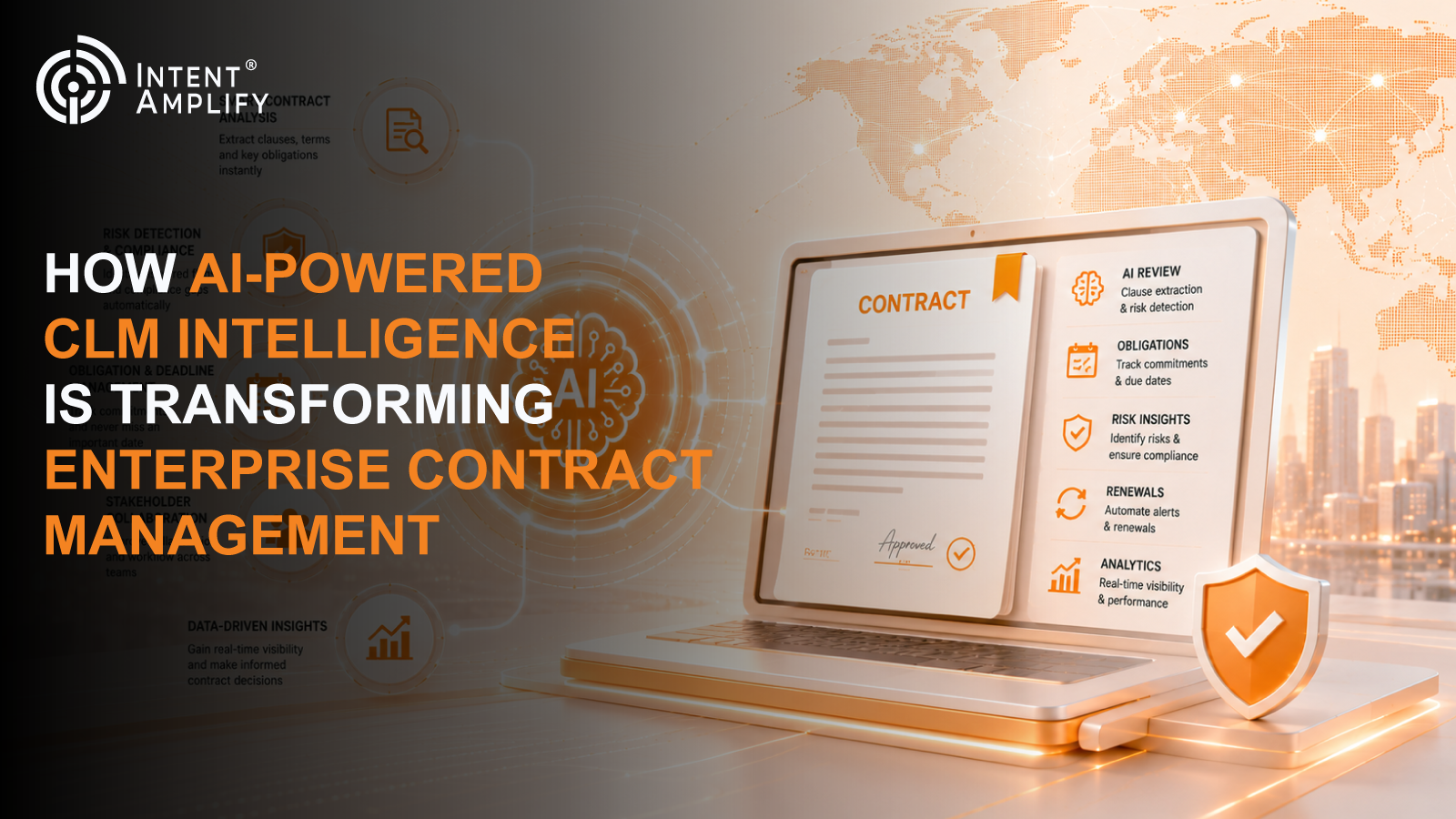
AI-powered CLM extends the operating model beyond storage and retrieval. It can extract data, identify key clauses, summarize obligations, improve search, and make analytics more useful for legal, procurement, and executive teams. The benefit is not only faster review, but a clearer and more reliable understanding of the commitments, risks, and opportunities embedded across the agreement portfolio.
McKinsey’s 2025 State of AI research found that 88% of organizations report regular AI use, while 62% are experimenting with AI agents. Those figures show why AI contract management is becoming more relevant, but McKinsey also notes that most organizations remain in experimentation or pilot stages and that workflow redesign is one of the strongest factors behind meaningful AI impact.²
For CLM leaders, the implication is clear: AI works best when contract data, process ownership, and governance are prepared before scale.
Why Trusted Contract Data Matters
Contract data management is now a foundational issue. If contract records are incomplete, metadata is inconsistent, clause libraries are outdated, or ownership is unclear, AI may accelerate search without improving confidence. In that situation, contract summarization becomes convenient but not necessarily trustworthy.
Trusted contract data gives AI contract review and contract automation a stronger base. Legal teams can identify nonstandard terms earlier. Procurement teams can monitor supplier obligations and renewal windows more proactively. Finance teams can understand commitments with greater confidence. Executives can use contract dashboards to answer governance, audit, and risk questions without waiting for manual research.
Microsoft’s 2026 Work Trend Index argues that as AI and agents take on more execution, leaders need to rearchitect work so people can direct outcomes rather than absorb manual coordination.³ That principle applies directly to CLM software. AI should not simply add another search layer on top of fragmented contract processes. It should help redesign how contract intelligence moves through legal, procurement, finance, and operations.
Procurement and Legal Need the Same Source of Truth
Procurement leaders often face the practical cost of weak contract visibility. Supplier contracts may be stored across sourcing systems, ERP platforms, shared drives, and inboxes. Renewal tracking may still rely on spreadsheets. When a supplier underperforms, teams may spend hours finding the original terms, service levels, or compliance obligations.
AI-powered CLM can support vendor contract management by making supplier commitments, contract renewals, obligation status, and performance terms easier to track. That strengthens procurement analytics and helps teams move from reactive contract discovery to proactive supplier governance.
Legal operations benefit similarly. Instead of manually searching for clauses, comparing terms, or reconstructing contract risk before an audit, legal teams can use AI contract review, clause management, and contract compliance monitoring to identify where attention is needed. The result is no less a legal judgment. It is a better time for legal judgment.
Governance Makes AI Contract Intelligence Scalable
Contract intelligence involves sensitive information, including pricing, liability, customer commitments, supplier terms, and compliance obligations. That makes governance essential. NIST’s AI Risk Management Framework emphasizes trustworthy AI across design, development, use, and evaluation, which is relevant when AI is applied to legal and commercial data.⁴
For CLM leaders, governance should include approved data sources, validated extraction rules, human review for high-risk clauses, audit trails for AI-assisted outputs, role-based access, and clear accountability for contract intelligence. Without those controls, AI may create faster answers but weaker confidence.
What Agiloft Brings to the Conversation
Agiloft fits this conversation because the campaign addresses a broader challenge than contract administration alone. It focuses on transforming agreements into a source of operational and business intelligence. Legal teams gain greater visibility into risk and fewer manual review cycles. Procurement teams gain renewal alerts, obligation tracking, and supplier intelligence. Executives gain a clearer view of contractual commitments, compliance exposure, and business risk.
Modern contract lifecycle management is no longer measured by whether contracts are stored somewhere. Success depends on whether the business can trust the information within those agreements, act on their requirements, and use those insights before risk, cost, or missed opportunity emerges.
Access Contracting Data You Can Trust
Agiloft’s report gives enterprise legal, procurement, and executive teams a practical framework for turning static contracts into trusted business intelligence through AI-enabled CLM.
About Intent Amplify
Intent Amplify helps organizations move from market insight to measurable growth through GTM strategy, demand intelligence, pipeline activation, executive roundtables, sponsored research, targeted content, webinars and panels, vendor intelligence, and strategic consulting.
References
-
Agiloft and IntentTechPub (2026). Contracting Data You Can Trust. Available at: http://intenttechpub.com/POC/agiloft/contracting-data-you-can-trust.html
-
McKinsey and Company (2025). The State of AI in 2025: Agents, Innovation and Transformation. Available at: https://www.mckinsey.com/capabilities/quantumblack/our-insights/the-state-of-ai
-
Microsoft (2026). 2026 Work Trend Index: Agents, Human Agency and the Opportunity for Every Organization. Available at: https://www.microsoft.com/en-us/worklab/work-trend-index/agents-human-agency-and-the-opportunity-for-every-organization
-
National Institute of Standards and Technology (2026) AI Risk Management Framework. Available at: https://www.nist.gov/itl/ai-risk-management-framework