
Account-based marketing has enabled B2B organizations to become more precise in identifying and prioritizing high-value accounts. Account-based engagement (ABE) reflects this evolution.
It represents a mature approach, prioritizing sustained, multi-threaded interactions across the buying journey while aligning marketing and sales around a shared objective.
However, precision in targeting alone has not translated into consistent influence over complex buying decisions.
In enterprise environments, where purchasing decisions involve multiple stakeholders, extended evaluation cycles, and increasing information asymmetry, visibility within an account is no longer sufficient.
What determines outcomes is the ability to engage, align, and influence the broader buying group over time.
Many organizations have invested significantly in marketing technologies, intent data, and campaign infrastructure. Yet, despite these investments, pipeline volatility, stalled opportunities, and inconsistent conversion rates remain persistent challenges.
This gap underscores a structural shift. The focus is moving from account identification to account engagement as a measurable and strategic discipline.
What is Account-Based Engagement?
Account-based engagement is the practice of systematically building and measuring meaningful interactions within target accounts across channels, roles, and time.
It extends beyond account selection and campaign execution to address three critical dimensions:
Which stakeholders within the account are actively engaging.
The depth and frequency of those interactions.
Extent to which engagement contributes to pipeline progression.
In essence,account-based engagement evaluates whether an organization is influencing decision-making within target accounts, rather than simply maintaining visibility.
Why ABE Matters Now: The Reality Of Modern B2B Buying
Enterprise buying dynamics have evolved significantly:
Buying groups are larger, more diverse, and increasingly distributed.
Independent research dominates early and mid-stage evaluation.
Decisions are driven by internal consensus rather than individual intent.
As a result, traditional demand generation metrics often fail to reflect true buying readiness.
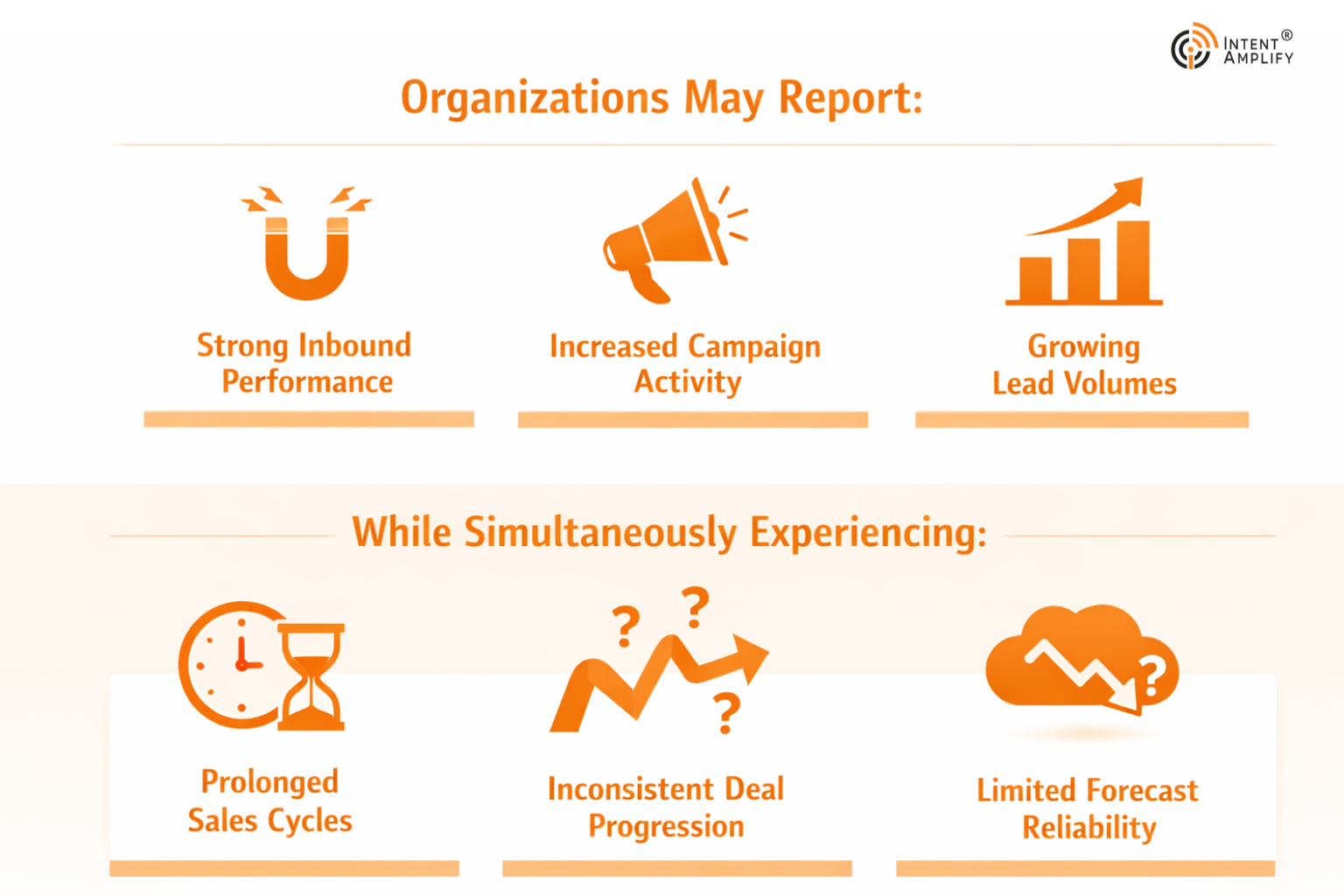
Account-based engagement addresses this disconnect by focusing on the quality, distribution, and momentum of engagement within strategically important accounts.
Core Strategies For Account-Based Engagement
Effective account-based engagement requires more than targeted outreach.
It demands a structured approach to engaging stakeholders, channels, and timing with precision.
1. Buying Group Orchestration, Not Persona Targeting
Effective engagement requires a shift from persona-based messaging to comprehensive buying group orchestration.
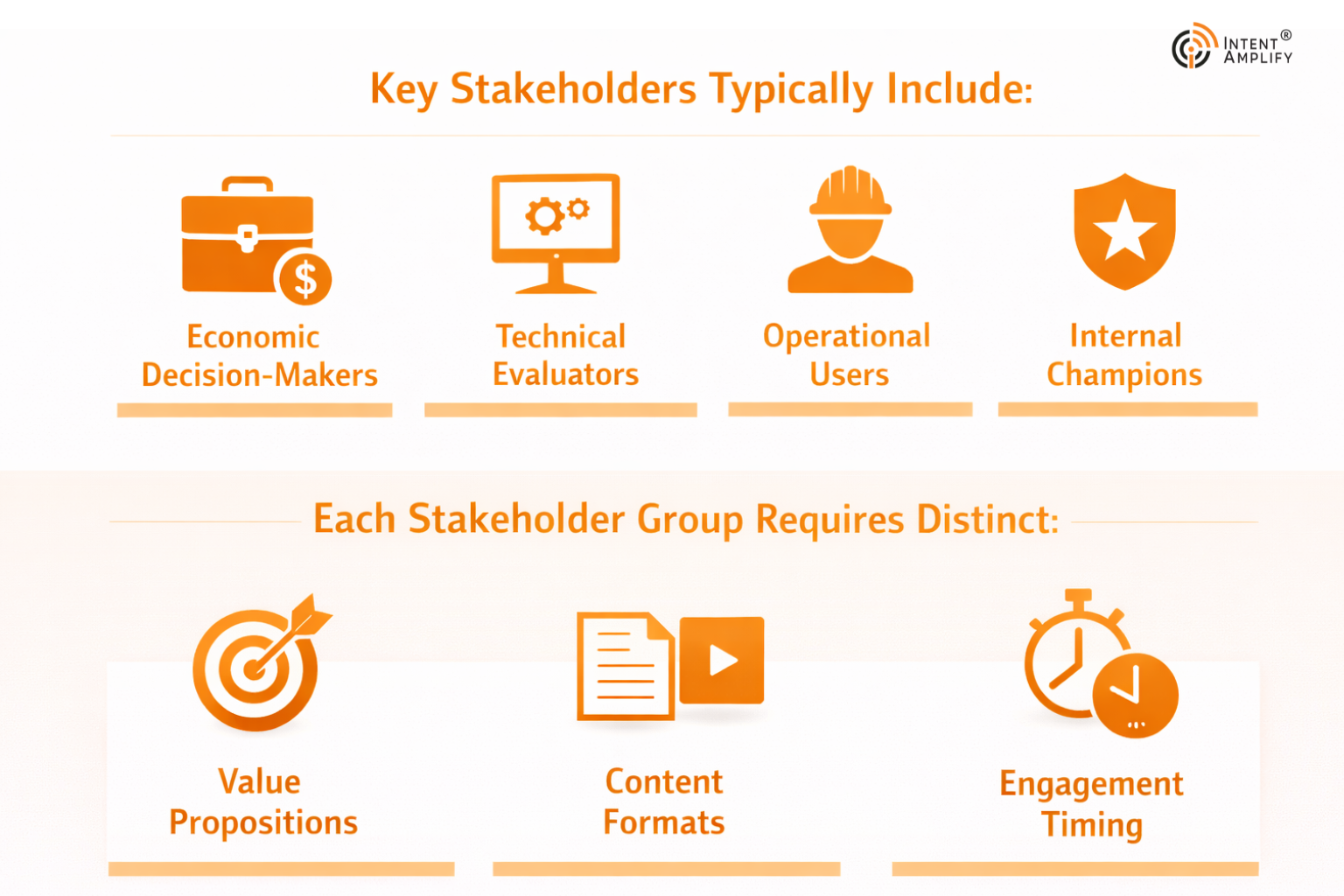
The objective is not content volume, but alignment across stakeholders within the account.
2. Multi-Threaded Engagement Across Channels
Enterprise engagement cannot rely on isolated channels.
High-performing organizations coordinate engagement across:
Digital channels such as email, LinkedIn, and programmatic media.
Content distribution and syndication networks.
Direct sales outreach and executive engagement.
Consistency across channels reinforces credibility and ensures sustained visibility throughout the decision process.
3. Intent-Led Prioritization
Account prioritization must be dynamic rather than static.
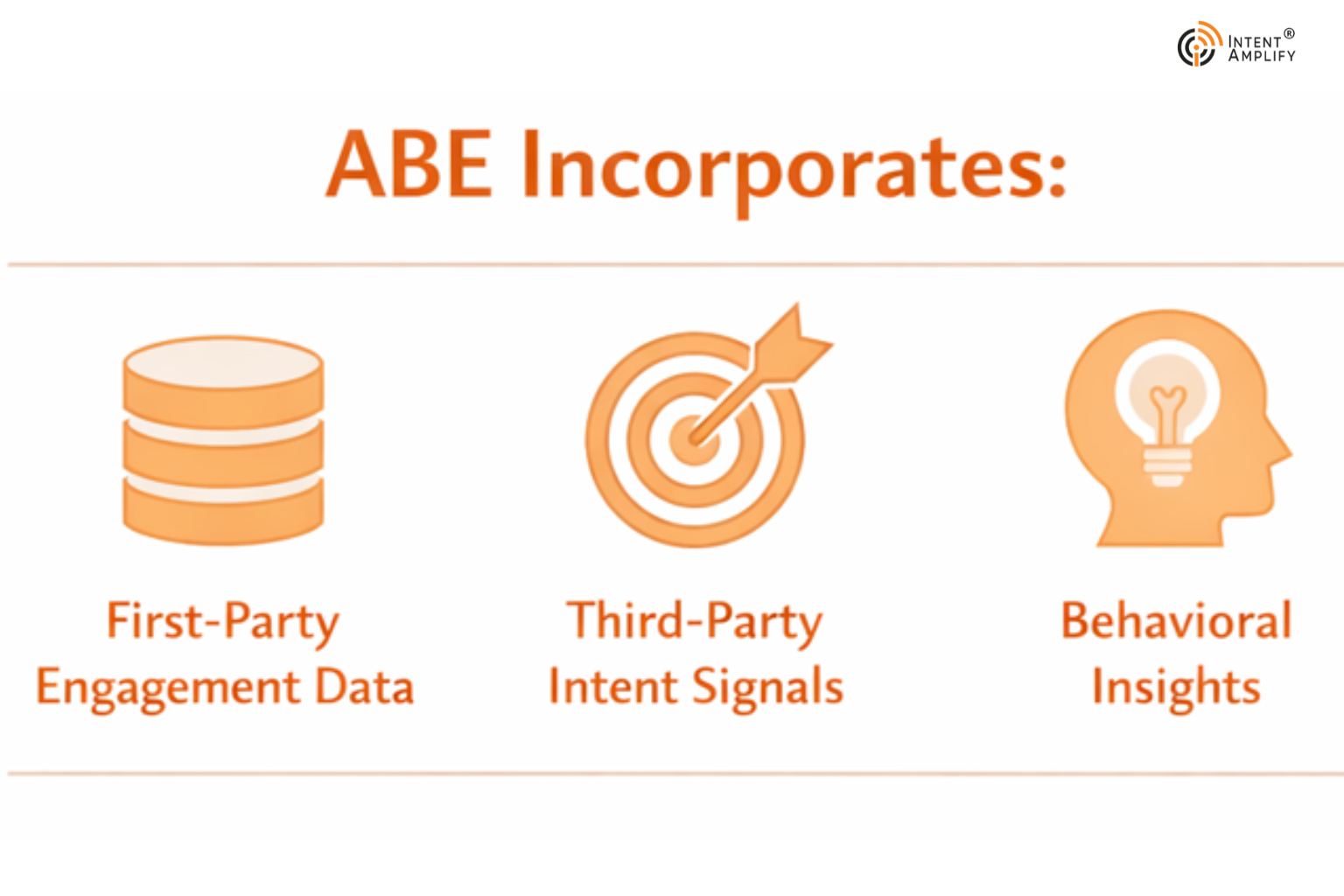
To determine:
When accounts are actively researching solutions.
When to intensify engagement efforts.
When to reallocate resources.
This approach enhances efficiency and ensures engagement is aligned with actual buying signals.
4. Content Mapped To Decision Stages
Content strategy must reflect both the stage of the buying journey and the role of the stakeholder.
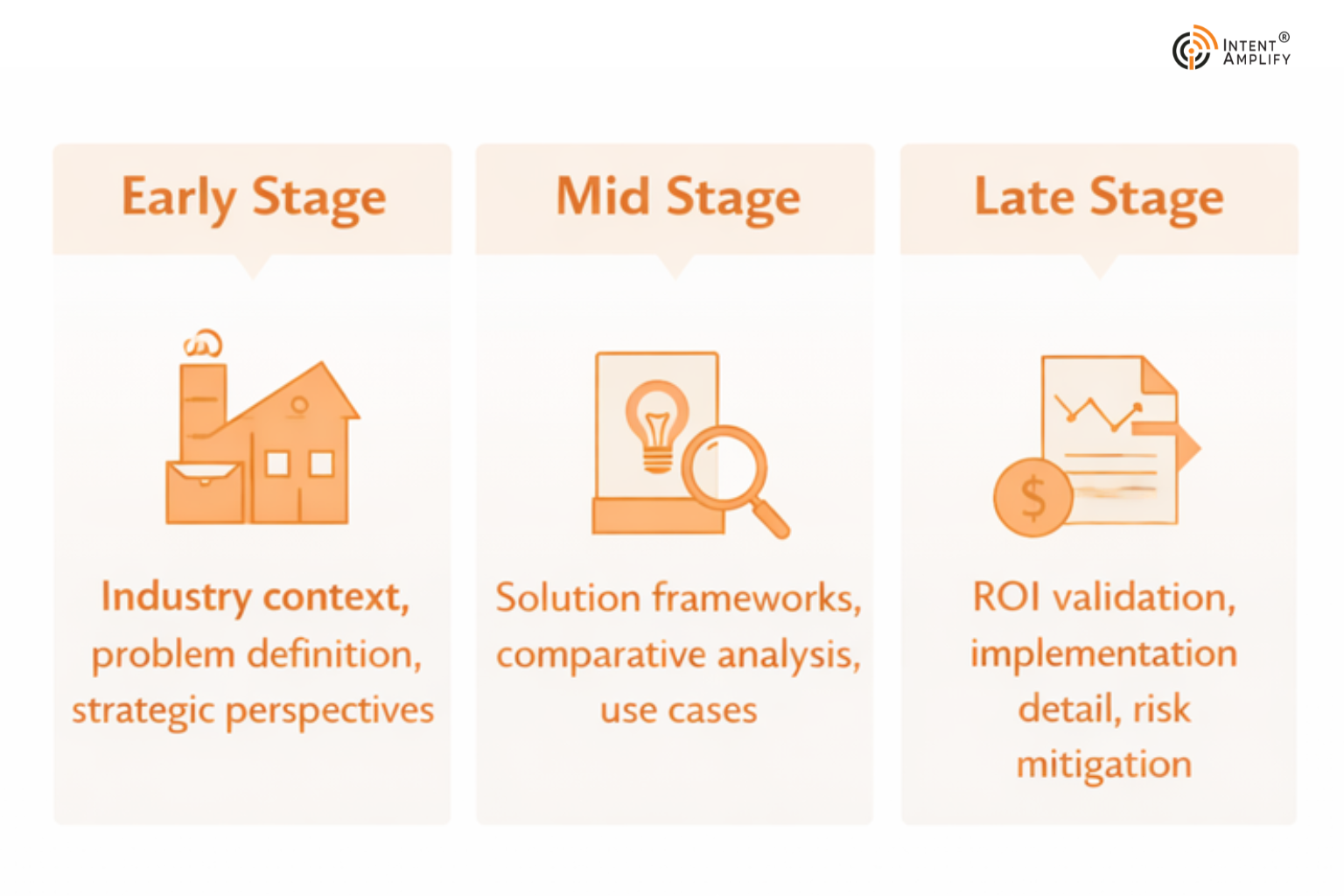
Effective mapping includes:
Early stage- Industry context, problem definition, strategic perspectives.
Mid stage- Solution frameworks, comparative analysis, use cases.
Late stage- ROI validation, implementation detail, risk mitigation.
Relevance at both the stage and stakeholder level is essential for sustained engagement.
5. Sales And Marketing Co-Ownership
Account-based engagement requires operational alignment between marketing and sales.
Responsibilities are shared:
Marketing drives awareness, engagement signals, and account insights.
Sales activates engagement through timely, informed outreach.
Success is measured not by lead transfer, but by coordinated progression of target accounts through the pipeline.
How To Track Account-Based Engagement Effectively
Measurement frameworks must evolve to reflect account-level engagement rather than individual activity.
1. Move Beyond MQLs
MQLs provide limited insight into complex B2B buying dynamics.
Tracking should focus on account-centric indicators.
2. Account Engagement Score
A consolidated metric that captures:
Interaction frequency.
Content consumption patterns.
Recency of engagement.
Evaluated at the account level to reflect collective activity.
3. Buying Group Coverage
Assessment of:
The number of stakeholders engaged.
Representation across key decision roles.
Comprehensive coverage is essential for deal progression.
4. Engagement Depth
Qualitative indicators such as:
Time spent on content.
Repeat interactions.
Multi-asset engagement.
These signals provide stronger insight into buying intent than surface-level activity.
5. Engagement Velocity
The rate at which engagement increases within an account.
Accelerating engagement often indicates:
Active evaluation cycles.
Internal alignment processes.
6. Pipeline Correlation
The most critical measure of effectiveness.
Organizations must evaluate whether higher engagement levels correlate with:
Faster deal progression.
Increased deal size.
Improved win rates.
Without this linkage, engagement efforts lack strategic impact.
Best Practices That Separate High-Performing Teams
Performance in account-based engagement is driven by precision, consistency, and alignment.
These best practices define how leading teams maintain that advantage at scale.
1. Prioritize Fewer Accounts, But Engage With Greater Depth
Focused engagement yields stronger outcomes than broad, shallow coverage.
2. Ensure Personalization Is Contextually Relevant
Effective personalization reflects:
Industry-specific challenges.
Role-based priorities.
Organizational context.
Surface-level customization does not drive meaningful engagement.
3. Maintain Messaging Consistency Across Functions
Alignment across marketing, sales, and leadership communication is critical to building credibility and trust.
4. Act On Engagement Signals With Timeliness
Delayed response reduces the effectiveness of engagement signals.
Organizations should operationalize rapid follow-up mechanisms.
5. Integrate Data Across Systems
A unified account view requires integration across:
CRM platforms.
Intent data providers.
Fragmented data limits visibility and reduces effectiveness.
6. Measure Influence, Not Activity
The objective is not increased activity, but improved outcomes.
Key indicators include:
Deal confidence.
Sales cycle duration.
Conversion efficiency.
Engagement Is The New Competitive Advantage
In B2B technology markets, access to target accounts is no longer a differentiating factor. The ability to influence decision-making within those accounts has become the defining competitive advantage.
Account-based engagement enables organizations to:
Remain relevant throughout complex buying journeys.
Align internal teams around high-value opportunities.
Convert strategic accounts into measurable revenue outcomes.
Organizations that operationalize this shift will be better positioned to navigate complexity, improve predictability, and drive sustained growth.