
Customers rarely praise a retail system when it works. They notice that the order is ready, the coupon applies, the shelf is stocked, the kiosk responds, the payment clears, and the line keeps moving. Then they leave.
That is the quiet future of convenience.
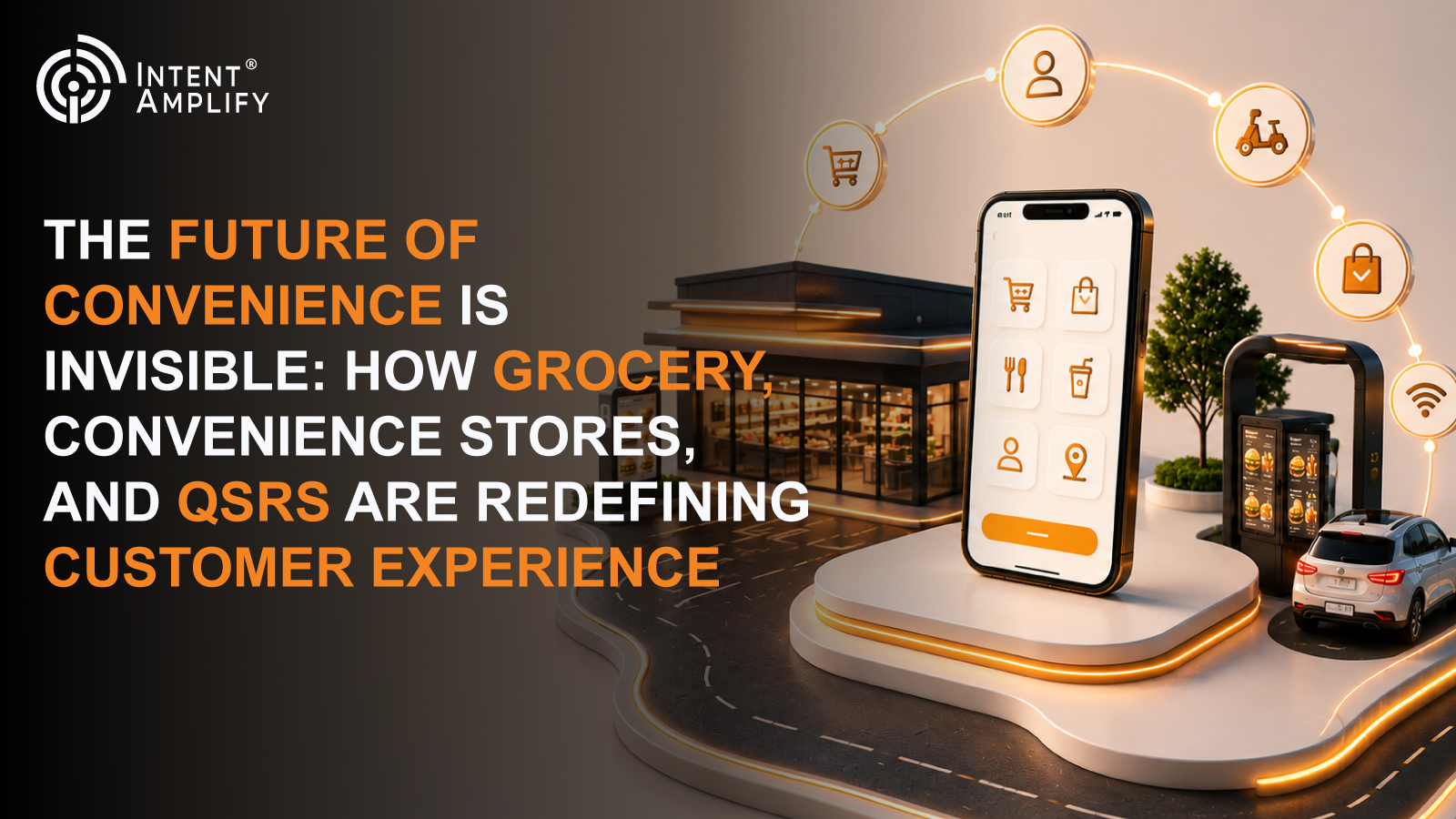
For grocery stores, convenience stores, and quick-service restaurants, customer experience is no longer defined solely by faster checkout lanes, better mobile apps, or cleaner store design. Those basics still matter, but the competitive edge is moving into the background. The next phase of frictionless retail will be shaped by invisible systems that reduce checkout friction, improve transaction speed, connect store operations, and make the customer journey feel effortless.
The U.S. retail market is still large enough to reward operators who get this right. The National Retail Federation expects U.S. retail sales to grow between 2.7% and 3.7% in 2025, reaching $5.42 trillion to $5.48 trillion.1
But growth does not mean customers are patient. It means they have options. For food retail leaders, the real question is not whether shoppers want convenience. They do. The harder question is whether the business can deliver it consistently without making the shopper do the work.
The Real Failure Starts When Convenience Becomes Effort
Retail friction usually begins in small moments. A grocery pickup order misses core items. A convenience-store customer walks in for a two-minute mission but waits for self-checkout assistance. A QSR guest orders ahead, only to find the pickup shelf, kitchen timing, and mobile status update telling different stories.
Individually, these problems look manageable. Together, they create a pattern customers remember.
This is why customer experience can no longer be treated as a front-end design issue alone. A mobile app cannot compensate for weak inventory visibility. A self-service kiosk cannot fix poor POS integration. A loyalty offer cannot build trust if the promoted product is unavailable. In modern retail, the experience is only as strong as the connected systems underneath it.
Deloitte’s commerce research found that 80% of B2C leaders believed they were delivering impressive online shopping experiences, while fewer than half of consumers agreed. The same research found that consumers spend 37% more with brands that provide consistent and positive commerce interactions.2
That gap should concern grocery, convenience, and QSR executives. Customers are not asking for more complexity. They are asking for fewer interruptions.
Grocery Is Becoming an Intelligence Business
Grocery has always been operationally unforgiving. Thin margins, perishable goods, large assortments, local demand shifts, and high trip frequency leave little room for error. What has changed is that shoppers now experience those operational gaps in real time.
An empty shelf is not just a merchandising failure. It is a trust problem. A weak substitution is not only a fulfillment issue. It signals that the retailer does not understand the shopper’s intent. A delayed pickup order can undo the value of a strong promotion.
That is why predictive analytics retail capabilities, computer vision retail tools, inventory intelligence, and unified commerce platforms are becoming central to the grocery customer experience. The goal is not to make technology more visible. It is to make the store more dependable.
McKinsey’s grocery research continues to show a consumer environment shaped by value sensitivity, channel choice, and operational pressure, making execution quality more important across food retail formats.3
The grocery customer does not care which system made the right substitution possible. They care that the replacement made sense. They do not think about retail technology platform architecture when an order is ready on time. They simply feel that the retailer can be trusted.
That feeling is now a competitive asset.
Convenience Stores Are Becoming Hybrid Experience Hubs
The convenience store is no longer only a fuel stop with packaged snacks attached. In many U.S. markets, it now operates as a fuel site, prepared-food destination, beverage stop, loyalty hub, quick-trip grocery location, and QSR-adjacent format.
That creates opportunity, but it also exposes seams.
A customer may fuel the car, buy coffee, order food, redeem a loyalty offer, verify age for a restricted product, and pay through a digital wallet in a single visit. If these moments are disconnected, the store feels slower than it should. If they work together, the trip feels almost invisible.
RETHINK Retail’s report, The Frictionless Frontier: Why Grocery, Convenience, and QSR Need a Reset, states that 84% of consumers prefer self-service kiosks, showing how strongly shoppers value control when the interface reduces waiting rather than adding steps.
Still, a self-service kiosk is not automatically convenient. If it cannot manage exceptions, apply promotions, support age verification software, or connect with food preparation workflows, it simply transfers the problem from staff to customer. True frictionless commerce requires platform unification, not scattered automation.
QSRs Are Competing on Flow, Not Just Speed
Quick-service restaurants have always cared about speed. The difference now is that speed must coexist with accuracy, personalization, value, and channel complexity.
A modern QSR may receive orders from the counter, drive-thru, self-ordering kiosk, mobile app, delivery marketplace, curbside flow, and loyalty campaign at the same time. The customer sees one brand. The store team sees multiple demand streams competing for kitchen capacity.
The National Restaurant Association projects the U.S. restaurant industry will generate up to $1.5 trillion in sales in 2025, reinforcing how large the QSR and foodservice opportunity remains.4
The same industry shift is visible in off-premises behavior. National Restaurant Association research reported that 75% of restaurant traffic now involves takeout, drive-thru, or pickup, while nearly 95% of consumers consider speed critical to the experience.5
That changes what service means. The restaurant experience is no longer limited to the dining room. It includes the app, digital menu, kitchen queue, payment flow, pickup shelf, and handoff experience.
RETHINK Retail’s report notes that kiosk deployments can drive 30% higher ticket sizes, suggesting that guided ordering, clearer menu presentation, and reduced counter pressure can support revenue as well as throughput.6
The deeper lesson is not that every restaurant needs more screens. The better lesson is that QSRs need better flow. AI checkout, checkout automation, order sequencing, and menu intelligence create value only when they reduce pressure on both guests and employees.
Labor Pressure Makes Invisible Systems More Valuable
The retail labor shortage has made every operational inefficiency more expensive. Grocery, convenience, and QSR teams are asked to stock shelves, prepare food, resolve checkout exceptions, support mobile orders, monitor shrink risk, answer questions, manage substitutions, and keep service friendly during peak traffic.
Technology should reduce that load. Too often, it adds to it.
Store employees still become the human bridge between disconnected dashboards, manual overrides, loyalty failures, payment exceptions, and customer complaints created by systems that do not speak to one another. That is not workforce efficiency. It is digital fragmentation with a human safety net.
Invisible convenience requires a more practical philosophy. Retail automation should simplify work, not digitize chaos. AI loss prevention, workforce tools, age verification software, and smart checkout should reduce unnecessary intervention while preserving human judgment where it matters.
RETHINK Retail’s asset states that AI age estimation can reduce human intervention by 75%, a useful example of how automation can improve compliance moments without slowing the customer journey.6
This is where technology becomes valuable. Not because it removes people from the store, but because it gives them fewer preventable problems to solve.
Trust Is Now Part of the Experience Architecture
Frictionless retail depends on data. That makes trust part of customer experience, not a separate compliance conversation.
Retailers are using more signals to personalize offers, forecast demand, manage retail shrinkage, prevent theft, improve transaction speed, and refine omnichannel retail journeys. Customers may welcome relevance, but they do not want to feel watched, manipulated, or punished by opaque systems.
Deloitte found that 52% of consumers want tailored websites and apps, while only about one-third of brands have prioritized those capabilities. The same research found that nearly 70% of consumers are more likely to purchase from a brand that personalizes experiences.2
Personalization, however, needs restraint. A relevant offer builds confidence. A promotion for an unavailable item weakens it. A faster checkout promise builds loyalty. A failed payment during a rushed trip damages it.
Security also matters. IBM reported that the global average cost of a data breach reached USD 4.44 million in 2025, while the U.S. average reached USD 10.22 million.7
For retailers handling payments, loyalty accounts, digital identities, and customer data, trust is not abstract. It is part of the seamless customer journey.
Where RETHINK Retail’s Report Fits
The Frictionless Frontier: Why Grocery, Convenience, and QSR Need a Reset is valuable because it treats convenience as a platform-level issue rather than a surface-level experience theme.
The report focuses on where friction actually hides: between the forecourt and counter, inside kiosk exceptions, across age-check moments, within checkout flows, and throughout disconnected store systems. For leaders evaluating unified retail platforms, POS integration, AI checkout, self-checkout security, and retail digital transformation, that framing is practical.
The benefit is not simply learning that convenience matters. Most leaders already know that. The real value is understanding where customer effort is being created by the operating model itself and how system integration can help remove it before it affects loyalty, labor, revenue, or margin.
Access the full report here:
The Frictionless Frontier: Why Grocery, Convenience, and QSR Need a Reset
What Leaders Should Do Before Investing
A successful frictionless retail strategy should begin with a friction audit. Leaders should identify where customers wait, repeat information, abandon orders, reject substitutions, require associate intervention, face payment delays, or encounter inconsistent loyalty offers.
The next step is to connect those moments to systems. Checkout friction may point to payment architecture. Pickup errors may reveal weak inventory visibility. Slow service may reflect labor planning rather than employee effort. Retail shrinkage may expose the need for better self-checkout security instead of more visible monitoring.
The third step is platform readiness. Grocery, convenience, and QSR operators should not manage separate realities across loyalty, POS, kiosks, mobile ordering, workforce management, loss prevention, and fulfillment. Unified commerce is becoming the operating foundation for a seamless customer journey.
Finally, executives should measure success by effort removed. Faster checkout matters, but so do fewer exceptions, better order accuracy, stronger loyalty redemption, cleaner fulfillment, lower wait times, and improved workforce efficiency.
About Intent Amplify
Intent Amplify helps B2B revenue teams turn buyer intent into a qualified pipeline through GTM strategy, demand intelligence, pipeline activation, roundtables, research-led content, webinars, panels, vendor intelligence, and strategic consulting. The company identifies in-market accounts, maps buying-group signals, and builds narrative-led campaigns that help sales and marketing teams engage the right decision-makers at the right stage.
How we can help: We help technology, SaaS, cybersecurity, AI, manufacturing, agency, and business services teams move beyond lead volume by surfacing high-intent buyers, mapping decision committees, activating personalized GTM narratives, and converting real-time buyer signals into revenue conversations.
To learn more or connect with our team, visit: Intent Amplify.
Conclusion
Convenience is increasingly defined by the effort required to complete everyday tasks.
Customers reward grocery, convenience, and QSR brands that make daily routines easier without requiring them to understand the systems behind the experience. They return to stores with reliable inventory, simple payments, accurate pickup, relevant offers, and consistent service.
Invisible convenience turns customer experience into an operational capability.
For U.S. food retail leaders, friction has become a measurable business issue affecting revenue, labor productivity, customer trust, and loyalty. Organizations that reduce customer effort through stronger operational coordination, system integration, and execution consistency are better positioned to strengthen retention, improve efficiency, and support sustainable growth.
Competitive advantage increasingly depends on removing unnecessary effort from everyday customer interactions while maintaining reliability, trust, and operational discipline.
References
-
National Retail Federation, NRF Forecasts 2025 Retail Sales to Hit $5.42 Trillion, Despite Economic Uncertainty, April 2, 2025
(https://nrf.com/media-center/press-releases/nrf-forecasts-2025-retail-sales-to-hit-5-42-trillion-despite-economic-uncertainty) -
Deloitte, What Do Consumers Really Think About Commerce Experiences?, April 2024
(https://deloitte.wsj.com/cmo/what-do-consumers-really-think-about-commerce-experiences-b492c8f7) -
McKinsey & Company, The State of Grocery Retail, 2026
( https://www.mckinsey.com/industries/retail/our-insights/state-of-grocery-retail-global ) -
National Restaurant Association, Restaurant Industry Poised for Growth in 2025: Industry Expected to Employ 15.9 Million People and Reach $1.5 Trillion in Sales, February 6, 2025
(https://restaurant.org/research-and-media/media/press-releases/restaurant-industry-poised-for-growth-in-2025-industry-expected-to-employ-15-9-million-people-and-r/) -
National Restaurant Association, From Trend to Transformation: Off-Premises Dining Now Essential for Restaurant Consumers, Operators, April 16, 2025
(https://restaurant.org/research-and-media/media/press-releases/from-trend-to-transformation-off-premises-dining-now-essential-for-restaurant-consumers,-operators/) -
RETHINK Retail, The Frictionless Frontier: Why Grocery, Convenience, and QSR Need a Reset, 2026
(https://intenttechpub.com/report/the-frictionless-frontier-why-grocery-convenience-and-qsr-need-a-reset/?mtm_campaign=frictionless_frontier&mtm_kwd=grocery_convenience_qsr&mtm_source=website&mtm_medium=cta_download_now&mtm_content=marketing&mtm_cid=IA_061_26_06_005&mtm_group=report&mtm_placement=website) -
IBM, Cost of a Data Breach Report 2025, 2025
(https://www.ibm.com/reports/data-breach)