
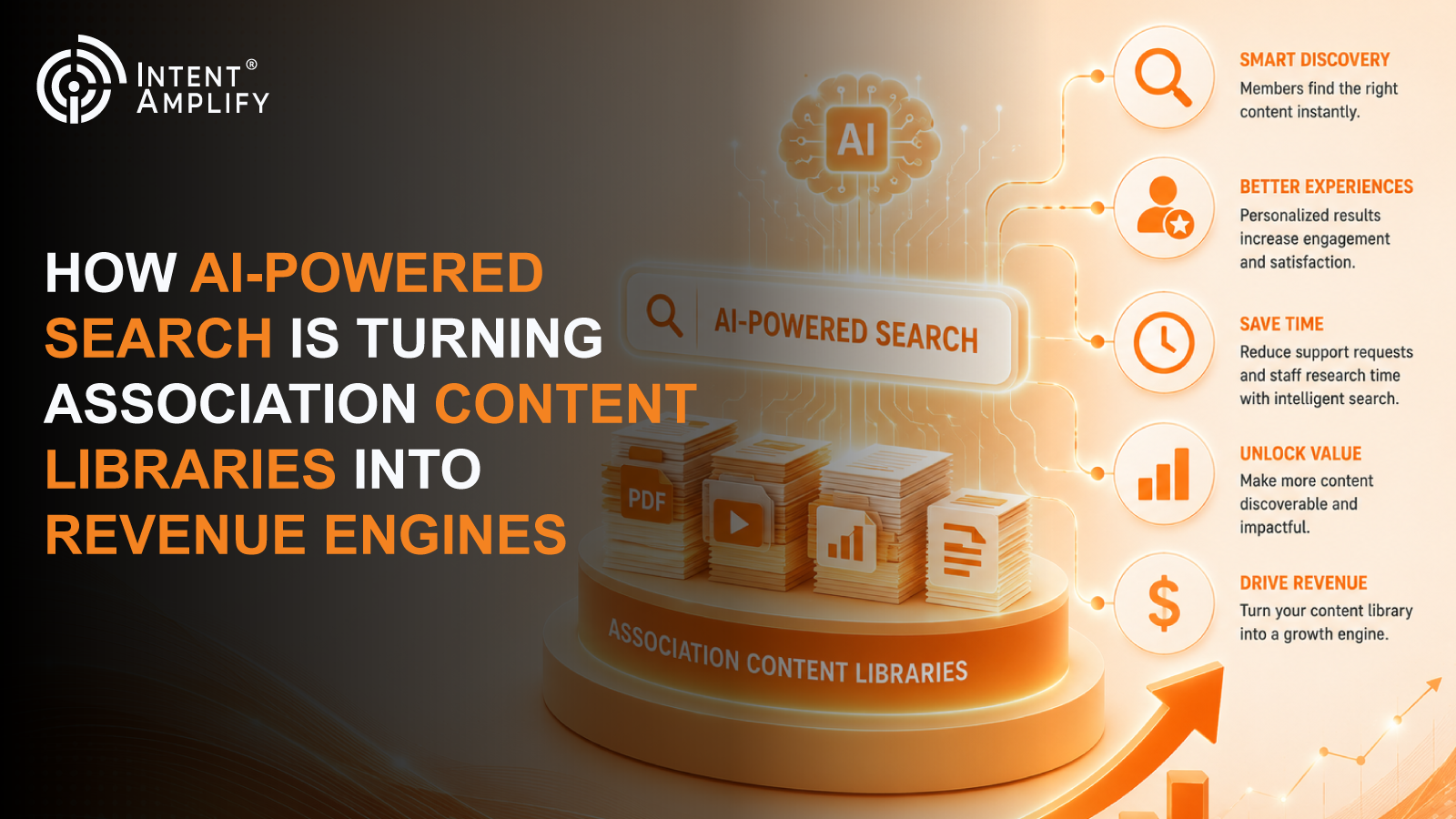
Progress Software Corporation brings this intelligence to association learning, knowledge, and member experience leaders through Association Technology Intelligence, where executives discover how emerging technologies are reshaping content discovery, personalized learning, digital engagement, and member value.
Over time, associations accumulate an enormous body of knowledge: certification programs, research publications, technical guidance, webinars, conference presentations, industry standards, learning resources, and member education content. In many organizations, this knowledge base represents decades of investment in professional development and member value.
Creating learning content has rarely been the problem. Helping members find the right knowledge, guidance, or learning pathway at the right moment has proven far more difficult.
Most associations sit on years, sometimes decades, of valuable educational content and institutional knowledge. Much of that content remains trapped across CMS platforms, LMS systems, document repositories, webinar archives, certification portals, and member communities. As AI changes how professionals search, learn, and engage with information, associations are beginning to rethink how knowledge should be delivered.
What many associations are beginning to realize is that their content libraries may represent an underutilized learning and engagement asset rather than a passive archive.
According to Microsoft's 2026 Work Trend Index, 20,000 knowledge workers across 10 markets participated in research examining how AI is transforming information access and knowledge work. 2
The report found that employees increasingly expect instant access to trusted information and expert knowledge.2
For associations, that shift creates an opportunity to make trusted knowledge easier to find, easier to apply, and more connected to each member's goals.
Organizations that can surface trusted content at the right moment can improve member engagement, support continuous learning, increase retention, strengthen certification journeys, and create more personalized member experiences.
Progress Software Corporation believes AI-powered knowledge discovery is becoming the foundation for that transformation.
The Hidden Learning Value Inside Association Content Libraries
Most associations have spent years building valuable repositories of industry knowledge, professional guidance, certification content, research, webinars, and educational resources. The challenge is no longer creating knowledge. The challenge is making that knowledge accessible, personalized, and actionable in a way that reflects how modern professionals prefer to learn and engage.
This challenge has become more urgent as AI changes how professionals access information in their daily work. According to McKinsey's The State of AI in 2025, many organizations are already using AI across core business functions, including knowledge-intensive workflows. As members become more familiar with AI-assisted information access in the workplace, they increasingly expect the same level of speed, relevance, and personalization from their associations. 1
Members no longer want to sift through large volumes of webpages, PDFs, recordings, and resource libraries. They expect instant answers, smart recommendations, personalized learning pathways, and conversational experiences that help them apply knowledge quickly. This is changing the role of association content from static reference material into an interactive member experience that supports learning, decision-making, and professional growth.
Key Figures for Learning and Member Experience Leaders
- 88% of organizations use AI in at least one business function. 1
- 79% report active use of generative AI technologies. 1
- 23% of organizations have already begun scaling agentic AI systems. 1
- 39% are actively experimenting with AI agents. 2
- 20,000 knowledge workers participated in Microsoft's latest AI workplace study. 2
Members increasingly expect instant access to trusted knowledge, personalized recommendations, and guided learning experiences.
Association content discovery is becoming a core driver of member engagement, education, and retention.
- 51% of organizations using AI report experiencing at least one negative consequence from AI deployment. 1
- One third of organizations report AI-related inaccuracies as a significant challenge. 1
- 99% of organizations have encountered attacks targeting AI systems. 3
- 97% of organizations are prioritizing security consolidation across cloud environments. 3
- 89% believe security operations and application security must become more integrated. 3
- Progress Agentic RAG reports up to 95% faster AI readiness compared with internal development approaches. 4
- Progress Agentic RAG reports up to 80% lower implementation costs compared with building internally. 4
Why Traditional Search Is Failing Modern Member Expectations
Most association content systems were built for storage, not discovery. When members search for a topic, they are often given a long list of links, PDFs, recordings, and portal results instead of a direct answer or guided next step. They may need to search across an LMS, member portal, webinar archive, certification platform, and document repository before finding what they need.
That experience creates friction. Members lose time, abandon searches, miss relevant learning opportunities, or fail to discover resources that could help them advance professionally. What worked when associations managed a limited content library becomes ineffective when thousands of resources are spread across disconnected systems.
IBM's latest research on Retrieval Augmented Generation explains why traditional search often fails modern knowledge workers. Members increasingly want direct access to trusted answers, recommended resources, and relevant learning pathways, not simply access to documents. 6
That distinction is critical.
In many cases, members are not looking for documents. They are looking for answers, guidance, and next steps backed by trusted association expertise.
Associations that recognize this difference are beginning to transform their content libraries into AI-powered learning and knowledge experiences.
The Engagement and Learning Opportunity Most Associations Are Missing
Traditionally, associations have delivered member value through memberships, certifications, training programs, events, continuing education offerings, research, and professional development resources.
AI-powered discovery introduces a new layer of member value by making learning resources easier to find, personalize, and apply.
Imagine a member asks:
"What should I learn next to stay current with the latest compliance requirements in my industry"
Instead of presenting a list of links, the system could surface a grounded answer alongside supporting standards, relevant courses, upcoming webinars, expert research, certification pathways, and recommended next steps based on the member's role, goals, and learning history.
Each member interaction generates signals about learning needs, professional objectives, and information requirements. AI-powered knowledge systems can use those signals to personalize discovery, connect members with relevant expertise, and recommend learning pathways aligned to individual goals.
More effective knowledge delivery improves content utilization and learning participation while helping associations derive greater value from existing educational assets. Agentic RAG extends that capability by enabling trusted knowledge to be delivered contextually, transparently, and at scale across the member journey.
Why Trusted Retrieval Matters More Than the AI Model Itself
Many organizations focus first on model selection. They compare ChatGPT, Gemini, Claude, and other large language models. But for associations, the more important question is not which model generates the answer. It is whether the answer can be traced back to trusted association content, approved learning resources, and authoritative subject-matter expertise.
Association content derives its value from credibility, accuracy, and member trust. Industry standards, expert guidance, certification requirements, governance frameworks, and regulatory interpretations carry weight because members trust their source.
If AI responses are not grounded in those sources, member trust erodes quickly.
IBM notes that retrieval quality remains one of the most important determinants of AI answer accuracy. 6
That makes retrieval architecture a strategic capability for learning delivery, knowledge management, and member experience, not just a technical feature.
Progress Software Corporation's Agentic RAG platform focuses specifically on grounding AI outputs in trusted enterprise and organizational knowledge repositories. 4
For associations, this means answers can remain tied to authoritative association content, approved educational resources, and member-specific access permissions rather than generic internet information.
The Governance Challenge for Member Knowledge Experiences
Associations face a unique challenge.
Unlike commercial enterprises, many associations manage:
- Regulatory information
- Certification standards
- Industry policies
- Member-only content
- Proprietary research
- Continuing education materials
- Role-based learning pathways
- Volunteer and committee resources
Strong access controls, permissions management, and content governance remain essential requirements.
As organizations accelerate the adoption of AI-powered search and knowledge discovery, security and governance have become critical considerations. Palo Alto Networks reports that 53% of organizations identify weaknesses in identity and access management as a significant security challenge. This concern becomes even more relevant as AI systems gain access to large volumes of organizational content and member data. 3
The objective is not simply to deliver answers faster or make content easier to search. It is to ensure that the right knowledge, learning resource, or recommendation reaches the right member while respecting security policies, member entitlements, certification status, and governance requirements. Members, staff, volunteers, learners, instructors, committee participants, and certification candidates may all have different levels of access; therefore, AI systems must respect established security rules, content permissions, and learning entitlements. All responses should be based on content that has been authorized for use, and users should be able to reference approved sources of content in order to facilitate transparency, compliance, and trust.
As AI-driven knowledge discovery grows throughout association ecosystems, governance must become a top priority. Associations will need robust frameworks for access control, content security, auditability, source attribution, and learning-content governance. This is where enterprise-level AI architecture will be critical, enabling AI-driven experiences to provide access to knowledge while still maintaining the security, accuracy, and governance requirements that all associations demand.
What Progress Software Brings to AI-Powered Member Knowledge Experiences
Progress Software positions Agentic RAG as more than a search solution; it is a foundation for delivering trusted, personalized, and governed knowledge experiences.
Progress Software highlights five capabilities that associations typically require when deploying AI-powered learning and member knowledge experiences:
Unified Knowledge Access
Connecting learning content, research, standards, webinars, and member resources across multiple repositories and systems.
Trusted Retrieval Optimization
Improving answer quality, content relevance, and recommendation accuracy through advanced retrieval strategies.
Source Grounding and Attribution
Providing traceability back to approved association content, learning resources, and expert sources.
Member Access and Governance Controls
Respecting member permissions, certification status, learning entitlements, and content access policies.
Continuous Experience Evaluation
Evaluating answer quality, retrieval performance, recommendation relevance, and member experience outcomes so associations can improve knowledge delivery at scale without forcing members to navigate complicated content systems.
The Future of Member Learning and Knowledge Experiences
Over the next decade, the competitive advantage of many associations may depend less on the volume of content they possess and more on their ability to deliver trusted, personalized knowledge experiences that help members learn, grow, and engage.
Members will increasingly expect:
- Conversational knowledge discovery
- Personalized learning recommendations
- Instant access to trusted expertise
- Guided learning and certification pathways
- Contextual content discovery
- Role-based resource recommendations
- Relevant next-best actions
Associations that embrace AI-powered knowledge discovery can transform content from a static repository into a strategic engine for learning, engagement, and member value.
Those who do not risk leaving valuable knowledge, learning resources, and member guidance buried beneath layers of navigation and search results.
Takeaway for Learning and Member Experience Leaders
Learning and member experience leaders have spent years building extensive collections of expertise, educational resources, and institutional knowledge. The priority now is improving discoverability, relevance, and actionability across those existing investments. As content ecosystems expand, knowledge accessibility is becoming a strategic differentiator.
AI-powered knowledge discovery is reshaping how professionals access trusted information and learning resources. Direct answers, contextual recommendations, guided learning experiences, and personalized next steps are becoming standard components of modern digital engagement. Associations that deliver those experiences can increase content utilization, strengthen member engagement, support learning outcomes, and reinforce long-term membership value.
The ability to transform stored knowledge into trusted, personalized experiences may become a defining competitive advantage for associations over the next decade.
Resource for Learning and Member Experience Leaders
Build vs. Buy: The Reality of Production-Grade RAG for Member Knowledge Experiences
Progress Software's executive guide explores how associations can transform fragmented content libraries, learning systems, and knowledge repositories into trusted AI-powered member experiences through retrieval, governance, evaluation, and enterprise-scale deployment.
Download the Whitepaper to understand how associations can build trusted AI-powered knowledge experiences that improve content discovery, support personalized learning, and strengthen member engagement.
References
- McKinsey and Company (2025). The State of AI in 2025: Agents, Innovation and Transformation.
- Microsoft (2026). 2026 Work Trend Index: Agents, Human Agency and the Opportunity for Every Organization.
- Palo Alto Networks (2025) State of Cloud Security Report 2025.
- Progress Software Corporation (2026) Progress Agentic RAG.
- Progress Software Corporation (2026). Build vs. Buy: The Reality of Production Grade RAG.
- IBM (2026). What Is Retrieval Augmented Generation?