

PRACTICAL GTM THINKING FOR THE WORK HAPPENING NOW.
Short-form analysis across ABM, advertising, content creation, demand generation, intent data and sales—with clear implications for GTM execution.
ABM
Account evidence, buying groups and activation.
Demand Generation
Demand quality, progression and handoff.
Intent Data
Signal interpretation, recency and prioritization.
Content Creation
AEO, buyer questions and account relevance.
Advertising
Attention and account-aware media.
Sales
Why-now evidence and seller context.
Resource engagement can support account prioritization, buying-context interpretation and evidence-rich handoff. It must not automatically create an SQL. Sales qualification requires the approved lifecycle definition and authoritative CRM evidence.
Blog resources
683 published resources matching this section.
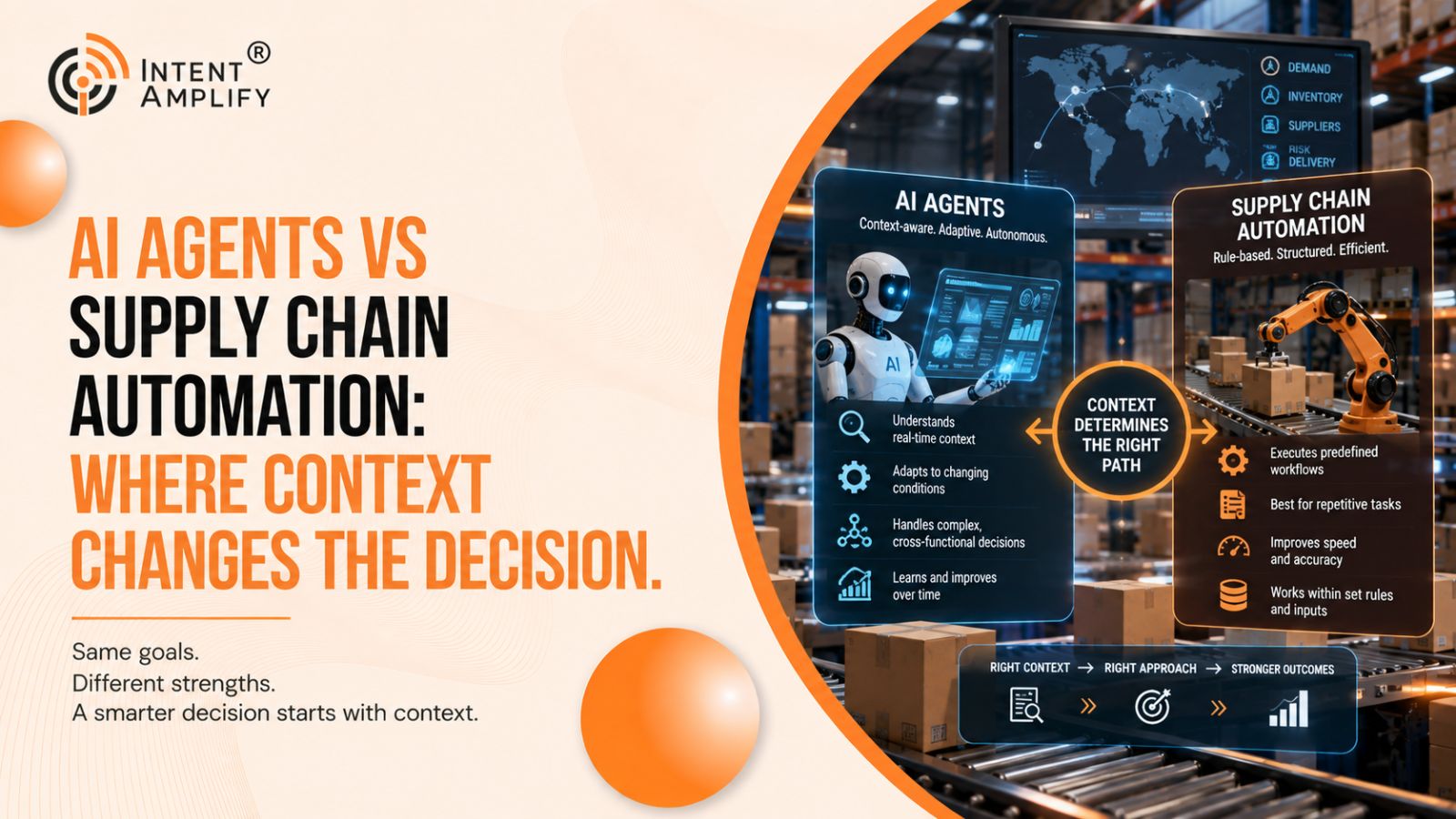
AI Agents vs Supply Chain Automation: Where Context Changes the Decision
Explore where AI agents add value beyond traditional supply chain automation, how operational context shapes decisions, and when human oversight, recommendation, or boun…
The Inventory Accuracy Control Loop: Detect, Decide, Correct
A practical framework for retail leaders to detect inventory divergence earlier, make consistent decisions, correct discrepancies, and reduce recurring inventory accurac…
Why Inventory Accuracy Breaks Omnichannel Execution
Inventory accuracy directly affects omnichannel availability, fulfillment, replenishment, and customer promises. Learn how retail leaders can reduce inventory drift, imp…
From Queue to Recovery: Designing Faster Peak-Trading Decisions for Store Teams
Peak-season resilience depends on how quickly store teams can detect problems, make the right decisions, and recover. Clear authority, trusted evidence, staff capacity, …
Why Holiday Customer Experience Breaks at the Handoffs Between Retail Systems and Store Teams
Holiday retail experiences often break down at handoffs between systems, teams, and channels. Better preparation, clearer ownership, and intentional automation can reduc…
Why Cost Per Unit Can Mislead Warehouse Leaders When the Work Gets More Complex
Cost per unit can hide changes in warehouse workload complexity. Learn how labor standards, workload context, and cost-to-serve help leaders separate execution issues fr…
What High-Performing B2B Content Looks Like: The 2026–2027 GTM Playbook
High-performing B2B content connects buyer signals, decision context, credible evidence, and GTM activation. See what changes for content, AI discovery, buying groups, a…
Buying Group Intelligence: How B2B Teams Turn Account Signals Into Coordinated Action
Buying group intelligence helps B2B teams interpret account signals across multiple stakeholders, prioritize accounts, and coordinate more relevant marketing and sales a…
From GenAI Proof of Concept to Production: A 45-Business-Day Framework
Learn how enterprise teams can move a prioritized GenAI use case from proof of concept toward production readiness by aligning business value, data, architecture, valida…
AI Agents Are Not Another Dashboard: What Changes When Supply Chain Systems Can Act
Learn how AI agents move supply chains beyond dashboards by assembling context, coordinating workflows, recommending decisions, and acting within governed boundaries.
AI Supply Chain Planning: How Agentic AI Redesigns Exception Management
Learn how agentic AI can improve supply chain planning by prioritizing material exceptions, reducing context assembly, and accelerating governed decisions.
Origin Visibility and the Option Window:Why the Earliest Supply Chain Signal Can Be the Most Valuable One
Learn how origin visibility expands the supply chain option window, connects early signals to business risk, and enables faster, decision-ready action.
Move from resource insight to an executable GTM decision.
Bring the market, account, buying-group or measurement problem you are solving.