

PERSPECTIVES FROM OPERATORS CLOSE TO THE WORK.
Expert perspectives should make assumptions visible, distinguish experience from evidence and connect insight to a practical GTM decision.
CMO Perspective
Investment, alignment and accountable growth.
Demand Leader Perspective
Program relevance and progression.
RevOps Perspective
Lifecycle, data and measurement discipline.
Sales Perspective
Usable account context and why-now evidence.
Resource engagement can support account prioritization, buying-context interpretation and evidence-rich handoff. It must not automatically create an SQL. Sales qualification requires the approved lifecycle definition and authoritative CRM evidence.
Expert Insights resources
48 published resources matching this section.
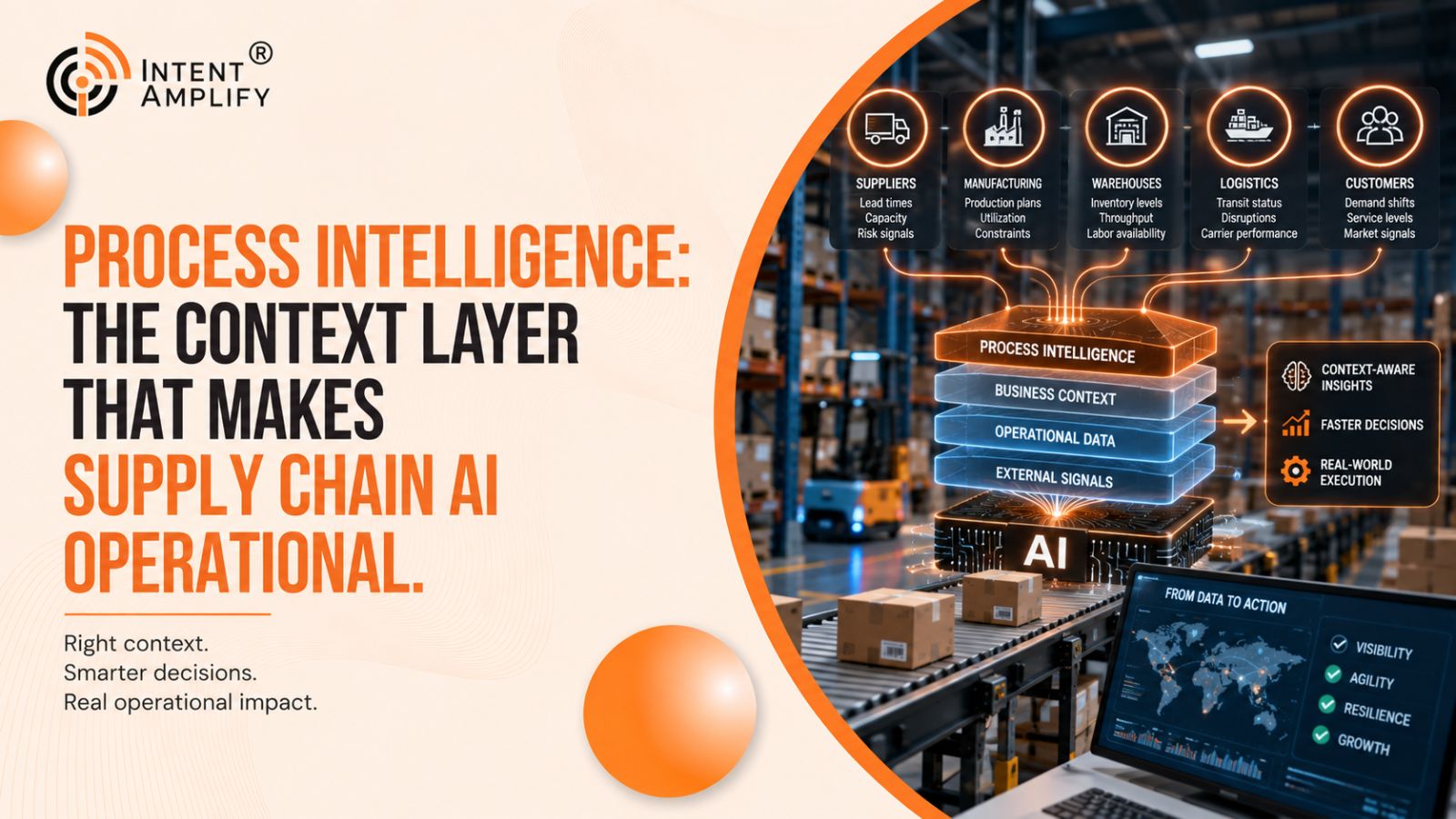
Process Intelligence: The Context Layer That Makes Supply Chain AI Operational
Explore how process intelligence gives supply chain AI the operational context needed to understand exceptions, dependencies, constraints, and workflows while keeping hu…
Why Inventory Accuracy Requires Cross-Functional Ownership
Inventory accuracy depends on coordinated ownership across retail operations, supply chain, ecommerce, technology, and inventory teams. Explore how shared definitions, c…
The Hidden Decision Debt Behind Inventory Inaccuracy
Explore how inventory inaccuracy creates hidden decision debt across grocery operations through manual checks, overrides, rerouting, and other workarounds, and how leade…
Customer Experience and Loss Prevention Need One Peak-Trading Decision Model
Peak retail performance depends on aligning customer experience and loss prevention within one decision model. Clear risk boundaries, decision rights, and executable con…
Peak Retail Resilience Starts With Associate Decision Rights, Not More Alerts
Peak retail resilience depends on giving store teams clear authority to act. Defined decision rights, trusted evidence, and explicit escalation boundaries help reduce de…
AI Agent Governance for Autonomous Supply Chains: Controls, Oversight and Enterprise Risk
Learn how to govern AI agents in autonomous supply chains using decision boundaries, narrow permissions, human oversight, escalation, rollback, and audit controls.
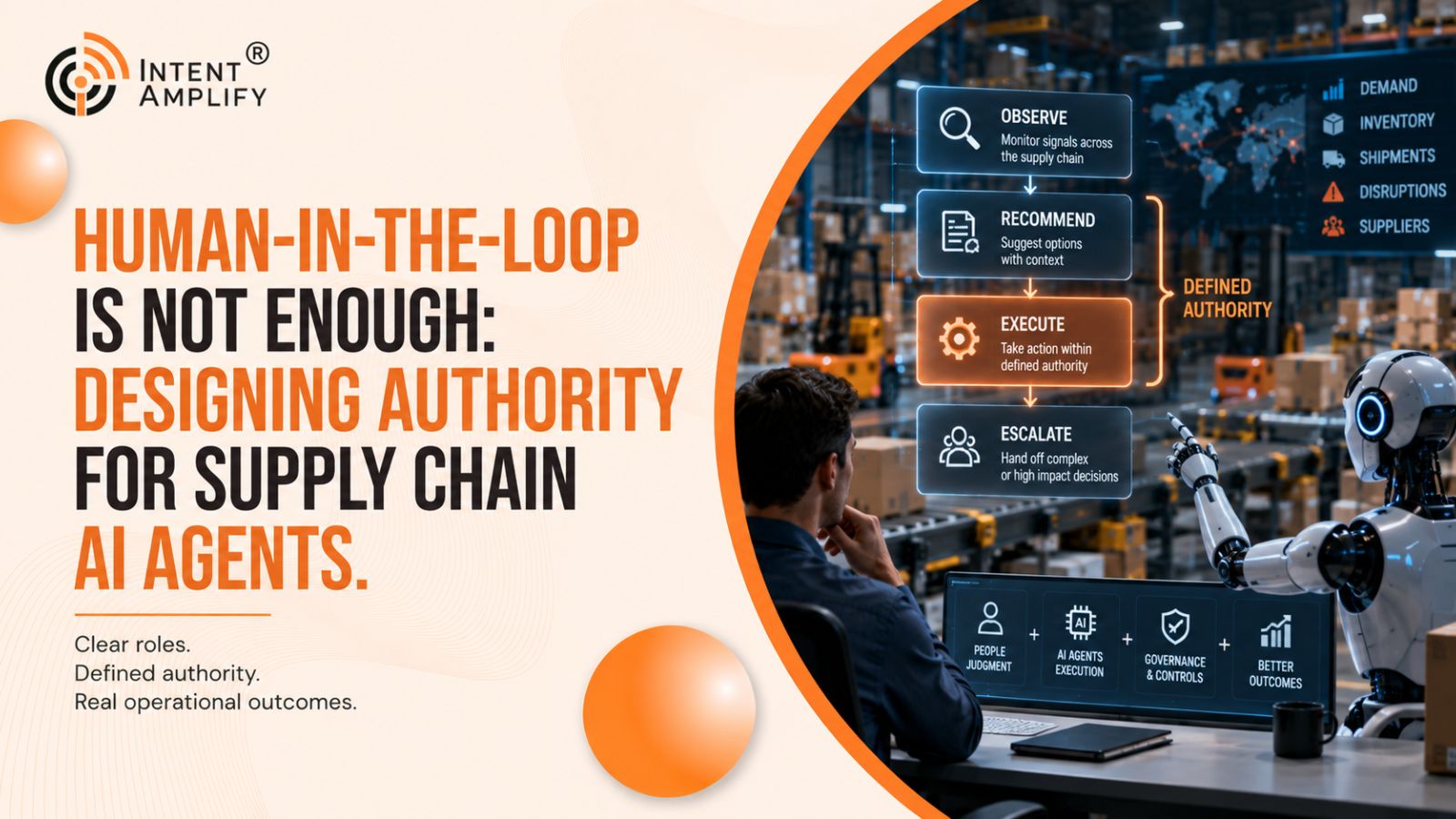
Human Judgment in Autonomous Supply Chains: How Leaders Govern AI Agents
Learn how agentic AI changes supply-chain roles and why human judgment, intelligent escalation, policy ownership, accountability, and override learning remain essential.
AI as a Supply Chain Decision Copilot: Three Practical Roles for AI Without Surrendering Executive Accountability
See how AI improves supply chain decisions through signal triage, context assembly and option comparison without surrendering human accountability.
Scenario Planning for Expiring Options: How Supply Chain Leaders Prepare Decisions Before Constraints Close In
Learn how supply chain scenario planning can define triggers, constraints, owners, response options, and decision deadlines before volatility closes meaningful
Automate the Label Decision, Not the Risk: A Governance Model for Parcel AI
Master parcel AI governance. Automate carrier selection at label creation while using tiered authority to keep human control over risk and policy.
The CFO Question in Parcel Shipping: Are You Paying for Speed You Don't Need?
Learn how parcel shipping cost optimization balances transportation spend, delivery probability, failure cost, and unnecessary premium service at shipment level
The Same-Day Grocery Advantage Is Decision Quality, Not Speed Alone
Discover why profitable same-day grocery relies on decision quality, not just speed. Align order economics, capacity, and fulfillment for growth.
Move from resource insight to an executable GTM decision.
Bring the market, account, buying-group or measurement problem you are solving.