Diversification can be real on paper and fragile in practice.
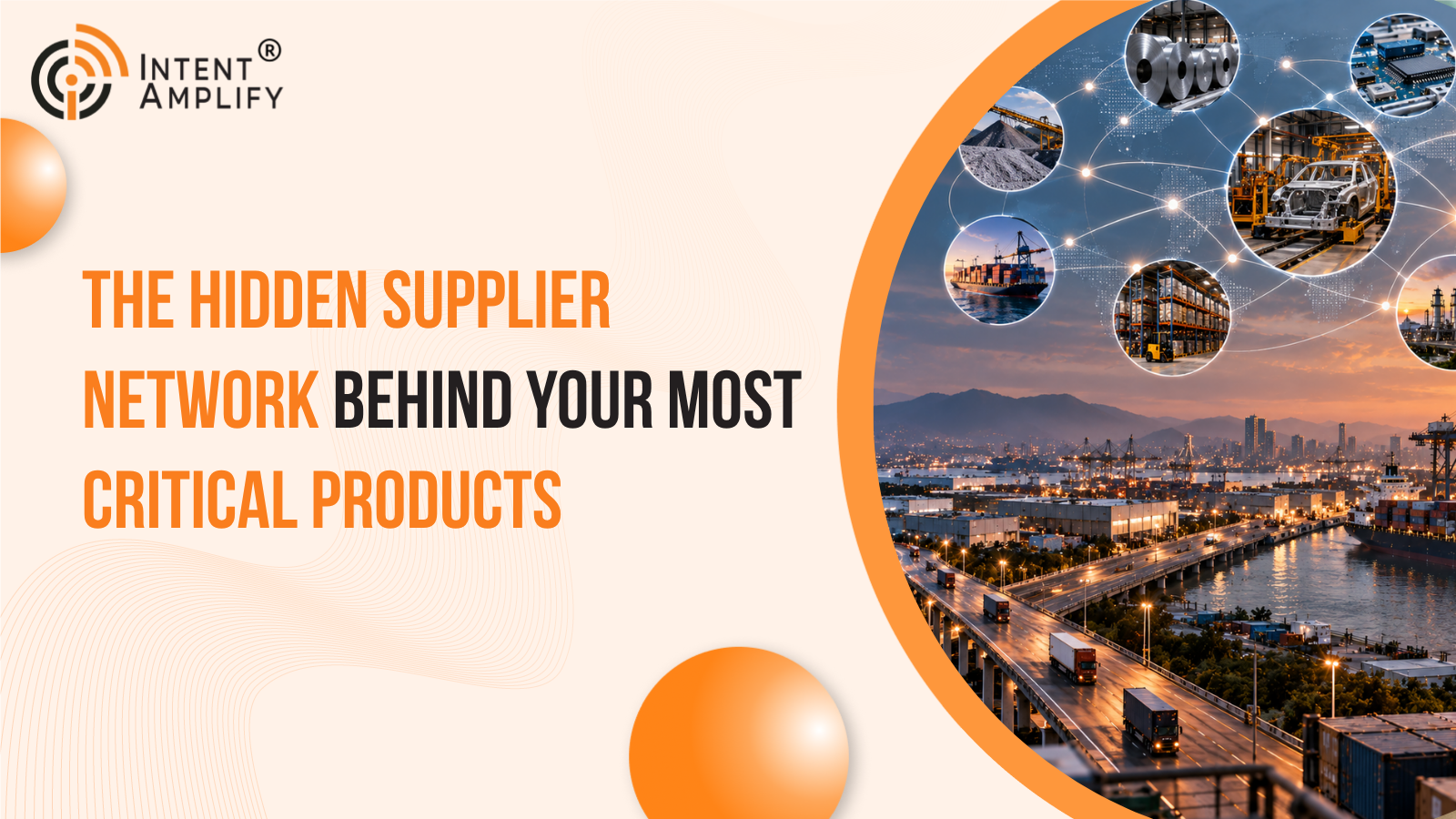
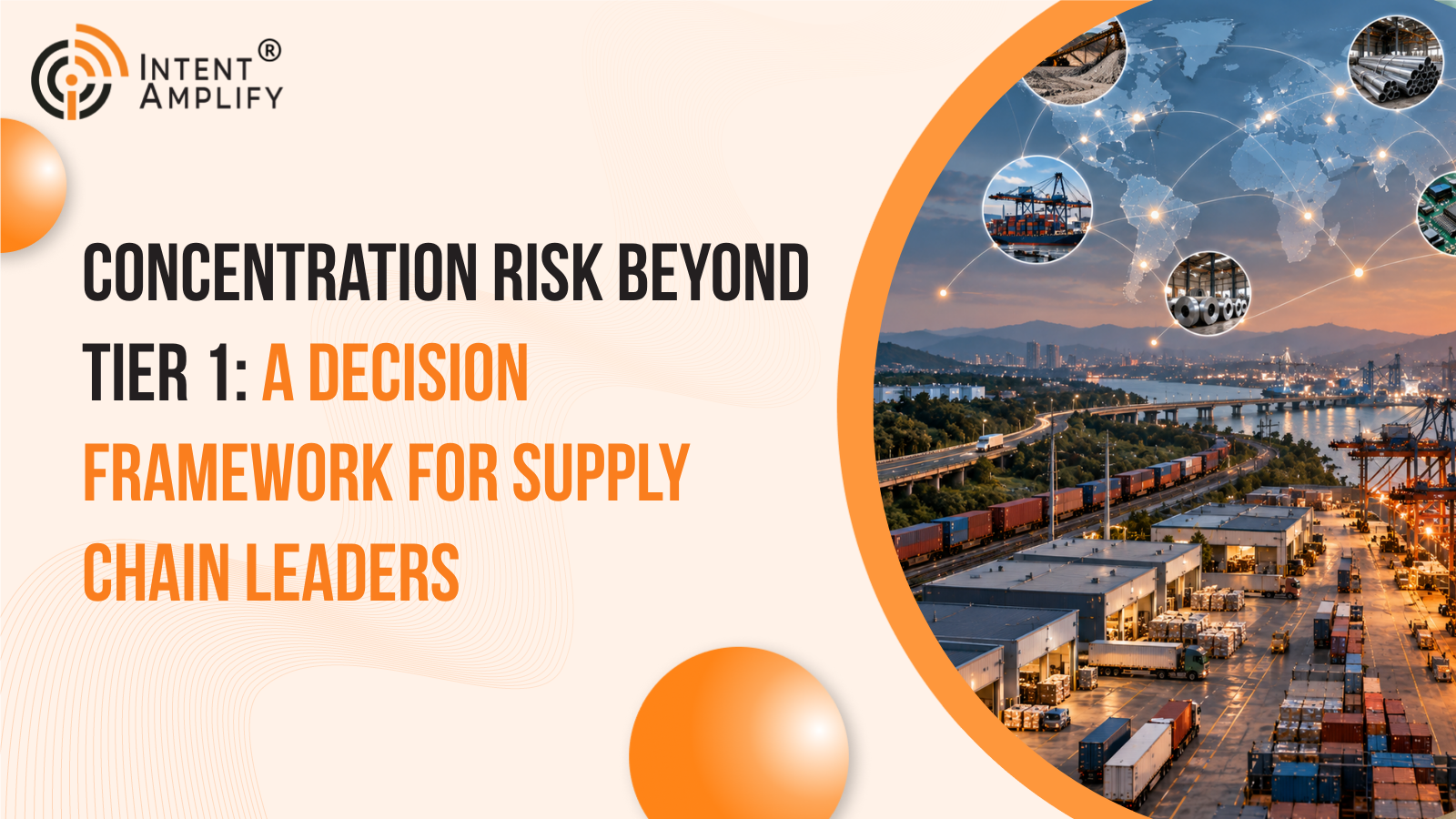
A procurement team may qualify multiple direct suppliers, split volume across regions, and maintain alternate contracts. Yet those suppliers can still converge on the same upstream manufacturer, material producer, processing facility, port, or geography. The Tier-1 sourcing model looks diversified while the N-tier network remains concentrated.
This is one of the strongest business cases for deeper supply chain intelligence.
Concentration is a dependency problem.
Traditional supplier concentration analysis often measures spend or volume by direct supplier. That is useful for commercial management, but it does not reveal whether different direct suppliers share the same upstream dependency.
N-tier concentration analysis asks a different set of questions.
- Do multiple Tier-1 suppliers source from the same Tier-2 producer?
- Do several critical products depend on one specialty material?
- Are nominally different supply paths exposed to the same geography?
- Does one sub-tier site support multiple high-value product lines?
- Would the failure of one upstream node defeat a multi-sourcing strategy?
These questions turn the network into a resilience model.
Why product context matters
Concentration is not equally important everywhere.
A shared upstream dependency for a readily substitutable, low-criticality component may be manageable. A shared dependency for a regulated, long-lead-time, single-process material can create major exposure.
That is why product-centric intelligence matters. It links network structure to the products and business outcomes the enterprise is trying to protect.
The four dimensions of concentration risk
Dependency concentration
How many supposedly independent supply paths converge on the same upstream entity?
Geographic concentration
How much critical supply relies on one country, region, transport corridor, or hazard zone?
Capability concentration
Is a specialized process, certification, technology, or material available from only a small set of sources?
Business concentration
How much revenue, service, compliance, or customer exposure depends on the upstream node?
A useful assessment combines all four.
Why hidden concentration changes the sourcing decision
A concentration finding becomes useful when it changes a decision. Consider two direct suppliers that appear independent in a sourcing dashboard. If both rely on the same upstream processor for a critical material, adding volume to the second supplier may improve commercial leverage without materially improving resilience. The apparent diversification does not remove the shared point of failure.
Leaders therefore need to distinguish supplier count from dependency diversity. The relevant question is not simply how many suppliers are contracted, but how many genuinely independent paths can support the critical product when disruption occurs. That requires product, site, material, and relationship context to be evaluated together.
This distinction also improves prioritization. Teams do not need identical mapping depth across every supplier relationship. They can focus deeper investigation on dependencies where business criticality is high, substitutability is low, relationship confidence is weak, or several products converge on the same node. In that way, N-tier analysis directs scarce risk-management attention toward exposures most likely to constrain an actual response.
The mitigation question
Finding concentration is only the beginning. Leaders need to decide whether the exposure is acceptable and what can realistically change.
Possible actions include qualifying an alternate source, increasing inventory temporarily, redesigning a component, shifting production, renegotiating supplier disclosure expectations, changing allocation rules, or accepting the exposure with explicit monitoring and contingency plans.
Each option has cost, time, and feasibility constraints. The best N-tier intelligence makes those trade-offs visible.
A decision framework
1. Define critical products.
Rank products and materials by operational, commercial, regulatory, and customer consequence.
2. Trace relevant supply paths.
Map the upstream suppliers, sites, and materials that support them.
3. Identify convergence.
Find shared nodes across suppliers and products.
4. Assess substitutability.
Measure alternate-source availability, qualification time, switching cost, and inventory coverage.
5. Monitor exposure.
Track financial, geopolitical, natural-hazard, cyber, compliance, reputational, and operational signals relevant to the concentrated nodes.
6. Predefine action.
Set thresholds for investigation, supplier engagement, alternate sourcing, inventory action, and executive escalation.
This sequence converts concentration analysis into an operating process.
Governance matters
N-tier relationship data can include verified and inferred connections. Decisions should reflect that difference.
A high-impact concentration signal based on incomplete relationship evidence may justify investigation, but it should not be presented as confirmed exposure until validated. Conversely, waiting for perfect certainty can waste valuable response time.
Good governance makes confidence visible and defines what level of evidence is required for each action.
Executive readiness scorecard
- Critical product segmentation: Mature / Developing / Unknown
- Upstream dependency mapping: Mature / Developing / Unknown
- Shared-node analysis: Mature / Developing / Unknown
- Relationship confidence: Explicit / Partial / Unclear
- Alternate-source data: Current / Partial / Unknown
- Mitigation ownership: Defined / Partial / Undefined
- Escalation thresholds: Defined / Ad hoc / None
- Outcome tracking: Active / Partial / None
A readiness scorecard should not become a compliance exercise. Its purpose is to show where a concentration-risk decision may fail because the underlying data, workflow, or ownership is weak.
What should leaders ask in the next sourcing review?
- Are our alternate suppliers truly independent?
- Which critical products share the same upstream node?
- Which dependencies would take longest to replace?
- Where does geographic diversification hide supplier convergence?
- Which concentration risks are accepted explicitly versus simply unknown?
- What evidence would trigger a sourcing or inventory action?
These questions move resilience from general awareness to specific choices.
Watch the on-demand webinar
Unlocking N-Tier Intelligence for Better Supply Chain Decisions examines how product-centric N-tier intelligence can uncover hidden dependencies and concentration risk, show how disruption can propagate, and help teams prioritize response.
Watch the on-demand webinar: Unlocking N-Tier Intelligence for Better Supply Chain Decisions.
Intent Amplify helps B2B technology brands turn complex operational capabilities into evidence-led content, audience engagement, and demand activation for enterprise decision-makers.
References
1. Sphera, N-Tier Transparency.
2. Sphera (2026), Why Traditional N-Tier Visibility Falls Short — and What Comes Next.
3. McKinsey & Company (2025), Supply Chain Risk Survey.
https://www.mckinsey.com/capabilities/operations/our-insights/supply-chain-risk-survey
4. Intent Amplify (2026), Unlocking N-Tier Intelligence for Better Supply Chain Decisions — On-Demand Webinar.