
For electronics manufacturers, the bill of materials is no longer only a record of what engineering intends to build. It is increasingly where design choices meet availability, lifecycle, sourcing, cost, compliance, and production risk.
That distinction matters because a technically valid component can still become an operational problem. Engineering may select a part that meets every performance requirement while procurement later discovers a constrained source, an unfavorable lifecycle position, or limited alternatives. When that discovery happens after the design is mature, the organization has fewer options and more expensive trade-offs.
Altium’s supply-chain resilience whitepaper frames this as a reason to move beyond spreadsheet-centric BOM management. It argues for a more dynamic and collaborative approach in which component selection, BOM creation, change management, and manufacturing handoff are supported by purpose-built BOM management rather than disconnected files [1].
The practical issue is not whether spreadsheets can store a BOM. They can. The issue is whether a static file can support continuous, cross-functional decisions when component conditions change.
For engineering and procurement leaders, resilience therefore begins with decision timing. The earlier supply intelligence enters the design process, the more room the organization has to evaluate alternatives, protect schedules, and make intentional trade-offs before a sourcing issue becomes a redesign.
Emerging Trend: From BOM Files to Shared Decision Systems
The previous operating model treated the BOM as a handoff. Engineering completed the design, exported the parts list, and passed it downstream. Procurement then sourced against the released requirement.
That sequence creates a structural delay.
Altium’s BOM Portal tutorial states that procurement teams often discover supply-chain issues only after engineering finalizes designs, when components may already be obsolete, unavailable, or over budget. The tutorial describes early and continuous BOM visibility as a way to identify supply-chain risks, evaluate alternatives, compare suppliers, consolidate requirements, and monitor lifecycle conditions while designs remain flexible [2].
This changes the role of BOM management.
A modern BOM environment should not merely display line items. It should help teams answer: What changed? Which product is exposed? How material is the risk? What alternatives exist? Who needs to review the decision? What action was approved?
Those questions require engineering context and procurement context to remain connected. Engineering understands why the component was selected and which technical constraints an alternate must satisfy. Procurement understands sourcing conditions, supplier options, lead times, commercial implications, and market signals. Neither view is sufficient on its own.
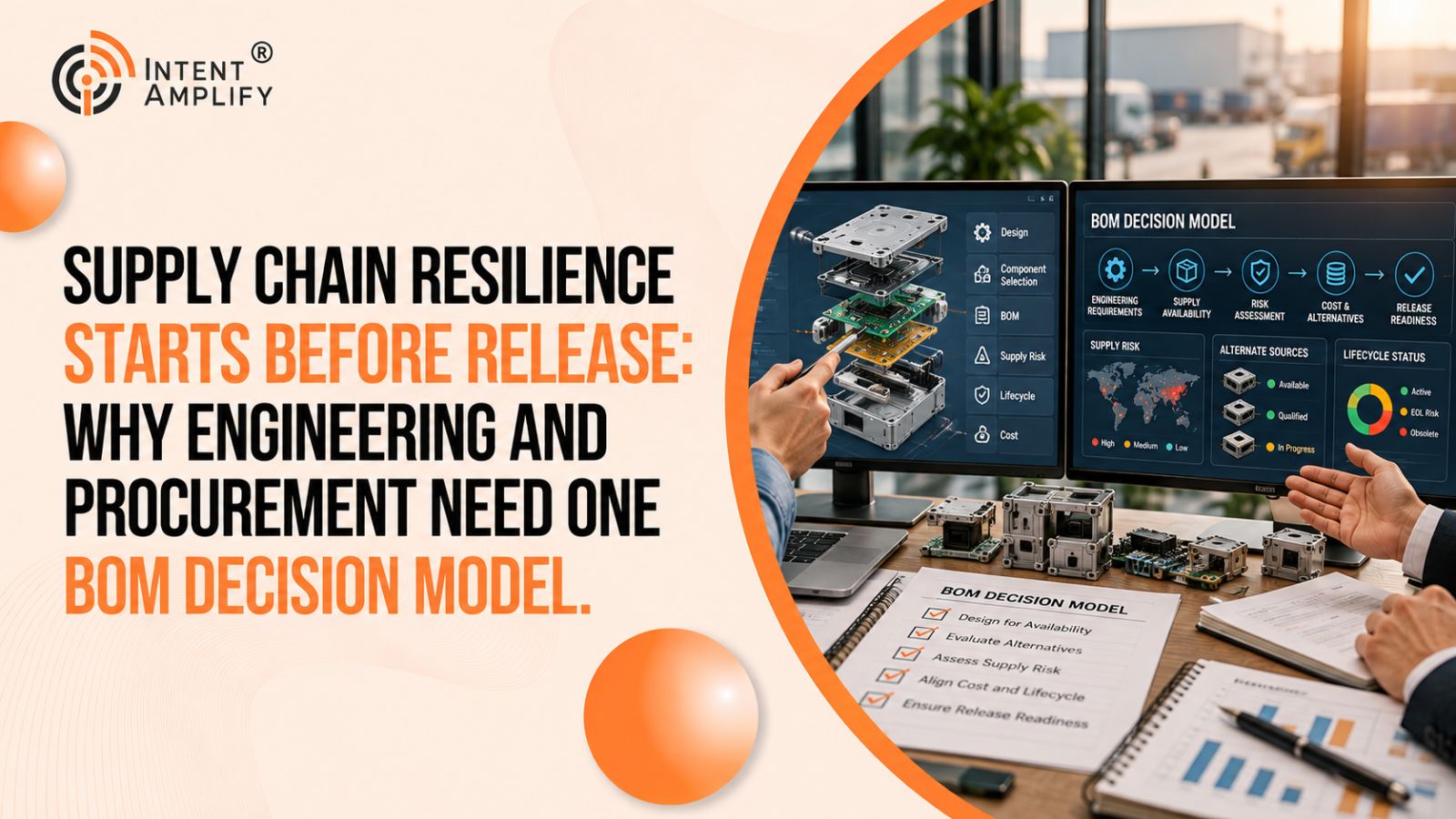
A shared BOM decision model brings those perspectives together before release rather than forcing teams to reconstruct them after a disruption.
Expert Perspective: Visibility Is Valuable Only When It Changes a Decision
Supply-chain visibility is often discussed as if seeing risk earlier automatically creates resilience. It does not.
A dashboard can flag an issue. A market feed can show a lifecycle change. A distributor can report availability. The organization still needs a defined decision path.
The useful question is not “Do we have more component data?” It is “Can the right people use that data to make a product decision while options are still open?”
That distinction is especially important in electronics because broad market conditions and BOM-level exposure are not the same thing.
ECIA’s Industry Pulse program tracks current sales expectations, cancellations, decommits, and product lead-time trends across major electronic-component categories, semiconductor subcategories, and end markets [3]. These indicators can help teams understand market direction, but they cannot determine whether a specific component is acceptable for a specific product.
A healthy market can still contain single-source exposure. Improving availability does not resolve an end-of-life concern. A technically compatible alternate does not automatically satisfy qualification requirements. Strong distributor inventory today does not guarantee that a critical design choice will remain resilient throughout a product lifecycle.
Decision quality therefore depends on connecting external signals to the BOM, the affected product, the technical constraints, and a named owner.
The mature approach is not “monitor everything.” It is to define which changes deserve review, which components justify deeper scrutiny, and which decisions should be escalated because the potential impact is material.
Market Implications: Component Choice and Sourcing Choice Are Converging
The electronics ecosystem itself is moving toward tighter connections between design and sourcing.
DigiKey’s collaboration with Ultra Librarian, announced in 2025, connected component discovery and procurement within a CAD-oriented workflow. DigiKey described the integration as giving designers access to quotes, prices, product availability, and lead times during the design process [4].
The significance is broader than one integration. It reflects a market direction in which sourcing context is being brought closer to engineering decisions.
That makes sense because many supply-chain options are created—or removed—during design. A component choice can preserve substitution flexibility or concentrate risk. A footprint decision can make later alternates easier or harder. A part can be reviewed with procurement before release or become an urgent exception after release.
At the same time, the semiconductor ecosystem continues to treat resilience as an end-to-end challenge. SEMI’s 2026 Semiconductor Supply Chain Management Survey covers supply-chain planning, supplier dynamics, manufacturing, customer demand, capabilities assessment, and market outlook across the value chain [5].
For engineering organizations, the implication is not that designers should become market forecasters. It is that component decisions increasingly need enough current supply context to avoid preventable downstream constraints.
Decision Governance Is Where BOM Intelligence Becomes Operationally Useful
A dedicated BOM environment becomes valuable when it improves the path from signal to accountable action.
Consider a lifecycle warning on a component used in three active products. The data point alone is not the decision.
The organization needs to determine which products are affected, whether inventory or sourcing options provide enough time, whether an alternate exists, whether engineering has evaluated that alternate, whether a design change is required, and who owns the final decision.
The same logic applies to lead-time movement, constrained supply, supplier concentration, or unexpected cost exposure.
This is where a shared BOM operating model can reduce friction. It keeps product structure, component context, supply intelligence, alternatives, and review activity closer together. That makes it easier for engineering and procurement to work from the same current information instead of reconciling separate spreadsheets, emails, and supplier lookups.
For leaders evaluating this shift, Altium’s whitepaper provides a useful next step. It examines why electronics companies are moving beyond spreadsheets and how modern BOM management can support stronger supply-chain resilience.
Recommendations: Building an Upstream BOM Decision Model
Here are the recommendations from Intent Amplify for electronics organizations looking to move component-risk decisions earlier in the product-development lifecycle.
1. Define the Supply Signals That Deserve Engineering Attention
Not every market movement should interrupt a designer. Establish thresholds for lifecycle status, availability, lead-time movement, source concentration, cost exposure, or other conditions that materially affect product delivery. The goal is to convert supply data into prioritized engineering decisions rather than a stream of undifferentiated alerts.
2. Review Critical Components Before Design Release
Identify components whose unavailability would create significant redesign, qualification, schedule, or production impact. Bring procurement context into the review while the design is still flexible. This creates time to evaluate whether the selected part is acceptable, whether an alternate should be qualified, or whether the design should change.
3. Treat Alternates as Governed Engineering Decisions
An alternate is not simply a part returned by a search. Engineering needs to define technical suitability, qualification requirements, and substitution constraints. Procurement needs to assess whether the alternate actually improves the sourcing position. Record the rationale so the organization does not restart the analysis during every disruption.
4. Connect Component Risk to Product Impact
A component signal becomes actionable when teams can see where the part is used and what business outcome could be affected. Prioritize issues according to the products, builds, launches, or commitments they can influence. This helps prevent low-impact alerts from consuming the same attention as risks that can interrupt production.
5. Make Ownership and Escalation Explicit
Shared visibility should not mean ambiguous responsibility. Define who reviews a signal, who supplies technical and sourcing evidence, who approves a change, and when the issue needs cross-functional escalation. A resilient BOM process should make the next action and owner visible, not merely the risk.
Conclusion: Resilience Is Built While Choices Are Still Flexible
Supply-chain resilience in electronics is not created when procurement finds a shortage. It is created earlier, when engineering choices can still be adjusted without disproportionate cost and delay.
The strongest BOM operating model therefore connects design intent with current supply context before release. Engineering retains responsibility for technical suitability. Procurement contributes sourcing and market intelligence. The organization defines which signals matter, how alternatives are evaluated, who owns the decision, and how the rationale is preserved.
Dedicated BOM management does not eliminate volatility. It changes how early the organization can see meaningful exposure and how efficiently it can respond.
That is the strategic shift behind the Altium campaign: from a static parts list to a shared decision system that helps engineering and procurement manage component risk while options remain open.
Build Stronger Demand Around Electronics Supply Chain Resilience
Intent Amplify helps B2B technology companies turn complex electronics, engineering, procurement, and supply-chain themes into credible thought leadership, market education, and demand-generation programs for senior buyers. For organizations positioning BOM management, component intelligence, design platforms, or supply-chain technology, the message must connect technical capability to a specific operational decision.
Through content strategy, research-led assets, content syndication, and buyer-focused demand generation, Intent Amplify helps technology brands translate complex solutions into clear executive value.
Assess your electronics supply-chain content and demand-generation strategy.
Use Altium’s “Building Supply Chain Resilience: Transforming BOM Management for Modern Electronics” whitepaper to benchmark where spreadsheet-led BOM workflows lose supply context, slow engineering-procurement decisions, or leave component risk unresolved until options narrow.
References
1. Altium (2026) Building Supply Chain Resilience: Transforming BOM Management for Modern Electronics. Available at:
https://resources.altium.com/p/transforming-bom-management-whitepaper
2. Altium (2026) BOM Portal Introductory Tutorial. Available at:
https://resources.altium.com/p/BOM-portal-introductory-tutorial
3. Electronic Components Industry Association (2026) Market Trends/Lead Times. Available at:
https://www.ecianow.org/market-trends-lead-times/
4. DigiKey (2025) DigiKey Collaborates with Ultra Librarian to Merge Component Discovery with Procurement. Available at:
5. SEMI (2026) Semiconductor Supply Chain Management Survey. Available at:
https://www.semi.org/en/industry-groups/supply-chain-management-survey