Executive Snapshot
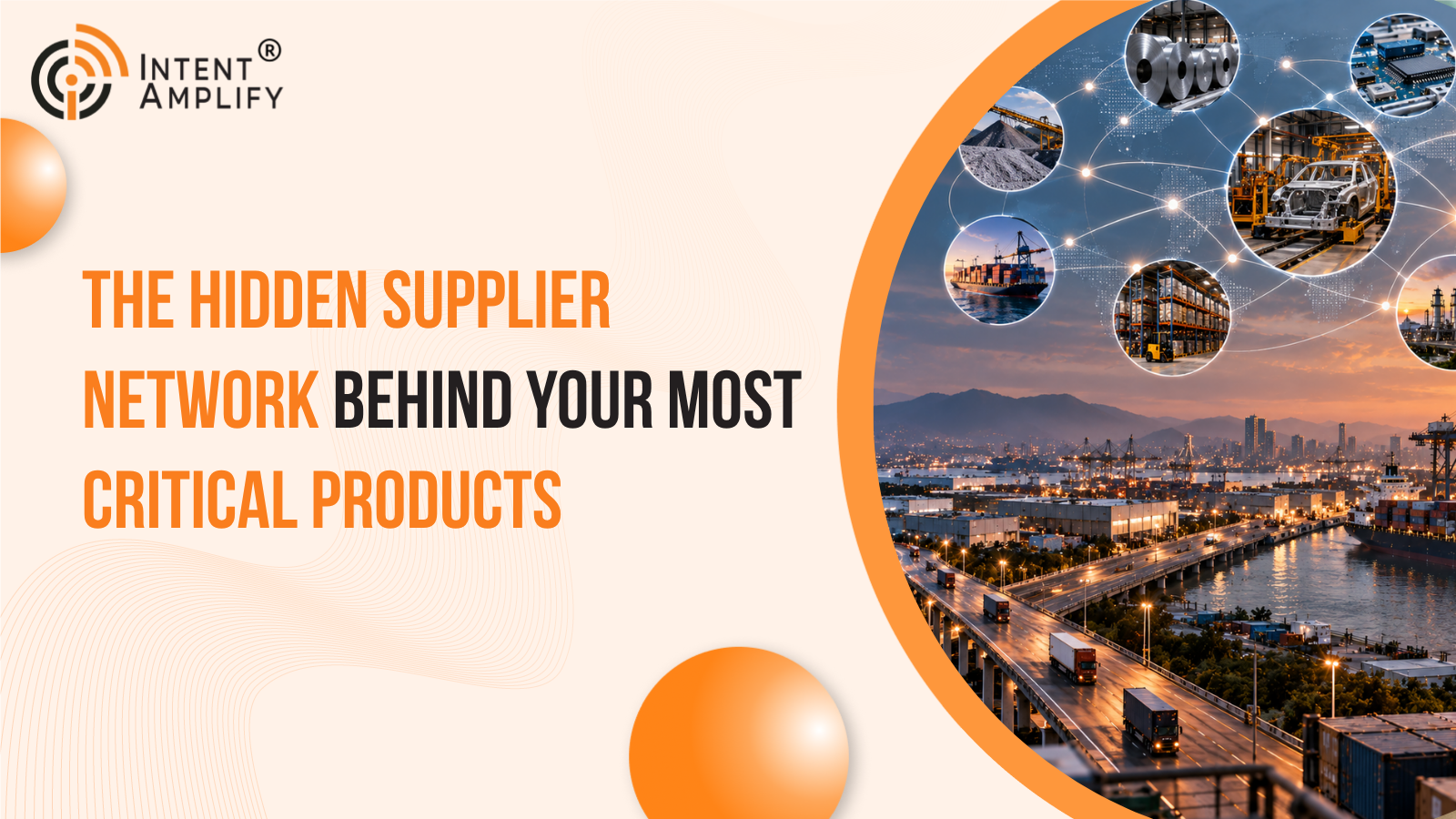
The supplier named on a purchase order is rarely the full supply network behind a critical product. A Tier-1 supplier may depend on a Tier-2 specialist, a Tier-3 processor, a shared logistics node, or a raw-material source that supports several apparently diversified suppliers. When disruption begins upstream, the direct supplier can still look healthy while the real response window is already narrowing.
That is why N-tier intelligence is becoming a decision discipline rather than a mapping exercise. Supply Chain Management Review reported in March 2026 that procurement teams are increasing attention on Tier-2 visibility as tariffs, volatility, and compressed launch cycles expose the limits of Tier-1 oversight. The practical value is not simply finding more supplier relationships. It is identifying which deeper-tier dependencies can change cost, continuity, launch, compliance, or customer outcomes. [1]
For supply chain, procurement, sourcing, risk, and operations leaders, the sharper question is not “How many suppliers can we map?” It is “Which hidden dependencies sit behind the products and commitments we cannot afford to lose?”
Key Industry Updates: Supply Chain Risk Is Moving Deeper Into the Network
Sphera’s June 2026 supply chain risk analysis argues that visibility alone is no longer enough. Organizations have more supplier intelligence and risk signals, yet disruption still exposes vulnerabilities because teams struggle to determine which information matters most and how it connects to business impact. [2]
Academic research published in June 2026 reaches a related conclusion from a different direction. A study in the International Journal of Physical Distribution & Logistics Management developed a multi-layered supplier risk assessment framework intended to make supplier-level resilience capabilities more operational and measurable. The research reinforces the need to connect multiple risk dimensions rather than rely on one supplier score or one monitoring signal. [3]
The external risk environment is also keeping pressure on procurement teams. CIPS reported in July 2026 that supply-chain concern remained elevated, with geopolitical disruption, inflation and input-price pressure, and cyber risk prominent in its Q2 Pulse Survey. The report also noted that organizations were actively redesigning supply networks in response to disruption. [4]
At the operating-model level, ISM and Amazon Business reported in July 2026 that 71% of surveyed organizations said balancing cost and risk now drives procurement strategy, while 45% said they were prepared for supply-chain disruptions and 65% still relied on manual reporting to gather supply-chain data. The findings point to a gap between strategic intent and the data and execution required for faster decisions. [5]
Trend Analysis: Product-Centric Intelligence Changes the Question
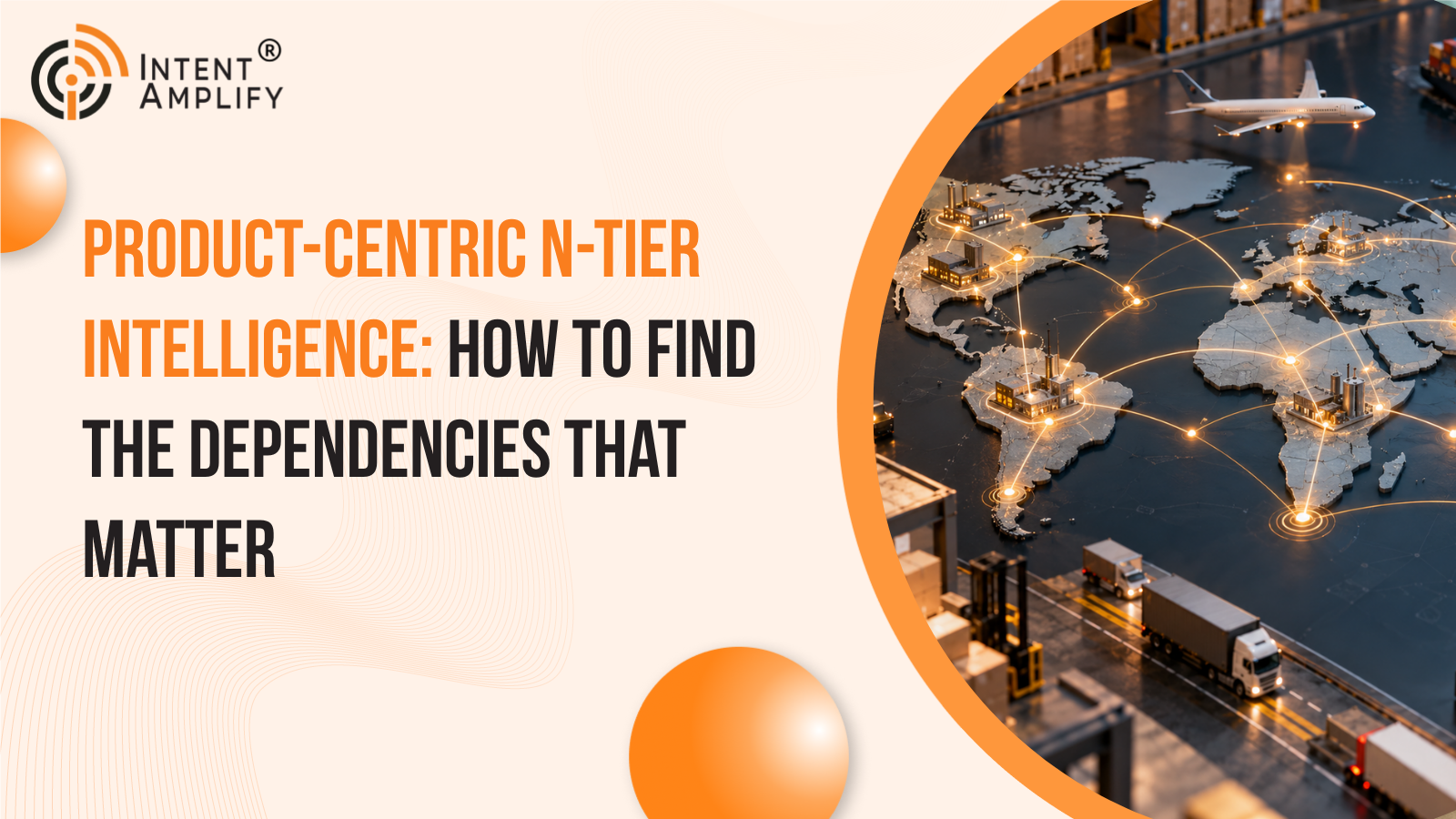
Traditional supplier mapping starts with companies and relationships. Product-centric N-tier intelligence starts with business criticality.
That difference matters. A network graph can show that Supplier A is connected to Supplier B. It does not automatically tell an executive whether that relationship supports a flagship product, a regulated component, a high-margin line, a customer commitment, or a replaceable input.
A product-centric view asks:
- Which critical products depend on the same upstream supplier?
- Where do multiple Tier-1 suppliers converge on one Tier-2 or Tier-3 source?
- Which sites, materials, processes, or logistics nodes create hidden concentration?
- How quickly could a disruption propagate into production or service?
- Which alternate sources are actually qualified?
- Which exposure deserves action first?
The hidden concentration problem is especially important. Two direct suppliers may appear to provide diversification while depending on the same upstream manufacturer. Several plants may rely on one specialty material. Multiple product families may share a single processor or transport corridor. Tier-1 diversification can therefore look stronger on paper than it is operationally.
This is where N-tier intelligence becomes useful: when deeper relationships are connected to product criticality, confidence in the relationship, current risk signals, and feasible mitigation.
Expert Commentary: More Relationships Do Not Automatically Mean Better Decisions
The temptation in N-tier programs is to treat completeness as the goal. Map more nodes, add more feeds, and generate more alerts. But a larger graph can increase workload without improving response if the organization cannot distinguish a critical dependency from a low-consequence relationship.
A more useful operating model separates four questions.
- First, what is critical? Identify the products, materials, facilities, revenue commitments, and regulatory obligations that deserve deeper visibility.
- Second, what is the dependency? Establish the upstream relationships supporting those outcomes and distinguish verified relationships from inferred or incomplete ones.
- Third, what is the exposure? Monitor the risk categories that can materially affect those dependencies, including financial, geopolitical, cyber, natural-hazard, regulatory, operational, and reputational signals.
- Fourth, what can the organization do? Connect the exposure to an executable decision: investigate, engage the supplier, qualify an alternate, rebalance inventory, change a sourcing strategy, or escalate.
The quality of the N-tier program should therefore be judged by decision usefulness, not graph size.
Actionable Insights for Supply Chain and Procurement Leaders
1. Start with critical products, not the entire supplier universe
Define which products, materials, services, and customer commitments justify deeper mapping. A bounded starting point makes the intelligence easier to validate and act on.
2. Separate verified relationships from inferred relationships
Supplier-network data can come from supplier disclosure, transactional evidence, third-party data, and modeled relationships. Preserve provenance and confidence so an inferred connection is not escalated as confirmed exposure.
3. Test diversification below Tier 1
For priority products, identify whether apparently independent direct suppliers share a sub-tier source, region, process, material, or logistics dependency. This is where hidden concentration can invalidate a sourcing assumption.
4. Connect every risk signal to business impact
Do not prioritize an event only because it appears severe. Determine what product is exposed, when impact could reach operations, what inventory or alternatives exist, and what customer or financial consequence could follow.
5. Build mitigation into the intelligence model
A useful N-tier view should help teams see the next decision. Record qualified alternatives, inventory buffers, switching constraints, response lead times, owners, and escalation paths alongside the dependency.
Conclusion: The Value of N-Tier Intelligence Is Better Prioritization
The next phase of supply-chain visibility will not be defined by the number of relationships an organization can display. The stronger capability is the ability to identify which deeper-tier relationships matter, understand how a disruption can propagate through a critical product, and act while lower-cost options are still available.
That requires more than a supplier graph. It requires product criticality, relationship evidence, current risk context, mitigation options, and clear decision ownership.
For leaders evaluating how to move from supplier-centric maps to product-centric N-tier intelligence, the on-demand webinar Unlocking N-Tier Intelligence for Better Supply Chain Decisions explores hidden dependencies, concentration risk, business impact, and practical prioritization.
References
1. Supply Chain Management Review (2026) How Procurement Teams Are Managing Tier 2 Suppliers to Lower Costs and Improve Resilience. Available at:
2. Sphera (2026) Supply Chain Risk Management in 2026: Why Visibility Alone Is No Longer Enough. Available at:
3. International Journal of Physical Distribution & Logistics Management (2026) From Risk to Resilience: A Multi-Layered Framework for Supplier Risk Assessment to Strengthen Supply Chain Resilience. Available at:
https://www.sciencedirect.com/org/science/article/pii/S0960003526000206
4. CIPS (2026) Q2 2026 CIPS Pulse Survey: Supply Chain Risk Results. Available at:
https://1prd-dxp.cips.org/knowledge-and-insight/articles/q2-2026-pulse-results
5. Institute for Supply Management (2026) ISM and Amazon Business Research Finds Most Organizations Unprepared for Supply Chain Disruption Despite Strategic Shift. Available at: