
Executive Thesis
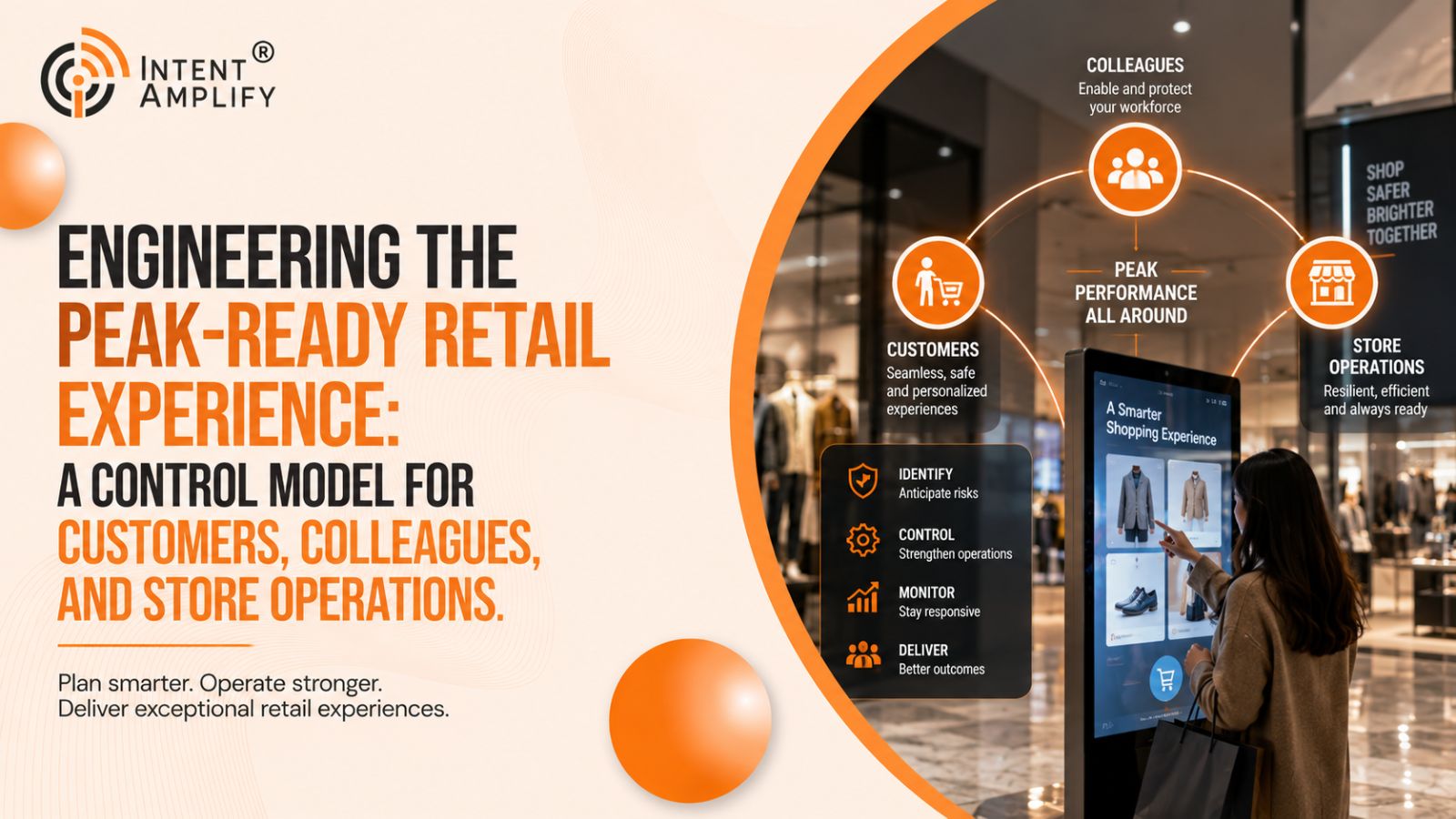
Peak retail puts customer experience, staff workload, safety, and loss protection into the same operating moments. The useful design objective is neither maximum friction nor minimum control. It is a shared decision model in which routine service remains fast and material protection conditions are explicit.
RETHINK Retail’s holiday playbook argues that retailers should prepare early, use stores intelligently as fulfillment hubs, protect staff experience, and automate intentionally. Those priorities increase the importance of control usability. A workflow that is theoretically well governed but cannot be executed under peak workload is not a strong operating control.
Observation: Peak Changes the Context of Routine Decisions
A workflow that appears low risk under normal conditions can behave differently when demand concentrates. Queues change visibility. Task reallocation changes supervision. Store fulfillment increases movement and workload. Returns add exceptions. Technology outages can force fallback processes. Temporary or reassigned staff may have different familiarity with local routines.
These conditions do not automatically imply higher loss or poorer service. They do mean that the context around a decision changes. NRF’s forecast of 4.4% U.S. retail sales growth in 2026 to $5.6 trillion reinforces the continuing scale of the retail operating environment (NRF, 2026), but it does not establish retailer-specific risk. Protection thresholds must come from each retailer’s own policy and evidence.
Interpretation: Friction Is Not the Same as Control
A control is valuable when it addresses a relevant risk and remains usable in the environment where employees must execute it. Extra steps that employees routinely bypass, alerts that are ignored, or approval chains that delay predictable service can weaken rather than strengthen the operating model.
Customer-experience teams see where controls create visible waiting or confusion. Protection teams understand which evidence changes the risk state. Store operations know whether the workflow is executable. Retail IT can improve signal quality and routing. The shared objective is not compromise between functions; it is a better decision boundary.
This is especially important because RETHINK Retail treats staff experience as a central peak pillar. When employees must remember complex rules, switch repeatedly between systems, or wait for unclear approval, the control burden competes with customer service for attention.
Implication: Define the Boundary Between Routine and Material
A peak decision model should distinguish routine customer recovery from material exceptions. Routine actions can include standard service recovery, workflow redirection, or task reallocation within established policy. Material conditions can include safety, privacy, suspected fraud, significant loss exposure, or broader operational impact.
The exact thresholds cannot be responsibly supplied by generic editorial content. They should be based on the retailer’s policies, legal requirements, risk appetite, and observed operating evidence. The reusable design pattern is narrower: condition, evidence, owner, authorized action, escalation trigger, and closure.
When that pattern is clear, employees do not need to choose between good service and following controls. The service path already contains the appropriate protection boundary.
Implication: Store-as-Hub Models Increase Cross-Functional Control Needs
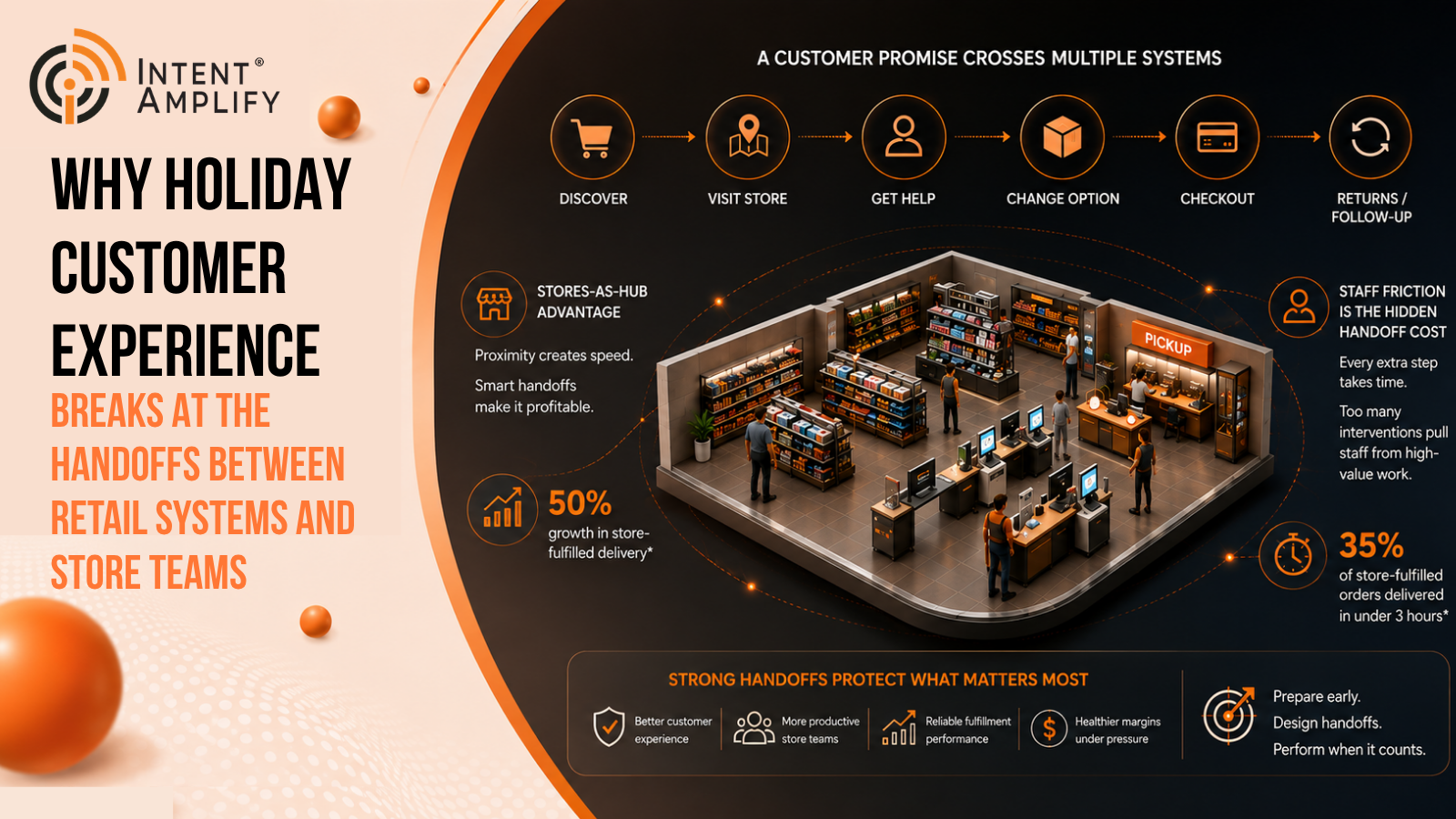
RETHINK Retail highlights store fulfillment as an important peak capability. Walmart’s FY26 Q4 earnings presentation independently reported approximately 50% growth in store-fulfilled delivery, while expedited deliveries under three hours represented about 35% of store-fulfilled orders (Walmart, 2026). Its analytical value is that store fulfillment expands the operating role of the store and therefore the number of decisions in which service, inventory, labor, and protection can intersect.
Deloitte’s 2026 store-modernization research similarly positions stores as increasingly important fulfillment and service assets (Deloitte, 2026b). That creates practical questions: How should high-value items be handled in store-fulfilled workflows? Which exceptions require additional verification? How should returns or substitutions be governed without adding unnecessary customer delay? Which conditions change a routine fulfillment action into a material protection event?
These questions should be resolved before peak, not improvised when demand is concentrated.
Implication: Shared Signals Need Role-Specific Actions
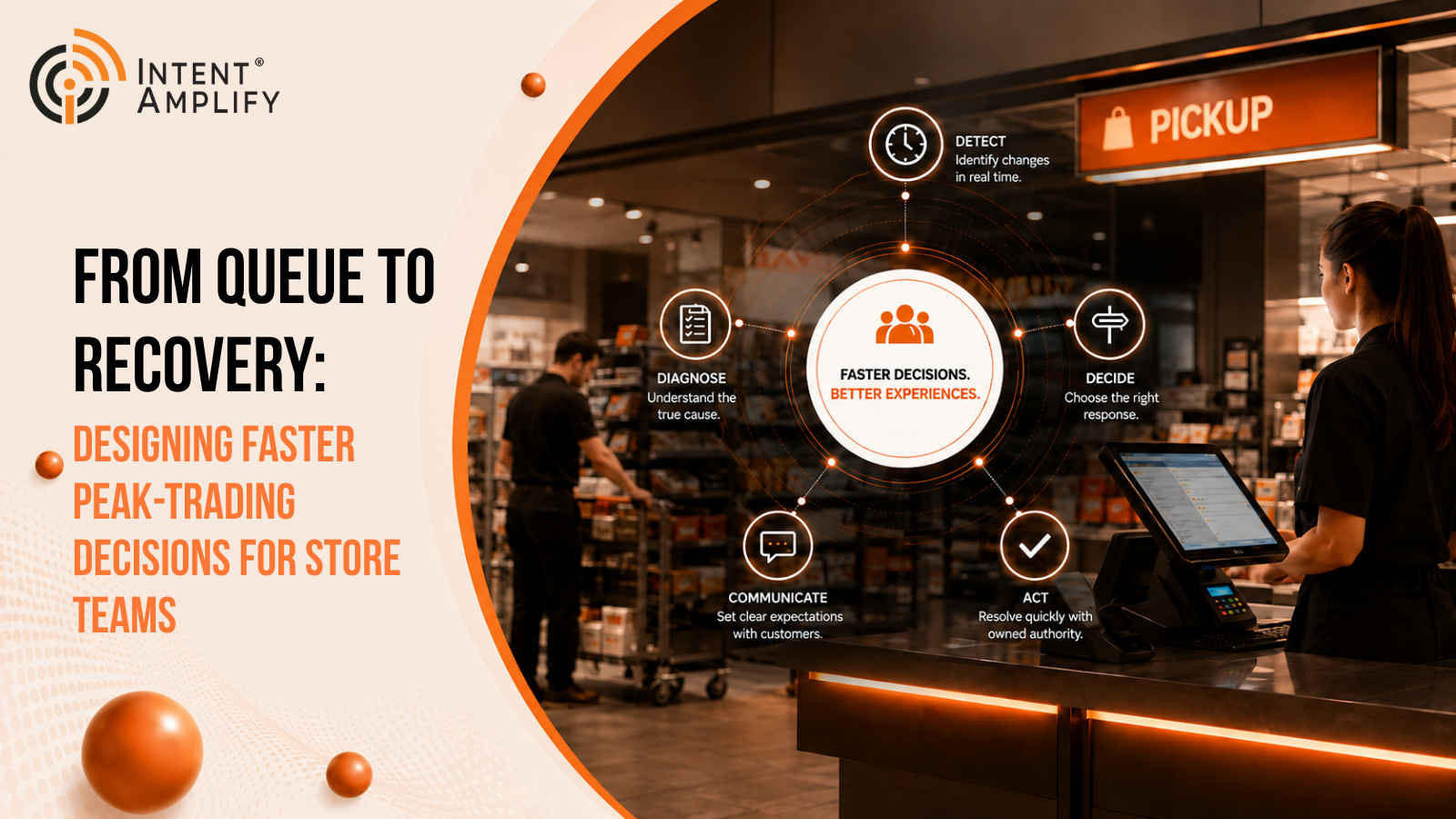
Customer experience and protection teams may observe different evidence, but some peak signals are operationally shared. Queue conditions, transaction exceptions, device health, fulfillment delays, repeated service recovery, and unusual workflow patterns can matter to multiple functions for different reasons.
A shared operating view does not mean every function sees every detail or acts on every signal. It means teams agree on which conditions change a cross-functional decision. Detailed information can remain role-appropriate while the organization maintains a common understanding of the operating state.
Deloitte’s connected-store research emphasizes integration across customer, associate, and enterprise capabilities (Deloitte, 2026a). The practical implication is that signal routing should follow decision rights. A protection alert sent to someone who cannot interpret or act on it creates distraction. A service signal that never reaches the team able to resolve it creates delay.
Implication: Staff Experience Is a Protection Variable
RETHINK Retail highlights age verification as a major self-checkout intervention point. Diebold Nixdorf states that age verification can account for up to 22% of interventions by a shop employee; this should be treated as sponsored-source evidence. It nevertheless illustrates why automated customer journeys still require well-designed human exception handling.
Deloitte’s 2026 store-labor analysis argues that technology produces value when work is redesigned, and administrative burden is reduced (Deloitte, 2026c). That matters for protection because sustained complexity can encourage inconsistent execution. The answer is not weaker control; it is simpler, clearer control that can be followed under realistic workloads.
Scenario-based training is therefore more useful than abstract policy recall for recurring peak moments. Employees need to understand the normal action, the evidence that changes the risk state, and where their authority ends.
A Shared Peak Decision Model
For one customer journey with service and protection implications, define:
1. Normal promise - what the customer should experience.
2. Routine condition - the state that can be handled within standard service policy.
3. Material evidence - the information that changes the protection or safety state.
4. Decision owner - the role authorized for each state.
5. Action boundary - what can and cannot be done locally.
6. Customer communication - what employees can accurately explain.
7. Closure evidence - what confirms that the condition has been resolved.
8. Read-back - whether the rule protected both experience and the relevant risk.
The model can be tested against checkout, returns, pickup, high-value product assistance, or another retailer-specific workflow. The purpose is to expose conflicting instructions before live demand does.
Measure the Outcome of the Control
A peak control should be reviewed against more than one outcome. Did it protect the customer experience? Did it appropriately manage the relevant risk? Did it create excessive staff workload? Did employees follow the intended path? Did the same exception recur?
No single metric answers all of these questions. A balanced review combines service, operational, staff, and protection evidence. The aim is not to claim universal performance; it is to learn whether the operating rule works in the retailer’s own environment.
Analyst Interpretation
Customer experience and loss prevention are not opposing peak priorities. They are parts of the same operating system. Strong design makes the relevant risk visible, keeps routine service fast, assigns material decisions to the appropriate owner, and uses evidence to improve the rule after action.
The evidence does not support a generic claim that reducing friction will reduce loss, or that adding controls will improve service. Those outcomes depend on the specific workflow. The stronger principle is that controls should be risk-relevant, executable under peak workload, and connected to explicit decision rights.
Sources
RETHINK Retail and Diebold Nixdorf (2026) The Holiday Season Playbook: Delivering Exceptional Customer and Staff Experience During Peak Trading. Available at: https://intentamplify.com/landing-page/report/the-holiday-season-playbook-delivering-exceptional-customer-and-staff-experience-during-peak-trading/ (Accessed: August 25, 2026).
Diebold Nixdorf (2024) Diebold Nixdorf Sets Out to Combat Shrink in Retail with New AI-powered Offering. Available at: https://s27.q4cdn.com/808990265/files/doc_news/Diebold-Nixdorf-Sets-Out-to-Combat-Shrink-in-Retail-with-New-AI-powered-Offering-2024.pdf (Accessed: August 25, 2026).
Walmart Inc. (2026) FY26 Q4 Earnings Presentation. Available at: https://fortune.com/company-assets/1854/quartr/slides-ad2ae-2026-02-19-12-36-02.pdf (Accessed: August 25, 2026).
National Retail Federation (2026) NRF Forecasts 4.4% Annual Retail Sales Growth with New Economic Model. Available at: https://nrf.com/media-center/press-releases/nrf-forecasts-4-4-annual-retail-sales-growth-with-new-economic-model (Accessed: August 25, 2026).
Deloitte (2026a) The Connected Store. Available at: https://www.deloitte.com/us/en/Industries/consumer/articles/connected-store-retail-digital-transformation.html (Accessed: August 25, 2026).
Deloitte (2026b) Future-proof Your Stores. Available at: https://www.deloitte.com/content/dam/assets-zone3/us/en/docs/industries/consumer/2026/future-proof-your-stores-2026.pdf (Accessed: August 25, 2026).
Deloitte (2026c) Store Labor Modernization and Workforce Management. Available at: https://www.deloitte.com/us/en/industries/consumer/articles/retail-labor-optimization-workforce-management.html (Accessed: August 25, 2026).