
Book a Demo
Home Platform Audience Accounts Intent Evidence Activation Solutions Industries Programs Research Pricing About Careers Press Contact Brands Trust Privacy Accessibility Demo ABM Advertising Content Demand Intent Data Sales Blog Infographics Events Product Sheets Videos Webinars White Papers E-books Customer Stories Corporate Presentation Newsletters Expert Insights Expert Analysis Research Reports
Blog

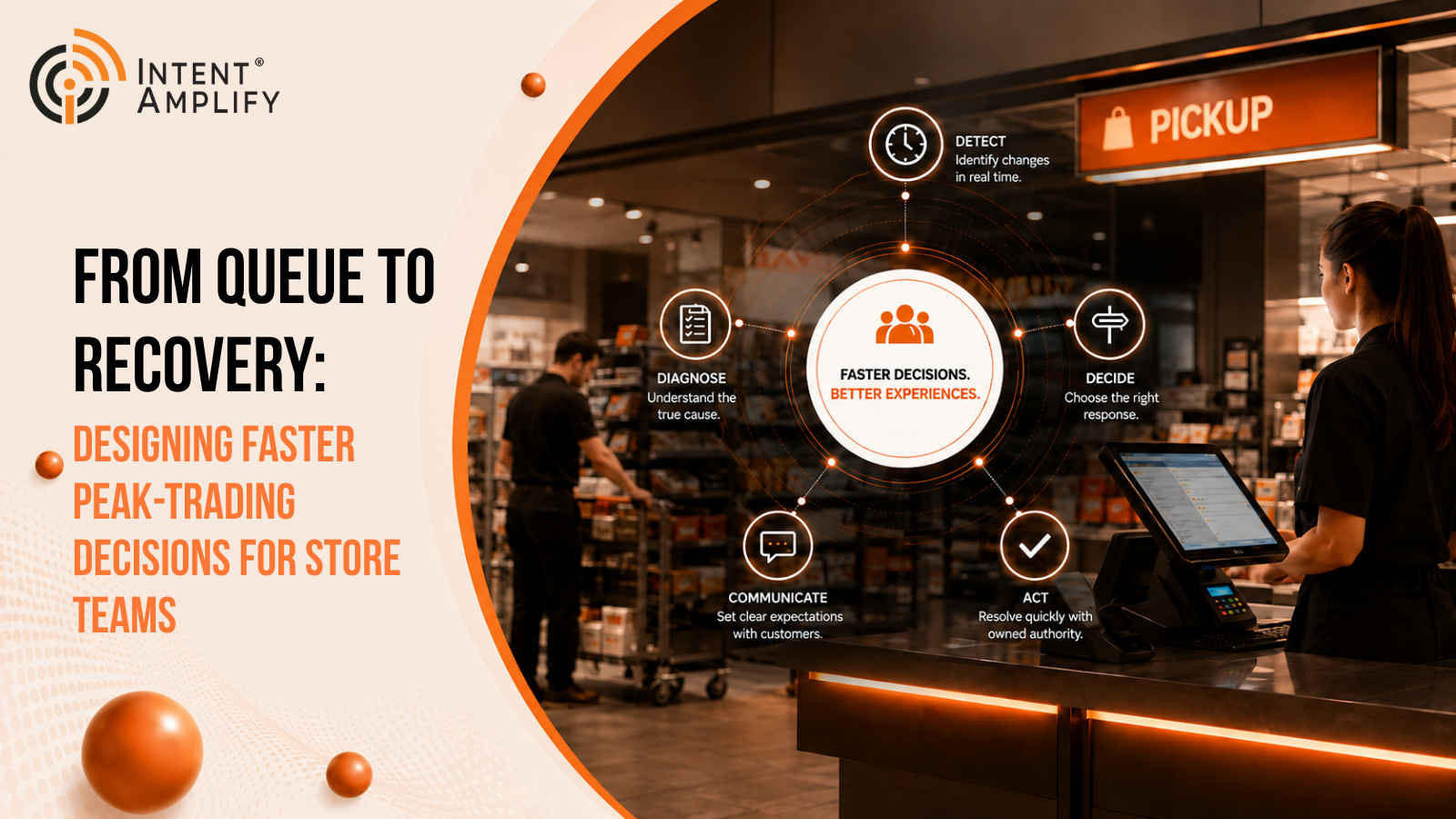
From Queue to Recovery: Designing Faster Peak-Trading Decisions for Store Teams

From Queue to Recovery: Designing Faster Peak-Trading Decisions for Store Teams
September 1, 2026 6 min read

Quick Answer

Peak-season resilience depends on how quickly store teams can detect problems, make the right decisions, and recover. Clear authority, trusted evidence, staff capacity, and intentional automation can help reduce customer-visible friction.

Peak Experience Is Built in Minutes

Holiday pressure turns small operating delays into visible customer friction. A manageable checkout line can become a queue. A pickup wave can arrive before orders are staged. A device outage can remove capacity. A colleague can wait for approval while customers wait for the colleague.

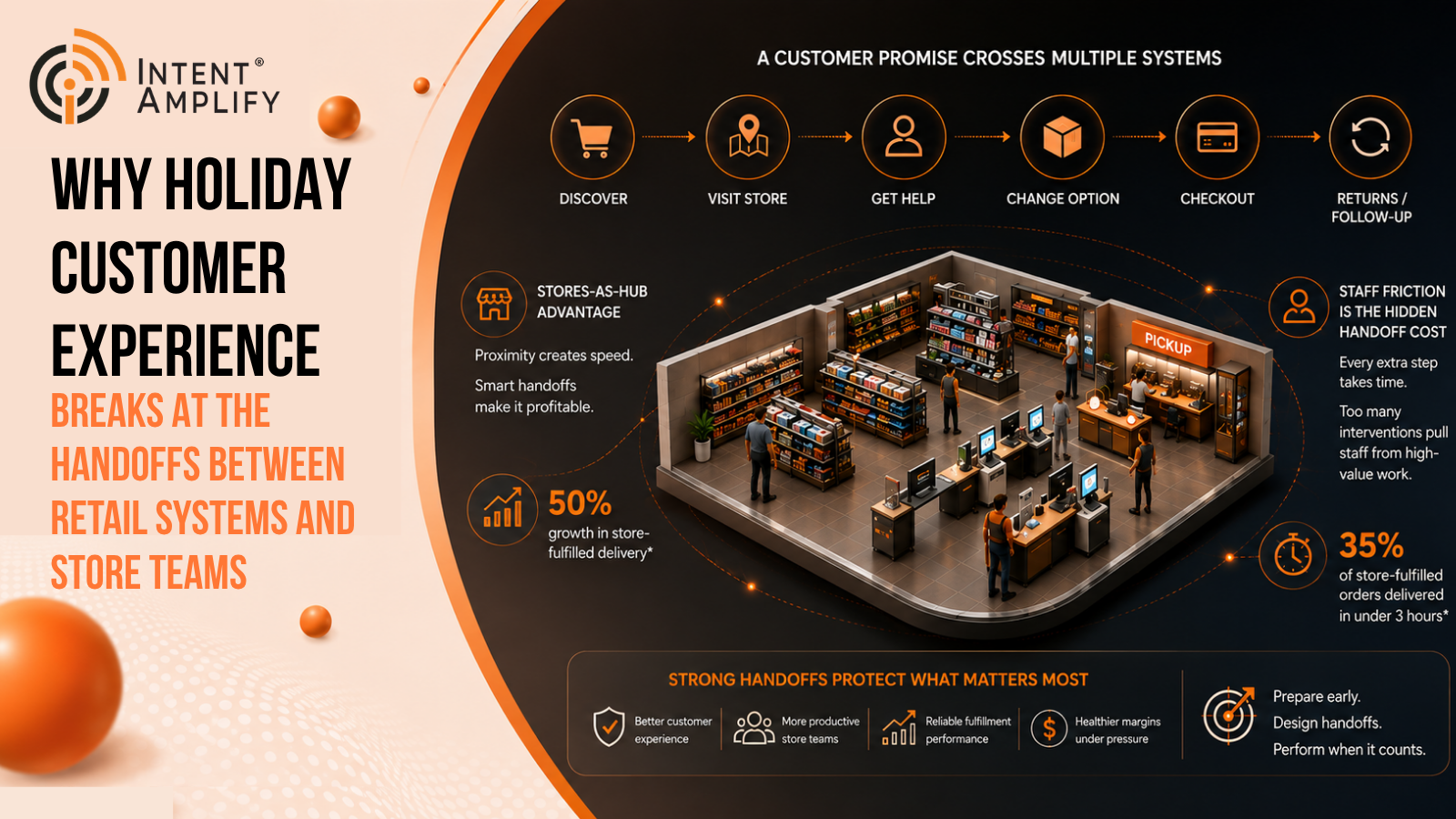
RETHINK Retail’s holiday thesis is useful because it treats these moments as design problems rather than unavoidable consequences of volume. Its four pillars - prepare early, use stores as fulfillment hubs, protect staff experience, and automate intentionally - point to one common requirement: teams need to convert a changing operating condition into the right action quickly.

Observation: Queues Are Often the Last Symptom

Queues are easy to see but difficult to diagnose from the queue alone. Checkout waiting can reflect staffing, device availability, payment friction, price exceptions, age checks, or task allocation. Pickup waiting can reflect inventory confidence, pick completion, staging, arrival recognition, or handoff capacity.

NRF forecasts U.S. retail sales growth of 4.4% in 2026 to $5.6 trillion, providing a current demand backdrop for retail planning (NRF, 2026). Higher demand does not by itself explain a poor experience. The operational question is whether capacity and decision rules adjust quickly enough when conditions change.

A stronger diagnostic approach traces visible waiting backward. Which event increased service time? Which exception repeated? Which resource became constrained? Which decision required escalation? Which system failed to provide a trusted answer? This turns the queue from a staffing assumption into an evidence problem.

Interpretation: Decision Latency Is a Peak Constraint

A material condition can be detected quickly and still produce a poor outcome if the response path is slow. Decision latency is the time between evidence that something has changed and an authorized action that addresses it.

Deloitte’s connected-store research emphasizes the value of integrating customer, associate, and enterprise capabilities (Deloitte, 2026a). The implication for peak trading is that visibility alone is insufficient. A queue indicator, order-risk alert, or device-status signal creates value only when the next action is defined and owned.

This distinction matters because peak teams can be data-rich and action-poor. If a dashboard changes but the employee must check another system, contact a manager, and wait for confirmation, the signal has not closed the operating loop. It has merely documented the problem earlier.

Implication: Local Authority Protects Recovery Capacity

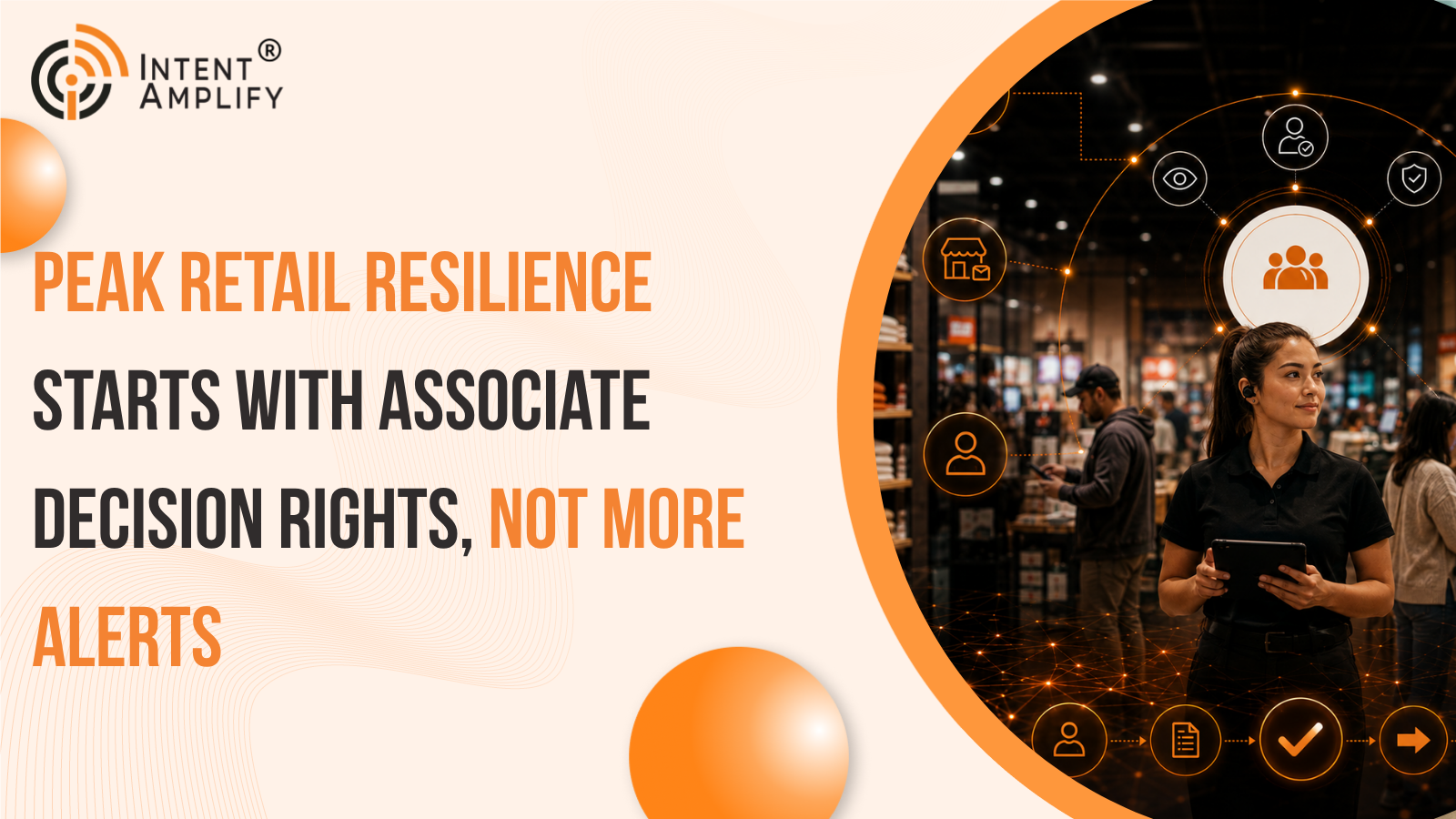
Routine, low-risk recovery should not compete with material exceptions for the same approval capacity. The exact authority boundaries differ by retailer, but the design principle is consistent: predictable actions should be defined before peak, while higher-risk conditions remain explicitly governed.

A store leader might be authorized to rebalance tasks, activate an approved service flow, or use a defined recovery option. An associate might resolve a common availability issue within policy. A technology team might use an approved fallback before central escalation. Safety, privacy, fraud, loss, or material customer-impact conditions should still move to the appropriate owner.

This is not reduced governance. It is more usable governance. The employee knows what can be resolved locally, what evidence is required, and which boundary changes the decision.

Implication: Staff Experience Determines Recovery Speed

RETHINK Retail explicitly connects staff experience with peak performance. The source highlights age verification as a major self-checkout intervention point. Diebold Nixdorf states that age verification can account for up to 22% of interventions by a shop employee; this should be treated as sponsored-source evidence. Its analytical value is in showing that apparently automated journeys can still generate concentrated human work.

Deloitte’s 2026 workforce research similarly argues that technology creates value when work is redesigned, and administrative burden is reduced (Deloitte, 2026d). During recovery, unnecessary alerts, duplicate updates, repeated searches, and approval waits consume the same attention needed to help customers.

A peak recovery model should therefore protect staff attention. Every alert should answer four questions: What changed? How important is it? Who owns the response? What action is expected? If an alert cannot answer those questions, it may add noise rather than resilience.

Implication: Recovery Must Include Customer Communication

An operational issue can be recovered internally while the customer still experiences uncertainty. If an order is delayed, the customer needs an accurate expectation. If an item cannot be found, the associate needs a supported alternative. If a service flow changes, the customer should not have to infer the new process.

Deloitte’s 2026 omnichannel post-purchase analysis highlights the importance of consistent execution after the initial purchase decision (Deloitte, 2026c). That reinforces a broader point: recovery is not complete when the system returns to normal. It is complete when the customer-facing promise has been restored or credibly reset.

A Recovery Design for Peak Trading

For a recurring scenario, define the following before demand concentrates:

1. Condition  -  the observable event that requires attention.

2. Evidence  -  the authoritative signal used to confirm the condition.

3. Local action  -  the approved response closest to the work.

4. Boundary  -  the point at which risk, scope, duration, or customer impact requires another owner.

5. Communication  -  the expectation employees can give customers.

6. Closure  -  the evidence that the condition has returned to an acceptable state.

7. Read-back  -  whether the response solved the issue without creating a new constraint.

This design can be applied to checkout waiting, pickup backlogs, device outages, inventory discrepancies, or recurring service exceptions. The thresholds themselves should be retailer-specific and evidence-based; they should not be invented from generic benchmarks.

Measure Recovery, Not Only Failure

Incident counts describe frequency. Recovery measures describe operating capability. Useful questions include: How quickly was the condition detected? How long until an authorized action began? How long until customer impact returned to an acceptable state? Did the response shift workload elsewhere? Did the same condition recur?

Peak operating design deserves economic measurement as well as service measurement. The accessible public sources reviewed for this asset did not independently substantiate the source-specific operating-income figure, so it has been removed rather than presented as a performance outcome.

Analyst Interpretation

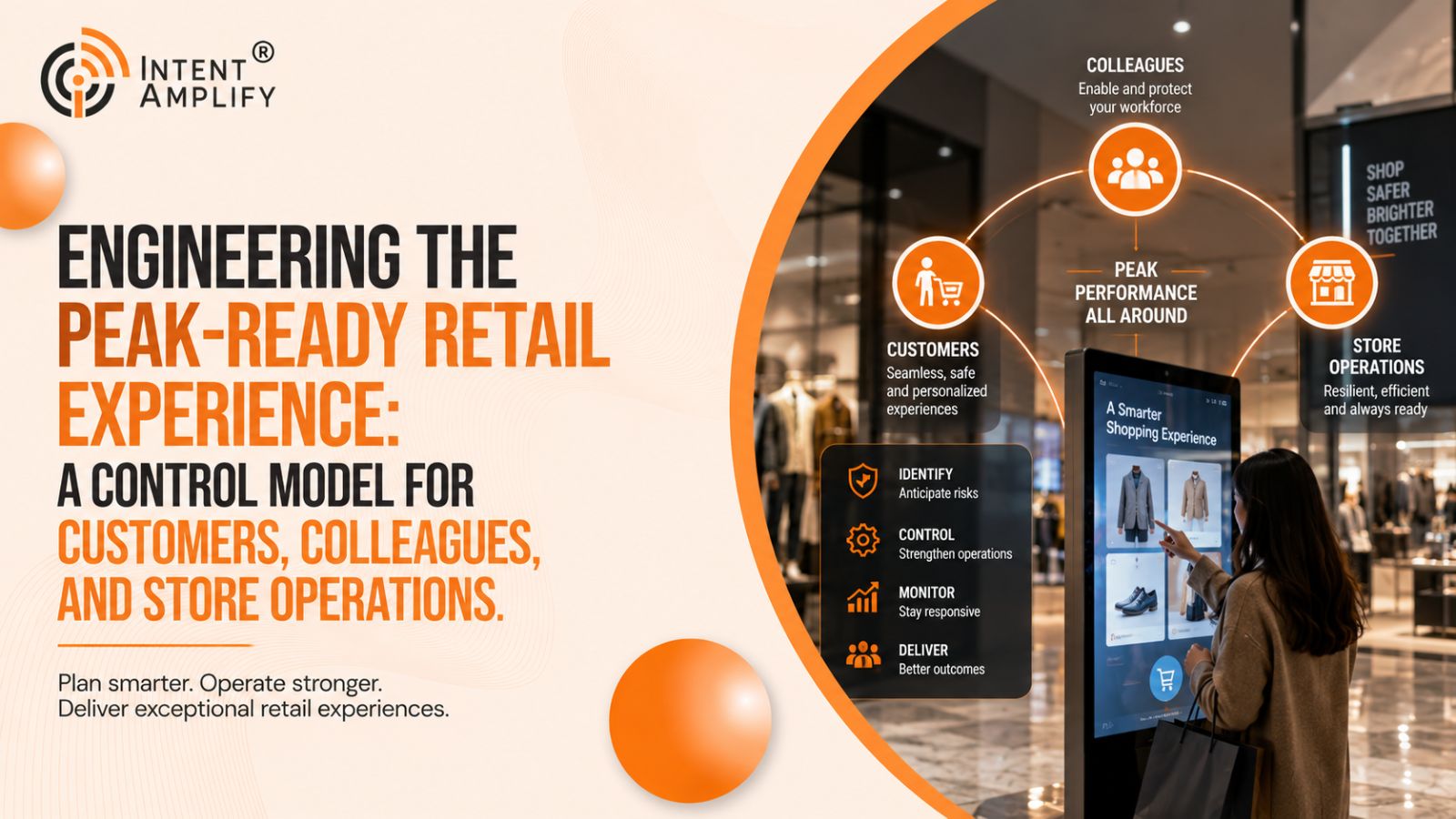
Peak resilience is not the absence of exceptions. It is the ability to detect material conditions, make bounded decisions close to the work, communicate accurately, and learn from the recovery. Preparation creates the opportunity to design those paths before the store is under maximum pressure. Staff-experience protection preserves the attention required to execute them. Intentional automation can shorten predictable decision paths when the evidence and boundaries are clear.

The strongest operating question is therefore not “How do we eliminate every queue?” It is “When pressure creates a customer-visible constraint, how quickly can the organization understand the cause and execute the right recovery?”

Download Now: The Holiday Season Playbook: Delivering Exceptional Customer and Staff Experience During Peak Trading

References

  1. RETHINK Retail and Diebold Nixdorf (2026) The Holiday Season Playbook: Delivering Exceptional Customer and Staff Experience During Peak Trading. Available at: https://intentamplify.com/landing-page/report/the-holiday-season-playbook-delivering-exceptional-customer-and-staff-experience-during-peak-trading/

  2. Diebold Nixdorf (2024) Diebold Nixdorf Sets Out to Combat Shrink in Retail with New AI-powered Offering. Available at: https://s27.q4cdn.com/808990265/files/doc_news/Diebold-Nixdorf-Sets-Out-to-Combat-Shrink-in-Retail-with-New-AI-powered-Offering-2024.pdf

  3. National Retail Federation (2026) NRF Forecasts 4.4% Annual Retail Sales Growth with New Economic Model. Available at: https://nrf.com/media-center/press-releases/nrf-forecasts-4-4-annual-retail-sales-growth-with-new-economic-model

  4. Deloitte (2026a) The Connected Store. Available at: https://www.deloitte.com/us/en/Industries/consumer/articles/connected-store-retail-digital-transformation.html

  5. Deloitte (2026b) Omnichannel Post-Purchase Experience. Available at: https://www.deloitte.com/us/en/industries/consumer/articles/omnichannel-post-purchase-strategy.html

  6. Deloitte (2026c) Store Labor Modernization and Workforce Management. Available at: https://www.deloitte.com/us/en/industries/consumer/articles/retail-labor-optimization-workforce-management.html

Contact
Sales