
Book a Demo
Home Platform Audience Accounts Intent Evidence Activation Solutions Industries Programs Research Pricing About Careers Press Contact Brands Trust Privacy Accessibility Demo ABM Advertising Content Demand Intent Data Sales Blog Infographics Events Product Sheets Videos Webinars White Papers E-books Customer Stories Corporate Presentation Newsletters Expert Insights Expert Analysis Research Reports
Resource

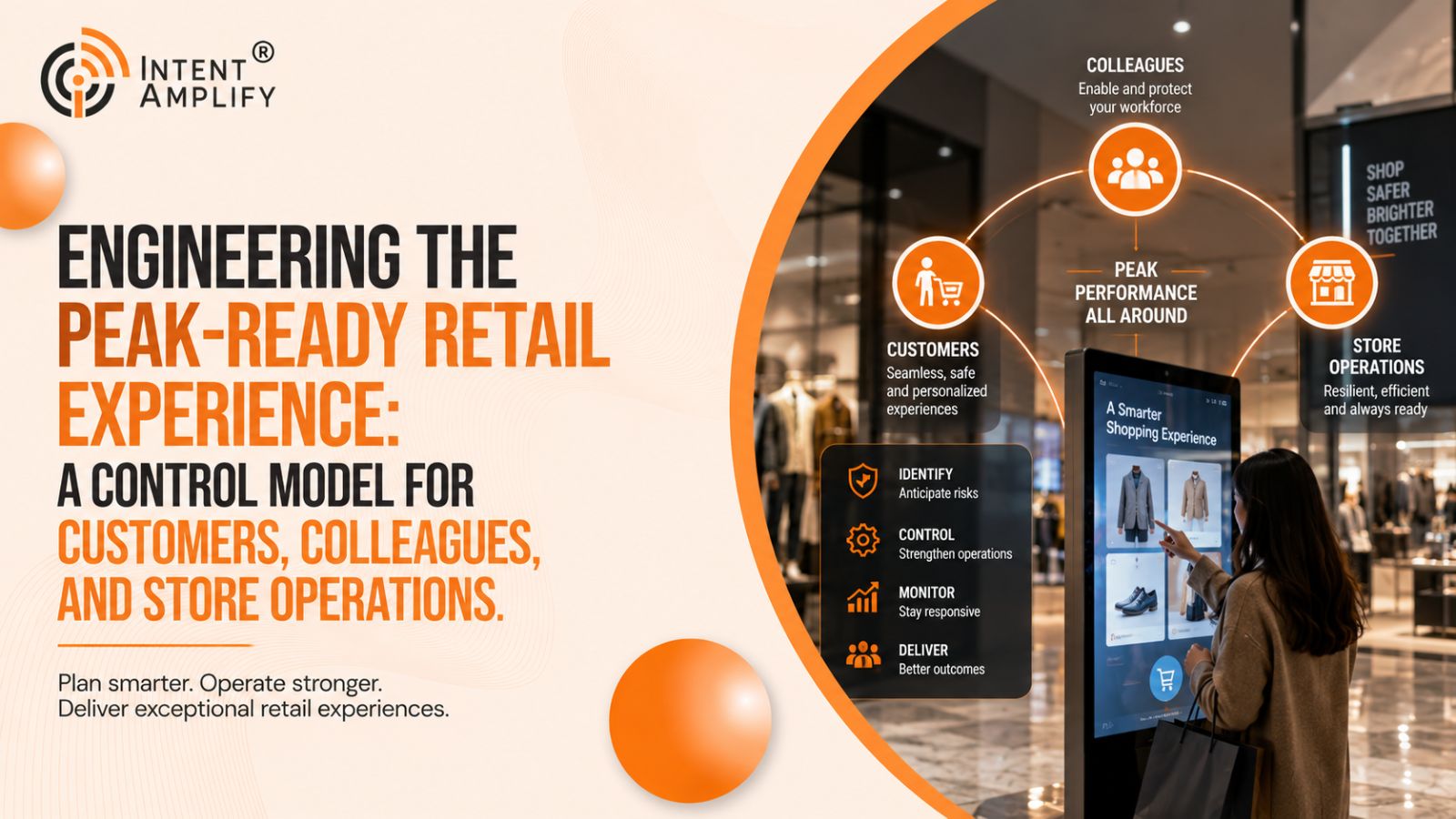
Engineering the Peak-Ready Retail Experience: A Control Model for Customers, Colleagues and Store Operations

Engineering the Peak-Ready Retail Experience: A Control Model for Customers, Colleagues and Store Operations
September 4, 2026 10 min read

Quick Answer

A six-control framework for peak retail operations that connects customer promises, staff workload, store fulfillment, decision rights, exceptions, and measurable outcomes.

Executive Summary

Peak trading is not a single volume event. It is a period in which customer demand, employee workload, technology dependency, fulfillment, service recovery, safety, and protection become more tightly coupled. Retailers can prepare for higher demand and still struggle when the decisions connecting these elements are slow, ambiguous, or based on conflicting evidence.

RETHINK Retail’s holiday playbook organizes the problem around four pillars: prepare early, use stores as fulfillment hubs, protect staff experience, and automate intentionally. This whitepaper translates those pillars into a six-control operating model: promise, evidence, workload, authority, exception, and read-back.

The model does not prescribe universal thresholds. It gives leaders a structure for defining retailer-specific decisions before demand concentrates and for learning from outcomes after action.

Observation: Peak Experience Is a System Outcome

A customer experiences one retailer. The operating model behind that experience can include ecommerce, store systems, inventory, workforce, fulfillment, checkout, payments, customer service, loss prevention, and central support. Peak pressure exposes the gaps between those components because it reduces the time available for manual coordination.

NRF forecasts U.S. retail sales growth of 4.4% in 2026 to $5.6 trillion (NRF, 2026). The forecast does not predict the performance of any individual retailer, but it reinforces the scale of the environment in which peak decisions will be made.

Deloitte’s connected-store research argues that store value increasingly depends on linking customer, associate, and enterprise capabilities (Deloitte, 2026a). Its store-modernization work also positions physical locations as fulfillment and service assets rather than purely transactional spaces (Deloitte, 2026b). Together, these sources support the view that peak experience is produced by an operating system, not a single touchpoint.

Interpretation: The Four Holiday Pillars Share One Operating Dependency

RETHINK Retail’s four pillars appear distinct, but each depends on decision design.

Preparation creates the opportunity to test decisions before live demand. Stores-as-hubs create more cross-channel choices about inventory, labor, fulfillment, and service. Staff experience depends on reducing avoidable coordination and intervention. Intentional automation works when predictable decisions have clear evidence and boundaries.

The common dependency is an execution architecture that connects the customer promise to authoritative evidence, available capacity, decision rights, exception handling, and measurable outcomes.

Control One: Define the Peak Promise

The first control is clarity about what the retailer is promising. A promise can involve product availability, checkout, pickup, returns, service response, delivery, or another retailer-specific journey.

For a priority journey, leaders should identify the customer expectation, the capacity and evidence dependencies, the normal operating path, the routine exception path, and the condition under which the promise must change. This prevents teams from defending an outdated expectation after the operating facts have changed.

A target service level is not evidence that the service level was achieved. This distinction matters both operationally and editorially. Targets guide action; outcomes require verified read-back.

Control Two: Establish Authoritative Evidence

Peak decisions fail when teams act on different versions of the operating state. Inventory is an obvious example, but the principle also applies to order readiness, queue conditions, device health, staffing, incident status, and customer communication.

For each material decision, define the authoritative evidence source, its owner, and acceptable freshness. If systems can disagree, specify which value governs the immediate action and how discrepancies are resolved.

More data does not automatically create stronger control. A useful signal describes a decision-relevant condition early enough for an authorized owner to act. Signals without action paths should not dominate the operating view.

Control Three: Manage Workload, Not Only Staffing

Staffing levels matter, but workload determines how that capacity is consumed. Two stores with similar headcount can experience very different pressure depending on digital-order volume, replenishment, transaction complexity, interventions, device issues, manager approvals, and repeated status checks.

RETHINK Retail’s staff-experience pillar makes this especially important. The source highlights age verification as a major self-checkout intervention point. Diebold Nixdorf states that age verification can account for up to 22% of interventions by a shop employee; the figure should therefore be treated as sponsored-source evidence. Its mechanism is useful: automation can still generate human workload through exceptions.

Deloitte’s 2026 store-labor research argues that technology creates value when work is redesigned and administrative burden is reduced (Deloitte, 2026d). Leaders should therefore examine workload at the workflow level: which tasks increase, which interruptions repeat, where approvals accumulate, and which alerts consume attention without changing action.

Control Four: Put Decision Rights Close to Routine Work

Routine peak recovery should not compete with material exceptions for the same approval capacity. Retailers can define bounded authority for common, low-risk conditions while preserving escalation for higher-risk events.

A decision-rights record can include the condition, evidence, local owner, permitted action, authority boundary, escalation owner, and required read-back. The exact thresholds must be set by the retailer from policy and operating evidence.

This design can protect customer experience by reducing avoidable waiting and staff experience by reducing uncertainty. It also protects manager capacity for situations involving broader customer impact, safety, privacy, loss, or material operational risk.

Control Five: Engineer the Exception Path

Peak experience is often decided by exceptions rather than normal flow. Missing items, delayed orders, price questions, device failures, promotion confusion, payment issues, returns, safety events, and protection signals can all disrupt the journey.

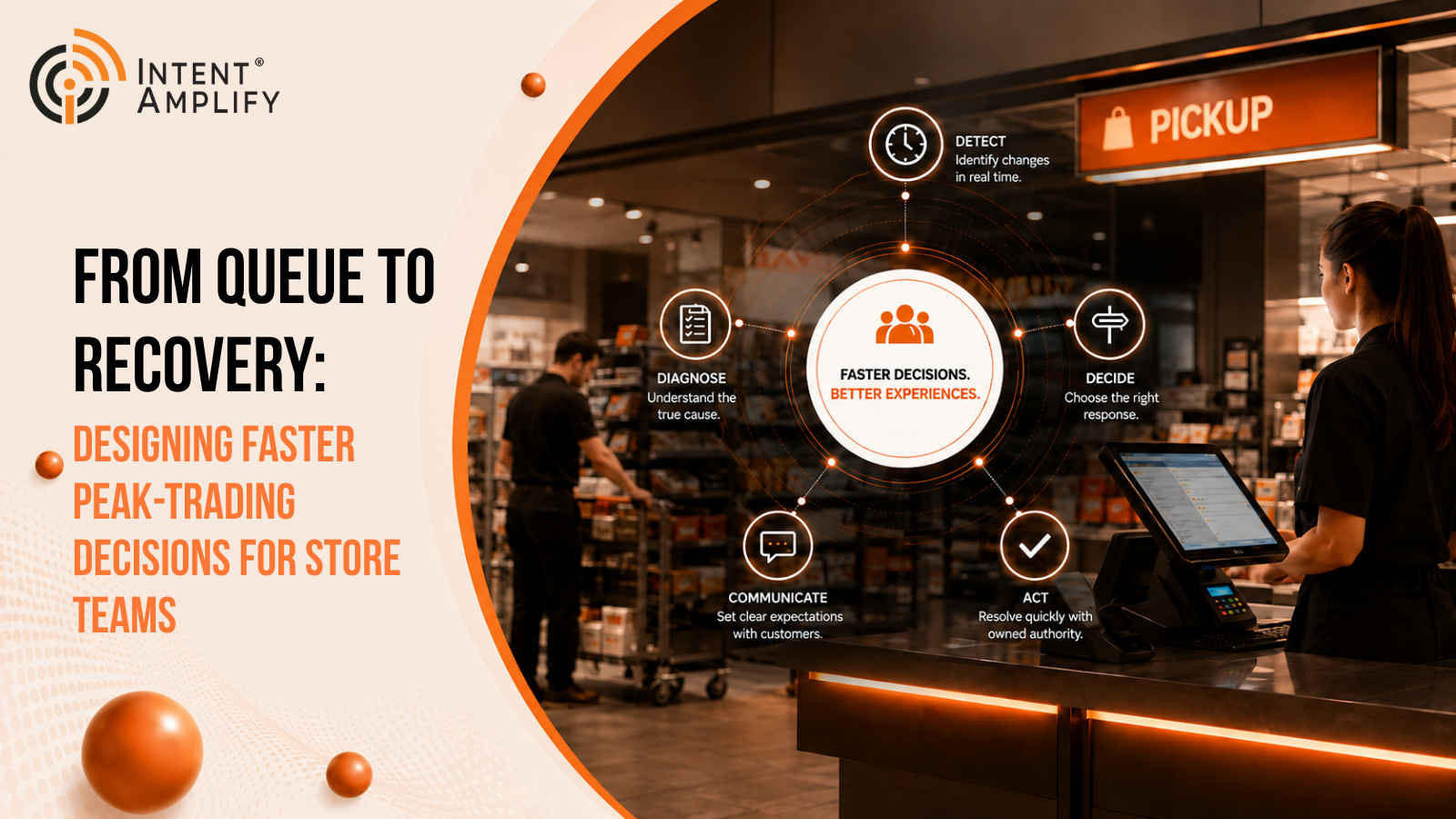
Exception design should answer six questions: What happened? What evidence is authoritative? Who owns routine recovery? What action is allowed? What condition changes the owner? How is closure confirmed?

Customer communication belongs inside the exception path. Employees need an accurate expectation they can share. The operation should not ask a colleague to defend a promise that the evidence no longer supports.

Deloitte’s omnichannel post-purchase research reinforces the importance of consistent execution after the initial purchase decision (Deloitte, 2026c). That makes recovery communication part of operating quality, not an afterthought.

Control Six: Read Back the Outcome

Peak operating models improve when the organization retains what it learned. For material interventions, record the condition, action, owner, expected result, actual result, and next rule.

Peak operating interventions should be evaluated economically as well as experientially. The accessible public sources reviewed for this whitepaper did not independently substantiate the source-specific operating-income figure, so it has been removed rather than used as an expected return.

Read-back should ask whether the customer-facing condition improved, whether staff workload shifted elsewhere, whether protection or safety consequences changed, and whether the same issue recurred. If evidence is inconclusive, the change should remain constrained rather than being declared successful.

Stores-as-Hubs: The Cross-Channel Control Challenge

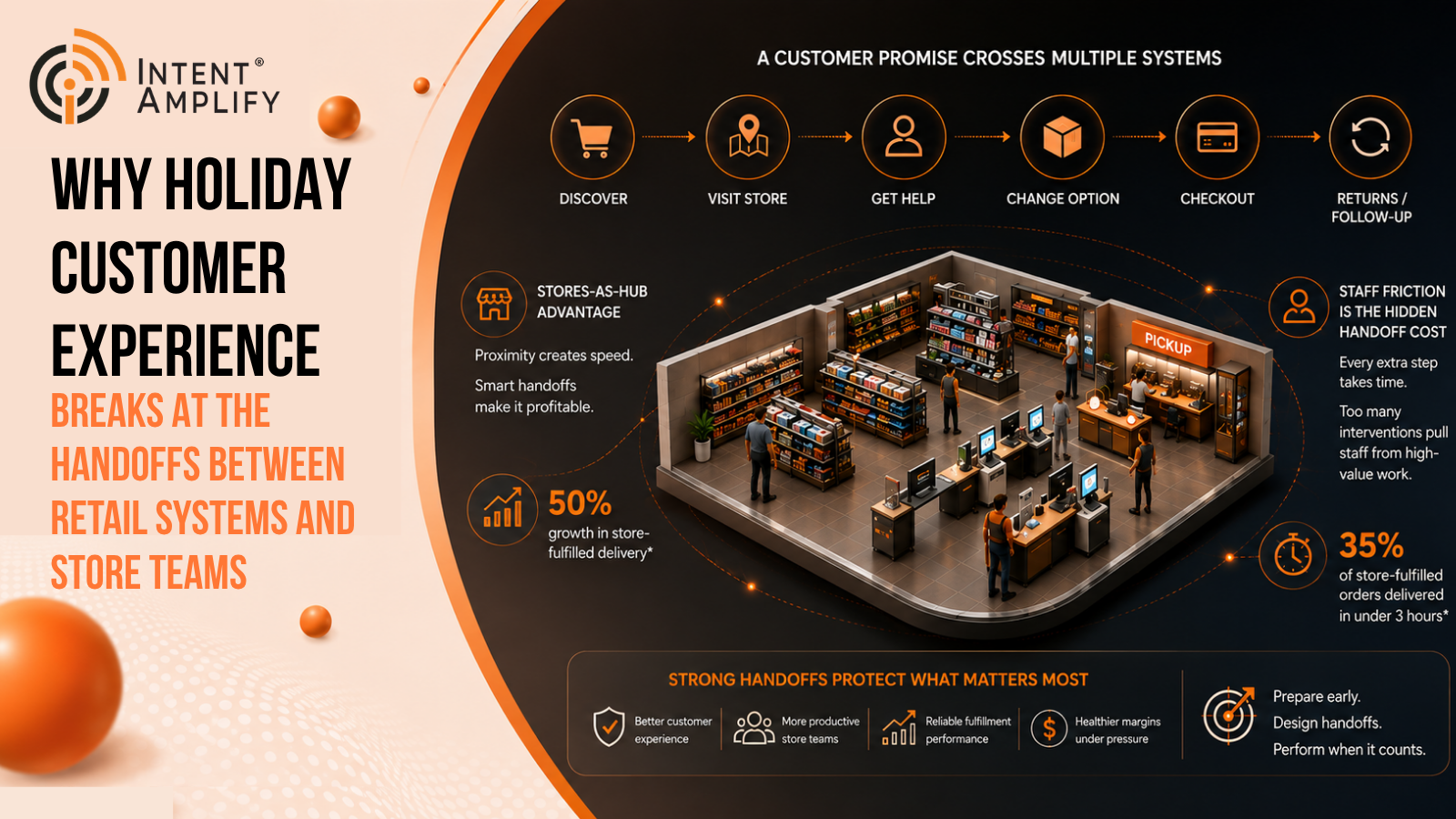
RETHINK Retail highlights strong growth in store-fulfilled delivery. Walmart’s FY26 Q4 earnings presentation independently reported approximately 50% growth in store-fulfilled delivery, with expedited deliveries under three hours representing about 35% of store-fulfilled orders (Walmart, 2026). Its strategic importance is the mechanism: proximity can create advantage only when inventory confidence, labor capacity, staging, service quality, and delivery economics remain controlled.

Deloitte’s store-modernization analysis supports the broader structural point that stores increasingly serve multiple roles (Deloitte, 2026b). That makes priority rules essential. When in-store customers and digital orders compete for the same capacity, leaders need evidence-based rules for rebalancing work and for changing the fulfillment promise when capacity becomes constrained.

The question is not how much digital demand a store can technically accept. It is how much it can accept while preserving the intended customer, staff, and economic outcome.

Intentional Automation: Automate the Decision Path, Not the Complexity

RETHINK Retail’s fourth pillar is intentional automation. The strongest candidates are predictable, evidence-rich, frequent tasks with clear rules and verifiable outcomes.

Deloitte’s connected-store research describes movement toward more integrated and intelligent store operations (Deloitte, 2026a). Its 2026 analysis of AI and frontline capacity adds a critical qualification: capacity released by technology becomes value only when work is deliberately redesigned (Deloitte, 2026e).

Automation should therefore be evaluated by what happens after the signal. Does it remove a search? Reduce an approval? Route the right task? Surface the permitted recovery? Close a repetitive status loop? If the employee still has to reconcile multiple systems or interpret an ambiguous recommendation, the automation may have relocated rather than removed friction.

A Cross-Functional Peak Control Room

The six controls can be brought together in a concise operating cadence. A control room should not centralize routine work. It should surface material conditions and cross-functional trade-offs.

A useful review asks: Which customer promises are under pressure? Which staff workflows are overloaded? Which evidence or technology issues are affecting decisions? Which safety or protection conditions require attention? Which actions remain open? What did the previous intervention change?

The view should remain small. Every signal should have an owner and an action. Metrics that do not change a decision should not dominate the review.

Role-Specific Responsibilities

Retail IT leaders should protect system availability, authoritative data, actionable alerts, workflow simplicity, and usable fallback paths.

Store operations leaders should define peak scenarios, workload responses, routine authority, customer recovery, and local escalation.

Loss and asset-protection leaders should define material protection conditions, role-appropriate signals, and the boundaries where a routine service response changes.

Customer-experience leaders should identify high-friction moments, ensure recovery communication is usable, and connect customer evidence to operating decisions.

Innovation leaders should evaluate new capabilities against operating fit, decision latency, staff cognitive load, and measurable recovery rather than novelty alone.

Measurement Framework

A balanced measurement set should combine customer, staff, operational, technology, and control evidence. Examples can include waiting or delay, repeated service exceptions, order readiness, device availability, alert acknowledgement, action time, recovery time, manager intervention, unresolved incidents, and recurrence.

These are examples, not universal KPIs. Each retailer should define the authoritative source, owner, cadence, and threshold. The most important distinction is between target and outcome: plans contain targets; operating systems produce evidence.

Implementation Sequence

Phase 1: Select one critical journey where customer and staff experience are visibly connected.

Phase 2: Define the promise and the evidence required to support it.

Phase 3: Map workload, systems, interruptions, approvals, and exception paths.

Phase 4: Define routine authority and material escalation boundaries.

Phase 5: Simulate relevant demand, technology, inventory, staffing, and exception conditions.

Phase 6: Establish read-back measures before the intervention is used.

Phase 7: Expand the pattern only when observed evidence supports the next step.

Analyst Interpretation

Peak readiness is not achieved by one technology, one staffing plan, or one customer-experience initiative. It is produced by coordinated decisions. RETHINK Retail’s four pillars are most actionable when translated into an operating architecture that links the customer promise to evidence, workload, authority, exception handling, and read-back.

The six-control model is intentionally evidence-first. It does not assume that every retailer has the same thresholds, constraints, or maturity. It provides a method for discovering those conditions, testing them before peak, and improving them through observed outcomes.

Download Now: The Holiday Season Playbook: Delivering Exceptional Customer and Staff Experience During Peak Trading

Sources

  1. RETHINK Retail and Diebold Nixdorf (2026) The Holiday Season Playbook: Delivering Exceptional Customer and Staff Experience During Peak Trading. Available at: https://intentamplify.com/landing-page/report/the-holiday-season-playbook-delivering-exceptional-customer-and-staff-experience-during-peak-trading/  (Accessed: August 25, 2026).
  2. Diebold Nixdorf (2024) Diebold Nixdorf Sets Out to Combat Shrink in Retail with New AI-powered Offering. Available at: https://s27.q4cdn.com/808990265/files/doc_news/Diebold-Nixdorf-Sets-Out-to-Combat-Shrink-in-Retail-with-New-AI-powered-Offering-2024.pdf  (Accessed: August 25, 2026).
  3. Walmart Inc. (2026) FY26 Q4 Earnings Presentation. Available at: https://fortune.com/company-assets/1854/quartr/slides-ad2ae-2026-02-19-12-36-02.pdf  (Accessed: August 25, 2026).
  4. National Retail Federation (2026) NRF Forecasts 4.4% Annual Retail Sales Growth with New Economic Model. Available at: https://nrf.com/media-center/press-releases/nrf-forecasts-4-4-annual-retail-sales-growth-with-new-economic-model  (Accessed: August 25, 2026).
  5. Deloitte (2026a) The Connected Store. Available at: https://www.deloitte.com/us/en/Industries/consumer/articles/connected-store-retail-digital-transformation.html  (Accessed: August 25, 2026).
  6. Deloitte (2026b) Future-proof Your Stores. Available at: https://www.deloitte.com/content/dam/assets-zone3/us/en/docs/industries/consumer/2026/future-proof-your-stores-2026.pdf  (Accessed: August 25, 2026).
  7. Deloitte (2026c) Omnichannel Post-Purchase Experience. Available at: https://www.deloitte.com/us/en/industries/consumer/articles/omnichannel-post-purchase-strategy.html  (Accessed: August 25, 2026).
  8. Deloitte (2026d) Store Labor Modernization and Workforce Management. Available at: https://www.deloitte.com/us/en/industries/consumer/articles/retail-labor-optimization-workforce-management.html  (Accessed: August 25, 2026).
  9. Deloitte (2026e) AI Is Freeing Up Frontline Retail Capacity. Available at: https://www.deloitte.com/ca/en/Industries/consumer/perspectives/frontline-retail-ai-capacity-value.html  (Accessed: August 25, 2026).
Contact
Sales