
EXECUTIVE SUMMARY
Autonomous Spend Management represents a shift from fragmented, transaction-centered spend processes toward a connected operating model in which buyers, suppliers, trusted data, and AI agents can work across the Design-to-Pay lifecycle. Coupa’s 2026 Autonomous Spend Management source material presents that shift as a response to economic volatility, supply disruption, growing complexity, and pressure on finance, procurement, and supply chain leaders to improve both control and speed.
The core message is that autonomy is not achieved by adding AI to an existing process. It requires a foundation: connected workflows, domain-specific data, clear governance, supplier participation, and a staged path to organizational readiness.
This whitepaper translates Coupa’s 2026 source material into an executive blueprint for evaluating that foundation.
THE CASE FOR A CONNECTED SPEND MODEL
Traditional spend environments can separate financial metrics from supply-chain context, distribute supplier and contract information across systems, delay visibility into commitments, and depend on manual interventions. Coupa’s 2026 source material argues that these conditions limit strategic decision-making and make organizations more reactive to disruption.
A connected model changes the unit of design. Instead of optimizing procurement, invoicing, contracts, payments, or supplier management independently, leaders examine how context moves across the entire spend journey. A request should carry policy and approval context. A sourcing decision should connect to supplier and contract information. An invoice should relate to orders, receipts, and agreed terms. A payment decision should reflect the broader commercial relationship.
The objective is not simply efficiency. It is decision continuity.
THE BUSINESS TRADE NETWORK
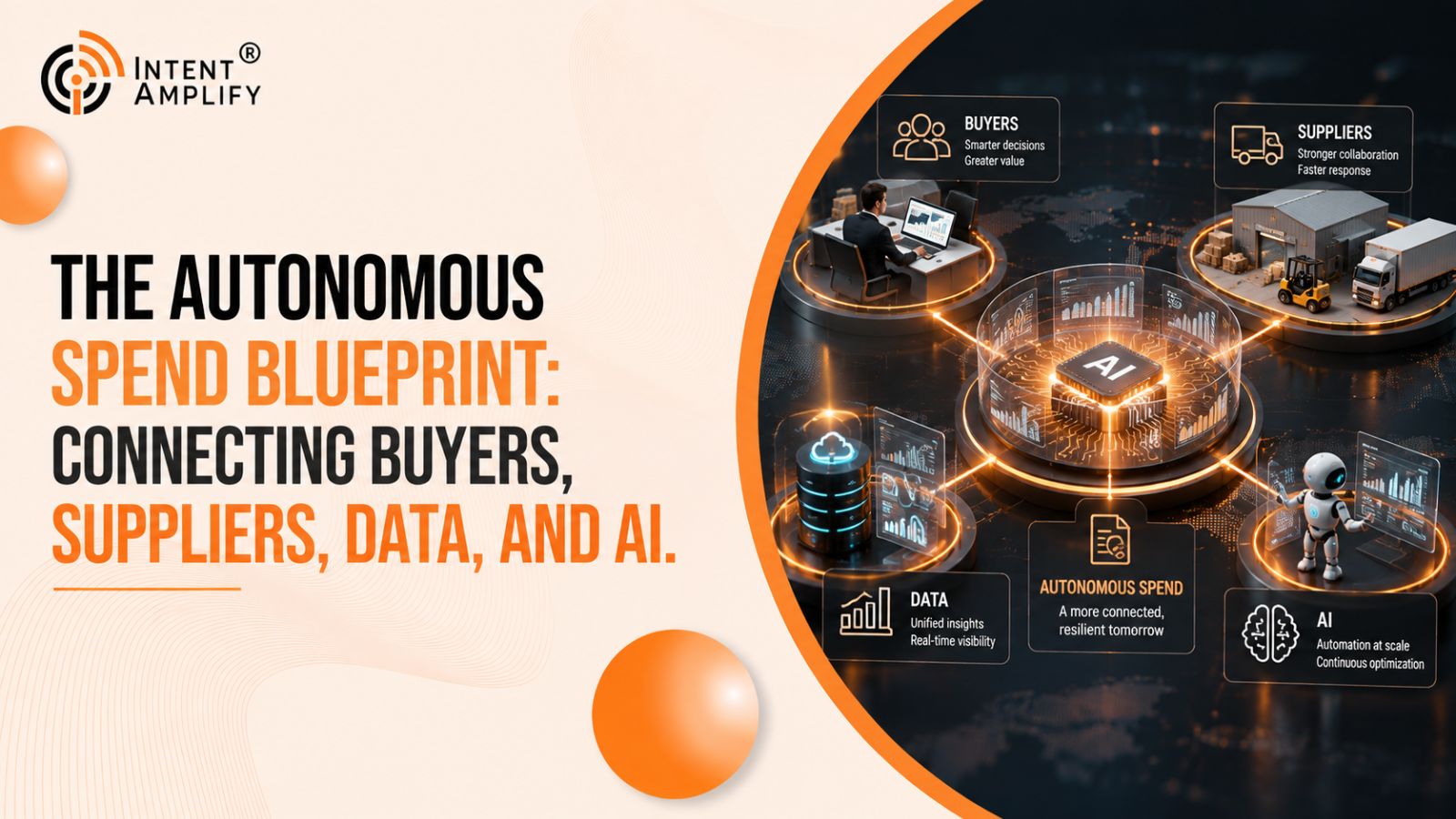
Coupa’s vision is built around a business trade network in which buyers and suppliers interact through shared, current information. Coupa’s 2026 source material describes a move from linear supply chains toward dynamic ecosystems characterized by real-time collaboration, predictive intelligence, cross-tier visibility, and shared value.
It also describes dynamic documents, AI agents handling routine transactions, interoperable AI, rules-based transactions, and shared data supporting continuous improvement.
For executives, the network model creates three strategic implications.
First, supplier experience becomes part of spend transformation. If suppliers cannot participate efficiently, internal automation will not produce an end-to-end digital process.
Second, data quality is shaped by both sides of the transaction. Supplier profiles, catalogs, quotes, fulfillment information, invoices, quality data, and forecast signals can all influence decision quality.
Third, collaboration can become a source of resilience. Coupa’s 2026 source material emphasizes forecast, quality, and inventory collaboration as mechanisms for keeping buyers and suppliers synchronized.
THE FOUR PILLARS OF COUPA’S ROADMAP
Coupa’s 2026 source material organizes Coupa’s roadmap around four pillars.
Pillar 1: Enhance Design-to-Pay for buyers. Coupa’s 2026 source material describes a platform spanning direct and indirect spend, integrations, industry requirements, digital payments, an intuitive user experience, and evolving commercial models. The strategic intent is to provide a connected demand-side foundation.
Pillar 2: Empower supplier engagement and discovery. Supplier catalogs, marketplaces, profiles, and discovery capabilities are designed to make participation easier and improve the information available to buyers.
Pillar 3: Create richer buyer-seller collaboration. Forecast, quality, and inventory collaboration move the relationship beyond individual transactions and toward shared operational planning.
Pillar 4: Build an AI agent-native engagement layer. Coupa’s 2026 source material describes agentic capabilities across source-to-contract, tax validation, invoicing, supplier onboarding, and intake. This layer is intended to support more autonomous workflows while retaining humans in the loop where appropriate.
The four pillars are interdependent. Agents need data. Data improves when workflows and participants are connected. Collaboration becomes more useful when both parties work from current context. The roadmap therefore functions as an operating architecture, not merely a feature list.
WHY DOMAIN DATA MATTERS
Coupa’s 2026 campaign source states that Coupa AI is informed by more than $8 trillion in transactional spend data from over 10 million buyers and suppliers. These figures are presented as Coupa-attributed claims. The broader architectural point is the use of domain-specific transactional context.
The campaign source also describes data-governance controls around community intelligence. Prospective customers should validate current permissioning, anonymization, security, privacy, legal, and compliance details directly with Coupa against their own requirements.
The broader architectural principle is clear: AI in spend management must understand the environment in which the decision occurs. Supplier relationships, spend categories, contracts, invoices, payment conditions, policies, and risk signals are not peripheral metadata. They are part of the decision itself.
AGENTIC AI AS A WORKFLOW PARTICIPANT
Agentic AI differs from conventional task automation because an agent can interpret context, make or recommend decisions, and take actions within defined parameters. Coupa’s 2026 source material describes Coupa Navi as a portfolio of agents that can operate autonomously or with a human in the loop, including multi-agent collaboration.
That creates new design questions for enterprises:
- Which decisions are suitable for automated execution?
- Which should remain recommendations?
- Which require mandatory human approval?
- What evidence must an agent consider?
- How are policy boundaries encoded?
- How are exceptions handled?
- How are actions audited?
- Who remains accountable for the outcome?
The correct autonomy level depends on risk, materiality, reversibility, data quality, and process maturity.
A FOUR-STAGE READINESS JOURNEY
Coupa’s 2026 source material outlines four stages of AI readiness.
Stage 1 — Tactical support. AI assists with operational activities and agents act mainly as advisors. Organizations may still have disjointed processes and unstructured purchasing.
Stage 2 — Digital assistants. Spend processes become more unified and AI is embedded into sourcing, contract lifecycle management, intake, analysis, monitoring, and related workflows.
Stage 3 — Collaborative partners. AI agents take a more consistent role in strategic activities, including category strategy and decision support.
Stage 4 — Autonomous operations. Agents make and execute more decisions with minimal human intervention across an end-to-end Design-to-Pay environment.
Coupa’s 2026 source material identifies four prerequisites for advanced autonomy: data quality, process standardization, governance frameworks, and change management. Those prerequisites should be treated as workstreams with owners and measurable completion criteria.
BUILDING THE BUSINESS CASE
Coupa’s 2026 source material recommends establishing a baseline and setting clear objectives before transformation. It also suggests prioritizing implementation areas based on pain-point intensity, financial impact, and change readiness.
A disciplined business case should include:
- Current-state baseline — verified performance before change.
- Outcome hypothesis — the specific business result expected.
- Scope — process, users, suppliers, categories, and systems included.
- Control model — human and automated decision boundaries.
- Implementation requirements — data, integration, policy, and change work.
- KPIs — measures such as cycle time, exception rate, compliance, user adoption, supplier participation, or another use-case-specific outcome.
- Evidence period — when results will be assessed.
- Expansion criteria — what evidence is required before increasing scope or autonomy.
No improvement claim should be treated as verified until the organization has measured it against the baseline.
IMPLEMENTATION BLUEPRINT
Step 1: Select a high-impact workflow. Choose an area with visible friction, meaningful business impact, and sufficient change readiness.
Step 2: Map the decision chain. Document every major decision, data input, handoff, policy, approval, and exception.
Step 3: Validate the data foundation. Assess completeness, structure, ownership, timeliness, permissions, and quality for the use case.
Step 4: Standardize the normal path. Define how the workflow should operate before automating it.
Step 5: Design the autonomy model. Classify actions as automated, recommended, human-approved, or prohibited.
Step 6: Include suppliers. Test whether external participants can complete their part of the workflow without creating new friction.
Step 7: Establish the baseline. Capture performance before deployment.
Step 8: Pilot with controls. Start with bounded scope and explicit exception handling.
Step 9: Measure outcomes. Compare performance with the baseline and investigate unintended effects.
Step 10: Scale only on evidence. Expand use cases or autonomy when governance and outcome data support the decision.
EXECUTIVE READINESS SCORECARD
Strategy — Clear business outcomes and prioritized use cases.
Data — Trusted, governed, domain-relevant inputs.
Process — Standardized workflows and documented exceptions.
Architecture — Connected systems capable of exchanging context.
Governance — Explicit human and agent decision rights.
Supplier readiness — External participants included in design.
Measurement — Verified baselines and agreed KPIs.
Change management — Roles, training, adoption, and escalation defined.
Auditability — Decisions and actions can be reviewed after the fact.
Scale criteria — Evidence requirements established before expansion.
KEY RISKS TO MANAGE
Automating ambiguity. If the current process is inconsistent, AI may accelerate inconsistency.
Overstating readiness. A successful demonstration is not evidence of production readiness.
Weak data controls. Poor inputs can undermine recommendations and actions.
Ignoring suppliers. Buyer-side efficiency can shift friction to the external network.
Unclear accountability. Autonomous action does not remove executive ownership.
Missing baselines. Without current-state evidence, improvement claims remain unverified.
Change fatigue. Teams need a clear explanation of how roles, responsibilities, and escalation paths will evolve.
WHERE THE CAMPAIGN E-BOOK FITS
“Simplified Expense Management: The Definitive Guide for Beginners” introduces Coupa’s Autonomous Spend Management vision, four strategic roadmap pillars, agentic AI approach, and four-stage readiness journey. It is designed as an entry point for leaders who need a common framework for discussing the move from tactical AI support toward increasingly autonomous spend operations.
DESIGN PRINCIPLES FOR PRODUCTION AUTONOMY
A production operating model needs more than connected technology.
It needs design principles that remain useful as use cases, participants, and autonomy levels change.
Principle 1: preserve decision context.
The workflow should carry the relevant supplier, contract, policy, transaction, and approval information to the point of action.
When context is missing, the process should expose the gap rather than allowing automation to infer silently.
Principle 2: make authority explicit.
Every important action should have a defined owner and permitted autonomy level.
Teams should know whether an agent may assist, recommend, execute within guardrails, or only escalate.
Principle 3: design exceptions before scale.
Normal-path automation can look successful while difficult cases accumulate elsewhere.
Document common exceptions, required evidence, escalation paths, and service ownership before broad rollout.
Principle 4: measure both outcomes and controls.
Cycle time or manual-touch reduction should be interpreted alongside compliance, overrides, exceptions, and other relevant control evidence.
Principle 5: include the supplier experience.
The buyer-side workflow and the supplier-side workflow are one operating chain when the desired outcome depends on both parties.
Principle 6: scale on demonstrated readiness.
A pilot should have predefined evidence gates for expanding users, suppliers, categories, or decision authority.
These principles make autonomy a managed capability rather than a technology setting.
OPERATING ROLES AND ACCOUNTABILITY
Autonomous spend changes how responsibilities are distributed, but it does not remove accountability.
Business owners remain responsible for the outcome the workflow is designed to improve.
Process owners define the intended path, exceptions, and operating standards.
Data owners maintain the critical information used for decisions.
Technology teams support integrations, availability, and technical controls.
Risk, legal, security, or compliance stakeholders contribute requirements where the use case demands them.
Users and suppliers provide operational evidence through adoption, exceptions, and feedback.
AI agents operate only within the authority and context assigned to the workflow.
A clear role model helps prevent a common failure mode: everyone assumes another function owns the consequences of an automated decision.
For each use case, leaders should document who approves autonomy, who monitors performance, who investigates exceptions, and who can pause or reduce automated action.
That ownership should be visible before production deployment.
CONTROL EVIDENCE FOR SCALE
Before autonomy expands, require evidence that the operating model is behaving as intended.
Review data-quality exceptions and whether missing context is handled correctly.
Review human overrides and determine whether they reveal poor recommendations, unclear policy, or changing business conditions.
Review supplier exceptions to ensure internal efficiency is not creating external friction.
Review adoption to confirm that users are following the intended process rather than creating workarounds.
Review audit records to determine whether important actions can be reconstructed and explained.
Review outcome measures against the verified baseline using stable definitions.
No single indicator proves readiness.
A workflow can have strong adoption but weak controls, or fast cycle times but poor exception handling.
Scale decisions should consider the combined evidence required by the use case.
When critical evidence is unavailable, readiness remains unverified until the gap is resolved.
FROM BLUEPRINT TO OPERATING RHYTHM
The final step is to turn the blueprint into a recurring management rhythm.
Use regular reviews to examine outcomes, controls, data quality, exceptions, adoption, and supplier participation.
Reconfirm that autonomy boundaries still reflect decision risk and organizational policy.
Track changes to workflows, integrations, or data sources that could affect agent behavior.
When evidence deteriorates, increase oversight or narrow scope while teams investigate.
When performance remains reliable, consider expansion against the predefined scale criteria.
This rhythm is important because readiness can change after implementation.
The objective is not a permanent label of autonomous-ready.
The objective is an operating system that can demonstrate when greater autonomy is appropriate and when human intervention should increase.
Download the free e-book to explore Coupa’s roadmap and use the readiness framework to assess the next practical step for your finance, procurement, and supply chain organization.
CONCLUSION
The autonomous spend blueprint begins with connection. Buyers and suppliers need usable digital pathways. AI needs trusted domain context. Workflows need standardized decisions. Governance needs explicit boundaries. Leaders need verified baselines and measurable outcomes. When those elements mature together, organizations can expand autonomy deliberately instead of treating AI as a shortcut around operating discipline.
REFERENCES
1. SAP — The Year of Agents: Why Procurement Will Lead the Enterprise AI Revolution (6 March 2026): https://news.sap.com/2026/03/procurement-leads-enterprise-ai-revolution/
2. Gartner — CPO’s Guide to Building Agentic AI Readiness in Sourcing and Procurement (15 May 2026): https://www.gartner.com/en/documents/7863181
3. Gartner — Implementing Proactive Procurement (22 May 2026): https://www.gartner.com/en/documents/7895177
4. SAP — Better Decisions in Motion: Building the Autonomous Enterprise (27 May 2026): https://news.sap.com/2026/05/autonomous-enterprise-better-decisions-in-motion/
5. Microsoft — From Intelligence to Impact: How Agentic AI Is Reshaping Today’s Supply Chain (4 May 2026): https://www.microsoft.com/en-us/dynamics-365/blog/business-leader/2026/05/04/from-intelligence-to-impact-how-agentic-ai-is-reshaping-todays-supply-chain/