

Book a Demo
Home Platform Audience Accounts Intent Evidence Activation Solutions Industries Programs Research Pricing About Careers Press Contact Brands Trust Privacy Accessibility Demo ABM Advertising Content Demand Intent Data Sales Blog Infographics Events Product Sheets Videos Webinars White Papers E-books Customer Stories Corporate Presentation Newsletters Expert Insights Expert Analysis Research Reports
White Paper / E-book

The Executive Playbook for Inventory Accuracy and Omnichannel Reliability

The Executive Playbook for Inventory Accuracy and Omnichannel Reliability
September 8, 2026 14 min read

Quick Answer

A practical playbook for retail leaders to improve inventory accuracy, strengthen omnichannel reliability, reduce recurring inventory gaps, and build more trustworthy physical-to-digital inventory operations.

Executive Brief

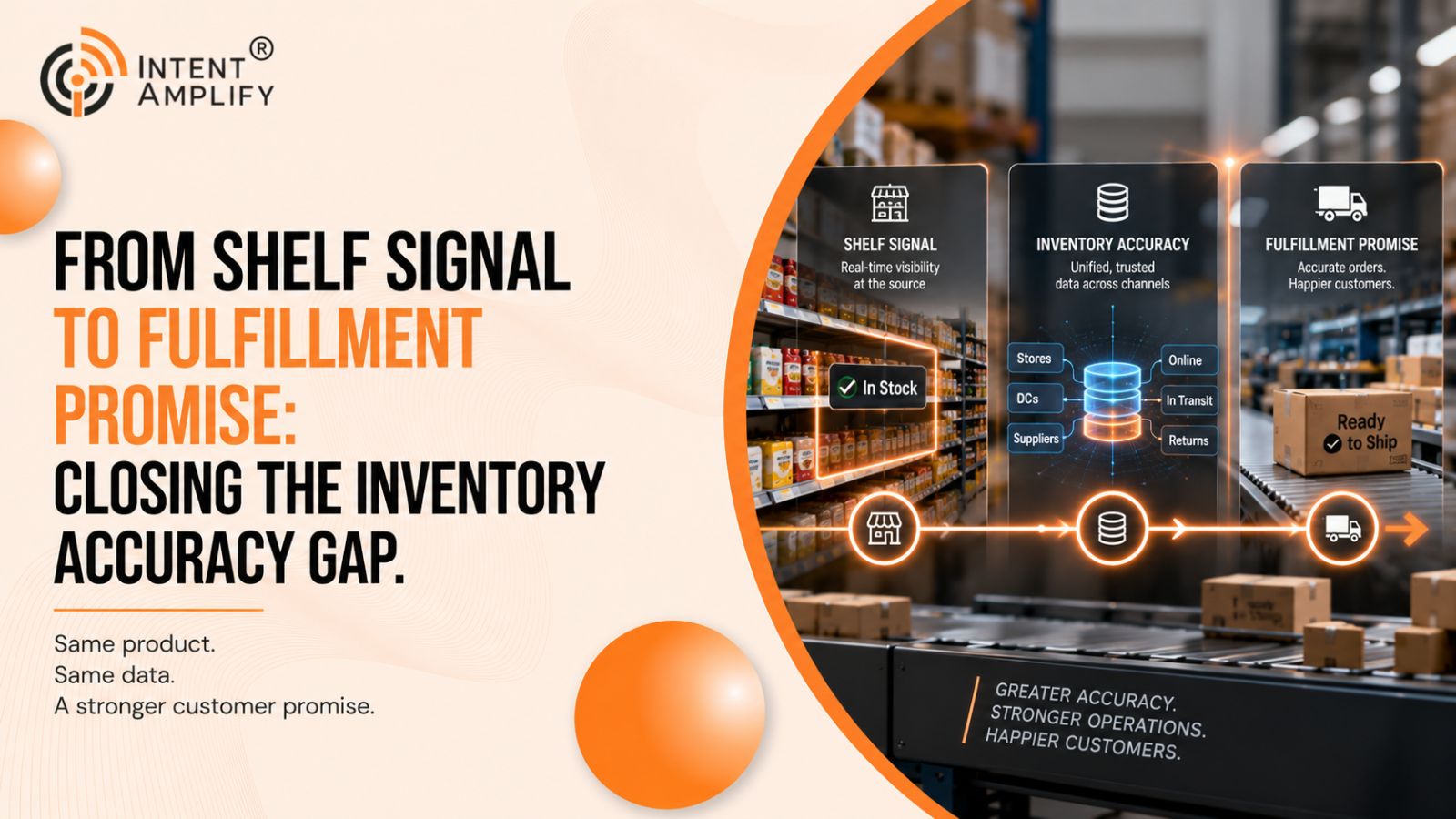
Inventory accuracy is no longer a narrow stock-control issue. In modern grocery retail, the inventory record influences what customers see online, what associates expect to find in stores, what replenishment systems order, what fulfillment teams promise, and what planning and automation systems treat as operational truth.

RETHINK Retail’s 2026 inventory-accuracy program frames the problem around confidence in the inventory number. Its webinar, How to Build the Inventory Accuracy Every Grocery Decision Depends On, highlights how even a 5% out-of-stock rate can translate into roughly one in three baskets missing an item, while uncertainty in inventory can affect labor, margin, online availability, retail media, and AI-assisted shopping.¹

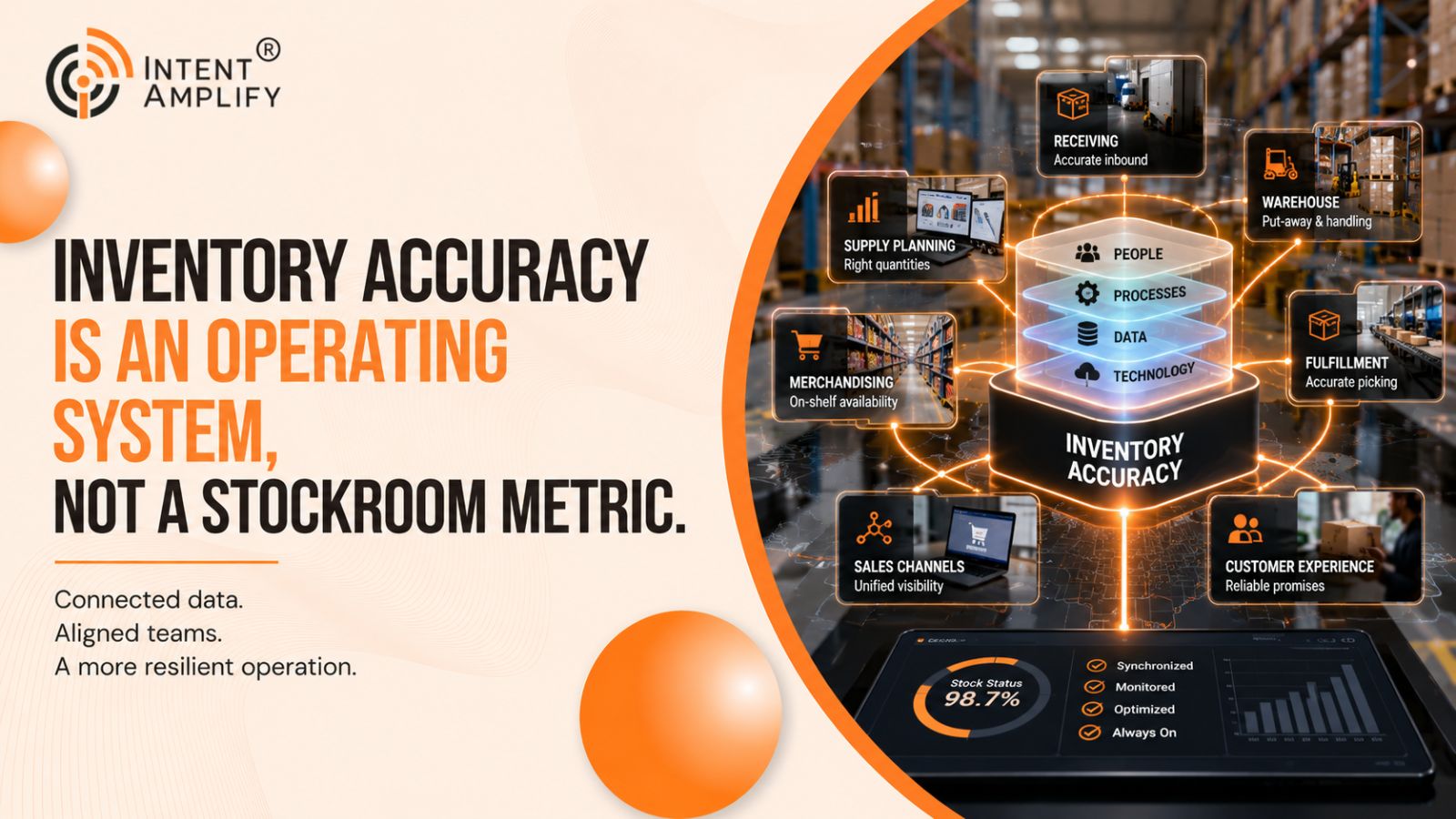
The executive challenge is therefore larger than improving a count. Retailers need an operating model that keeps physical inventory and digital inventory aligned closely enough for the decisions that depend on them. The right model connects event capture, detection, decision rules, correction, root-cause learning, ownership, and governance.

This eBook provides a practical guide for Director+ leaders across retail operations, supply chain, inventory, replenishment, ecommerce, merchandising, enterprise systems, digital transformation, and operational excellence. It focuses on how retailers can move from periodic reconciliation toward continuous inventory reliability without assuming that one technology, one audit, or one metric can solve every source of inaccuracy.

Inventory Accuracy by the Numbers

Recent grocery research shows why inventory record inaccuracy deserves executive attention. A 2026 study published in the Journal of Business Logistics analyzed approximately 24,000 SKUs across 11 grocery stores. The researchers found that inventory record inaccuracy was positively associated with average inventory levels, restocking frequency, and perishability. The study also reported that a store-wide inventory audit was associated with an approximately 11% sales lift in the two months after the stock count, with the effect concentrated on items where system inventory exceeded actual inventory.²

These findings should not be treated as a universal retailer benchmark. They come from a defined study context and should be used as evidence that inventory accuracy can have operational and commercial consequences, not as a forecast of results for another retailer.

The grocery environment makes the issue especially complex. Perishable products move frequently, require additional handling, and are subject to shelf-life and rotation processes. Promotions can alter demand and operating attention. Returns, damages, transfers, replenishment, picking, substitutions, and manual adjustments all create moments where physical reality and system records can diverge.

GS1 India’s 2026 analysis of inventory challenges in retail and FMCG similarly emphasizes the problem of systems showing stock that is not actually available and describes standardized product identification and barcode practices as foundational to improving inventory visibility and accuracy.³

The executive message is clear: inventory reliability depends on the quality of the events, identifiers, processes, and decisions that continuously update the record.

Why Inventory Accuracy Is Now a Customer-Promise Issue

In a store-only model, an inaccurate inventory record may remain invisible until an associate performs a count or a shopper cannot find an item. In omnichannel retail, the same error can become a customer promise before anyone physically verifies the product.

A shopper may see an item listed as available, place an order, select pickup, and expect fulfillment within a defined window. The retailer then routes work based on the inventory signal. If the item is damaged, misplaced, already reserved, incorrectly received, or simply not present, the failure appears downstream as a search, substitution, reroute, cancellation, delay, or service recovery task.

This means inventory accuracy should be evaluated against the decision it supports. The useful question is not only, “Is the record correct?” It is, “Is this inventory signal sufficiently reliable for the next decision?”

A replenishment decision, ecommerce availability promise, store-pick assignment, transfer request, and merchandising action may require different definitions of usable inventory. Retailers should define terms such as on-hand, available, sellable, reserved, damaged, in-transit, and fulfillable consistently enough that teams understand which quantity authorizes which action.

The Availability Paradox in Grocery Retail

RETHINK Retail’s 2026 analysis of the “availability paradox” separates inventory inaccuracy from customer availability. Inventory inaccuracy describes a mismatch between the system record and physical reality. Customer availability asks whether the shopper can actually access the item the retailer intends to offer.⁴

The distinction is important because aggregate accuracy can look acceptable while customer-facing failures remain concentrated in particular SKUs, stores, categories, or workflows. A retailer can therefore improve a broad inventory metric without fully solving the moments that damage fulfillment reliability.

This is why leaders should connect inventory measures to customer and operating outcomes. Where are failed picks occurring? Which items repeatedly require manual verification? Where does the digital promise differ from store reality? Which categories generate recurring adjustments? Which exceptions create the most compensating work?

The objective is not to force every inventory issue into a customer metric. It is to identify where unreliable records influence decisions that customers, associates, planners, or automated systems depend on.

From Periodic Counting to Continuous Inventory Control

Physical counts remain useful, but a count is a correction event rather than a complete operating model. It tells the organization that the record and physical state differ at a particular moment. It does not automatically explain where the divergence began or prevent recurrence.

A continuous inventory control model has four connected stages:

Detect. Identify a signal that suggests physical and digital inventory may have diverged.

Decide. Determine what the signal means for the decision in scope and which action is appropriate.

Correct. Protect the immediate customer or operational outcome and restore the record where evidence supports a correction.

Learn. Group recurring exceptions, investigate patterns, and change the process, rule, integration, training, or control that creates repeated divergence.

The distinction between correction and learning is critical. If every discrepancy ends with an adjustment, the organization can become efficient at repairing records while remaining weak at preventing the same conditions from returning.

Table 1: From Periodic Counting to Continuous Inventory Reliability

Area

Periodic Accuracy Model

Continuous Reliability Model

Primary Objective

Reconcile the inventory record after discrepancies are found

Keep decision-critical inventory continuously trustworthy

Detection

Rely mainly on scheduled physical counts and audits

Combine counts with operational signals such as failed picks, receiving mismatches, shelf checks, and other exceptions

Response

Correct the inventory quantity

Contain the immediate issue, correct the record, assign ownership, and learn from recurrence

Ownership

Inventory team owns the problem

Immediate exception owner resolves the issue, while a root-cause process owner addresses recurring causes

Measurement

Track count completion and inventory accuracy

Track accuracy, exception aging, recurrence, correction time, and manual verification effort

Technology

Record inventory and report discrepancies

Capture events, detect exceptions earlier, and support operational decisions

Building a Reliable Physical-to-Digital Inventory Signal

Inventory records are created by events. Receiving, put-away, replenishment, sale, picking, packing, transfer, return, damage, shrink, adjustment, and disposal can all change the physical position. Each event needs a digital representation that is timely and specific enough for the downstream decision.

Retail leaders should map the event chain for a bounded use case. Start with one important decision, such as whether an item should be offered for store pickup. Identify the inventory definition used by that decision, the systems that contribute to it, the events that change it, and the points where physical reality can move without the system learning quickly enough.

Standardized product identification matters because reliable event capture depends on knowing precisely which item is moving. Barcode and product-identification disciplines can reduce ambiguity and improve visibility across retail and FMCG processes.³

The goal is not to map every possible inventory event at once. A smaller decision-focused map is more useful because it connects data quality to an operating consequence.

Inventory Accuracy and Omnichannel Fulfillment

Omnichannel execution increases the number of decisions that depend on inventory confidence. Store inventory may support walk-in demand, pickup, ship-from-store, delivery, transfers, substitutions, and digital availability at the same time.

RETHINK Retail’s 2026 discussion of the future of grocery retail emphasizes that shoppers move across in-store, pickup, and delivery experiences and that strong back-end operations are increasingly important to consistent execution.⁵

When inventory confidence is low, retailers compensate. Ecommerce teams may suppress availability. Fulfillment teams may add buffers. Associates may verify stock manually. Orders may be routed away from a location that appears uncertain. These controls can protect the customer promise, but they also create operational cost and may reduce sellable availability.

Retailers should therefore treat protective rules as explicit controls. Each buffer, threshold, manual check, or override should have a purpose, owner, trigger, and review condition. When upstream reliability improves, leaders can test whether the compensating control is still necessary.

Human Decision-Making and Exception Management

Inventory reliability is not only a systems problem. Store associates, inventory teams, fulfillment teams, managers, planners, and technology teams all make decisions that can either strengthen or weaken the record.

The operating model should make immediate exception ownership clear. A failed pick, for example, may require rapid containment to protect the customer outcome. That is different from determining why the item was unavailable and whether the cause is recurring.

A practical exception record should capture the affected decision, detection point, relevant process context, containment action, correction action, owner, and whether recurrence is suspected. Where the cause is not known, the record should say so rather than forcing a conclusion.

Human judgment remains important when evidence is incomplete. Automation can route or prioritize exceptions, but the organization should define when a local team can act, when a specialist review is needed, and when a recurring pattern should move to a process owner.

Inventory Intelligence as a Retail Decision Engine

Inventory technology creates value when it improves a defined decision. RFID, barcode systems, computer vision, analytics, workflow tools, and AI can all contribute, but they address different control points.

A useful technology evaluation begins with operating questions:

- Which inventory signal becomes available earlier?

- Which discrepancy becomes easier to detect?

- Which manual verification step can be removed?

- Which exception can be routed more consistently?

- Which recurring cause becomes visible?

- Which customer or planning decision becomes more reliable?

The organization should be able to describe the decision before automating it. Otherwise, technology may create more alerts without improving action.

AI also raises the importance of inventory reliability. Systems that recommend, route, replenish, forecast, or communicate availability can amplify the consequences of weak underlying data. Better automation therefore increases the value of trustworthy inventory signals rather than reducing the need for them.

Governance Rules for Inventory Reliability

Inventory governance should follow the causal chain rather than assigning every issue to a central committee.

Routine exceptions should stay in routine workflows. Cross-functional governance should focus on recurring patterns, disputed definitions, blocked corrective actions, material decision risks, and changes that require coordination across functions.

Table 2: Inventory Reliability Governance Checklist

Governance Area

Executive Question

What It Clarifies

Decision Definition

Which inventory quantity authorizes this decision?

Ensures every team understands which inventory value should be used for a specific action

Signal Source

Which system or event is authoritative at the moment of decision?

Establishes the trusted source of truth for the inventory signal

Detection

How do we know when physical and digital inventory may have diverged?

Defines how inventory discrepancies are identified early

Immediate Ownership

Who protects the current customer or operational outcome?

Clarifies who is responsible for resolving the immediate exception

Root-Cause Ownership

Who can change the recurring process or system condition?

Assigns responsibility for preventing the same issue from happening again

Escalation

Which cases genuinely require cross-functional review?

Prevents routine exceptions from being unnecessarily escalated

Measurement

Which indicators show that inventory reliability is improving?

Creates a consistent way to track progress and operating effectiveness

Control Retirement

What evidence allows a buffer, override, or manual check to be removed?

Ensures temporary compensating controls do not become permanent operating work

Good governance reduces unnecessary escalation. It gives teams enough authority to resolve normal work while ensuring structural issues reach the owner capable of changing them.

Inventory Accuracy Maturity Model

Retailers should avoid treating every inventory workflow as equally mature. A maturity model can help leaders decide where to stabilize definitions, strengthen detection, improve ownership, or introduce automation.

Table 3: Inventory Reliability Maturity Model

Stage

Operating Characteristics

Priority

Stage 1: Reconciled

Periodic counts and record corrections dominate

Establish baseline definitions, measurement rules, and evidence

Stage 2: Visible

Inventory exceptions are captured, categorized, and made visible to responsible teams

Improve detection, classification, and ownership

Stage 3: Controlled

Decision rules, ownership, and SLAs guide exception response

Reduce exception aging and recurring inventory discrepancies

Stage 4: Connected

Inventory events, workflows, root causes, and downstream decisions are linked

Remove compensating work and improve cross-functional consistency

Stage 5: Adaptive

Automation supports bounded inventory decisions within defined governance controls

Scale automation only where reliability, evidence, and controls are proven

Progress should be based on evidence, not aspiration. A retailer may be mature in one fulfillment workflow and early-stage in another. The appropriate unit of analysis is the decision chain, not the enterprise as a whole.

Implementation Roadmap for Retail Leaders

Start with a bounded scope where inventory reliability clearly affects an important decision. This could be one category, store cluster, fulfillment method, or recurring exception type.

First 30 days: Define and baseline. Align the inventory definition for the target decision. Map the physical-to-digital event chain. Identify current detection signals, manual controls, owners, and baseline measures.

Days 31–60: Test and learn. Introduce one or two targeted improvements such as earlier detection, better event capture, a clearer decision rule, or stronger exception ownership. Track the same measures and document unintended effects.

Days 61–90: Standardize selectively. Compare results with the baseline. Decide whether to scale, revise, stop, or continue collecting evidence. Remove compensating controls only where the evidence shows they are no longer required.

This is a recommended operating sequence, not a promise that inventory performance will improve within 90 days.

Flowchart: Inventory Reliability Scaling Path

Select a decision-critical inventory problem.

Define the inventory signal and baseline.

Map events, exceptions, and ownership.

Pilot one control improvement.

Measure reliability, manual work, and recurrence.

Scale, revise, or stop based on evidence.

The strongest implementation path is not the broadest rollout. It is the one that creates a repeatable connection between signal quality, decision quality, operating action, and measurable evidence.

RETHINK Retail Perspective

RETHINK Retail’s inventory-accuracy program is relevant because it positions inventory accuracy as a foundation for grocery decision-making rather than an isolated stock-control exercise. The campaign connects phantom inventory and unreliable records with customer promise, labor, margin, digital commerce, retail media, and AI-assisted shopping.¹

For retail operations, inventory, supply chain, ecommerce, merchandising, and enterprise systems leaders, the practical question is how to create an inventory number that can be trusted strongly enough for the decision at hand.

That requires more than periodic counting. It requires clear definitions, reliable event capture, useful detection, decision rules, immediate and root-cause ownership, disciplined correction, and a learning loop that reduces recurrence.

Explore How to Build the Inventory Accuracy Every Grocery Decision Depends On

RETHINK Retail’s webinar examines why inventory accuracy remains difficult in grocery, how phantom inventory affects customer promises, and how retailers can build a more trusted inventory foundation across stores and digital channels.

Register Now

Interactive Operations Assessment

The webinar is designed to move from market context into the retailer’s own operation. Following the session, attendees can opt into an interactive assessment to surface hidden inventory gaps, identify where inventory uncertainty is creating operational friction, and map a practical path toward potential ROI. Participants can also review their assessment results one-to-one with Tom Enright, a retail supply chain expert and former lead Gartner analyst.

Final Takeaway

Inventory accuracy is becoming infrastructure for omnichannel reliability. The inventory record increasingly influences what customers are promised, what associates are asked to do, what replenishment systems trigger, and what automated decisions treat as true.

Retailers should therefore move beyond a count-and-correct model. Start with the decision, define the inventory signal it needs, map the events that can change physical reality, detect divergence earlier, separate containment from root-cause correction, and measure whether recurring work is actually declining.

Technology can strengthen the model, but only when the control point is clear. Better identifiers improve event integrity. Better detection surfaces exceptions. Better workflow supports ownership. Analytics can reveal recurrence. AI can prioritize or automate bounded decisions. None of these capabilities removes the need for trustworthy underlying inventory data.

The executive objective is not perfect inventory as an abstract target. It is a more reliable relationship between what the system says, what the operation can execute, and what the customer is promised.

References

1. RETHINK Retail (2026) How to Build the Inventory Accuracy Every Grocery Decision Depends On. Available at: https://rethink.industries/video/the-inventory-accuracy-every-grocery-decision-depends-on/ 

2. Rekik, Y., Oliva, R., Syntetos, A. A. and Glock, C. H. (2026) Inventory Record Inaccuracy in Grocery Retailing: Impact of Promotions and Product Perishability, and Targeted Effect of Audits. Available at: https://onlinelibrary.wiley.com/doi/10.1111/jbl.70079 

3. GS1 India (2026) Inventory Challenges in Retail & FMCG: How Standardised Barcodes Improve Accuracy & Visibility. Available at: https://www.gs1india.org/blog/inventory-challenges-in-retail-fmcg-how-standardised-barcodes-improve-accuracy-visibility 

4. RETHINK Retail (2026) The Availability Paradox: How Inventory Inaccuracy is Costing Retailers More Than They Realize. Available at: https://rethink.industries/articles/the-availability-paradox-how-inventory-inaccuracy-is-costing-retailers-more-than-they-realize/ 

5. RETHINK Retail (2026) The Future of Grocery Retail: Consumer Behavior, AI, and the Case for Better Operations. Available at: https://rethink.industries/podcast/the-future-of-grocery-retail-consumer-behavior-ai-and-the-case-for-better-operations/ 

Contact
Sales