
Book a Demo
Home Platform Audience Accounts Intent Evidence Activation Solutions Industries Programs Research Pricing About Careers Press Contact Brands Trust Privacy Accessibility Demo ABM Advertising Content Demand Intent Data Sales Blog Infographics Events Product Sheets Videos Webinars White Papers E-books Customer Stories Corporate Presentation Newsletters Expert Insights Expert Analysis Research Reports
Newsletter

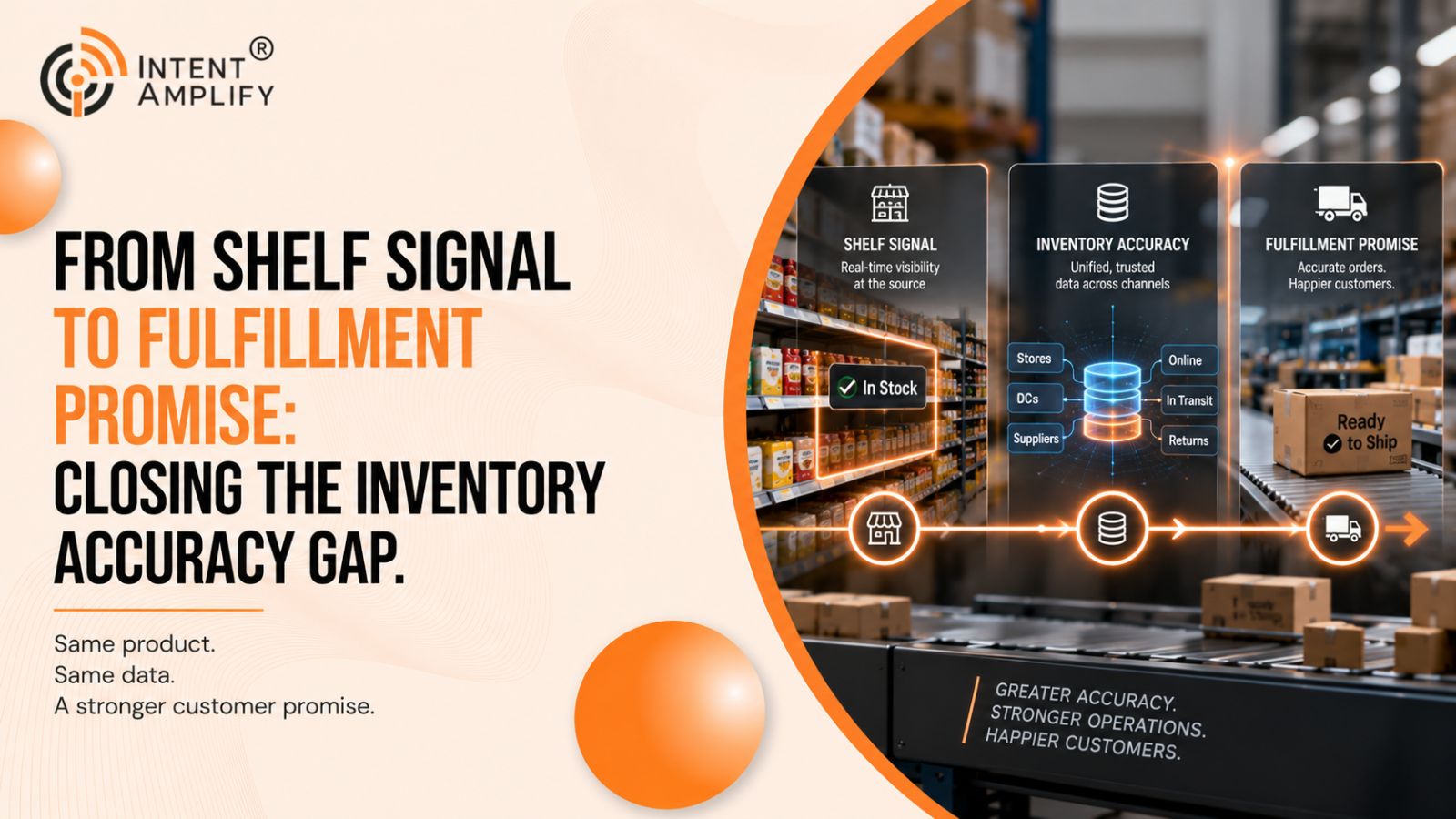
From Shelf Signal to Fulfillment Promise: Closing the Inventory Accuracy Gap

From Shelf Signal to Fulfillment Promise: Closing the Inventory Accuracy Gap
September 8, 2026 7 min read

Quick Answer

Explore how retailers can close inventory accuracy gaps by connecting shelf signals, fulfillment decisions, exception ownership, and continuous operational controls.

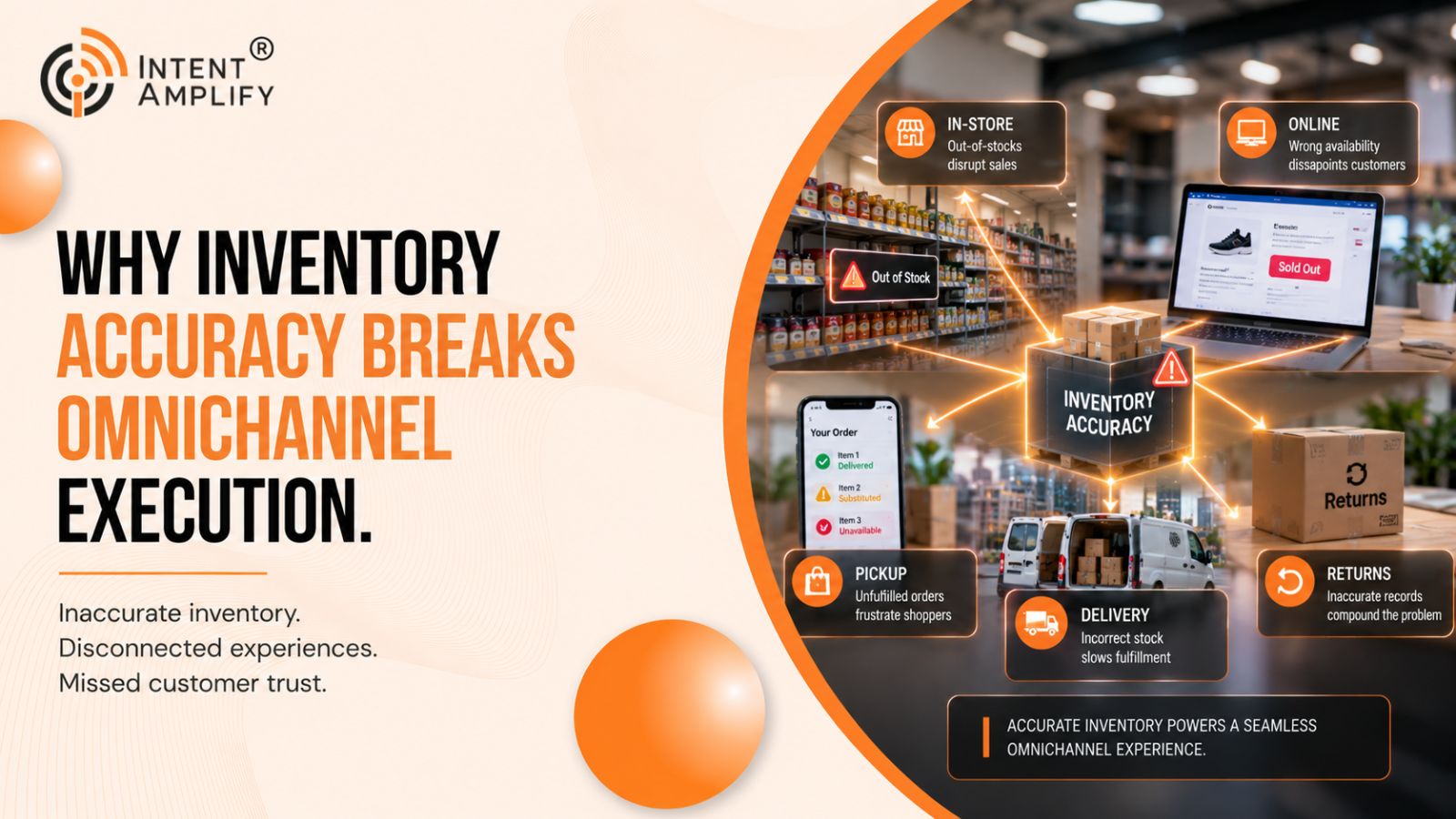
The customer promise begins before a picker receives a task. It begins when the retailer decides that an item is available to sell. That decision may look simple on a product page, but it depends on a chain of physical events, system updates, process controls, and operational judgments. When the chain is reliable, availability becomes a useful promise. When it is not, the organization can expose a confident digital signal that the physical operation cannot fulfill.

For omnichannel leaders, inventory accuracy is therefore less about a single percentage and more about closing the gap between shelf reality and fulfillment decision-making.

The gap is created by events, not by spreadsheets.

Inventory records change because the physical world changes. Product is received, moved, replenished, picked, packed, returned, damaged, transferred,d and adjusted. Each event creates an opportunity for the physical position and system position to diverge. A record can be correct at one moment and wrong after the next poorly captured event.

That is why periodic correction alone cannot create continuous reliability. Counting can restore a record, but the operating model must also determine why the record drifted, whether the cause is recurring, and what control should change. Otherwise, the same discrepancy returns and the organization pays for it again through search, exception work, conservative availability, or customer-facing failure.

Start with the promises that matter.

A useful improvement program begins by identifying the decisions that inventory data is expected to support. For ecommerce, that can include whether an item is shown as available, whether a location is eligible to fulfill an order, and how much inventory should be protected from promise. For store operations, it can include replenishment, task prioritization, and exception handling. For planning and merchandising, it can include how local availability informs allocation and action.

The point is not to force every function into one metric. It is to create shared definitions around the moments where inventory information changes a decision.

Four questions expose the control gaps.

1. Where can the record diverge from physical reality? Map receiving, movement, replenishment, fulfillment, returns, transfers,s and adjustments. Do not assume all errors originate in counting.

2. How is a discrepancy detected? A failed pick, recount, transfer mismatch, ch or operational observation may reveal the same underlying issue at different times. Earlier detection usually creates more options for intervention.

3. Who owns the next decision? Detection without ownership creates queues. The operating model should define what happens when a discrepancy crosses a threshold or affects a customer promise.

4. How does the organization learn from recurrence? If the same item, location, workflow, or transaction pattern repeatedly creates exceptions, the signal should reach the process owner, not remain trapped in an exception log.

The control loop: detect, decide, correct, learn

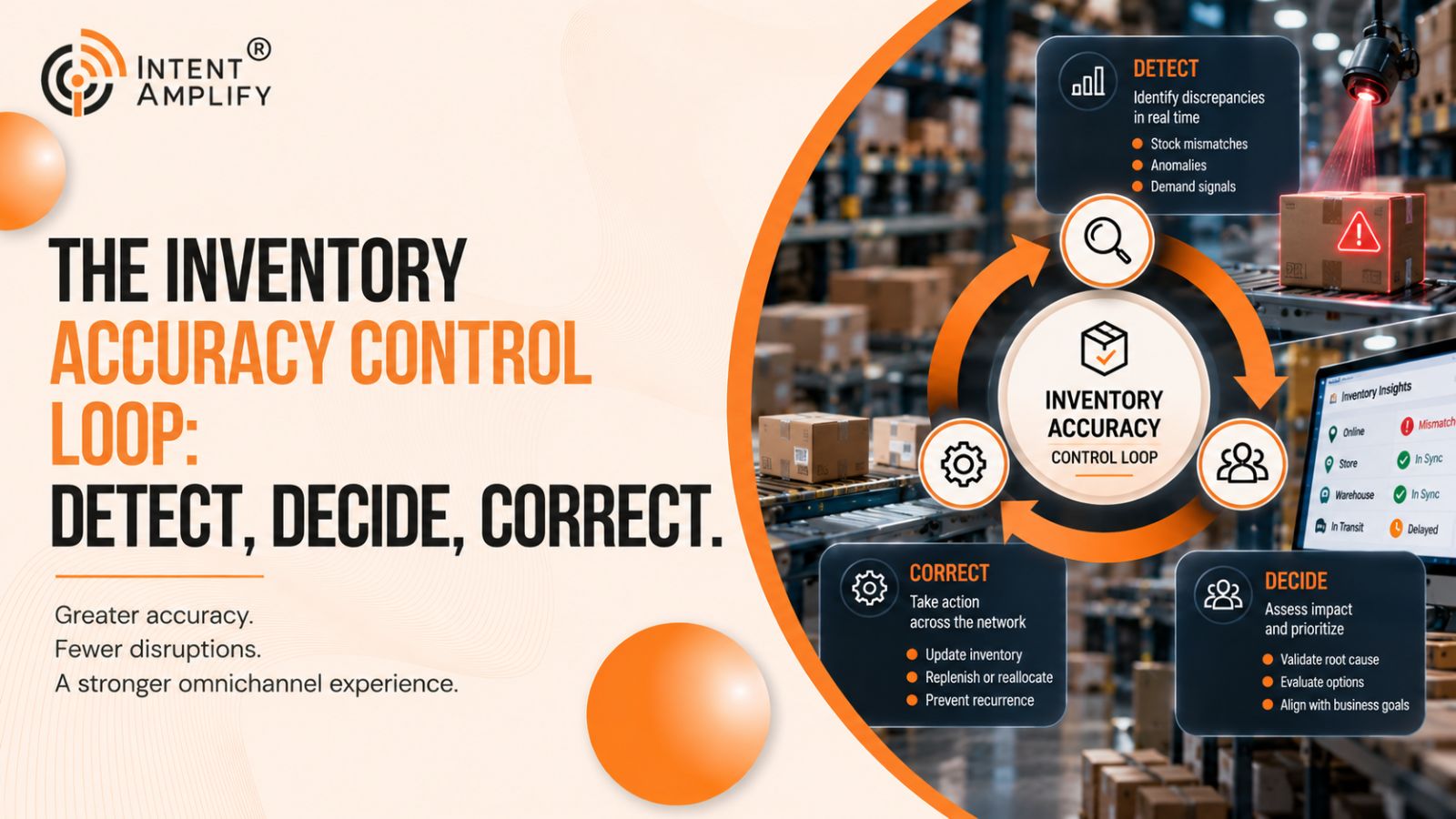
A mature inventory accuracy discipline behaves like a control loop. Detection identifies a mismatch or risk signal. Decision logic determines the appropriate action. Correction restores the current position. Learning identifies whether a process, policy, integration, or operating behavior should change.

This loop matters because the fastest correction is not always the best long-term response. A manual adjustment can close an exception quickly while leaving the cause untouched. Conversely, an extensive root-cause exercise can be too slow when a customer-facing promise needs immediate protection. Effective operations separate immediate containment from systemic correction.

That distinction also clarifies ownership. Store or fulfillment teams may own immediate resolution. Inventory or operations teams may own policy. Technology teams may own integration defects. Merchandising or planning may own rules that influence movement. Leadership owns the cross-functional mechanism that connects these actions.

What to measure

Activity metrics are necessary but insufficient. Counts completed and exceptions closed show work performed. Leaders also need measures that reveal reliability: exception aging, repeat discrepancy patterns, failed fulfillment attempts associated with unavailable stock, time from detection to correction, and the share of recurring causes with a named owner and corrective action.

Metric definitions should be explicit. “Inventory accuracy,” “availability,” “on-hand,” “sellable,” and “fulfillable” can mean different things across systems and teams. If definitions are not aligned, dashboards can create the appearance of precision while teams continue to act on different realities.

The role of technology

Technology can improve detection, synchronization, and visibility, but technology does not remove the need for operating design. A faster signal is valuable only if the organization knows what decision the signal should trigger. More granular data is useful only if teams can distinguish meaningful exceptions from noise. Automation is effective when the exception logic, ownership,p and feedback loop are already clear enough to automate responsibly.

This is why leaders should evaluate technology in the context of the operating model. Ask which decision becomes faster, which manual check can be removed, which exception becomes visible earlier, and which recurring cause can be identified with greater confidence.

A practical pilot

Choose one bounded flow where inventory reliability materially affects execution: a store cluster, category, fulfillment method, or recurring exception type. Document the current decision path. Define the signal used to identify a discrepancy. Assign an immediate owner and a root-cause owner. Establish a small set of measures before changing the process. Then test one or two interventions.

The purpose is to create evidence, not to declare success early. A useful pilot tells leadership which control changed the operating outcome, which assumptions were wrong, and what must be standardized before scale.

Turn the pilot into a decision standard.

A pilot becomes more valuable when its output is a repeatable decision standard rather than a one-time improvement story. Document which signals were trusted, which thresholds triggered action, who made each decision, what evidence closed the exception, and what conditions required escalation. That record gives other teams a practical starting point and makes later automation easier to govern.

Leaders should also test whether the pilot reduced dependence on compensating work. If employees still need side spreadsheets, repeated physical checks, informal messages, or local buffers to feel confident in the inventory position, the formal process may not yet be reliable enough. Those workarounds are useful evidence because they reveal where the operating model is asking people to bridge gaps between systems, definitions, or ownership.

Scale should therefore follow control maturity, not enthusiasm. Before extending a new process to more locations or categories, confirm that teams use the same definitions, exception routes, and closure criteria. Confirm that recurring causes reach the appropriate process owner and that the operating review can distinguish an isolated discrepancy from a pattern. A standardized control loop creates a stronger foundation for scaling technology because the organization knows which decisions should remain human, which can be automated, and which require additional evidence.

One final discipline is to review the customer promise alongside the operational metric. An improvement can look efficient internally while still creating friction if availability rules become excessively conservative. The aim is not simply to suppress exceptions. It is to improve the quality of the promise while reducing avoidable recovery work. That balance keeps inventory accuracy connected to the commercial and operational decisions it is meant to support.

Leadership takeaway

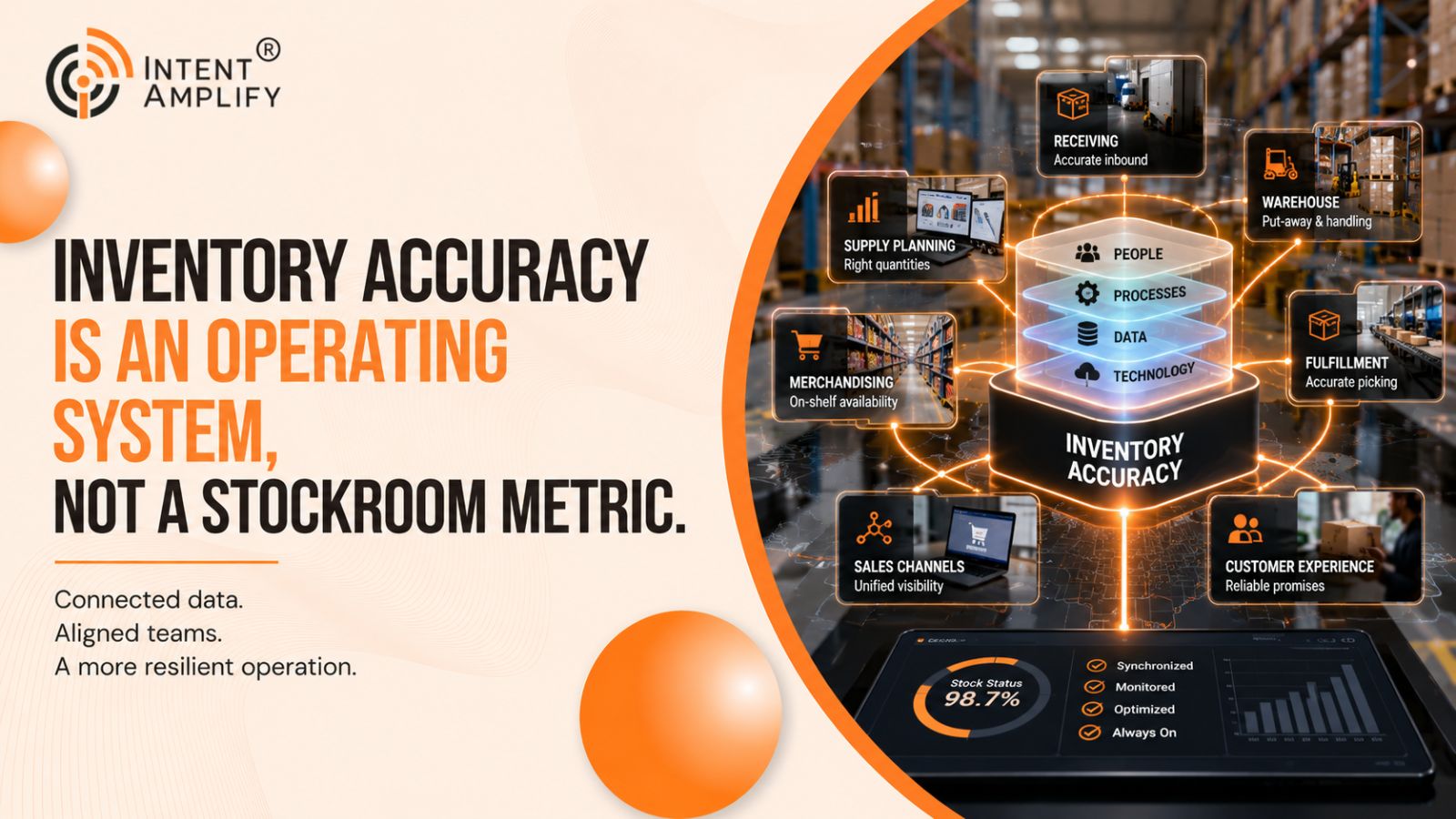
The gap between shelf signal and fulfillment promise is an operating gap. It is created by the way events are captured, decisions are made, exceptions are owned, and recurring causes are corrected. Treating inventory accuracy as a cross-functional control system gives leaders a more actionable path than treating it as a periodic count result.

The question for the next operating review is not simply whether inventory is accurate. It is whether the organization can trust inventory information enough to make the next customer-facing decision without compensating work.

Register for the Inventory Accuracy webinar

Join RETHINK Retail to examine the cost of phantom inventory, how to build one inventory number stores can trust, and practical operational fixes designed to address avoidable labor, margin pressure, and weak customer promises without assuming a major technology overhaul. Following the webinar, attendees can opt into an interactive operations assessment and a one-to-one review with Tom Enright.

Register Now

References

  1. RETHINK Retail (2026) How to Build the Inventory Accuracy Every Grocery Decision Depends On. Available at: https://rethink.industries/video/the-inventory-accuracy-every-grocery-decision-depends-on/

  2. Rekik, Y., Oliva, R., Syntetos, A.A. and Glock, C.H. (2026) Inventory Record Inaccuracy in Grocery Retailing: Impact of Promotions and Product Perishability, and Targeted Effect of Audit. Journal of Business Logistics. Available at: https://onlinelibrary.wiley.com/doi/10.1111/jbl.70079

  3. RETHINK Retail (2026) The Availability Paradox: How Inventory Inaccuracy is Costing Retailers More Than They Realize. Available at: https://rethink.industries/articles/the-availability-paradox-how-inventory-inaccuracy-is-costing-retailers-more-than-they-realize/

  4. Retail Dive (2026) The Order Management Imperative: How Outdated Order Management Is Holding You Back and What You Can Do About It. Available at: https://www.retaildive.com/spons/the-order-management-imperative-how-outdated-order-management-is-holding-y/814488/

  5. Supply Chain Dive (2026) Always-on Supply Chains Are Becoming the Norm, Experts Say. Available at: https://www.supplychaindive.com/news/always-on-supply-chains-becoming-the-norm-experts-say-outlook/825481/

Contact
Sales