
Executive Snapshot
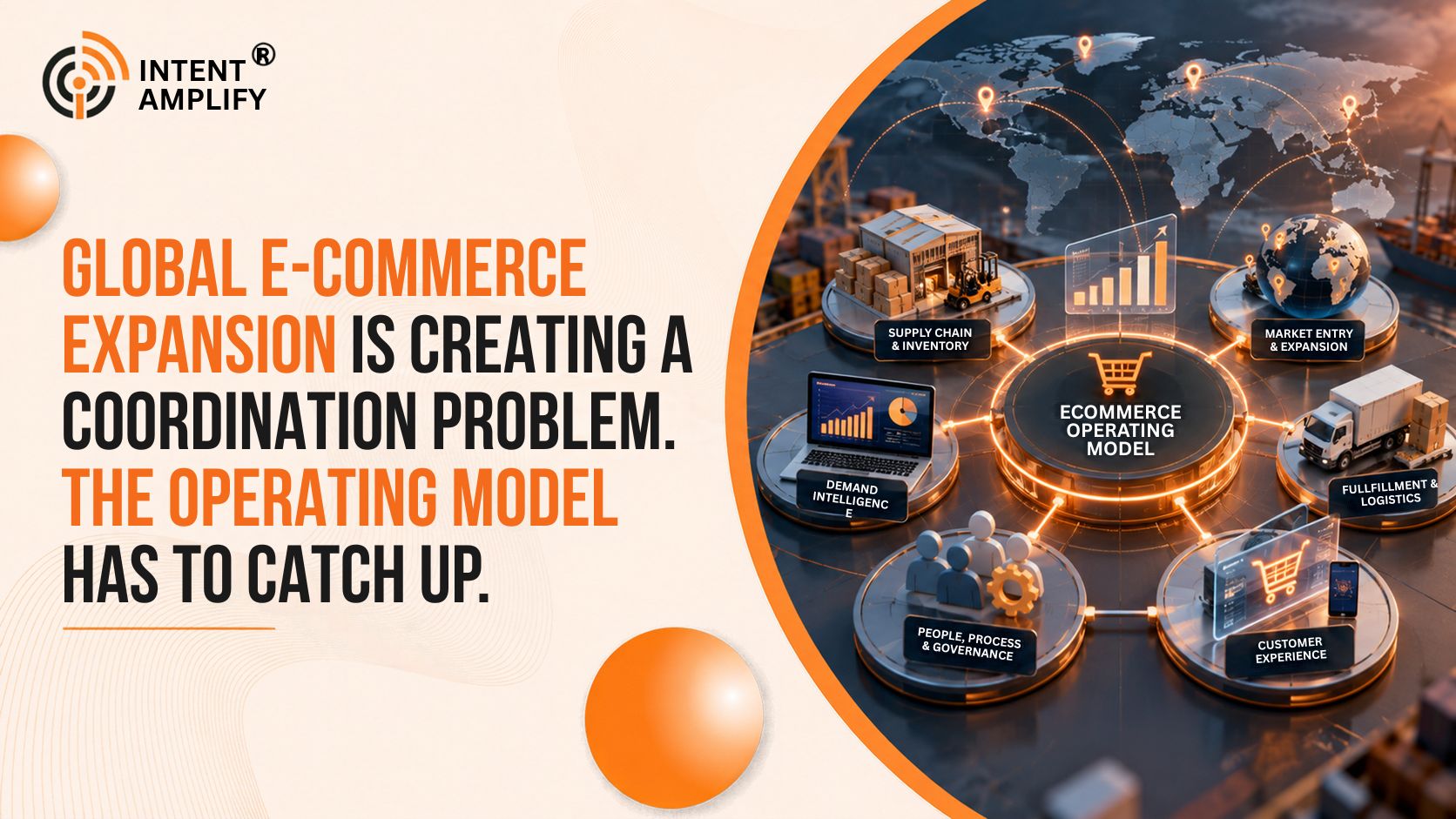
Global ecommerce expansion is no longer mainly a storefront-launch problem. The more consequential challenge is whether an enterprise can enter new markets while keeping checkout trust, payments, tax, customs, fulfillment, returns, customer service, product data, finance, and governance connected.
What is a global ecommerce operating model?
A global ecommerce operating model is the shared system of data, controls, decision rights, technology interfaces, and market configurations used to sell across countries without rebuilding the business for every market. It standardizes enterprise truth while allowing payments, tax, delivery, returns, language, and customer experience to adapt where local evidence requires it.
RETHINK Retail’s Global Expansion: The New Operating Model for Global Ecommerce frames the shift around four connected priorities: hyper-local payments that build checkout trust, replacement of regional duplication with one connected model, relief from tax, compliance, and logistics complexity, and architecture prepared for AI-led discovery. The common thread is operating-model design. A market can be commercially attractive and technically launchable while still being difficult to run at scale.
For ecommerce, digital, operations, finance, technology, and expansion leaders, the sharper question is not simply whether another country can be activated. It is whether the business can convert local market requirements into a repeatable customer-to-cash model without recreating systems, controls, providers, and exception processes for every geography.
Key Industry Updates: Cross-Border Demand Is Rising Faster Than Operating Simplicity
DHL’s 2026 E-Commerce Trends Report surveyed 29,000 online shoppers and 5,800 ecommerce businesses across 29 countries. It reports that 70% of shoppers buy internationally, up from 60% in 2025, while 45% buy across borders more than once a month. More than three in ten orders are being sent internationally, and 25% of businesses that do not currently ship cross-border say they are prioritizing cross-border delivery capabilities in the next 12 months. [1]
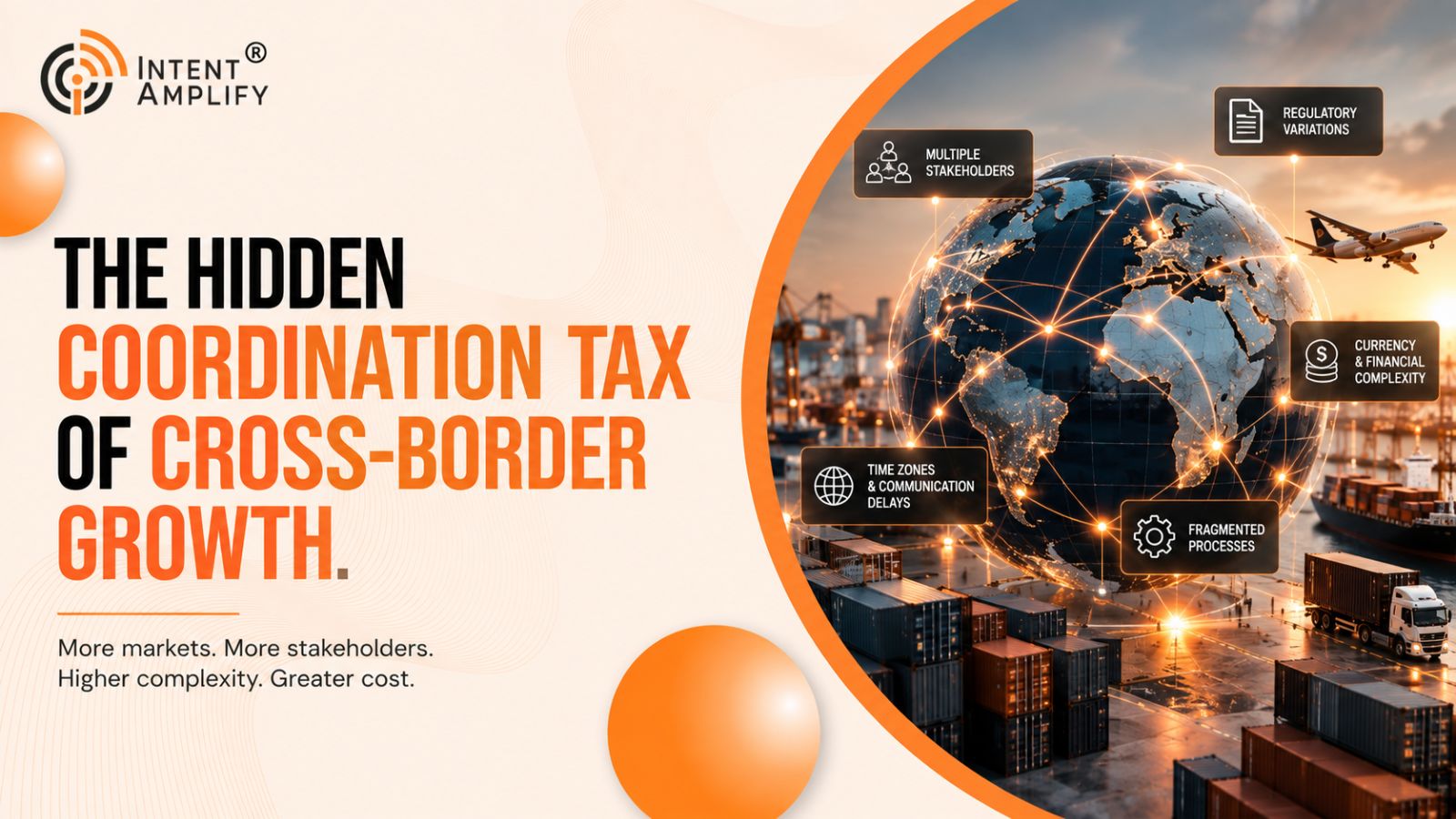
The same DHL research shows why demand alone is not enough. Delivery costs, customs, duties, taxes, uncertainty about delivery providers, returns friction, and fear of fraud remain material barriers. In other words, international demand can be visible before the operating model is ready to support it. [1]
Payments are another pressure point. PayPal’s March 2026 cross-border commerce guidance emphasizes the need to plan for differences in payment methods, currencies, taxes, duties, shipping, customer expectations, and local market behavior rather than treating international ecommerce as a simple extension of domestic selling. [2]
Juniper Research reported in May 2026 that the value of cross-border payments is expected to rise from $50.8 trillion in 2026 to $62.9 trillion by 2030. Its analysis links that growth to expanding cross-border ecommerce, B2B payments, and improving payment infrastructure. The forecast is directional rather than a guarantee, but it reinforces the infrastructure challenge facing enterprises that want to serve more markets. [3]
Trend Analysis: Local Trust Requires a Connected Global Core
The old expansion model often starts with a country, a storefront, a payment method, a carrier, and a campaign. That sequence can generate sales, but it can also create regional technology, local provider contracts, duplicated data definitions, one-off reporting, and manual reconciliation that become harder to govern as the portfolio grows.
The emerging model separates a governed global core from controlled market configuration. The global core should contain the elements that need consistency: product identity, order states, customer and consent logic, inventory definitions, financial events, performance definitions, escalation rules, and ownership. Market configuration should contain the elements that legitimately vary: language, permitted assortment, payment methods, currencies, tax treatment, duties, delivery options, returns design, local support routes, and market-specific legal requirements.
Checkout.com’s March 2026 integration with SAP Commerce Cloud’s Open Payment Framework illustrates the broader direction toward standardized integration rather than repeated custom payment builds. The announcement describes a framework intended to simplify payment-provider integration and support cards and local payment methods through a common commerce environment. Vendor claims should be interpreted in context, but the architectural signal is relevant: global commerce teams are looking for ways to add local payment capability without multiplying custom infrastructure. [4]
The same principle applies beyond payments. A local carrier may be the right choice, but tracking states should still map to a common operating view. A market-specific returns route may be necessary, but refund, inventory recovery, tax, and customer-service consequences should still reconcile to shared controls. Localization is not the problem. Unmanaged localization is.
Expert Commentary: Market Entry Should Be Designed as an End-to-End Operating Decision
A useful way to test expansion readiness is to follow one representative order through the complete lifecycle: discovery, product selection, checkout, payment authorization, tax and duty calculation, inventory allocation, fulfillment, customs, delivery, service, return, refund, settlement, and reconciliation.
At every handoff, leaders should ask four questions. What system or record is authoritative? Who owns the next decision? What can fail? What happens when the standard path is unavailable? Those questions expose gaps that are easy to miss in launch plans because each function may be locally ready while the end-to-end journey is not.
Walmart’s June 2026 announcement that Walmart.com would ship an expanded assortment to customers in Mexico is a useful market signal because it shows how major retailers continue to extend ecommerce across borders through a combination of assortment, digital experience, and logistics. The announcement itself does not prove a universal operating model, but it demonstrates that international ecommerce expansion remains an active strategic priority for large retailers. [5]
The leadership implication is straightforward: a market should not be considered ready only because the website works. Readiness also requires a credible customer promise, an operable transaction path, known compliance responsibilities, observable fulfillment and returns, clear exception ownership, and finance visibility through settlement and reconciliation.
Actionable Insights for Global Ecommerce Leaders
1. Separate the global core from market configuration
Document which capabilities must remain globally consistent and which can vary by market. Require every local variation to have a customer, regulatory, infrastructure, or economic rationale, an owner, and a review point.
2. Treat checkout as a trust system
Localized checkout should connect currency, payment choice, total landed cost, delivery expectations, returns, security, and support. A payment method that improves front-end relevance but creates unresolved settlement or refund complexity is not an isolated checkout decision.
3. Build compliance into the transaction design
Tax, customs, product eligibility, labeling, privacy, invoicing, and consumer obligations should be mapped before launch. Where the operating model requires a Merchant of Record or another accountable seller structure to absorb localized tax, compliance, payment, and logistics obligations, leaders should define that responsibility explicitly rather than leave it fragmented across providers. The objective is not to centralize every decision but to make responsibilities and evidence explicit.
4. Design fulfillment and returns together
International delivery economics can look attractive until failed delivery, customs exceptions, returns, refunds, and inventory recovery are included. Compare cross-border direct, marketplace, in-country inventory, partner, and hybrid models on total operating consequences rather than outbound shipping alone.
5. Make expansion evidence-based
Before launch, classify material readiness questions as verified, assumed, unknown, or unresolved. Define what evidence would close each question and who owns that evidence. This prevents assumptions from quietly becoming permanent operating architecture.
Conclusion: The New Advantage Is Repeatability With Local Relevance
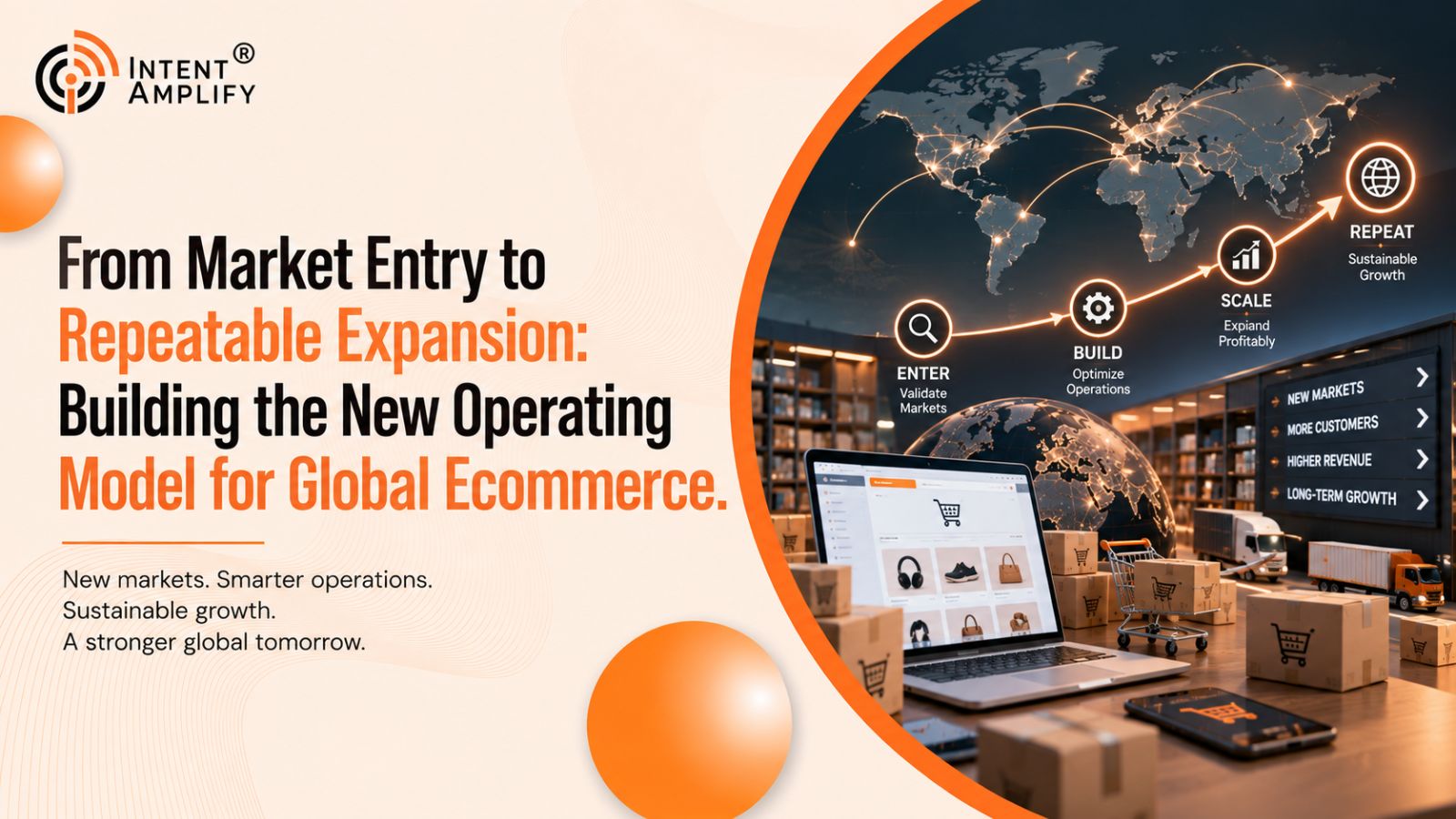
Global ecommerce growth is becoming less about how many countries an enterprise can technically reach and more about how consistently it can operate across them. The strongest model does not eliminate local variation. It creates a common operating foundation strong enough to absorb justified local requirements without fragmenting product, order, customer, inventory, finance, and performance truth.
That is why the next expansion decision should be judged by more than launch speed. Leaders should ask whether the new market strengthens reusable capabilities, makes decision rights clearer, improves data and reconciliation, and leaves the organization better prepared for the next country.
For a deeper view of hyper-local checkout, one connected global operating model, backend simplification including Merchant of Record approaches, and commerce architecture prepared to convert demand from AI search and global marketplaces, read Global Expansion: The New Operating Model for Global Ecommerce.
Use the report as the next-step decision guide for ecommerce, digital, operations, finance, technology, payments, logistics, and expansion leaders evaluating how to scale international commerce without multiplying regional systems and operating complexity.
Read the full RETHINK Retail guide
References
1. DHL eCommerce (2026) 2026 E-Commerce Trends Report. Available at: https://www.dhl.com/global-en/microsites/ec/ecommerce-insights/insights/reports/2026-ecommerce-trends-report.html
2. PayPal (2026) Cross-Border Commerce: How to Succeed in 2026. Available at: https://www.paypal.com/us/brc/article/cross-border-ecommerce-strategy
3. Juniper Research (2026) Cross-border Payment Transactions to Hit $63 Trillion by 2030 Globally, as Cross-border eCommerce Scales Rapidly. Available at: https://www.juniperresearch.com/press/cross-border-payments-transactions-to-hit-63tn/
4. Checkout.com (2026) Checkout.com Integrates with SAP’s Open Payment Framework to Accelerate Enterprise Ecommerce Payments. Available at: https://www.checkout.com/newsroom/checkout-com-integrates-with-saps-open-payment-framework-to-accelerate-enterprise-ecommerce-payments
5. Walmart (2026) Walmart Opens Walmart.com to International Customers, Unlocking Access to Hundreds of Thousands of Items with Shipping Available to Mexico. Available at: https://corporate.walmart.com/news/2026/06/11/walmart-opens-walmartcom-to-international-customers-unlocking-access-to-hundreds-of-thousands-of-items-with-shipping-available-to-mexico