
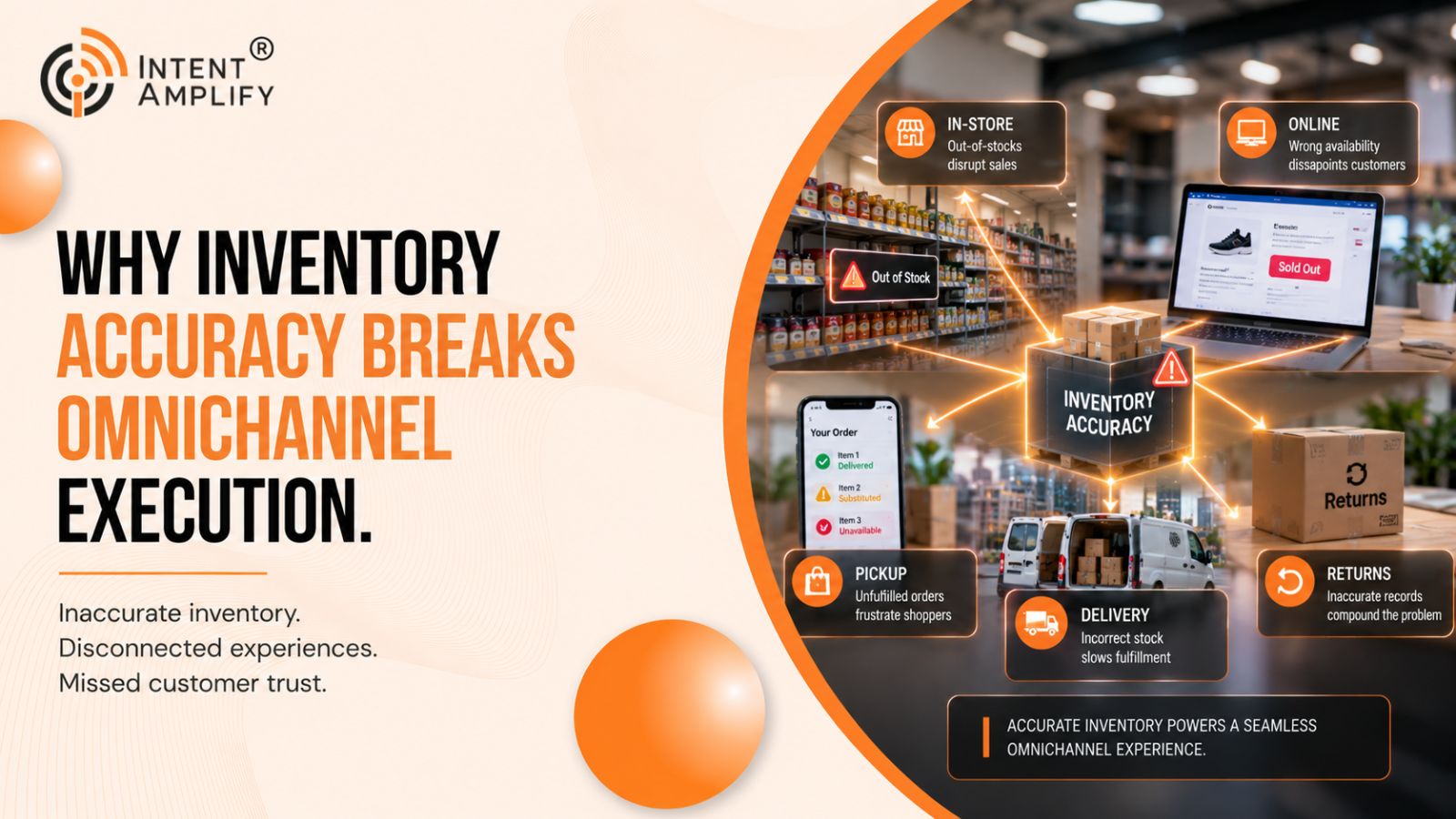
Inventory Accuracy Is Now a Customer-Promise Problem
Inventory accuracy used to be treated as a stockroom control: count what is on hand, reconcile the difference, and correct the system. In omnichannel retail, that definition is too narrow. Inventory data now determines whether a customer sees an item as available, whether an order is accepted, which location is selected for fulfillment, and whether a store team can execute the promise that has already been made.
RETHINK Retail’s 2026 inventory-accuracy webinar frames the problem directly: even at a 5% out-of-stock rate, roughly one in three baskets can be missing an item. The wider issue is confidence. Retailers may have inventory systems that look accurate at an aggregate level while store-level reality still produces substitutions, failed picks, unavailable products, wasted labor, and broken customer promises. [1]
For Director+ leaders across retail operations, supply chain, inventory, ecommerce, merchandising, and enterprise systems, inventory accuracy is therefore an execution dependency. When the record is wrong, every downstream decision inherits the error.
Why Omnichannel Magnifies Inventory Drift
Inventory records change whenever product moves. Receiving, put-away, replenishment, picking, transfers, returns, damage, shrink, and manual adjustments can all create a gap between physical reality and the system record. In a single-channel environment, some of those gaps may remain hidden until a count. In omnichannel retail, the same gap can become customer-facing immediately.
ECR Retail Loss highlighted the scale of the issue at its 2026 Inventory Record Accuracy Summit, noting that inaccurate records create empty shelves, excess stock, and lost sales. Its research has also shown that correcting inaccurate records can produce material sales improvement, reinforcing that inventory record accuracy is not simply a compliance activity. [2]
The practical implication is that retailers cannot rely only on periodic counting. Counting can restore a record, but it does not explain why the record became unreliable in the first place.
The Operational Failure Starts Before the Customer Sees It
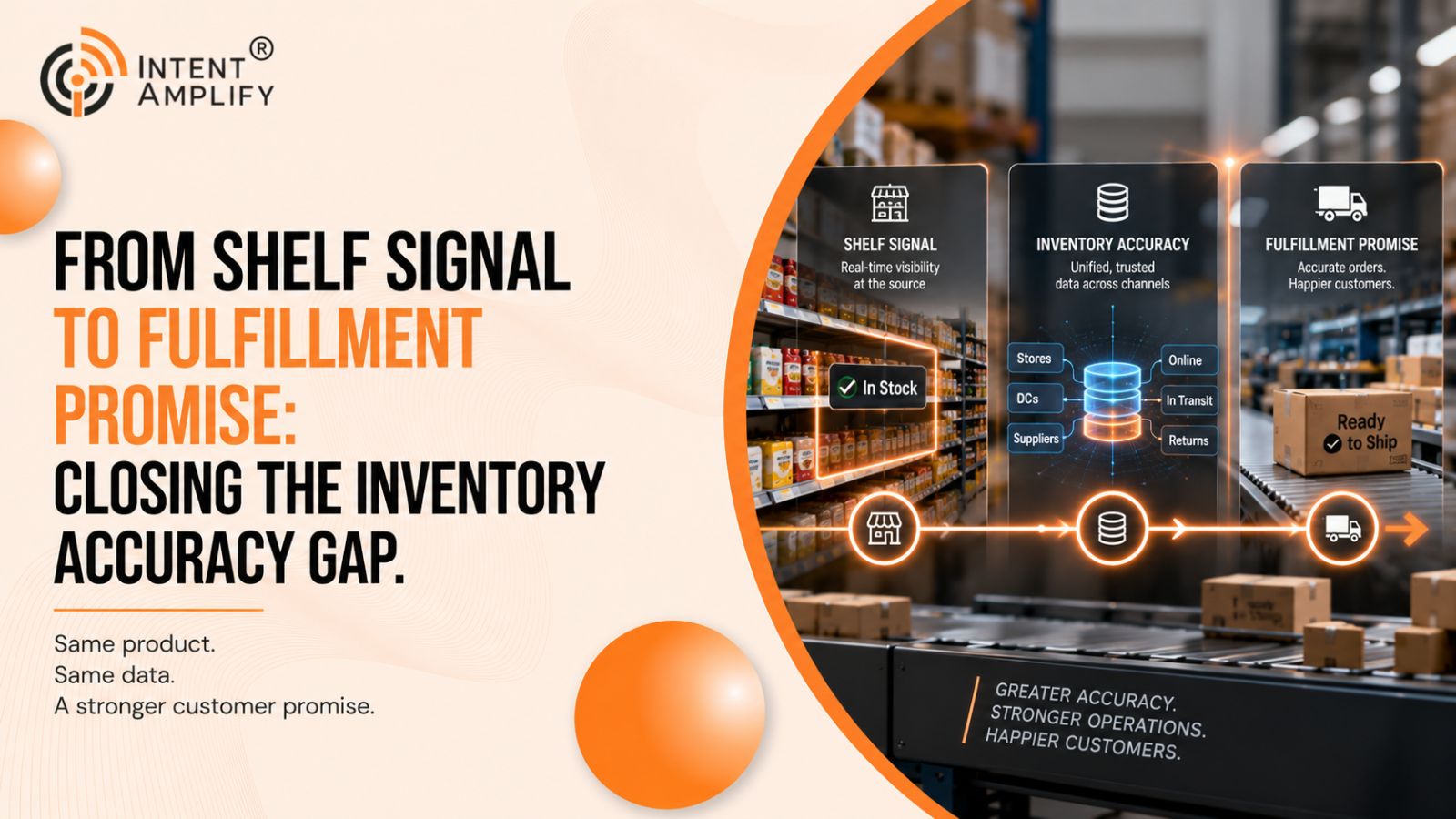
A failed pickup or delivery may be the visible symptom, but the root cause may have occurred much earlier. A receiving error can make inventory appear available when it never entered the sellable flow. A transfer can be recorded before the product reaches its destination. A return can be physically present but not yet sellable. A replenishment task can be completed incorrectly while the system assumes the shelf position is ready.
Recent academic research reinforces this point. A 2026 Journal of Business Logistics study covering about 24,000 SKUs across 11 grocery stores found that inventory record inaccuracy is shaped by operating conditions including inventory levels, restocking frequency, perishability, and audit activity. The study also found that targeted inventory audits can materially affect sales where negative inventory record inaccuracy exists. [3]
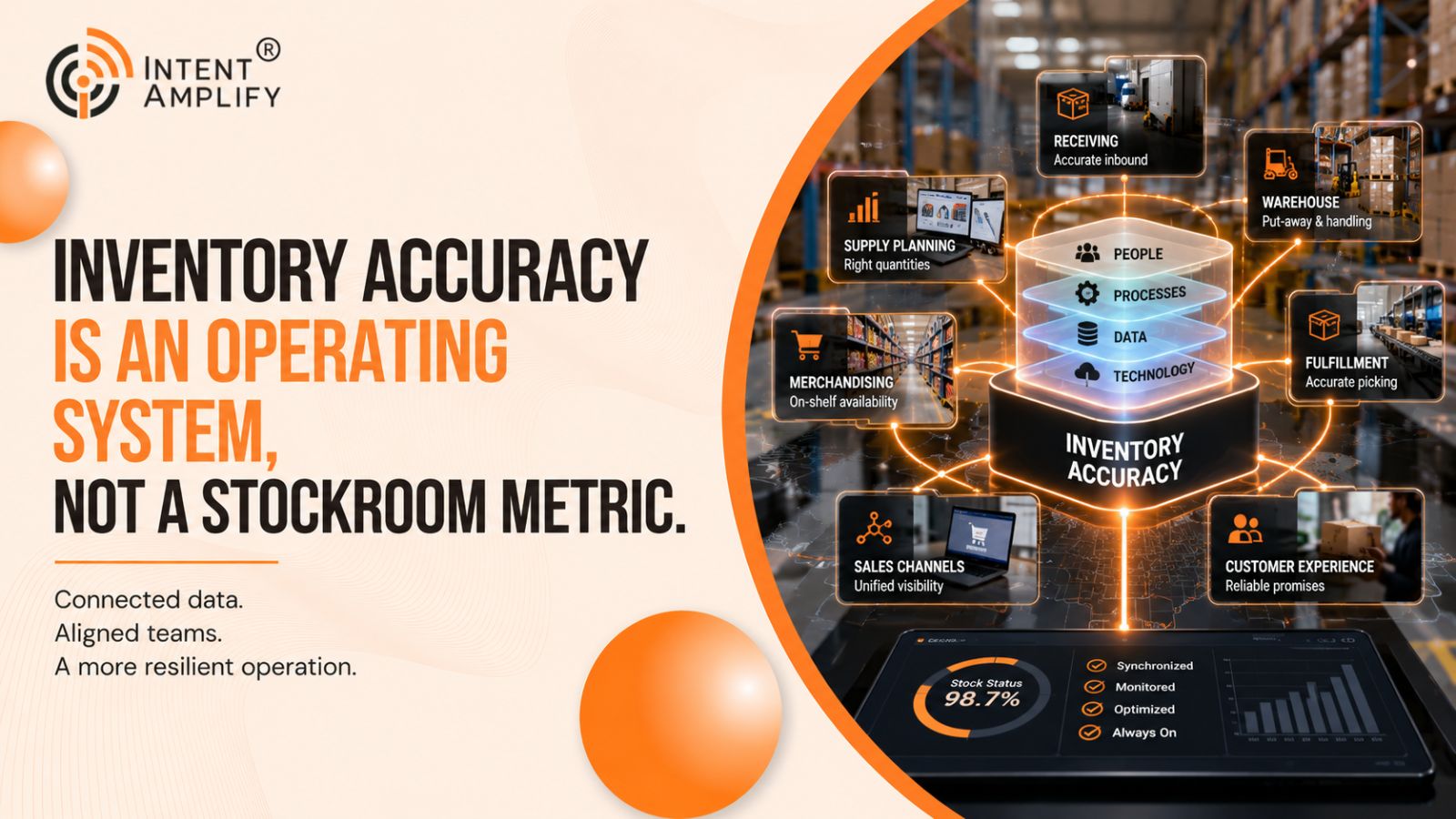
This is why inventory accuracy should be managed as a process system, not a single number.
Compensation Creates Hidden Operating Cost
When teams do not trust inventory data, they compensate. Store associates perform extra checks. Ecommerce teams add buffers. Fulfillment teams reroute orders. Planners discount the signal. Managers create local spreadsheets or exception routines.
These controls may be rational, but over time they create decision debt. Work that should be driven by the standard inventory signal becomes dependent on local judgment and repeated verification.
Retail Gazette reported in April 2026 that more than 60% of inventory records can contain inaccuracies, citing research that links improved inventory accuracy with better on-shelf availability and sales performance. [4] The leadership takeaway is not to adopt a universal benchmark blindly. It is to identify where the organization is spending labor and adding complexity because teams do not trust the record.
A Practical Operating Checklist
- First, define the customer or operational decisions that depend on inventory data.
- Second, map the physical events that can change the inventory position and the systems expected to capture them.
- Third, identify where discrepancies are first detected and whether that happens early enough to change the outcome.
- Fourth, separate immediate containment from root-cause correction.
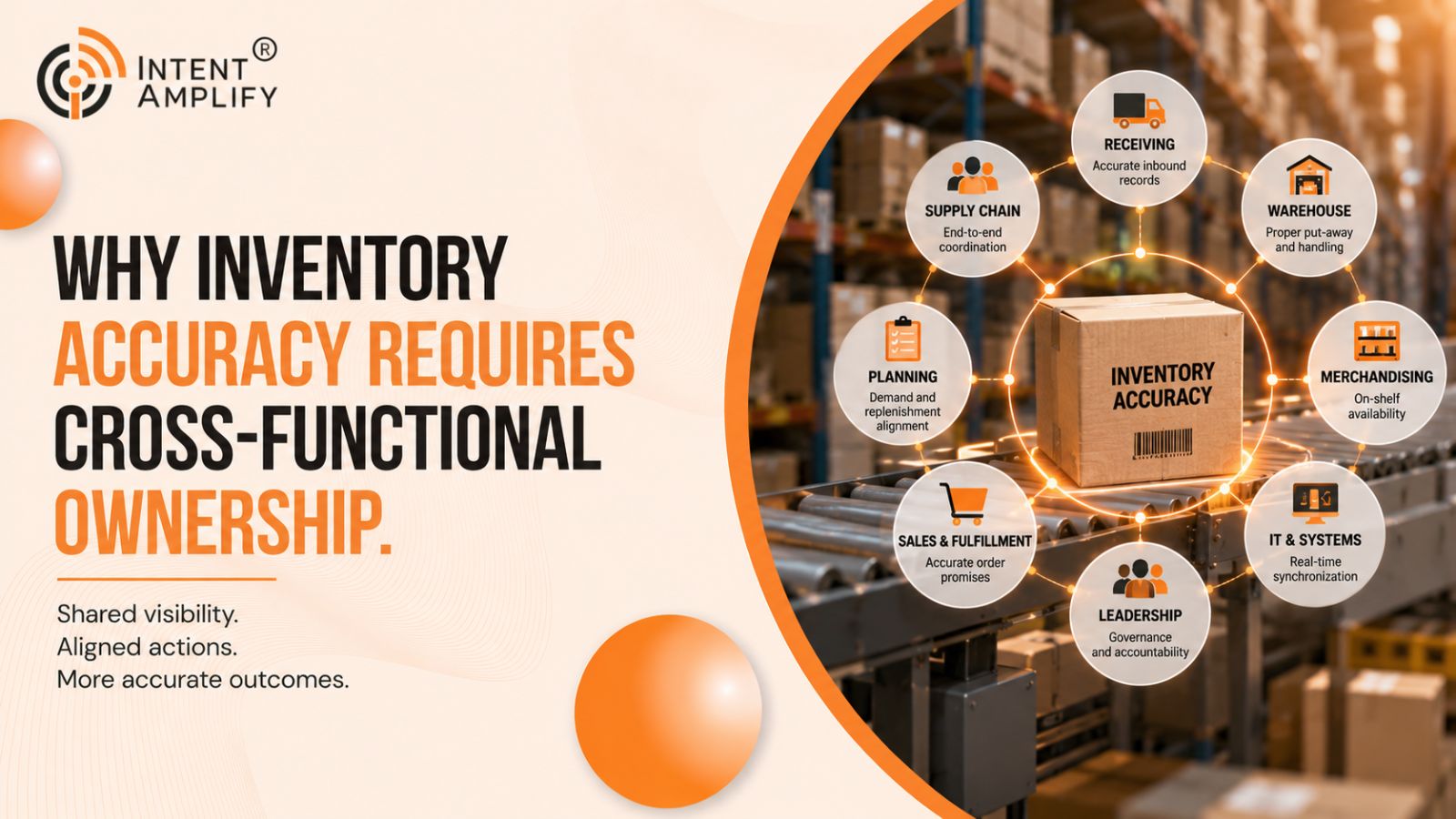
- Fifth, assign an exception owner and a process owner for recurring causes.
- Sixth, measure repeat discrepancies, exception aging, failed fulfillment attempts, and manual verification work.
The objective is not perfect inventory. It is a more reliable decision system.
Inventory Accuracy Also Changes the Shrink Conversation
Retail Dive reported in March 2026 that several major retailers had seen shrink improve from pandemic-era highs, while noting that shrink reflects a mix of theft, operational weaknesses, and accounting gaps. [5] That distinction matters because not every record mismatch has the same cause. Retailers need enough event and exception evidence to distinguish theft, process failure, timing, damage, counting error, and system synchronization issues before assigning corrective action.
Build Inventory Confidence Before Scaling Automation
Retailers evaluating automation, AI, RFID, computer vision, or new inventory platforms should begin with the decision they want to improve. Better visibility is useful only when teams know what action a signal should trigger, who owns it, and how success will be measured.
Register for the Inventory Accuracy webinar
Conclusion
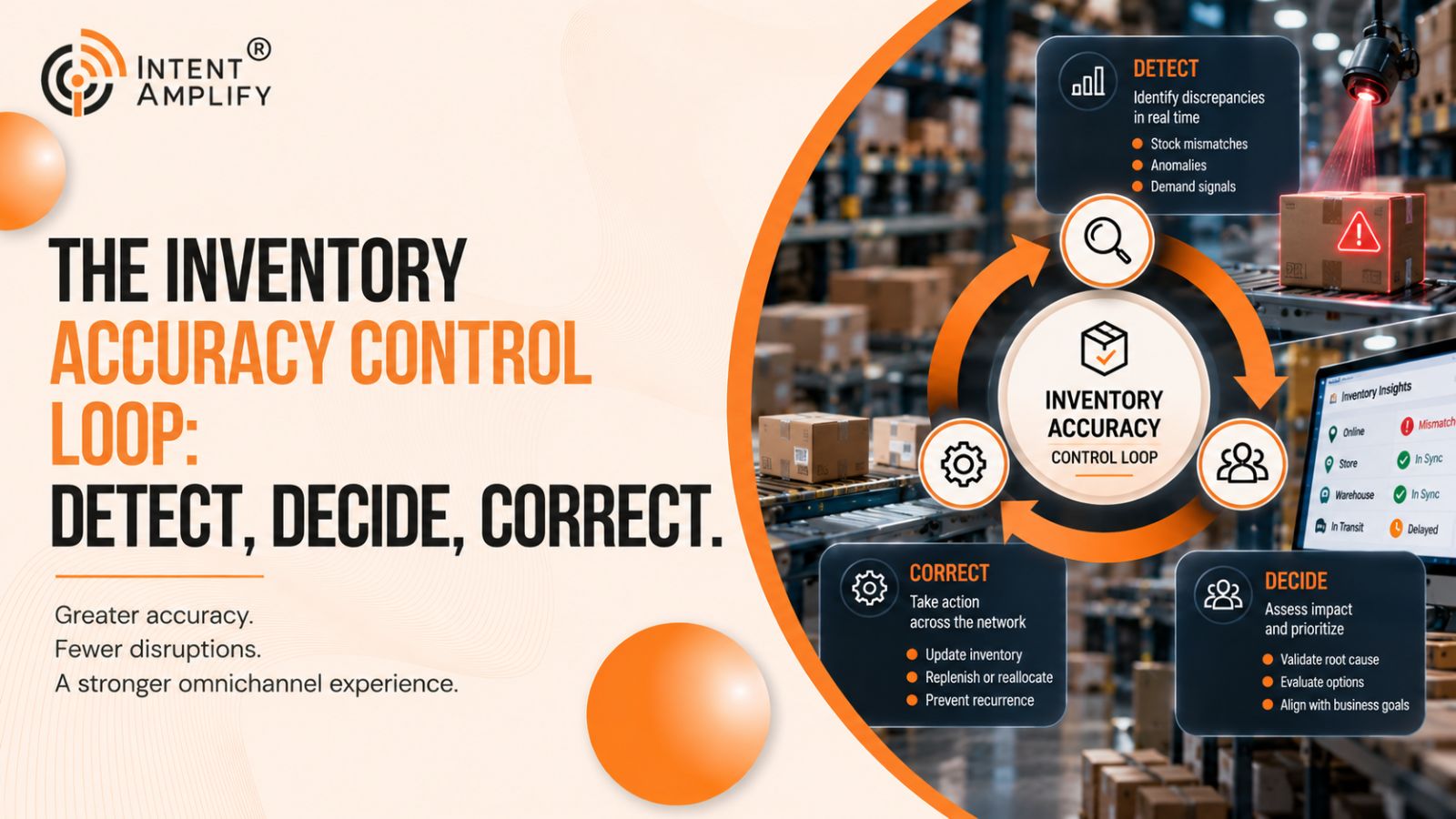
Inventory accuracy breaks omnichannel execution when retailers treat the record as a passive description rather than an active decision input. The stronger model connects physical events, system signals, operational decisions, exception ownership, and root-cause learning.
The question for retail leaders is not simply whether inventory is accurate. It is whether the organization can trust inventory information enough to make the next customer-facing decision without compensating work.
Take the Next Step: Assess Your Inventory Operation
Following the webinar, attendees can opt into an interactive assessment of their own operation to surface hidden inventory gaps and identify a practical path toward stronger inventory confidence. Participants can also review their assessment results one-to-one with Tom Enright, a retail supply chain expert and former lead Gartner analyst.
Register for the RETHINK Retail Inventory Accuracy webinar
FAQs
1. Why does inventory accuracy matter more in omnichannel retail?
Because the inventory record now influences customer-facing availability, order routing, pickup, delivery, replenishment, and store execution.
2. Why are periodic counts not enough?
Counts can correct the current record, but they do not automatically identify the process or system condition that caused the mismatch.
3. What should leaders measure beyond count accuracy?
Exception aging, repeat discrepancies, failed fulfillment attempts, time to correction, and manual verification work can reveal operating reliability.
4. Who should own inventory accuracy?
Routine exceptions need clear owners, while recurring causes should be assigned to the process or system owner able to prevent recurrence.
5. What is the first step toward improvement?
Choose one inventory-dependent decision chain, baseline the current process, and map where the physical and digital states can diverge.
References
-
RETHINK Retail (2026) How to Build the Inventory Accuracy Every Grocery Decision Depends On. Available at: https://rethink.industries/video/the-inventory-accuracy-every-grocery-decision-depends-on/
-
ECR Retail Loss (2026) Inventory Record Accuracy Summit: Bold Ideas for Retail. Available at: https://ecrloss.com/inventory-record-accuracy-summit-2026/
-
Rekik, Y., Oliva, R., Syntetos, A.A. and Glock, C.H. (2026) Inventory Record Inaccuracy in Grocery Retailing: Impact of Promotions and Product Perishability, and Targeted Effect of Audits. Journal of Business Logistics. Available at: https://onlinelibrary.wiley.com/doi/10.1111/jbl.70079
-
Retail Gazette (2026) Could your sales be up to 11% better? Available at: https://www.retailgazette.co.uk/blog/2026/04/could-your-sales-11-per-cent-better/
-
Retail Dive (2026) Retailers report shrink levels down from pandemic highs. Available at: https://www.retaildive.com/news/retail-inventory-shrink-theft-levels-down-pandemic-highs/815222/