
Inventory accuracy is often discussed as a stockroom discipline: count the units, reconcile the variance, correct the record. That framing is too narrow for an omnichannel retailer. When customers can discover, buy, reserve, pick up, return or redirect inventory across channels, the inventory record becomes an operating signal. Every downstream decision that depends on that signal inherits its quality.
A reliable inventory position supports a basic promise: the organization should know what it can sell, where it can fulfill it, and when it can make that promise with confidence. An unreliable position creates a different operating environment. Teams compensate with buffers, manual checks, exception handling, conservative availability rules and local workarounds. The problem is no longer a counting problem. It becomes a decision-quality problem.
Why the inventory record now sits inside the customer promise
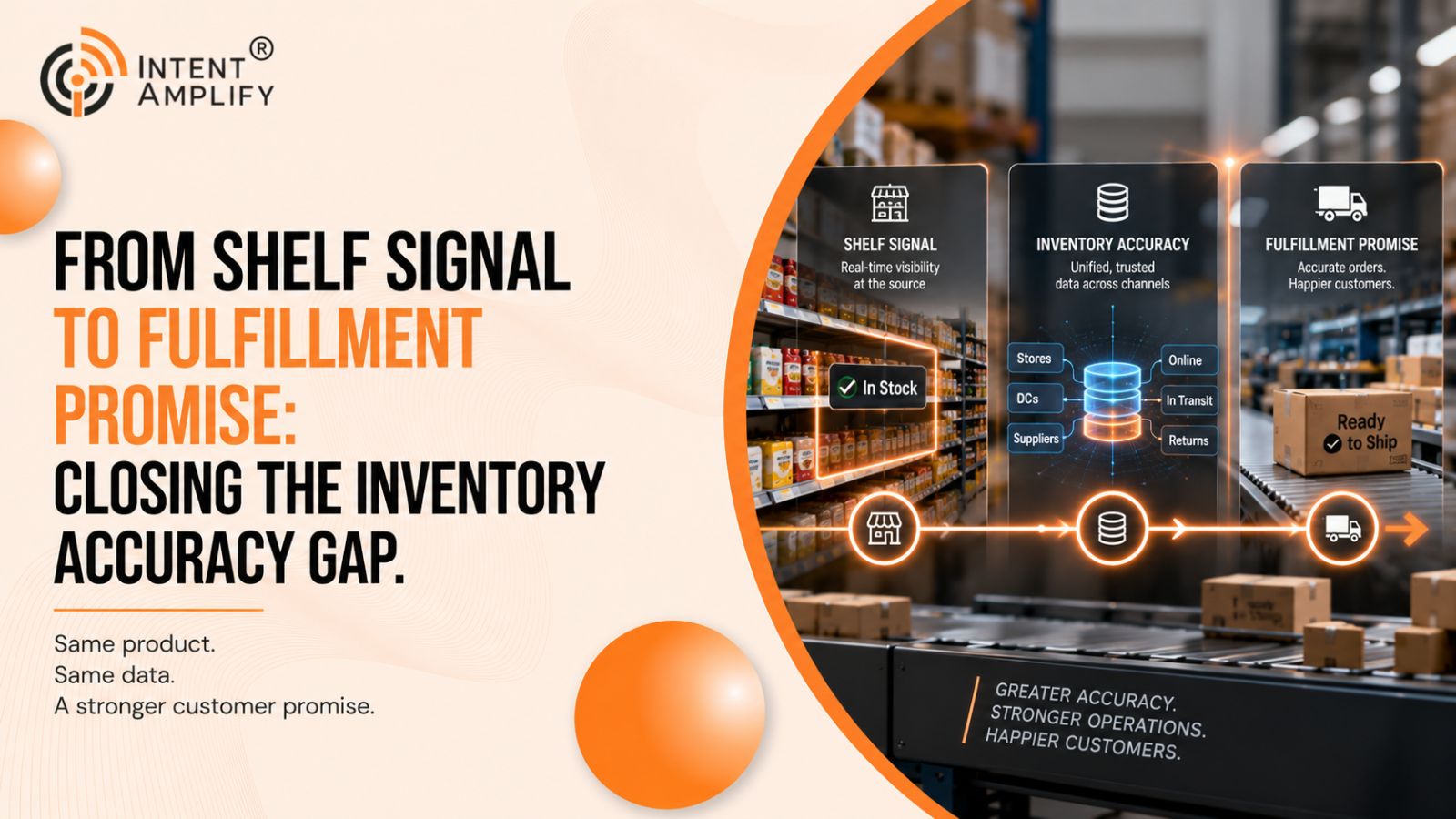
Omnichannel execution compresses the distance between a digital signal and a physical action. A shopper sees availability. An order-management process selects a location. A store or distribution team receives a task. A picker searches for the unit. A pickup or delivery commitment is made. If the inventory signal is wrong at the start, each later step can be perfectly executed and still fail to deliver the intended outcome.
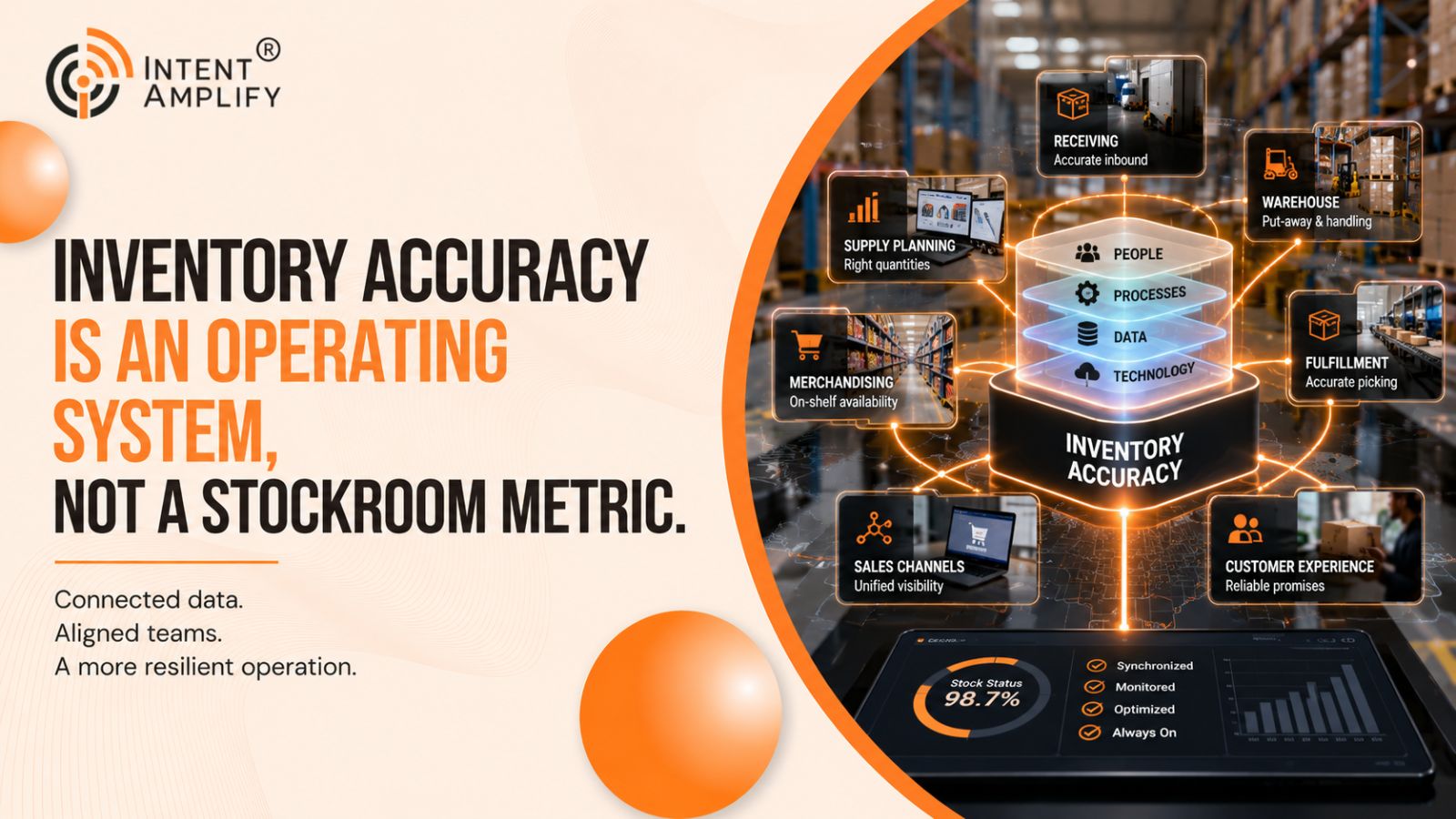
That is why leaders should evaluate inventory accuracy as an operating system rather than a periodic audit metric. The relevant question is not only, “How accurate was the count?” It is, “Which decisions depend on this record, how quickly do errors become visible, and how reliably does the organization correct the underlying cause?”
The cost of inaccuracy is distributed
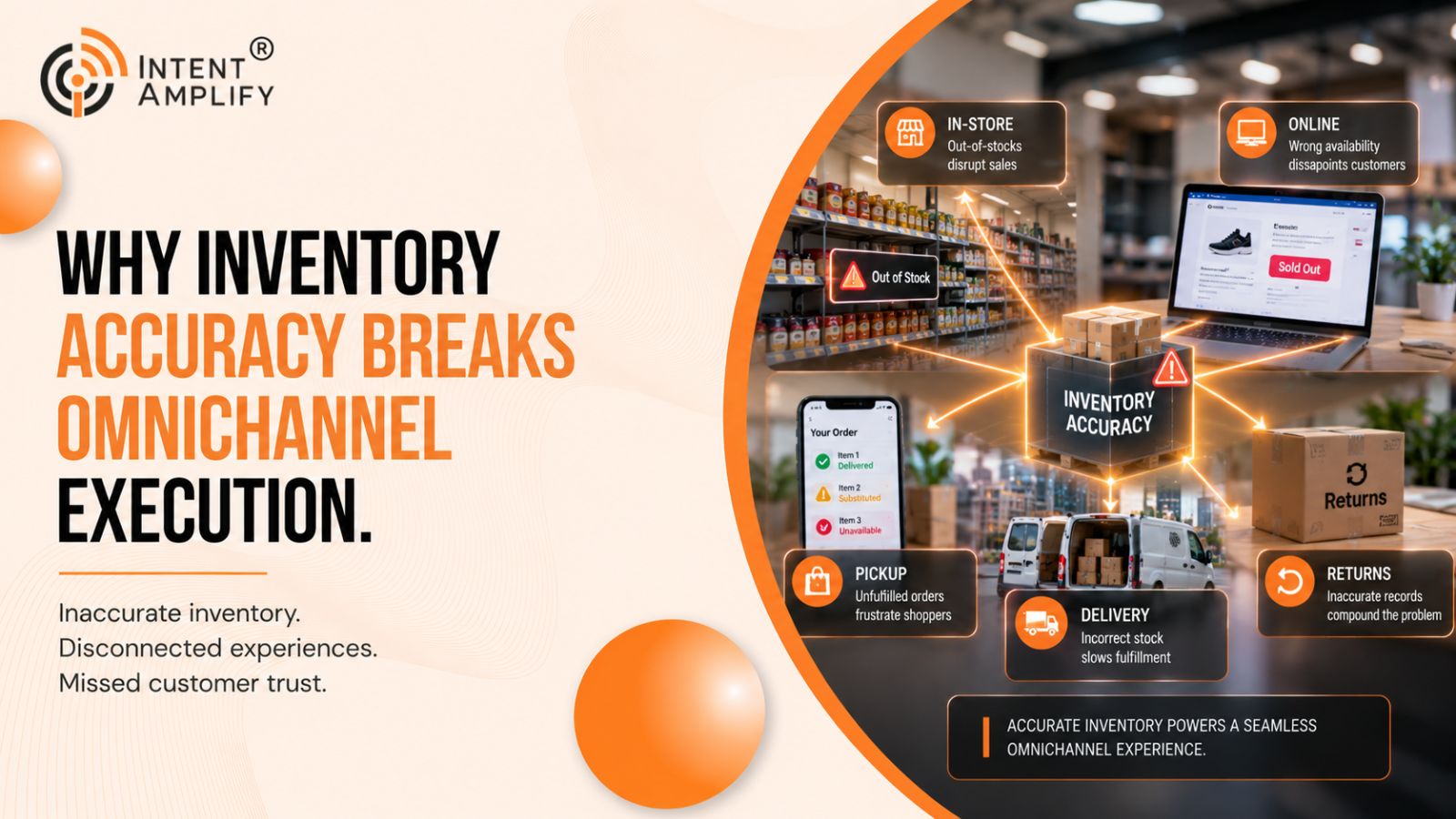
Inventory inaccuracy rarely stays inside one function. Operations teams absorb search time and exception work. Fulfillment teams face substitutions, cancellations or re-routing. Merchandising teams may act on distorted availability. Planning teams can inherit noisy signals. Ecommerce teams may have to protect the customer experience with conservative availability logic. Technology teams are asked to reconcile systems that reflect different moments or definitions of truth.
This distribution of impact can hide the real problem. Each team sees a different symptom and may optimize locally. One team adds a buffer. Another increases cycle counts. Another tightens order acceptance. Another creates a manual escalation. These responses can reduce immediate pain, but they can also create decision debt: the organization becomes dependent on compensating controls instead of removing the causes of unreliable inventory signals.
A better operating model starts with the decision chain
Leaders can make the issue more actionable by mapping the decisions that depend on inventory accuracy. Start with the customer-facing promise and work backward. What availability signal is shown? What system determines whether an item is eligible for fulfillment? What location is selected? What operational task is created? What event confirms that the inventory position changed? What exception path is triggered when the physical reality and system record disagree?
This decision-chain view creates three useful distinctions.
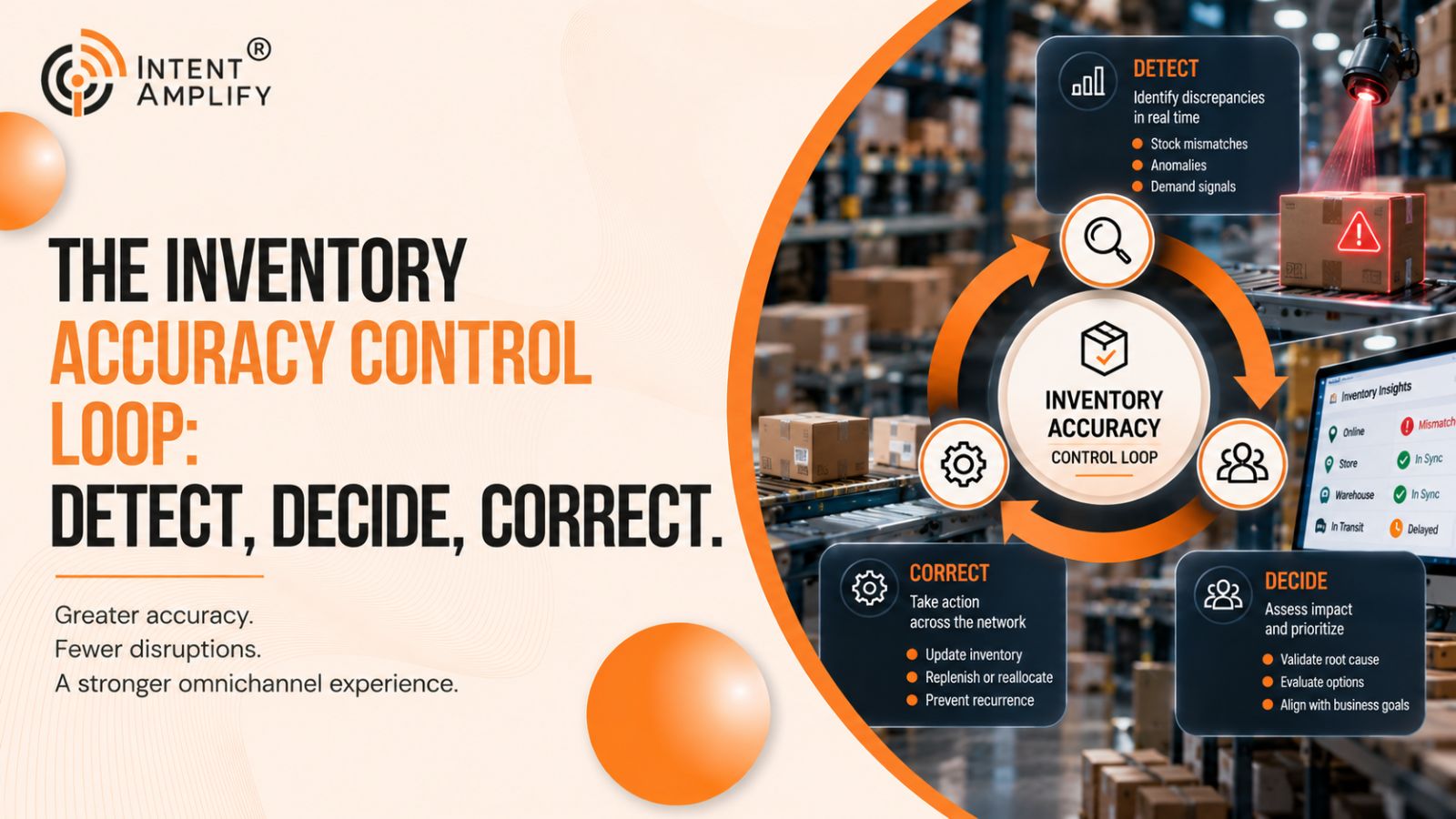
First, detection: how does the organization know an inventory position may be wrong? Detection can come from counts, failed picks, receiving discrepancies, returns, transfer exceptions, shelf observations or other operational events. The source matters because each signal arrives at a different point in the process.
Second, decision: what happens when an exception is detected? Is the item temporarily protected from promise? Is a recount required? Is the task routed to a specific owner? Is another location considered? Is the customer promise adjusted? A signal without a decision rule simply creates another queue.
Third, correction: does the organization only repair the record, or does it identify the recurring process condition that created the error? Sustainable accuracy requires both. Correcting a number restores the immediate position. Correcting the cause improves the operating system.
Measure reliability, not activity alone
Many inventory programs can report activity: counts completed, exceptions reviewed, tasks closed. Those measures are useful for control, but they do not by themselves show whether the business is becoming more reliable.
A stronger measurement set connects inventory controls to operating outcomes. Leaders can track where mismatches are detected, how long exceptions remain unresolved, how often the same item-location pattern recurs, how frequently fulfillment attempts encounter unavailable inventory, and whether corrective actions reduce repeat exceptions. The exact metric definitions should be agreed across operations, inventory, ecommerce and technology so that teams are not comparing different versions of “accuracy.”
The goal is not to manufacture a single perfect score. It is to create a shared view of where unreliable inventory information changes decisions and where intervention produces measurable improvement.
Ownership has to cross functional boundaries
Because inventory accuracy touches multiple processes, assigning the entire problem to inventory control can create a structural blind spot. Inventory teams may own counting policy and record correction, but receiving, replenishment, transfers, picking, returns, merchandising processes, system integrations and fulfillment rules can all influence the quality of the inventory signal.
A practical governance model therefore separates process ownership from exception ownership. Process owners are accountable for preventing recurring causes within their workflows. Exception owners are accountable for resolving current discrepancies within an agreed service level. A cross-functional operating review then looks for patterns that no single team can see in isolation.
This is especially important for senior retail operations, supply chain, inventory, replenishment, ecommerce, merchandising, enterprise systems, digital transformation and operational excellence leaders. Their leverage is not in personally resolving inventory exceptions. It is in designing the operating conditions that make exceptions visible, actionable, and less likely to repeat.
A controlled path to improvement
Inventory accuracy programs do not need to begin with an enterprise-wide transformation. A controlled pilot can create evidence faster. Choose a defined product group, store cluster, fulfillment flow, or exception type. Establish the current decision path. Define the failure signals. Assign owners. Set the intervention rule. Measure the before-and-after pattern using the same definitions.
The pilot should answer operational questions rather than prove a predetermined technology thesis. Where does the signal break? Which exceptions matter most to customer promise or labor? Which control changes the outcome? Which process causes recurrence? What can be standardized before scaling?
That evidence creates a stronger foundation for technology, process and investment decisions. It also prevents the organization from confusing more visibility with better control. Dashboards can reveal problems; an operating model determines what happens next.
Leadership takeaway
Inventory accuracy is not a back-office hygiene metric. It is part of the infrastructure that supports fulfillment reliability, customer promise and cross-functional decision quality. The most effective programs connect the inventory record to the decisions it enables, the exceptions it creates, the owners who act on those exceptions and the feedback loop that removes recurring causes.
For retail leaders, the strategic question is straightforward: does your inventory system of record merely describe stock, or does your operating model make that information reliable enough to support day-to-day customer and operating decisions?
A useful executive test is to examine how quickly the organization can move from an inventory discrepancy to a governed decision. If teams can identify the affected promise, assign an owner, contain immediate risk and trace the recurring cause without creating another manual workaround, accuracy is functioning as an operating capability rather than an isolated control. That discipline also gives leaders a clearer basis for deciding where process redesign, system integration or automation will create the greatest operational value.
Register for the Inventory Accuracy webinar
Join RETHINK Retail to examine why grocery inventory accuracy has remained stubborn, how phantom inventory weakens customer promises, and how retailers can build one inventory number every store can trust without a major technology overhaul. Following the webinar, attendees can opt into an interactive operations assessment and a one-to-one review with Tom Enright, former lead Gartner analyst and retail supply chain expert.
References
1. RETHINK Retail (2026) How to Build the Inventory Accuracy Every Grocery Decision Depends On. Available at: https://rethink.industries/video/the-inventory-accuracy-every-grocery-decision-depends-on/
2. IHL Group (2026) How Inventory Intelligence Is Becoming the Single Biggest Divider Between Leaders and Laggards. Available at: https://www.ihlservices.com/news/analyst-corner/2026/03/how-inventory-intelligence-is-becoming-the-single-biggest-divider-between-leaders-and-laggards/
3. Retail Gazette (2026) Could your sales be up to 11% better? Available at: https://www.retailgazette.co.uk/blog/2026/04/could-your-sales-11-per-cent-better/
4. Retail Bulletin (2026) How to track stock in real time. Available at: https://www.theretailbulletin.com/retail-solutions/how-to-track-stock-in-real-time-06-05-2026
5. SupplyChainBrain (2026) Inventory Drift: A Hidden Underminer of Retail Supply Chain Performance. Available at: https://www.supplychainbrain.com/blogs/1-think-tank/post/44058-inventory-drift-a-hidden-underminer-of-retail-supply-chain-performance