
Why AI Video Is Moving From Feature to Operating Capability
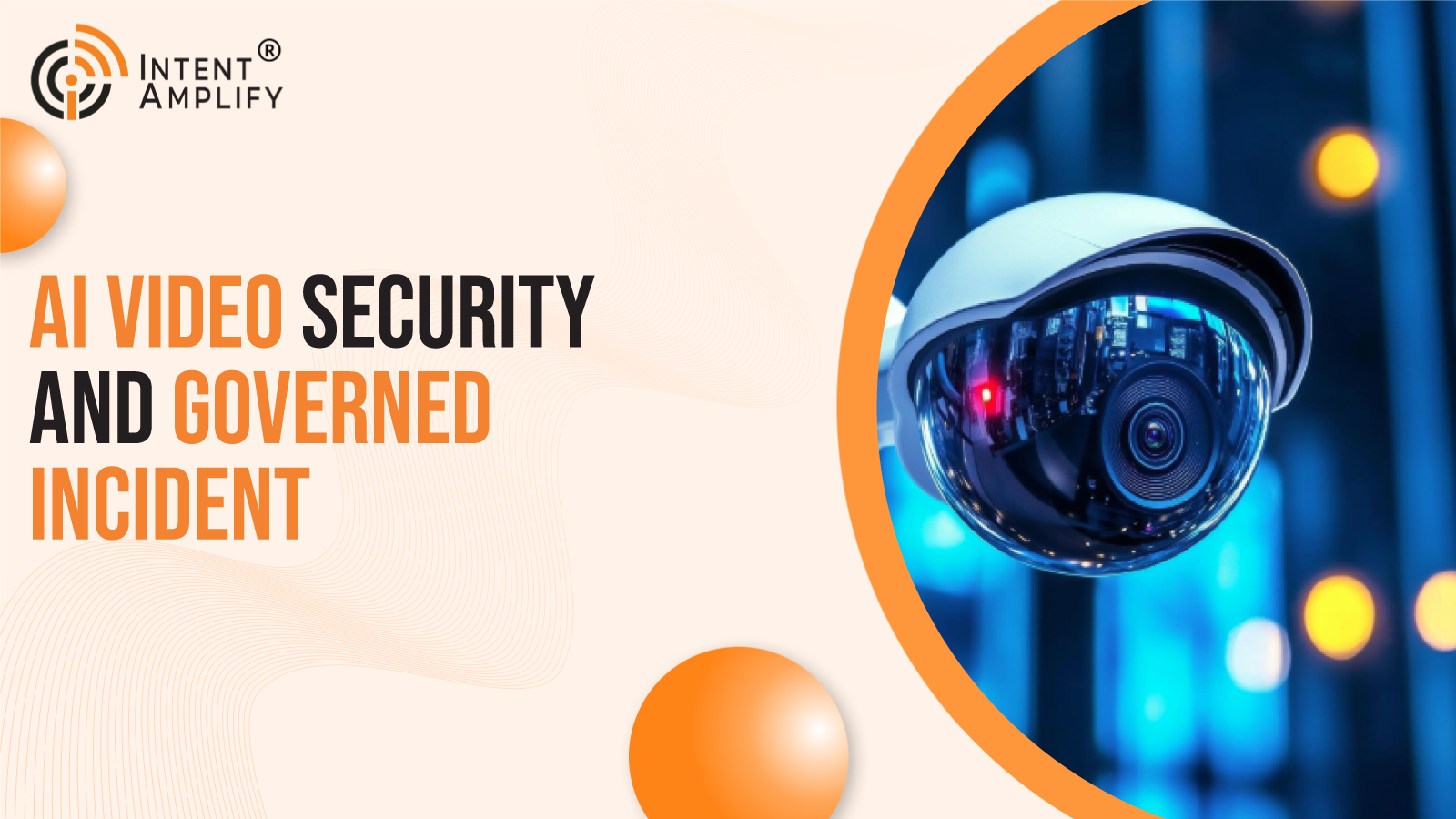
AI video is becoming a practical response to a very ordinary enterprise problem: teams have more footage, more locations, more alerts, and less time to review every event manually. The promise is not magic detection. The value is faster context, searchable evidence, and more consistent escalation.
For security leaders, the question is not simply whether a camera platform has AI. The better question is whether AI supports governed investigation workflows, reliable access controls, usable audit trails, and clear incident ownership across locations.
1. Manual Investigation Does Not Scale Across Distributed Sites
Manual video review becomes fragile when an enterprise operates dozens or hundreds of sites. A small incident can turn into hours of footage search, local coordination, and evidence transfer. That model delays decisions and weakens the documentation needed for compliance or legal review.
AI-assisted search can help teams locate people, vehicles, objects, motion, and time-based patterns faster. The operational value is strongest when AI is paired with clear retention policies, controlled access, and standardized incident workflows.
2. AI Detection Must Be Connected to Human Judgment
AI can prioritize events, surface anomalies, and reduce noise. It should not replace accountable review. Security teams need escalation logic, confidence thresholds, investigation notes, and procedures that distinguish a helpful signal from a final conclusion.
McKinsey has highlighted the need to update identity, access, third-party risk, and governance processes as autonomous AI capabilities expand. That principle applies directly to physical security: AI-enabled workflows should be governed continuously, not deployed as isolated innovation experiments.
3. Faster Search Creates Value Only When Evidence Is Trusted
Speed is useful only when the evidence chain is reliable. Teams need to know who accessed footage, when it was exported, how long it is retained, whether access was appropriate, and whether the investigation record can be reconstructed later.
This is why AI video modernization should include auditability, permissions, retention, and integration with incident response tools. Otherwise, faster search may produce faster confusion rather than better decisions.
4. Buyers Should Evaluate AI Through a Governance Lens
A practical buying evaluation should examine detection use cases, privacy boundaries, admin controls, explainability, alert routing, and security integration. AI video should support response maturity, not become another disconnected dashboard.
The mature enterprise posture is a platform where AI helps human teams detect, search, document, and escalate events with discipline.
Intent Amplify Perspective
Intent Amplify views this topic as an enterprise governance and resilience decision, not only a technology refresh. For CISOs, CSOs, infrastructure leaders, and physical security teams, the strategic value comes from connecting visibility, identity, evidence, AI-assisted investigation, and response workflows into a more accountable operating model.
The highest-quality buying process will define the operating model before platform selection. That means clarifying ownership, risk priorities, access rules, retention policy, investigation procedures, integration needs, and measurable outcomes before a deployment is treated as ready.
Intent Amplify AI Video Investigation Governance Framework
Intent Amplify recommends that enterprises evaluate this campaign theme through a governance and resilience framework rather than a device checklist. The framework below translates executive priorities into practical review pillars.
|
Current Priority |
Branded Framework Pillar |
|
Search footage across people, objects, locations, and time |
Pillar 1: Searchable Evidence |
|
Prioritize alerts without removing human review |
Pillar 2: Human-Governed AI |
|
Control access, retention, exports, and logs |
Pillar 3: Evidence Governance |
|
Connect AI events to incident response workflows |
Pillar 4: Response Integration |
|
Measure speed, quality, and auditability of investigations |
Pillar 5: Continuous Improvement |
Intent Amplify Research Desk Observation
The next maturity stage will belong to organizations that connect physical security data with cloud operations, identity context, incident response, and governance controls. Teams that continue to manage cameras, access, visitors, and evidence as separate functions are likely to face slower investigations, weaker auditability, and preventable cyber-physical exposure.
The practical opportunity is to turn modernization into a disciplined readiness motion: assess the current environment, identify risk and friction, define governance, validate integration needs, and prioritize rollout by business impact.
Executive Readiness Scorecard
|
Assessment Area |
1 = Low Readiness |
2 = Developing Readiness |
3 = High Readiness |
|
AI use-case clarity |
AI capabilities are evaluated as feature checkboxes. |
Priority use cases are defined for some sites. |
Detection, search, and response use cases are mapped to risk workflows. |
|
Governance controls |
Access and retention policies are unclear. |
Basic controls exist but vary by location. |
Permissions, exports, logs, and retention are centrally governed. |
|
Human review model |
Alerts are treated as conclusions. |
Review exists but ownership is inconsistent. |
AI signals feed accountable human investigation workflows. |
|
Evidence trust |
Exports and investigation records are informal. |
Some evidence practices are documented. |
Evidence handling is auditable across teams and sites. |
Turn Physical Security Modernization Into an Enterprise Governance Platform
This content is designed to support appointment generation by moving executive readers from awareness to assessment. The recommended follow-up is a readiness conversation that reviews current-state architecture, site risk, access governance, AI investigation maturity, evidence handling, and response workflows.
Request an AI Video Security Readiness Assessment
References
- Gartner. "Hype Cycle for Cyber-Physical Systems Security, 2025." Published July 15, 2025. https://www.gartner.com/en/documents/6723934
- Microsoft. "Microsoft Digital Defense Report 2025: Safeguarding Trust in the AI Era." Published 2025. https://cdn-dynmedia-1.microsoft.com/is/content/microsoftcorp/microsoft/bade/documents/products-and-services/en-us/security/Microsoft-Digital-Defense-Report-2025-v5-21Nov25.pdf
- Gartner. "Gartner Forecasts Worldwide End-User Spending on Information Security to Total $213 Billion in 2025." Published July 29, 2025. https://www.gartner.com/en/newsroom/press-releases/2025-07-29-gartner-forecasts-worldwide-end-user-spending-on-information-security-to-total-213-billion-us-dollars-in-2025
- Accenture. "State of Cybersecurity Resilience 2025." Published June 25, 2025. https://www.accenture.com/content/dam/accenture/final/accenture-com/document-3/State-of-Cybersecurity-report.pdf
- McKinsey & Company. "Deploying Agentic AI with Safety and Security: A Playbook for Technology Leaders." Published October 16, 2025. https://www.mckinsey.com/capabilities/risk-and-resilience/our-insights/deploying-agentic-ai-with-safety-and-security-a-playbook-for-technology-leaders