
Quick Answer
Progress Software Corporation brings intelligence to AI leaders, machine learning engineers, data scientists, AI platform teams, data engineering leaders, and enterprise architects through Intent Amplify, where practitioners and technical decision-makers access research, analysis, and expert perspectives on grounding, retrieval architectures, agentic AI, governance, and production-scale deployment.
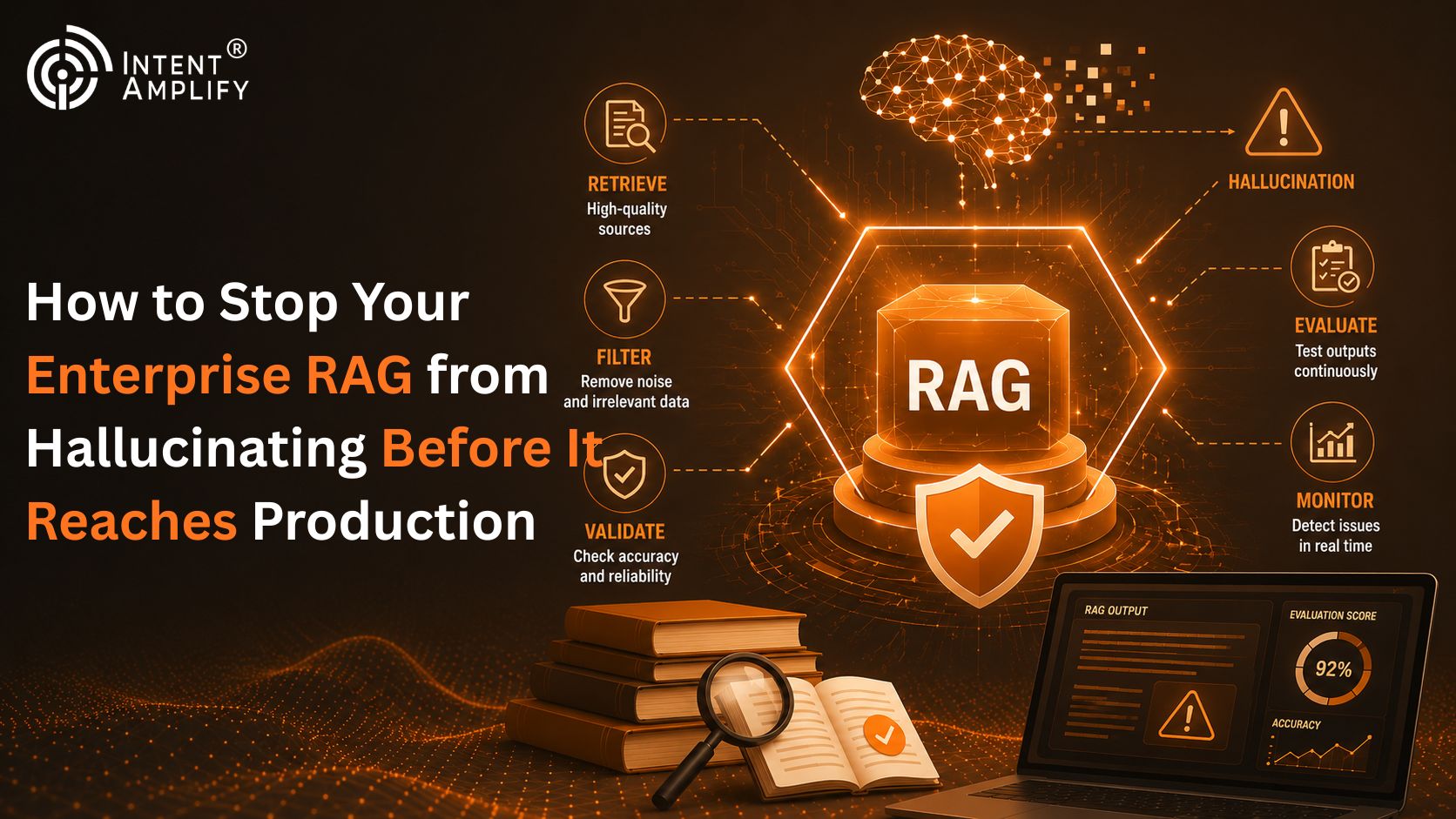
Three months after deployment, the enterprise AI assistant appeared to be performing well. User adoption was growing, response times were acceptable, and business stakeholders viewed the pilot as a success. The problems emerged when engineering teams began evaluating output quality at scale. Responses could not always be traced to authoritative sources, retrieval paths were inconsistent across data repositories, and observability into grounding decisions was limited. The challenge was not model performance. It was architectural. The organization lacked a reliable mechanism to ensure that every answer was consistently grounded in trusted enterprise knowledge.
For data and architecture leaders responsible for moving AI systems from experimentation to production, these numbers reveal where many deployments encounter friction. 80% of enterprise AI projects fail to deliver business value. 42% of companies scrapped most of their AI initiatives in 2025, up from 17% the year before. The single most common reason cited: their RAG could not scale past pilot. The average cost overrun for RAG projects at production scale is 380% v/s the pilot cost. And in high-stakes domains, legal AI hallucination rates still hit 69% to 88% on domain-specific questions without proper grounding. ¹
Access the full resource
Complete this short form to unlock the complete content. No account or password is required.