
Quick Answer
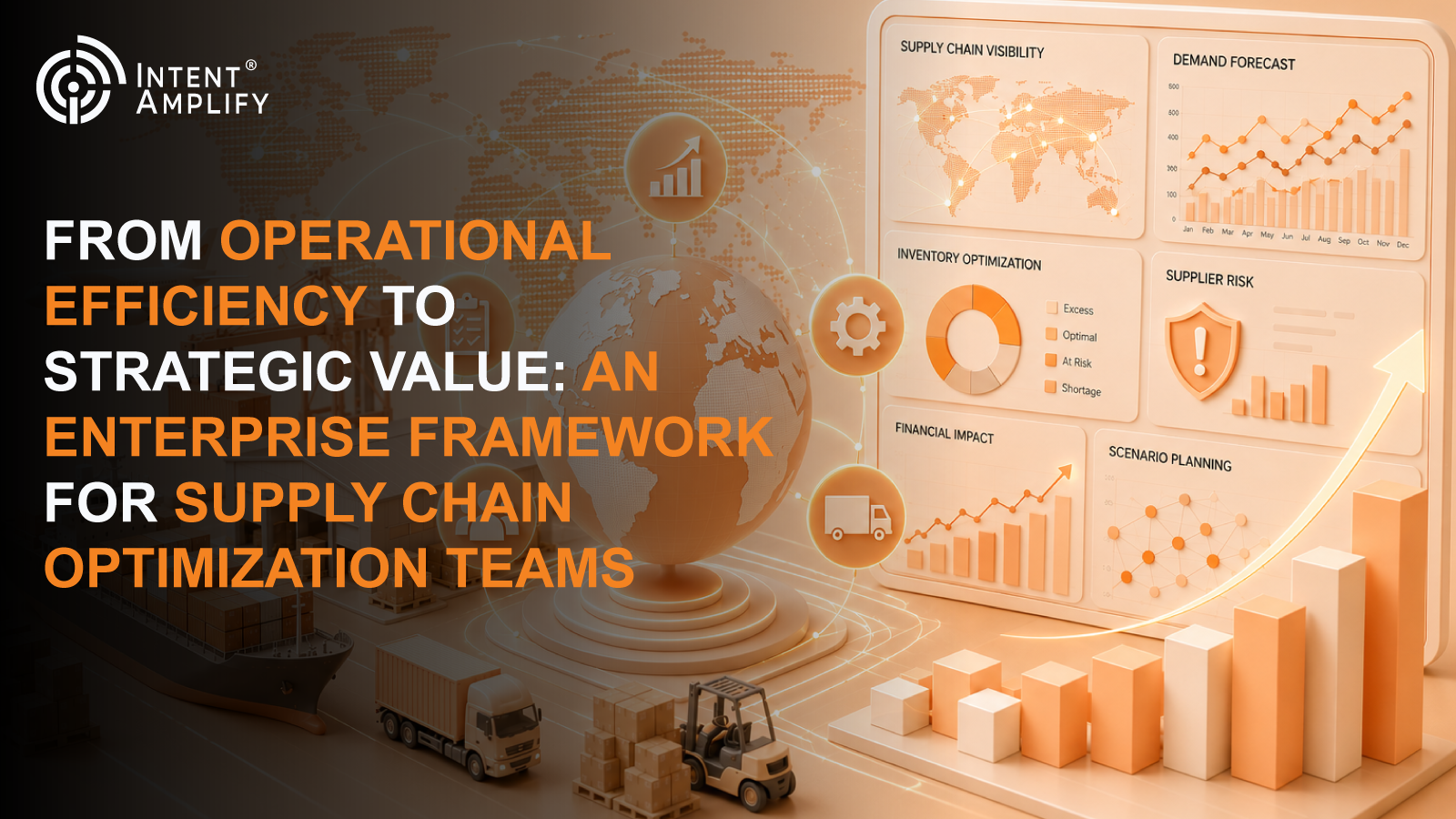
Supply chain optimization teams are moving beyond cost efficiency toward enterprise decision intelligence. This whitepaper explores how trusted data, scenario planning, workflow integration, and value measurement help planning groups improve resilience, financial discipline, service reliability, and strategic decision-making.
Supply chain decision teams are being pulled into a larger role. The historical mission was relatively clear: lower cost, improve service, balance inventory, design better networks, and support planning teams with analytical rigor. Those priorities still matter. Yet the operating environment has changed. In 2026, the more urgent question is whether optimization groups can help the enterprise make better decisions before disruption, margin pressure, or customer volatility forces a reactive response.
The evidence is difficult to ignore. McKinsey’s 2025 supply chain risk research found that 82% of surveyed companies reported that new tariffs affected their supply chains, with 20% to 40% of their activity affected in some way. 39% reported higher supplier and material costs, while 30% reported reduced customer demand. At the same time, affected companies were not responding through a single lever: 45% were increasing inventories, 39% were pursuing dual sourcing, and 33% were developing nearshoring or onshoring plans.1
Access the full resource
Complete this short form to unlock the complete content. No account or password is required.