

Executive Overview
Electronics organizations have access to more component information than ever. Engineering and procurement teams can review manufacturer data, supplier availability, lifecycle state, compliance information, lead times, sourcing options, and possible alternatives. Yet greater visibility does not automatically produce a resilient bill of materials.
The more important issue is decision quality.
A BOM can contain accurate part numbers and still expose a product to avoidable sourcing risk. A lifecycle warning can be visible but arrive after design lock. An alternate part can appear in a search result without being technically reviewed. Procurement can identify a fragile sourcing position after engineering flexibility has narrowed. Manufacturing can receive a formally complete BOM while material supply exceptions remain unresolved.
Altium’s Building Supply Chain Resilience: Transforming BOM Management for Modern Electronics frames this problem around moving beyond spreadsheet-centric BOM management and connecting component selection, BOM creation, supply-chain information, engineering-procurement collaboration, and manufacturing handoff [1].
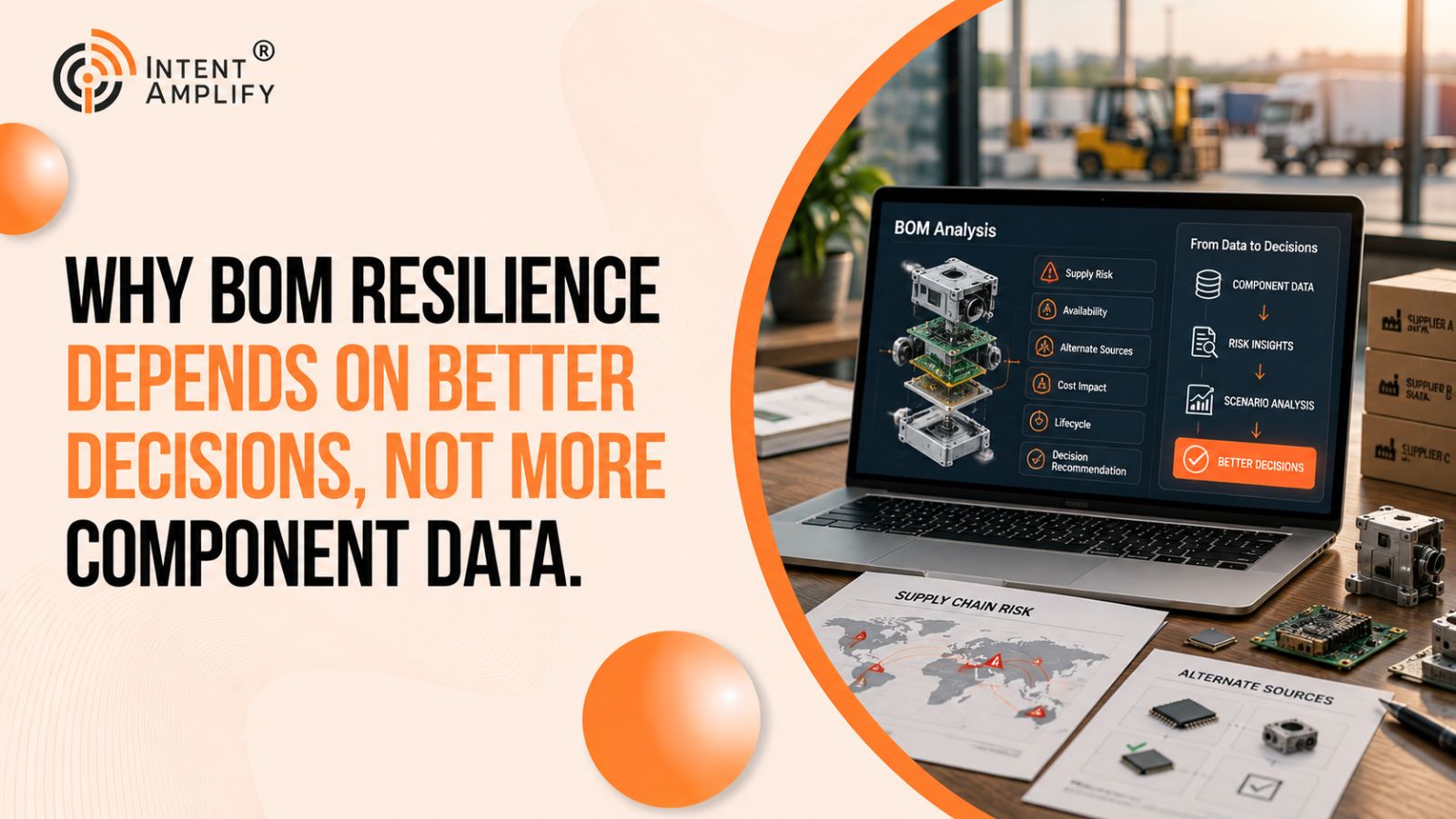
This Expert Analysis argues that BOM resilience begins with better decisions, not more component data. The practical objective is to make supply evidence actionable while engineering choices can still change, distinguish candidate alternatives from usable alternatives, and create shared decision context across engineering and procurement.
Altium 365’s BOM Portal documentation describes BOM enrichment with manufacturer and supplier information, availability, lifecycle context, alternative-part suggestions, and issue resolution inside the BOM workflow [2]. The opportunity is not simply to see more. It is to use that context to decide earlier.
The BOM Problem Is Usually a Decision Problem
Many organizations already know what is on the BOM.
They can export line items, compare suppliers, review pricing, search distributor catalogs, inspect lifecycle status, and investigate availability. The difficulty appears when different teams interpret the same component through different operating priorities.
Engineering sees electrical and mechanical fit. Procurement sees supplier access, lead time, pricing, and continuity. Quality and compliance teams see qualification requirements. Manufacturing sees build readiness. Program leaders see schedule exposure.
A component can therefore be technically correct and operationally fragile at the same time.
This is where a static BOM view reaches its limit. It can record the selected component, but it does not automatically settle the trade-off between technical preference and supply flexibility. It does not determine whether an availability change is material enough to trigger engineering review. It does not establish whether a proposed substitute is truly usable. It does not decide who owns an unresolved exception before release.
Resilience requires a decision model.
For every material component exception, teams need to answer: What changed? Which product or design is exposed? What is the technical consequence? What sourcing options remain? Is there a reviewed alternative? Who owns the next decision? What evidence is required before the issue is closed?
The strongest BOM process is therefore not the one with the largest number of fields. It is the one that converts relevant evidence into timely, controlled decisions.
Key Figures at a Glance
The electronics supply environment continues to change across component categories, suppliers, and end markets.
ECIA’s Market Trends and Lead Times program tracks electronic-component sales expectations, cancellations, decommits, and lead-time trends across major component categories and market segments [3]. That matters for BOM owners because supply assumptions made at one design stage may not remain valid at another.
SEMI’s 2026 Semiconductor Supply Chain Management Survey examines the semiconductor value chain across planning, supplier dynamics, manufacturing, customer demand, capabilities, and market outlook [4]. The broader implication is that component conditions are shaped by a network of capacity, demand, supplier, and manufacturing variables rather than one availability number.
DigiKey reported adding more than 27,000 new stocking parts and 104 suppliers in Q2 2026, while more than 373,000 products were added to its system during the quarter [5]. That expanding choice can create more design and substitution options, but it also reinforces the need for disciplined technical and commercial evaluation.
These figures should not be read as automatic evidence that a specific BOM is at risk. They are market context. BOM-level decisions still require product-specific evidence.
For engineering and procurement leaders, the operating lesson is straightforward: a component decision is not permanently safe because it was reasonable when first selected. Critical parts need review points that reflect the changing supply environment and the cost of changing the design.
Why More Component Data Does Not Create BOM Resilience
More data helps teams notice potential risk. It does not automatically explain what action should follow.
A lifecycle flag may indicate a material concern, but the response depends on product usage, inventory position, remaining production horizon, redesign cost, and available alternatives. Limited supplier availability may be serious for a critical component with no approved substitute, but less consequential for a line with several validated options.
The decision depends on context.
This is why BOM resilience cannot be reduced to a dashboard of red, yellow, and green indicators. A risk indicator is useful only when the organization understands its consequence and has a defined response.
A better decision model asks: Is the signal current? Is it material to this product? What is the cost of waiting? What flexibility remains? Does the proposed response introduce a new technical or commercial risk? Who has authority to approve the disposition?
Altium’s BOM Portal approach is relevant because supply information and issue resolution are brought closer to the BOM workflow [2]. But technology alone does not create the operating model.
Organizations still need thresholds, ownership, evidence standards, alternative-part governance, and release rules.
The objective is not to maximize alerts. It is to reduce the number of material component risks that remain unresolved until the cost of change is high.
BOM Resilience Starts with an Explanation
A better component decision begins with a clear explanation of cause and consequence.
Teams need to understand whether a component concern is driven by lifecycle status, constrained sourcing, lead-time movement, supplier concentration, compliance, availability, qualification requirements, or a design choice that limits substitution.
That explanation changes the response.
If the issue is supplier concentration, the team may investigate approved sourcing alternatives. If the issue is lifecycle exposure, engineering may need to assess a replacement. If the problem is an unqualified alternate, the priority may be technical review rather than additional supplier searching. If the risk is a stale BOM revision, governance and change control may be the immediate problem.
The strongest resilience programs do not begin by asking teams to replace every risky component. They begin by asking which risks are material, what they threaten, and which action preserves the most flexibility.
Table 1: BOM Signals and Decision Meaning
BOM Signal |
Possible Meaning |
Better Decision Question |
|
Lifecycle concern |
Future availability or redesign exposure |
When does this part become material to product continuity? |
|
Single-source dependency |
Concentration risk or technical constraint |
Is the dependency intentional, and what is the fallback? |
|
Availability change |
Temporary market movement or persistent sourcing issue |
Does this condition threaten the next decision or build window? |
|
Candidate alternate |
Potential flexibility, not yet validated |
What evidence is still required before this alternative is usable? |
|
Late BOM change |
New evidence or weak upstream review |
Could this exception have been identified before design lock? |
This distinction is essential. Visibility tells teams that something changed. Decision intelligence explains why it matters and what must happen next.
Alternative-Part Readiness Changes the Resilience Picture
A candidate substitute is not the same as an approved alternative.
Search and component-intelligence tools can identify parts that appear similar. But technical suitability may depend on electrical characteristics, package, thermal behavior, environmental requirements, firmware interaction, compliance, qualification history, manufacturing constraints, and product-specific performance.
Procurement then needs to determine whether the alternative actually improves sourcing resilience.
This creates a governance requirement.
Organizations should distinguish between at least four alternative states: candidate identified, technically reviewed, commercially reviewed, and production-ready or qualified. The exact terminology can differ, but the status must be explicit.
Without this separation, teams can overestimate their resilience. A BOM may appear to have several substitutes when none can be used without additional engineering work.
DigiKey’s continued expansion of available parts and suppliers illustrates the breadth of the component ecosystem [5]. More choice can be valuable, but discovery is only the first step.
For critical components, alternative readiness should be designed before disruption. That does not mean every line requires multiple approved substitutes. It means the organization should identify where the absence of an alternative would create material redesign, schedule, sourcing, or production exposure.
A resilient BOM therefore records not only what is selected, but how much usable flexibility remains if conditions change.
Decision Timing Determines How Expensive a Component Risk Becomes
The same component issue can have very different consequences depending on when it becomes actionable.
During early component selection, engineering may be able to choose a different device with limited disruption. During schematic completion, the change may require additional review. During layout, validation, or certification, the cost rises. After release, the same change can affect procurement, manufacturing, documentation, qualification, and delivery schedules.
This is the central reason to move supply intelligence upstream.
External sources such as ECIA and SEMI show that component and semiconductor conditions evolve over time [3][4]. A one-time check cannot be treated as permanent evidence.
The organization therefore needs review points tied to decision consequence.
Critical components may require supply-aware review during selection, before design lock, at BOM release, and when material lifecycle or availability changes occur. Routine components may require less intervention.
The goal is not continuous manual review of every line. It is exception-based governance that focuses attention where timing matters.
A dashboard may show that a component has become problematic. Decision intelligence determines whether the organization still has a low-cost response window.
Engineering-Procurement Collaboration Needs Shared Context
The traditional handoff model assumes engineering finishes the design and procurement then sources it.
That sequence becomes fragile when component conditions can materially affect design viability.
Procurement may identify a supply concern only after engineering has committed to the part. Engineering may reject an alternative because technical constraints were never visible to sourcing teams. Both functions can spend time reconstructing context from email threads, spreadsheets, exported BOMs, and separate supplier searches.
A more resilient model does not eliminate functional ownership.
Engineering still owns technical intent. Procurement still contributes sourcing and commercial evidence. The change is that both functions share decision context at defined points.
Altium’s campaign specifically emphasizes engineering-procurement collaboration as part of modern BOM management [1]. BOM Portal’s documented workflow also brings supply-chain information into the BOM environment [2].
The practical design principle is to create collaboration around exceptions, not around every component.
High-impact sourcing concentration, lifecycle concerns, constrained availability, unresolved alternatives, or critical compliance dependencies should trigger shared review. Routine components should flow without unnecessary coordination.
This reduces two common forms of waste: late engineering rework and repeated procurement investigation without enough technical context.
Portfolio Visibility Helps Teams See Which Component Risks Matter Most
A component problem becomes more important when the same part appears across multiple products.
A line-by-line BOM review can miss this portfolio effect.
One specialized component used in several revenue-critical designs may create more exposure than many isolated low-impact warnings. Conversely, a component with a concerning market signal may be manageable if it appears in one product with a validated alternative and adequate transition time.
Where-used visibility therefore changes prioritization.
Teams should be able to identify which products depend on a component, which BOM revisions contain it, which alternatives have been reviewed, and which owners need to participate in a disposition.
This is another area where spreadsheet-centric workflows can become difficult to govern as complexity grows. Multiple files can make it harder to maintain authoritative revisions, trace component usage, and understand whether a risk has already been investigated elsewhere.
A resilient operating model treats the BOM as part of a connected product and supply decision system rather than a standalone document.
The purpose is not centralized control for its own sake. It is to avoid solving the same component problem repeatedly while missing the shared dependency that makes it strategically important.
Governance Makes BOM Decisions Defensible
Supply-chain governance determines whether component-risk recommendations are trusted, challenged, or ignored.
If a system identifies a lifecycle concern, who decides whether it is material? If an alternative is proposed, who confirms technical suitability? If procurement finds a sourcing problem after design lock, who owns the escalation? If engineering accepts a single-source dependency, where is that rationale recorded?
These questions matter because BOM decisions cross functions.
Without governance, more component intelligence can produce more debate rather than faster resolution.
Table 2: Governance Questions for BOM Resilience
Governance Area |
Question Leaders Should Resolve |
|
Decision ownership |
Who owns each material component exception? |
|
Data authority |
Which source and refresh rule define current supply evidence? |
|
Alternative status |
What separates a candidate from an approved or production-ready alternate? |
|
Revision control |
Which BOM revision is authoritative, and what changed? |
|
Risk acceptance |
Who can accept residual sourcing exposure before release? |
|
Outcome review |
How are late changes and unresolved exceptions reviewed after execution? |
Governance is the trust layer.
It establishes what evidence is sufficient, which decisions can proceed automatically, which require human review, and how residual risk is documented.
The best governance model is proportional. It should not force high-friction review onto every BOM line. It should increase scrutiny when component criticality, sourcing concentration, lifecycle exposure, qualification effort, or product impact makes the decision consequential.
The Roadmap: From Better BOM Visibility to Better Decisions
A practical BOM resilience roadmap should begin with recurring decisions, not a broad technology rollout.
Start by identifying the component decisions that create the most friction: late sourcing exceptions, lifecycle changes, single-source dependencies, unreviewed alternatives, release-stage BOM changes, or repeated engineering-procurement escalation.
Next, map the evidence behind each decision.
Teams should determine which information comes from engineering systems, BOM management, manufacturer and distributor sources, procurement, compliance, quality, and manufacturing. They should also define freshness requirements. Evidence that was adequate three months earlier may not be adequate for a release decision today.
Then define the decision owner.
Every material exception should have an accountable role, a required response, and a closure condition. A warning without ownership is only an alert.
Next, introduce supply intelligence before high-cost commitment points.
This is where a dedicated BOM workflow can provide leverage. Altium’s campaign argues for moving beyond static spreadsheet administration, while BOM Portal documents supply-chain enrichment and issue-resolution capabilities [1][2].
Finally, measure decision performance.
Useful measures include time from material risk identification to disposition, high-severity exceptions open at release, critical components without a reviewed alternative strategy, supply-driven engineering changes after design lock, and time required to identify all products affected by a component issue.
Flowchart: BOM Decision Intelligence Roadmap
Identify high-friction component decisions
↓
Map supply evidence, technical constraints, and ownership
↓
Define criticality and escalation thresholds
↓
Bring supply intelligence into engineering review
↓
Resolve or consciously accept material exceptions before release
↓
Measure late changes, decision time, and residual exposure
↓
Scale the operating model across products and programs
What Altium Brings to the Conversation
Altium is positioned for this conversation because the campaign challenges a spreadsheet-first BOM operating model.
The central value proposition is not that spreadsheets are inherently wrong. They remain useful for many forms of analysis and exchange. The problem appears when a static file becomes responsible for dynamic component evidence, alternative management, collaborative exception handling, revision control, and cross-functional decision history.
The campaign whitepaper focuses on building supply-chain resilience through modern BOM management [1]. Altium 365’s BOM Portal documentation describes a more connected workflow for BOM data, manufacturer and supplier information, availability, lifecycle context, alternatives, and issue resolution [2].
For engineering leaders, the opportunity is earlier awareness of component constraints before technical flexibility disappears.
For procurement leaders, the opportunity is better technical context around sourcing decisions and alternatives.
For program and operations leaders, the opportunity is a clearer view of unresolved component exposure before manufacturing handoff.
BOM resilience begins when the business understands not only what parts are on the product, but which decisions remain fragile if component conditions change.
Altium’s whitepaper examines why spreadsheet-centric BOM processes become difficult to sustain as electronics design and supply-chain complexity increase, and how dedicated BOM management can support collaboration, component visibility, alternative-part planning, and more resilient product decisions [1].
Conclusion
BOM resilience does not begin with another component dashboard. It begins with the quality and timing of the decisions engineering and procurement teams make when technical requirements and supply conditions intersect.
More component data can improve visibility, but visibility alone does not resolve risk.
A resilient operating model explains why a component issue matters, identifies which products are exposed, distinguishes possible alternatives from usable alternatives, assigns decision ownership, and brings relevant supply evidence into the workflow before the cost of change becomes disproportionate.
For electronics organizations, this distinction matters because a BOM is never only a parts list. It is a record of technical choices, sourcing dependencies, manufacturing assumptions, and future flexibility.
The organizations that improve BOM resilience will not necessarily be those that monitor the most signals. They will be those that know which signals require action, which risks can be accepted, which alternatives are truly ready, and which decisions must be made before the next change in component conditions removes their options.
Download Altium’s “Building Supply Chain Resilience: Transforming BOM Management for Modern Electronics” whitepaper to assess when spreadsheet-led BOM management is no longer sufficient and how dedicated BOM management can improve supply-chain visibility, engineering-procurement collaboration, and earlier component-risk decisions.
References
1. Altium (2026) Building Supply Chain Resilience: Transforming BOM Management for Modern Electronics. Available at:
https://resources.altium.com/p/transforming-bom-management-whitepaper
2. Altium 365 (2026) BOM Portal Technical Documentation. Available at:
https://www.altium.com/documentation/altium-365/bom-portal
3. Electronic Components Industry Association (2026) Market Trends/Lead Times. Available at:
https://www.ecianow.org/market-trends-lead-times/
4. SEMI (2026) Semiconductor Supply Chain Management Survey. Available at:
https://www.semi.org/en/industry-groups/supply-chain-management-survey
5. DigiKey (2026) DigiKey Adds Over 27,000 New Parts and 104 Suppliers in Q2 2026. Available at: