
Executive Summary
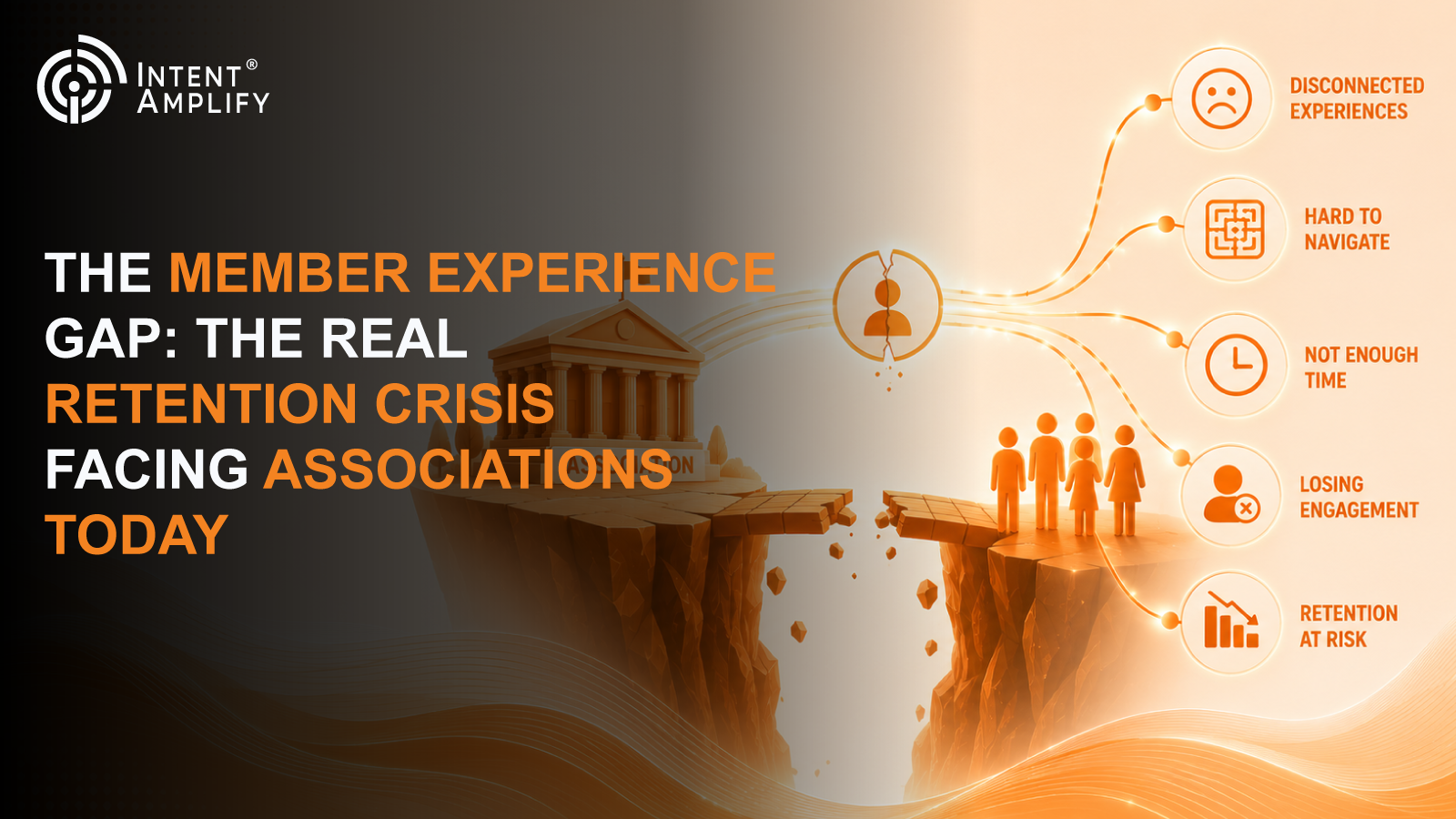
Associations are not facing a simple renewal problem. They are facing an experience problem.
For years, many associations measured value through access. Access to events. Access to research. Access to certification. Access to policy updates. Access to a professional community. That model still matters, but it is no longer enough. Today’s members compare every digital interaction with the best experiences they receive from enterprise platforms, consumer apps, and AI-powered tools.
This shift has created the Member Experience Gap. It is the distance between the value associations believe they provide and the value members actually experience.
The pressure is visible across the wider experience economy. According to Zendesk CX Trends 2026, 74% of consumers now expect customer service to be available 24/7. ¹
The same report found that 88% of customers expect faster response times than they did just one year ago. ²
These expectations are not limited to retail, software, or service brands. They are increasingly shaping how members judge associations, professional bodies, and industry communities.
Members increasingly judge associations by the same standard they use for every other digital experience: how quickly they can access relevant, trustworthy information. The expectation is no longer access to content alone. It is access to answers, context, and expertise when they are needed most.
That is the real retention crisis facing associations today.
Why Retention Risk Starts Before Renewal Season
Retention risk rarely begins when a member receives a renewal notice. It starts much earlier.
It begins when members stop opening emails. It grows when they cannot find relevant resources. It deepens when community engagement feels disconnected from their professional needs. It becomes serious when the member no longer sees the association as essential.
The 2026 Membership Performance Benchmark Report by iMIS reports that 76% of respondents have steady or increased retention. ³
That finding may sound encouraging, but it also signals a clear warning. Retention stability is not universal, and many organizations are still working to protect member value in a changing environment.
The same benchmark report is based on the 11th annual survey of membership professionals from around the world. ⁴
That matters because the retention conversation is no longer isolated to one segment or region. It is becoming a broad concern across membership-based organizations.
The experience gap rarely appears as a dramatic failure. More often, it emerges through small frustrations: a member struggling to locate a report, a certification candidate navigating multiple systems to find learning resources, or a sponsor unable to identify the most relevant audience segment. Individually, these moments seem minor. Collectively, they shape how members perceive value.
Information Overload Is Weakening Member Value
Most associations have accumulated extensive libraries of research, standards, certification resources, webinars, policy guidance, community knowledge, and educational content.
The challenge is rarely content volume. It is helping members discover the right information quickly enough for it to remain useful.
This is why knowledge access is becoming a retention issue. Members rarely leave because an association has no content. It’s because there is no immediate usefulness to that information. The 2026 Membership Performance Benchmark Report shows how membership professionals concentrate on recruiting, engaging, retaining, and generating more revenue, along with assessing the impact of technology on recruiting members. ⁵
Technology directly influences whether members can discover, access, and realize value from association resources.
When knowledge is trapped across disconnected systems, members experience delay. When the search is weak, members experience frustration. When content is not personalized, members experience irrelevance.
The archive may be rich, but the member journey can still feel poor.
Digital Expectations Are Being Reset Outside the Association Sector
One of the most important shifts in membership strategy is that associations no longer define the benchmark for member experience. Digital platforms across every industry are setting expectations for speed, relevance, and personalization.
They expect search to understand intent. They expect recommendations to be relevant. They expect answers to be fast. They expect support to be available when they need it.
Adobe’s 2026 AI and Digital Trends research, conducted with Oxford Economics, surveyed 3,000 executives and practitioners and 4,000 customers globally. ⁶
The scale of that research reflects how seriously enterprise leaders now view digital experience, customer trust, and AI-driven engagement.
Adobe also found that 51% of customers now name value for price as a top factor shaping trust. ⁷ For associations, this is highly relevant. When members evaluate annual dues, event fees, certification investments, and sponsorship packages, they are asking whether the value feels clear, current, and easy to access.
The same Adobe analysis found that 25% of customers now use AI platforms such as ChatGPT as their top research tool. ⁸
This is a major signal for associations. If professionals increasingly begin their research journeys through AI platforms, associations must ensure their knowledge is structured, discoverable, credible, and ready to be surfaced through modern digital channels.
The strategic challenge is ensuring members can access association knowledge before they turn to alternative sources.
The New Membership Benefit Is Knowledge That Works
Traditional benefits are still important. Traditional membership benefits such as events, advocacy, certification programs, networking opportunities, and research resources remain important contributors to member value.
Increasingly, however, the differentiator is not access to knowledge itself but the ability to apply that knowledge effectively.
Effective knowledge is accessible, contextual, and relevant to the specific needs of each member. It supports action rather than simply existing as information within a repository.
The iMIS and AssociationTRENDS benchmark notes that 400-plus membership professionals worldwide contributed insights to the 2026 report. ⁹
That industry participation shows how much attention membership leaders are placing on engagement, technology, and growth.
Members need different answers at different stages of their journey.
Different members seek different forms of value. A new member may need onboarding support, while a senior executive may prioritize regulatory intelligence. Certification candidates, sponsors, volunteer leaders, and mid-career professionals all engage with association knowledge in distinct ways.
If every member receives the same emails, the same content recommendations, and the same portal experience, relevance declines. Retention depends on the opposite. It depends on making members feel understood.
AI Can Help, But Trust Must Lead
Most association leaders are not asking whether AI can generate answers. They are asking whether members can trust those answers. That distinction is becoming increasingly important as AI becomes embedded within member-facing experiences.
AI is now part of the member experience conversation, but associations should not treat it as a shortcut. AI without trust can damage credibility. AI grounded in verified association knowledge can strengthen it.
Zendesk reports that CX Trends 2026 is based on insights from more than 11,000 respondents worldwide. ¹⁰
The same summary notes that 90% of CX leaders are seeing clear ROI from AI copilots and related AI tools. ¹¹
For associations, the lesson is not to automate everything. The lesson is to apply AI where it removes friction and improves access to trusted knowledge.
That may include smarter member search, personalized learning recommendations, automated resource discovery, member service support, event matching, and knowledge assistants trained on approved content.
Trust remains the guardrail.
Qualtrics’ 2026 Global Consumer Experience Trends research draws from 20,000 consumers across 14 countries. ¹²
Its related report page also states that the research covers 18 industries. ¹³
This is important because, reliability, transparency, and relevance are becoming universal experience expectations. Associations already have a natural advantage. They own trusted domain expertise. They have expert committees, standards, practitioner knowledge, and institutional credibility.
A significant opportunity is not to replace expertise with AI. It is to make trusted expertise easier to access, navigate, and apply.
From Archives to Answers: The Client Perspective
The strongest path forward for associations is captured in From Archives to Answers: The Future of Association Knowledge, the client’s whitepaper on the future of association knowledge. The core message is clear: associations already hold enormous intellectual value, but that value must become easier for members to discover, trust, and apply.
The whitepaper positions AI-powered search as the next evolution of association knowledge delivery. Instead of asking members to manually search across research reports, certification content, conference recordings, policy documents, and learning resources, associations can turn their digital ecosystems into intelligent knowledge interfaces. This directly supports the member experience priorities discussed throughout this article.
The implications extend beyond content discovery. When members can access relevant expertise more quickly, engagement tends to improve. Staff spend less time responding to repetitive questions and more time creating value. Leadership gains greater visibility into emerging member interests and knowledge gaps. Sponsors benefit from more informed audiences. In short, better knowledge accessibility can strengthen multiple dimensions of association performance simultaneously.
This is why the shift from archives to answers is not simply a technology upgrade. It is a retention strategy, a member value strategy, and a revenue protection strategy.
For associations dealing with fragmented content libraries and declining digital engagement, the client’s approach offers a clear way forward: transform static knowledge assets into searchable, always-on intelligence that improves member experience and strengthens long-term loyalty.
Read the full whitepaper, From Archives to Answers: The Future of Association Knowledge, here: From Archives to Answers
What Association Leaders Should Do Now
Association leaders should begin by auditing the member journey. Where do members experience friction? Where do they search and fail? Where do they need support but receive generic communication?
Second, measure knowledge accessibility. Content volume is not enough. A resource library with thousands of assets has limited value if members cannot quickly locate the right answer.
Third, evaluate whether current discovery experiences align with modern member expectations. Static search experiences are not built for modern expectations. Static discovery experiences are increasingly misaligned with how professionals seek information.
Fourth, personalize engagement. Role, career stage, interests, behavior, content history, and professional goals should inform the member experience.
Fifth, protect trust. Any AI-powered or automated experience must be transparent, secure, accurate, and grounded in approved association knowledge.
Finally, connect experience metrics with retention strategy. Renewal is not a once-a-year decision. It is the outcome of hundreds of small interactions where the member either feels value or feels friction.
Conclusion
The real retention crisis facing associations is not caused by a lack of information. It is caused by the gap between what members expect and what many associations currently deliver.
Members increasingly expect experiences that are relevant, responsive, and grounded in trusted expertise. They want interactions that acknowledge their goals, reduce friction, and help them make progress.
Associations already have the raw material to deliver this value. They have expertise, archives, research, events, education, communities, and credibility. The next step is to make those assets easier to discover, personalize, and apply.
Associations that successfully close the Member Experience Gap are likely to strengthen retention, deepen engagement, and reinforce their position as trusted industry resources. They will become indispensable knowledge partners for the industries they serve.
Many associations have accumulated substantial engagement data. The next challenge is converting those signals into insight that improves member experience and organizational growth.
Associations need to understand how members engage with content, where friction occurs, and which signals indicate emerging needs. Those insights can strengthen member experience, retention, and growth.
More on From Archives to Answers: The Future of Association Knowledge.
Intent Amplify helps organizations transform audience signals into Demand Intelligence, activate high-value opportunities, and build Go-to-Market strategies that drive measurable outcomes.
Download the whitepaper here: From Archives to Answers
References
- Zendesk (2026) CX Trends 2026.
- iMIS (2026) 2026 Membership Performance Benchmark Report.
- AssociationTRENDS and iMIS (2026) 2026 Membership Performance Benchmark Report.
- Oxford Economics and Adobe (2026). Adobe 2026 AI and Digital Trends Report.
- Adobe (2026). Adobe AI and Digital Trends Report: Four Key Takeaways.
- AssociationTRENDS and iMIS (2026) 2026 Membership Performance Benchmark Report.
- Zendesk (2026) CX Trends 2026.
- Qualtrics (2026) Global Consumer Experience Trends.
- Qualtrics (2026). 2026 Consumer Experience Trends Report.
- Adobe (2026) AI and Digital Trends 2026.