
Executive Summary
Logistics resilience is no longer principally a capacity or inventory problem. It is an enterprise decision-execution capability: the ability to convert fragmented signals into timely action before disruption becomes a production, revenue, compliance, or customer-service failure.
The financial exposure is substantial. U.S. business logistics costs reached $2.4 trillion in 2025, equivalent to 7.8% of national gross domestic product. Although both figures declined from the previous year, the change should not be mistaken for structural stability. Freight, inventory, labor, trade, and network risks continue to shift across regions and transportation modes. For executives, the relevant question is whether the operating model can absorb those movements without losing margin, service, or control. [1]
Five disciplines now determine readiness: decision-grade visibility, risk interpretation, scenario-based planning, governed logistics partnerships, and clear execution authority.
Decision-grade visibility is the ability to connect a logistics signal with its operational, customer, financial, security, and compliance consequences, determine how much response time remains, and identify viable authorized actions.
The central finding is straightforward. More technology does not automatically create a more adaptable logistics network. Enterprises also need reliable data, tested alternatives, accountable partners, and decision rights calibrated to the speed of the risk. The objective is not to predict every disruption. It is to preserve enough time and operational choice to make a defensible response.
Structural Volatility Is Replacing Episodic Disruption
For much of the previous decade, logistics networks were optimized around predictable trade relationships, stable routes, and concentrated purchasing power. Disruption was treated as an exception to an otherwise dependable system.
That premise has weakened.
Tariffs, geopolitical conflict, extreme weather, supplier distress, labor constraints, cargo crime, cyber incidents, and transportation volatility increasingly interact. A tariff change may alter sourcing economics. The resulting supplier move can change lead times, inventory requirements, customs obligations, security exposure, and dependence on a different port or carrier.
What appears to be one logistics issue is often a chain of connected decisions. Resilience fails when each function optimizes its own response while the enterprise consequence remains unowned.
North American trade illustrates the concentration involved. During 2025, $1.6 trillion in freight moved between the United States, Canada, and Mexico. This dependence makes border crossings, customs documentation, carrier capacity, and regional infrastructure material concerns for automotive, electronics, food, chemicals, retail, manufacturing, and defense supply chains. [2]
Executives should examine concentration across lanes, facilities, providers, products, customs processes, and digital platforms. A company may appear diversified at the supplier level while still depending on the same port, border crossing, sub-tier producer, broker, or transportation management system.
Global Trade Is Reconfiguring, Not Returning to Normal
Maritime transportation remains the backbone of international commerce. UN Trade and Development reports that around 80% of international merchandise trade by volume is carried by sea. For U.S. enterprises importing components, chemicals, industrial equipment, electronics, apparel, food ingredients, or automotive parts, maritime disruption is more than a carrier-management concern. It affects working capital, production scheduling, inventory policy, and customer commitments. [3]
The World Economic Forum reported that tariff escalation redirected more than $400 billion in global trade flows during 2025 and that major route disruption contributed to a 40% year-over-year increase in container shipping costs. Together, these findings point to structural network reconfiguration rather than a temporary pricing spike. [4]
There is rarely a cost-free resilience decision. An alternate port may protect production but add customs complexity; additional inventory may create time but consume working capital. Leaders must understand the trade-off before the intervention window closes.
Visibility Must Explain Consequence, Not Merely Location
Many supply chain visibility programs answer a narrow question: Where is the shipment?
That information matters, but it does not show whether the delay threatens a plant, a customer order, a regulated import, or an inventory position. A shipment may remain visible throughout its journey while the enterprise still fails to protect the commitment that depends on it.
Decision-grade visibility should answer four questions. Where is the shipment, and what changed? Which orders, plants, inventory positions, or customers depend on it? Which external conditions affect the route, provider, or product? Which alternatives remain viable, and who can authorize them?
The decisive measure is time to business impact: the interval between a disruption signal and the point at which the organization can no longer meet the affected production, revenue, compliance, or customer commitment.
Consider a delayed component moving from Mexico to a U.S. assembly plant. Location data may show that the truck is waiting at the border. Decision intelligence must establish how much usable inventory remains, which production sequence is affected, whether another crossing is feasible, whether customs documentation can be transferred, and who may approve premium transportation.
Logistics analytics should therefore prioritize loads with the shortest time to business impact, not simply display the largest number of exceptions. This changes visibility from a monitoring function into an operating control.
Move From Risk Visibility to a Structured Logistics Resilience Framework
Understanding where disruption occurs is only the first step. The greater challenge is determining which risks deserve immediate attention, how operational dependencies connect across suppliers, transportation, inventory, customs, and customers, and what actions should be prioritized before business impact becomes unavoidable.
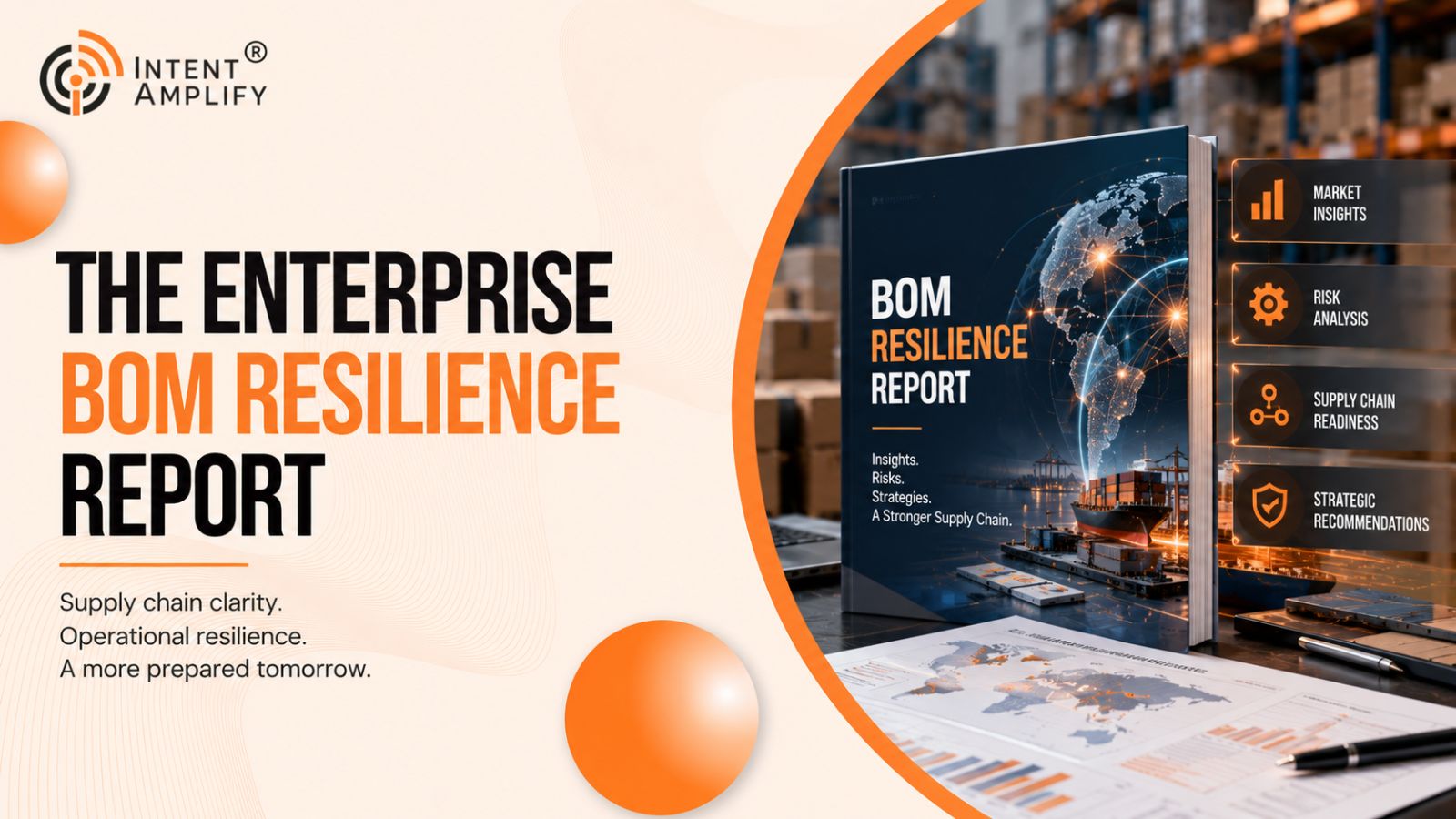
The eBook provides a practical logistics resilience framework that helps executives organize the issues explored in this report into a structured operating model. Rather than treating visibility, planning, risk management, logistics partnerships, trade compliance, and execution governance as separate initiatives, the framework shows how they work together to support faster and more consistent decision-making. It also helps leadership teams translate analytical findings into prioritized actions that align resilience investments with operational and business objectives.
Use The Logistics Resilience Playbook: Building Agile, Visible, and Future-Ready Supply Chains to connect decision-grade visibility, scenario planning, route optionality, partner readiness, cargo security, and customs governance.
Access the Logistics Resilience Playbook
Tariff and Customs Decisions Now Shape Network Design
Trade policy has moved to the center of logistics planning. McKinsey’s 2025 survey of 100 supply chain leaders found that 82% said new tariffs were affecting their supply chains, with 20% to 40% of activity affected in some form. Supplier and material costs increased for 39% of respondents, while 30% reported weaker customer demand. Because this is survey evidence, the findings should be treated as directional rather than representative of every industry. [5]
Tariff and customs decisions must therefore be integrated with sourcing, inventory, routing, pricing, and customer-commitment planning. Leaders should evaluate classification, origin, valuation, sanctions, forced-labor exposure, broker readiness, and documentation quality before a network change is approved.
Automation can flag missing information, compare documents, support classification research, and monitor regulatory changes. It should not serve as an autonomous compliance authority. Automation may recommend or flag; accountable trade professionals should retain authority over material classification, origin, valuation, and admissibility decisions.
Customs compliance is therefore a network-design control, not a final administrative check.
Supplier Monitoring Must Be Converted Into Business Interpretation
Supplier-risk programs often collect financial, geographic, and operational signals without connecting them to a specific enterprise dependency.
Sphera’s 2025 survey of 200 senior procurement and supply chain executives found that 73% had experienced supplier disruptions during the previous 12 months. 23% reported significant revenue or cost losses, while another 50% reported smaller losses. The study was commissioned by a commercial provider, so its findings are directional, but the pattern shows how routinely supplier events reach the income statement.[6]
A useful supplier-risk model should interpret what each signal means for operations. Financial deterioration affects the probability and timing of interruption. Site concentration reveals exposure to one region or facility. Sub-tier dependency exposes hidden common points of failure. Transportation limits show whether supply can move during a disruption. Recovery lead time defines the duration of exposure. Substitute availability determines how quickly technical and commercial replacement can occur.
The most important question remains straightforward: What enterprise process fails if this supplier cannot perform, and how long do we have to intervene?
Answering it requires procurement, logistics, engineering, operations, finance, and commercial teams to share one dependency view. Without that coordination, a supplier may appear replaceable to procurement while remaining technically irreplaceable to production.
Cargo Theft Has Become a Transaction-Trust Problem
Freight security was once centered primarily on physical safeguards. Those controls still matter, but criminal groups increasingly exploit digital freight processes through stolen identities, compromised email accounts, fraudulent carrier credentials, fictitious pickups, and unauthorized changes to delivery instructions.
CargoNet recorded 2,646 confirmed cargo-theft incidents in the United States and Canada during 2025, an 18% annual increase. Estimated losses approached $725 million, while average theft value increased 36% to $273,990. Because CargoNet records reported and confirmed events, the figures should be treated as directional rather than as a complete measure of cargo crime. [7]
The increase in average loss value suggests that organized groups may be targeting high-value freight more selectively and exploiting weaknesses in transaction trust.
Responsibility must extend across functions. Procurement and logistics should verify carrier identity. Warehouse and transportation teams should validate pickup details. Logistics and security should approve route changes. Finance should independently verify payment changes. IT and provider-management teams should assess platform security. High-value shipment escalation should sit jointly with logistics leadership and security.
The goal is to prevent a credible-looking digital instruction from producing an irreversible physical release. That requires independent verification of carrier, driver, tractor, trailer, destination, and payment changes, not merely better post-theft investigation.
Logistics Partnerships Must Demonstrate Readiness Under Stress
Carriers, third-party logistics providers, customs brokers, and technology companies provide capacity and specialist expertise that few enterprises can replicate internally. Yet provider selection still emphasizes price, geographic coverage, and routine service performance.
A resilient partner must demonstrate alternative carrier, mode, or lane access; disclose subcontractors and fourth parties; maintain recovery procedures for platform failure; apply identity controls and incident escalation; support customs execution; provide named decision contacts; and participate in joint disruption exercises.
Contracts should specify data availability, cyber requirements, incident-notification periods, continuity responsibilities, subcontractor controls, recovery expectations, and escalation authority.
A relationship becomes strategically valuable when it preserves choices during disruption. High on-time performance in routine conditions does not prove that a provider can secure scarce capacity, restore failed integrations, or coordinate a route change during a border or security incident.
Move From Disruption Response to an Executable Logistics Plan
The webinar examines how enterprises can connect visibility, partner coordination, route flexibility, trade compliance, cargo security, and decision ownership within one executable response model.
Participants will explore how to identify business exposure earlier, qualify alternatives before disruption, and reduce the time between signal and action.
Reserve Your Seat for the Logistics Resilience Webinar
AI Requires Explicit Limits on Execution Authority
Gartner predicts that 70% of large organizations will adopt AI-based forecasting to predict demand by 2030. AI-supported planning can detect complex patterns, process external signals, compare scenarios, and produce forecasts more frequently than traditional planning cycles. Gartner also notes that adoption remains constrained by incomplete data, limited accessibility, organizational resistance, and the need to benchmark advanced models against simpler methods. [8]
Enterprises should distinguish three authority tiers. Advisory systems summarize conditions and recommend options. Bounded-execution systems perform predefined, low-risk actions within approved thresholds. Human-authorized execution requires accountable approval before material routing, sourcing, customs, inventory, or customer decisions.
Completion should be demonstrated through operating evidence. Forecast accuracy must be benchmarked. Recommendations should identify missing or low-confidence inputs. Model drift must be monitored. Material decisions should retain human approval. Outputs must be traceable to source data and assumptions, while rollback and override procedures must be tested.
AI can compress decision time. It should not obscure decision ownership.
Intent Amplify Perspective: Build a Decision Architecture
Intent Amplify’s perspective is that logistics resilience should be managed as an enterprise decision architecture rather than a collection of transportation projects. Technology platforms should implement that architecture, not substitute for it.
The architecture must connect five questions: What changed? Which business commitments are exposed? How much time remains before impact? Which alternatives are operationally and legally viable? Who can authorize the response?
Performance should be measured across the full response cycle. Logistics operations own time-to-detect. Supply chain, trade, security, and commercial teams contribute to the time to interpret. Named continuity leaders own their time to decide. Logistics, procurement, providers, and operations own time to execute. Finance and business owners validate exposure avoided, while continuity and operations leaders measure recovery time.
Alert volume is an activity metric. Preserved revenue, avoided downtime, protected service, and shorter recovery are enterprise outcomes.
Table 1. Intent Amplify Executive Readiness Scorecard
|
Capability |
Executive Assessment Question |
High Readiness Looks Like |
|
Critical Flow Awareness |
Can you identify the suppliers, facilities, routes, and products that would have the greatest business impact if disrupted? |
Business-critical dependencies are documented, prioritized, and regularly reviewed. |
|
Decision-Grade Visibility |
Does your visibility platform explain business impact, not just shipment location? |
Operational data is connected to inventory, production, customer commitments, and supplier dependencies. |
|
Risk Interpretation |
Can your teams determine which disruption requires immediate action? |
Risks are prioritized by business consequence, time to impact, and recovery options. |
|
Network Optionality |
Are alternate suppliers, carriers, routes, ports, and customs processes already qualified? |
Executable alternatives are available before disruption occurs. |
|
Partner & Trade Readiness |
Can logistics partners and trade processes support continuity during disruption? |
Providers have documented continuity plans, secure data-sharing practices, and clearly defined recovery responsibilities. |
|
Decision Ownership |
Are executive decision rights clearly defined during a logistics disruption? |
Accountability, escalation paths, and response authority are established across logistics, procurement, operations, trade, and security. |
Score each domain independently using five maturity levels:
1 — Reactive: Informal and dependent on individual knowledge.
2 — Developing: Partially documented, with material gaps.
3 — Defined: Documented across critical flows.
4 — Measured: Tested and reported through performance metrics.
5 — Adaptive: Continuously validated and updated.
Assess six domains: critical-flow awareness, decision-grade visibility, risk interpretation, network optionality, Partner and Trade Readiness, and Decision Ownership.
Do not rely on an average alone. Critical-flow awareness, Partner and Trade Readiness, and network optionality are gating domains. Weakness in any one can prevent timely action even when technology and reporting appear mature.
Leadership teams should prioritize the lowest-scoring domain supporting a business-critical flow and define an owner, corrective action, and completion test.[1]
Intent Amplify Research Desk Observation
The most persistent gap in logistics modernization is the distance between visibility and action.
Visibility identifies the exception. Decision architecture determines whether the enterprise still has time to respond.
Many organizations can detect a delayed shipment earlier than they could several years ago. Far fewer can connect it to business exposure, compare compliant alternatives, obtain authority, and execute before capacity or inventory runs out.
The next stage of logistics transformation will depend less on adding stand-alone dashboards and more on coordinating decisions across transportation, procurement, inventory, trade, security, finance, and customer operations.
Recommendations With Owners and Completion Evidence
First, map critical dependencies. Supply chain, logistics, procurement, and IT should produce a critical-flow map with named owners and time-to-impact windows.
Second, build executable alternatives. Logistics, providers, trade, and security teams should test route, carrier, mode, and customs options before disruption.
Third, connect forecasts to actions. Planning, operations, and finance should define thresholds that trigger inventory repositioning, capacity reservation, supplier intervention, or customer communication.
Fourth, recontract partnerships. Procurement, legal, logistics, and security should include continuity, data, cyber, subcontractor, and recovery obligations in relevant agreements.
Fifth, integrate customs and security. Trade, logistics, and security teams should establish joint routing and shipment-release controls for high-risk flows.
Finally, measure decision performance. Executive supply chain leadership should track time to detect, interpret, decide, execute, and recover, then use post-event reviews to remove recurring delays.
Turn Logistics Research Into Executive Engagement
Intent Amplify helps B2B organizations translate logistics, supply chain, procurement, and operations research into executive content, webinar programs, audience acquisition, content syndication, account-based marketing, and integrated demand-generation thought leadership.
Discuss a Logistics Research and Demand-Generation Program With Intent Amplify
Strategic Takeaway: Preserve Choice Before the Window Closes
Logistics resilience is not achieved by maximizing inventory, duplicating every provider, or attempting to predict every disruption. Those approaches are expensive and frequently impractical.
The more sustainable objective is controlled adaptability: clear knowledge of critical dependencies, reliable signals, qualified alternatives, accountable partners, and decision rights calibrated to the speed of the risk.
The enterprises that perform best will not necessarily own the most technology or command the greatest freight volume. They will be the organizations that recognize consequential change early, interpret it accurately, and act while viable choices remain.
References
- Council of Supply Chain Management Professionals and Kearney (2026) 2026 State of Logistics Report. Available at: https://cscmp.org/CSCMP/CSCMP/Educate/State_of_Logistics_Report.aspx?hkey=bdfd8da6-e34f-434c-b39c-d3219dd4a6a2
- U.S. Bureau of Transportation Statistics (2026) Transborder Freight Data Annual Report: 2025. Available at: https://www.bts.gov/newsroom/transborder-freight-data-annual-report-2025-0
- UN Trade and Development (n.d.) Review of Maritime Transport. Available at: https://unctad.org/topic/transport-and-trade-logistics/review-of-maritime-transport
- World Economic Forum (2026) Global Supply Chains Enter Era of Structural Volatility, World Economic Forum Report Finds. Available at: https://www.weforum.org/press/2026/01/global-supply-chains-enter-era-of-structural-volatility-world-economic-forum-report-finds/
- McKinsey & Company (2025) Supply Chain Risk Pulse 2025: Tariffs Reshuffle Global Trade Priorities. Available at: https://www.mckinsey.com/capabilities/operations/our-insights/supply-chain-risk-survey
- Sphera (2025) Nearly Three-Quarters of Companies Suffered Revenue Losses from Supplier Disruptions in the Last 12 Months. Available at: https://sphera.com/company/news/sphera-survey-nearly-three-quarters-of-companies-suffered-revenue-losses-from-supplier-disruptions-in-the-last-12-months/
- CargoNet (2026) Cargo Theft Losses Surge to Estimated $725 Million in 2025, Verisk CargoNet Analysis Reveals. Available at: https://www.cargonet.com/news-and-events/cargonet-in-the-media/2025-theft-trends/
- Gartner (2025) Gartner Predicts 70% of Large Organizations Will Adopt AI-Based Supply Chain Forecasting to Predict Future Demand by 2030. Available at: https://www.gartner.com/en/newsroom/press-releases/2025-09-16-gartner-predicts-70-percent-of-large-orgs-will-adopt-ai-based-supply-chain-forecasting-to-predict-future-demand-by-2030[2]