

Executive Summary: The Labor Cost You Cannot Explain Is Hard to Improve
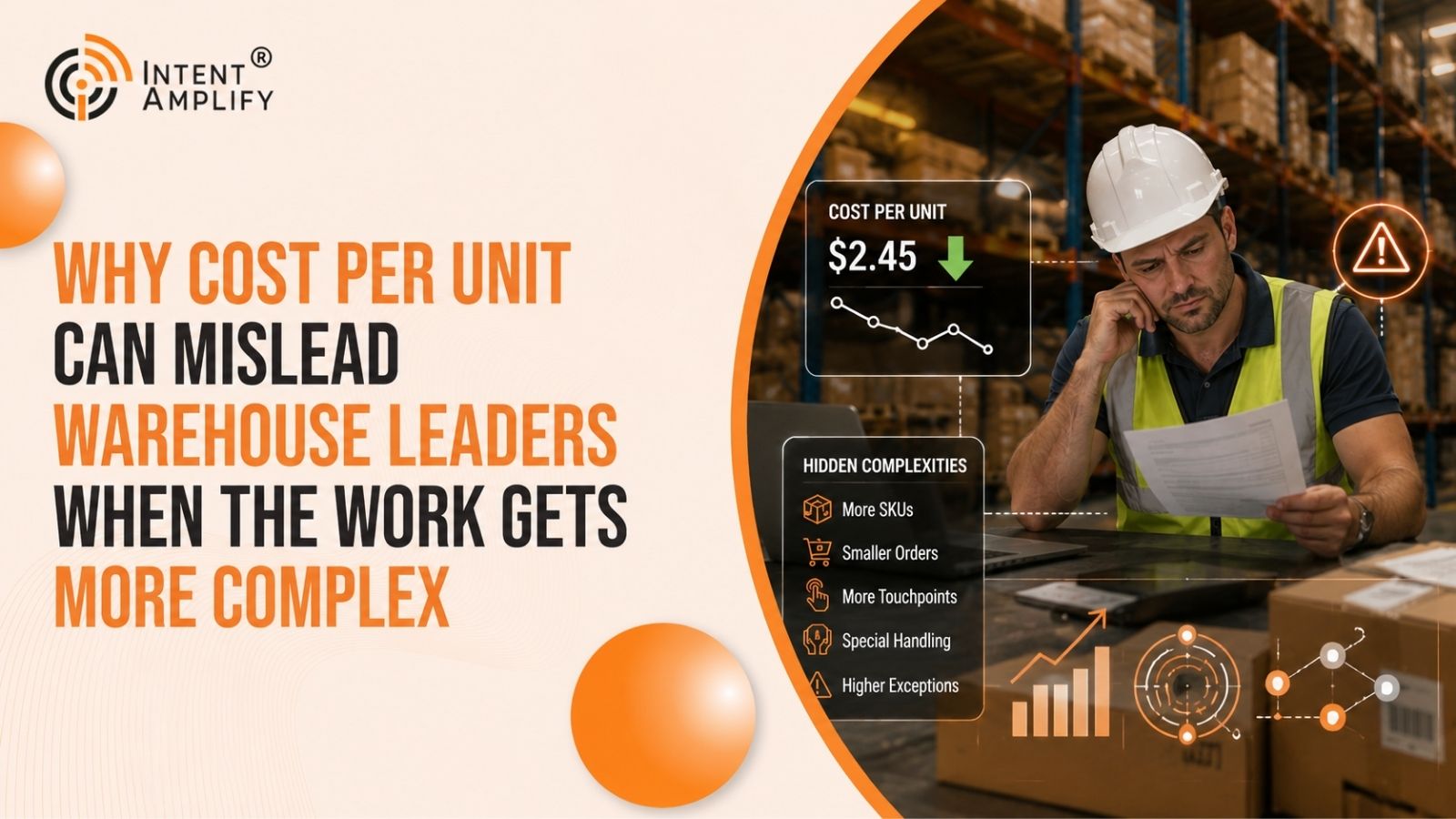
Distribution leaders are under pressure to protect service while labor remains one of the largest controllable operating costs inside a warehouse. That tension makes labor management an executive issue rather than a floor-level productivity exercise. The useful question is no longer simply whether employees can move more units per hour. It is whether the network can understand what the work should cost, why actual labor differs from that expectation, and which operating decision will close the gap without creating new service, safety, or retention problems.
The September 15 Supply Chain Now webinar centers on a durable idea: labor is a margin decision. That framing matters because labor performance sits at the intersection of demand, process design, staffing, standards, supervision, technology, and customer commitments. A strong management system therefore needs both operational evidence and financial context. It should help leaders distinguish a harder workload from weaker execution, necessary indirect work from avoidable friction, and a temporary demand spike from a structural labor problem.
This asset is written for VPs and Directors of distribution, warehousing, logistics, fulfillment, supply chain, and operations across multi-site 3PL, wholesale distribution, manufacturing, retail and consumer brands, e-commerce fulfillment, and food-and-beverage networks. It does not treat a registration, dashboard, or isolated productivity gain as proof of business value. The objective is to create a decision framework leaders can use before the next staffing, cost, technology, or network review.
The content intentionally separates management principles from vendor-specific performance claims. Any ROI, savings, or customer outcome should be verified against the cited source and the organization's own operating baseline before publication or investment approval.
Indirect time is often where labor economics becomes opaque. It is necessary to run a warehouse, yet poorly classified indirect work can hide waiting, rework, system friction, training gaps, or assignment problems. The same bucket may contain both essential support and avoidable delay.
What Counts as Indirect Labor?
Indirect labor includes work that supports the operation without landing cleanly in the primary production measure: meetings, training, travel between assignments, cleanup, battery changes, waiting, equipment checks, problem-solving, inventory support, and other non-direct activity. Some of it is necessary. Some of it is a symptom of process friction. The management problem begins when both categories are invisible or coded inconsistently.
Leaders should resist treating indirect time as waste by definition. The better approach is classification: necessary support work, controllable support work, avoidable delay, and unclassified time. That taxonomy turns a large bucket into a portfolio of decisions—staffing, process redesign, training, slotting, equipment, system configuration, or data-quality remediation.
The first goal can simply be better classification. A network often discovers enough opportunity by reducing 'unknown' time before it tries to reduce legitimate indirect work.
Easy Metrics highlights indirect-time and missing-time visibility within its operations financial management capabilities. The executive principle is to make the bucket explainable before trying to shrink it. Classification is what turns paid time into a process-improvement agenda.
|
Decision element |
What to establish |
|---|---|
|
Necessary support |
Training, safety, meetings, equipment checks, and other required activity. |
|
Controllable support |
Work that is legitimate but can be scheduled or designed more efficiently. |
|
Avoidable friction |
Waiting, searching, rework, congestion, and preventable handoffs. |
|
Unknown |
Time that cannot yet be classified and therefore requires data or process investigation. |
Why Missing and Unclassified Time Distort Productivity
Warehouse labor decisions usually depend on data that lives in different systems. WMS activity describes what moved. Time-and-attendance and payroll describe paid time and labor cost. Job codes or indirect tracking describe non-direct work. Standards describe expected effort. Finance systems provide budgets, revenue, and margin. The decision layer appears only when those records can be reconciled.
Data unification is therefore not an abstract analytics goal. It is what allows a supervisor or executive to answer basic questions quickly: what work occurred, who and what supported it, what it should have required, what it actually consumed, and what happened to service and cost.
Start with the minimum data needed to answer the decision. Integration should expand when a new source changes explanation or action, not because the field is available.
Executive questions
- Which source is authoritative for activity, time, standards, and cost?
- Which missing field actually blocks the decision?
Separate Necessary Support Work From Avoidable Friction
A labor program should begin with the work as it actually happens. Map the trigger, task sequence, handoffs, travel, systems, exceptions, and final service requirement. This is where hidden labor content becomes visible. A dashboard built before this map often inherits the organization's existing blind spots.
Recent-case replay is especially useful. Take one ordinary shift and one difficult shift, reconstruct what changed, and identify where paid time was expected to go versus where it actually went. That creates a grounded improvement backlog.
Do not optimize a process that the organization cannot describe. A short recent-case workshop often reveals different informal versions of the same workflow, which itself is a source of labor variance.
Trace Indirect Time to Process and Handoff Design
Indirect time often accumulates at process boundaries: waiting for work release, hunting for equipment, resolving inventory discrepancies, switching assignments, staging around congestion, or waiting for approvals. These are design signals because no single associate owns the whole delay.
Process-level analysis should connect the time pattern to the trigger and the receiving step. That makes it possible to redesign the handoff rather than simply asking people to work faster inside a broken flow.
Map the cost of the boundary as well as the time. A few minutes of repeated waiting across hundreds of assignments can become a material labor expense even when no single delay looks dramatic.
Executive questions
- Where is the handoff cost accumulating?
- Is the fix local or cross-functional?
Use Patterns, Not Individual Blame
Performance data becomes more credible when coaching explains the work rather than merely ranks people. Managers need to distinguish process barriers, training gaps, equipment constraints, standards issues, and individual execution. That preserves fairness and improves the chance that feedback changes performance.
The strongest coaching loop uses representative cases, lets associates understand the expectation, and records recurring exceptions. When the same exception appears across many people, the problem may belong to the process or standard rather than the individual.
Trust matters because labor data changes behavior only when people believe the comparison is fair. Explain what is measured, what is excluded, and how associates can challenge bad data or abnormal conditions.
Quantify the Cost and Margin Consequence
Operations and Finance often review the same month with different evidence. Finance sees actual spend against a static budget. Operations sees the work that arrived: order mix, customer requests, seasonal peaks, absenteeism, late trailers, equipment downtime, and exception handling. When those views are not reconciled, cost discussions become negotiations rather than diagnosis.
A better operating language uses workload-adjusted expectations. Easy Metrics describes Targeted Cost to Serve as an earned-budget concept that changes with real work rather than forecast assumptions. The broader management principle is useful regardless of platform: determine what the observed work should reasonably have cost, compare it with actual cost, and then trace the variance to execution, complexity, or both.
Finance and Operations should agree on the variance logic before the result is known. Predefined rules reduce the temptation to reinterpret the measure when a facility misses target.
Executive questions
- Do Operations and Finance agree on what the observed work should have cost?
- Which variance has a named operating owner?
The Indirect-Labor Decision Framework
A decision-ready framework should make the next action obvious. Define the business question, the eligible scope, the expected condition, the actual condition, the variance, the likely drivers, the accountable owner, and the review date. Keep contrary evidence visible. If a metric cannot tell the team what to investigate or who needs to act, it is a reporting metric rather than a management metric.
For an executive review, classify each issue into four routes: sustain what is working; remediate a known process or data gap; redesign the operating method where the model no longer fits; or defer action when evidence is insufficient. This prevents every variance from becoming a headcount or technology request.
Use the framework as a working decision record. The point is to make assumptions visible so another leader can challenge the recommendation with the same evidence.
|
Decision element |
What to establish |
|---|---|
|
Executive question |
What decision would this metric cause the team to make differently this week? |
|
Evidence owner |
Name the person responsible for the source, the interpretation, and the follow-through. |
|
Counter-signal |
Record the strongest fact that could overturn the initial conclusion. |
|
Decision date |
Set the operating forum where the variance will be reviewed and closed. |
The webinar explores how labor decisions connect operational performance with margin over time.
|
Category |
Meaning |
Decision |
|---|---|---|
|
Necessary support |
Required work that enables safe/service execution |
Schedule and measure |
|
Controllable support |
Legitimate work with design flexibility |
Optimize timing/ownership |
|
Avoidable friction |
Waiting, searching, rework, congestion |
Remove root cause |
|
Unknown |
Unclassified paid time |
Improve data and process visibility |
Conclusion: Visibility Turns Indirect Labor Into an Improvement Portfolio
Warehouse labor improvement becomes more durable when the organization stops treating labor as a monthly variance to explain and starts treating it as a daily operating system to manage. That requires trusted data, fair standards, workload context, visible indirect time, disciplined overtime review, and a common language between Operations and Finance.
References
- Easy Metrics (2026), Warehouse Performance Management Platform. https://www.easymetrics.com/
- Easy Metrics (2026), Targeted Cost to Serve: Why Warehouse Cost Management Starts with the Right Question. https://www.easymetrics.com/blog/targeted-cost-to-serve-why-warehouse-cost-management-starts-with-the-right-question/
- Easy Metrics (2026), Targeted Cost to Serve launch announcement. https://www.easymetrics.com/news/easy-metrics-launches-targeted-cost-to-serve-tcts-a-new-metric-for-measuring-warehouse-cost-performance/
- Easy Metrics, Warehouse Labor Management System. https://www.easymetrics.com/warehouse-performance-management-platform/warehouse-labor-management-system/
- Easy Metrics, Setting Accurate and Defensible Labor Standards. https://www.easymetrics.com/wp-content/uploads/2021/12/Setting-Accurate-and-Defensible-Labor-Standards.pdf
- Easy Metrics, Data-Driven Labor Standards. https://www.easymetrics.com/wp-content/uploads/2023/04/Data-Driven-Labor-Standards-v9.pdf
- Inbound Logistics / Easy Metrics (2026), The Unified Warehouse Data Playbook. https://www.inboundlogistics.com/whitepapers/the-unified-warehouse-data-playbook/
- Reyes Coca-Cola Bottling, Warehouse Supervisor role description. https://jobportal.reyesholdings.com/allbusinessunit/jobs/32521?lang=en-us