
Book a Demo
Home Platform Audience Accounts Intent Evidence Activation Solutions Industries Programs Research Pricing About Careers Press Contact Brands Trust Privacy Accessibility Demo ABM Advertising Content Demand Intent Data Sales Blog Infographics Events Product Sheets Videos Webinars White Papers E-books Customer Stories Corporate Presentation Newsletters Expert Insights Expert Analysis Research Reports
Research Report

Inventory Accuracy Readiness: From Phantom Stock to Reliable Grocery Execution

Inventory Accuracy Readiness: From Phantom Stock to Reliable Grocery Execution
September 8, 2026 14 min read

Quick Answer

A practical framework for grocery retailers to improve inventory accuracy, detect phantom stock, reduce execution gaps, and build more reliable omnichannel inventory decisions.

Executive Summary

Inventory accuracy has moved beyond the stockroom. In grocery retail, the inventory record now influences replenishment, ecommerce availability, store picking, substitutions, customer promises, retail media, labor allocation, and increasingly AI-assisted shopping. When the physical product and the digital record diverge, the failure can surface anywhere in that decision chain.

RETHINK Retail’s 2026 inventory-accuracy program frames the problem as a crisis of confidence. Even at a 5% out-of-stock rate, roughly one in three baskets can be missing an item. The uncertainty extends beyond the shelf into margin, labor, digital availability, retail media performance, and the promise retailers make to customers across channels. [1]

Recent empirical research strengthens the case for treating inventory accuracy as an operating issue rather than a periodic counting task. A 2026 Journal of Business Logistics study covering approximately 24,000 SKUs across 11 grocery stores found that inventory record inaccuracy was associated with operating conditions including average inventory level, restocking frequency, and perishability. Its field quasi-experiment found an approximately 11% store-wide sales lift after an inventory audit, with the effect concentrated on items where system inventory exceeded physical inventory. [2]

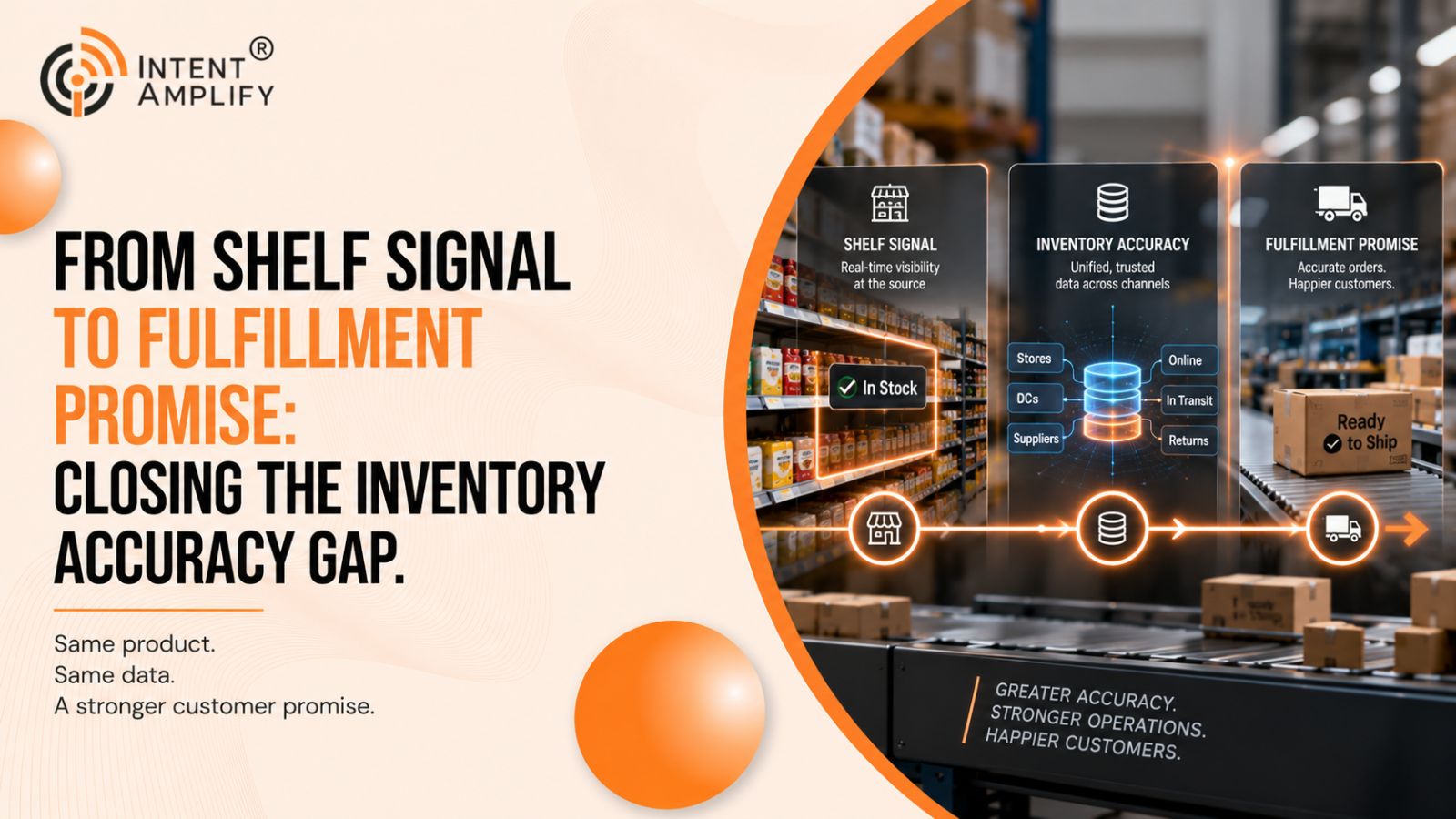
This report examines the state of inventory accuracy through an execution lens. The central finding is that retailers need more than accurate counts. They need an operating model that connects physical events to digital signals, signals to decisions, decisions to owners, and recurring discrepancies to process improvement.

For Director+ leaders across retail operations, supply chain, inventory, replenishment, ecommerce, merchandising, enterprise systems, digital transformation, and operational excellence, the priority is practical: establish which inventory signals can be trusted for which decisions, detect divergence early enough to act, and build a control loop that prevents recurring errors from becoming permanent operating work.

Industry Overview: Inventory Accuracy Has Become an Execution Problem

Inventory accuracy used to be discussed primarily as a record-keeping or stock-counting issue. That framing is increasingly inadequate for modern grocery retail.

Every inventory-dependent decision assumes that a system value represents a physical reality. Replenishment assumes the on-hand balance is sufficiently reliable to trigger an order. Ecommerce assumes an item marked available can be picked. Store associates assume a location or quantity signal can guide them to product. Customer-facing systems assume availability can be promised before the shopper arrives. AI and automation assume the data they receive is fit to drive the next action.

When that assumption fails, the organization compensates. Store teams search for product. Ecommerce teams apply inventory buffers. Fulfillment teams substitute or cancel. Planners discount unreliable signals. Customer service manages disappointment. Managers create manual checks and reconciliation routines. The record error therefore creates a second layer of work: decision debt.

The RETHINK Retail webinar, How to Build the Inventory Accuracy Every Grocery Decision Depends On, makes this connection explicit. It describes inventory uncertainty as a foundation problem affecting customer promises, labor, margin, retail media, in-store execution, online shopping, and AI-assisted commerce. [1]

The issue is especially important in grocery because the operating environment creates frequent opportunities for divergence. High SKU counts, frequent replenishment, perishability, promotions, substitutions, returns, damage, transfers, and fast product movement all create inventory events that must be captured correctly and quickly.

The 2026 grocery study by Rekik, Oliva, Syntetos, and Glock provides direct evidence of this complexity. Across its sample, inventory record inaccuracy was positively associated with average inventory level, restocking frequency, and whether an item was perishable. [2] The finding matters because it shifts attention from the abstract question of whether inventory is inaccurate to the operational question of where inaccuracy is most likely to emerge and where corrective effort may have the greatest value.

Current Market Landscape: The Confidence Gap Is Now Omnichannel

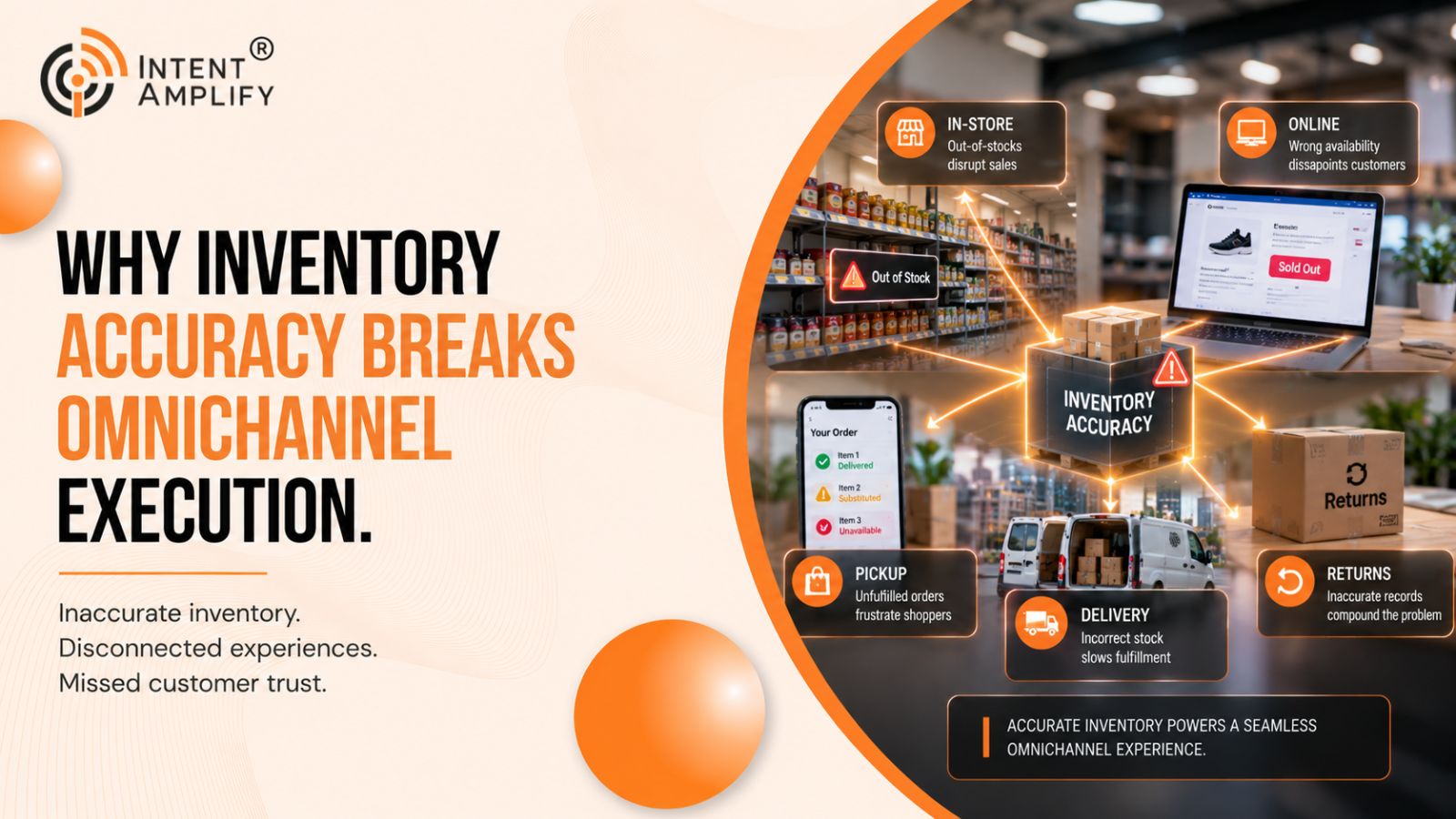
The inventory problem is no longer confined to whether a shelf is empty. Modern retail has created multiple versions of availability.

A product can exist in the building but not on the shelf. It can be physically present but damaged or unsellable. It can be available in aggregate but not in the specific size, flavor, pack, or variant the customer wants. It can be shown as available online but inaccessible to the picker. It can be recorded in one system while another system has not yet received the update.

RETHINK Retail’s June 2026 analysis calls this the “availability paradox.” It distinguishes inventory inaccuracy, where the system shows stock that is not actually available, from customer availability, which asks whether shoppers can find the products the retailer has committed to carrying. The analysis also warns that aggregate accuracy measures can obscure SKU-level failures that matter to the customer. [3]

This distinction changes how leaders should evaluate inventory programs. A high aggregate accuracy figure does not automatically mean a retailer can make a reliable customer promise. The relevant question is whether the inventory signal is accurate enough, current enough, and specific enough for the decision being made.

For ecommerce, the decision may be whether to expose an item for pickup. For replenishment, it may be whether to trigger an order. For a store associate, it may be whether to search the backroom. For retail media, it may be whether promoting a product makes sense when local availability is uncertain. For an AI shopping assistant, it may be whether a recommendation can actually be fulfilled.

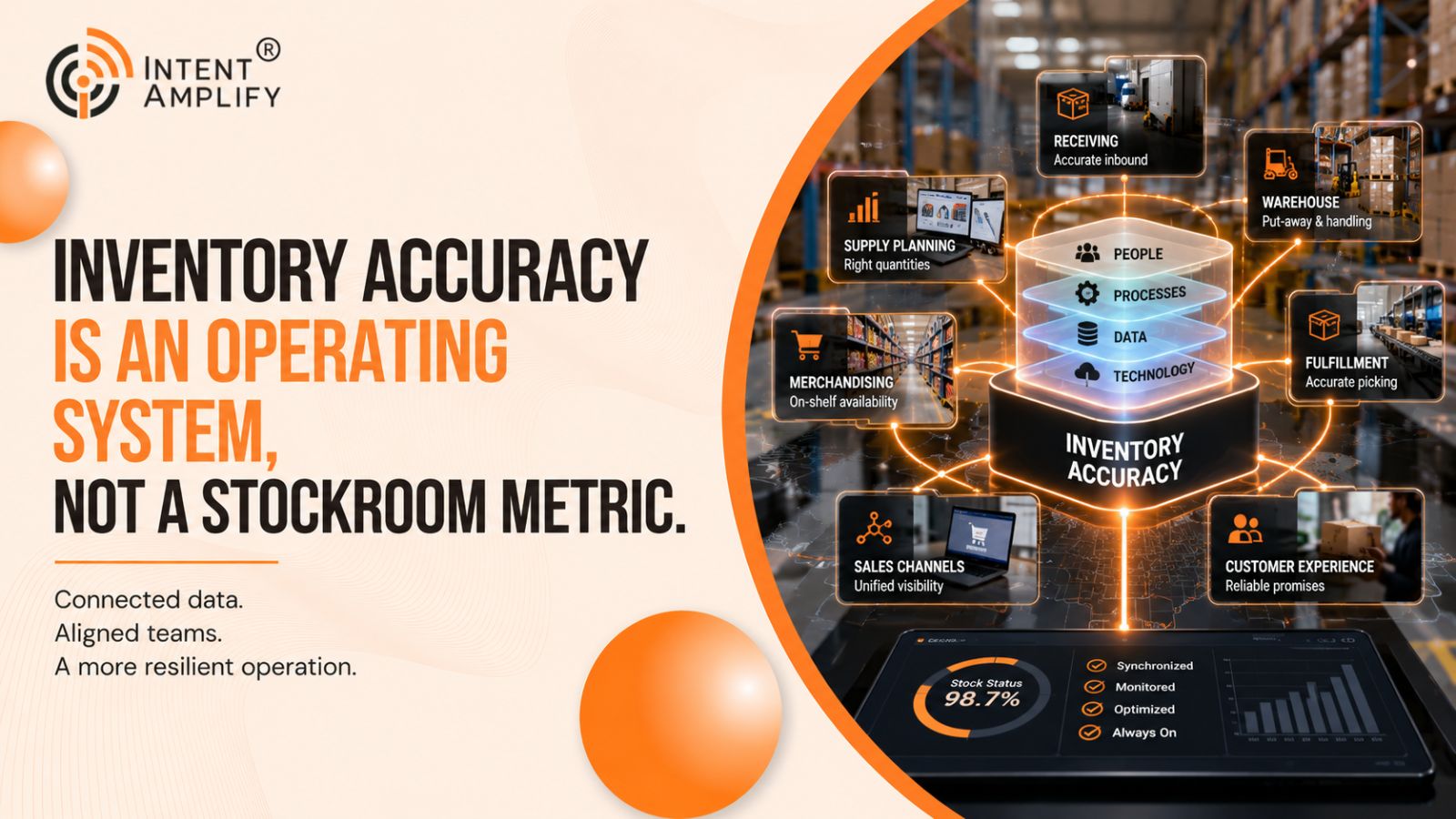
Inventory accuracy is therefore becoming a shared data dependency across the retail operating model.

Key Findings

1. A small out-of-stock rate can affect a large share of baskets

RETHINK Retail reports that even at a 5% out-of-stock rate, roughly one in three baskets can be missing an item. [1] The implication is that an apparently modest item-level problem can become a much larger customer-experience problem when baskets contain multiple items.

For leaders, this means inventory performance should not be interpreted only through a single percentage. The customer experiences the basket, the order, or the mission - not the average SKU.

2. Inventory record inaccuracy is not evenly distributed

The Journal of Business Logistics grocery study analyzed approximately 24,000 SKUs across 11 stores. It found that inventory record inaccuracy was associated with average inventory levels, replenishment frequency, and perishability. [2]

This supports targeted control rather than uniform effort. Retailers should identify categories, processes, locations, and event types where the combination of inaccuracy risk and decision impact is highest.

3. Audits can create measurable commercial impact

The same 2026 study conducted a field quasi-experiment and found an approximately 11% store-wide sales lift after a stock audit, concentrated on items with negative inventory record inaccuracy—cases where the system showed more inventory than was physically present. [2]

The result does not mean every retailer should expect the same lift. It does show that correcting inaccurate records can have direct commercial consequences within a defined grocery setting. The evidence supports treating inventory audits as more than administrative cleanup when the inaccuracies interfere with replenishment and sales.

4. Customer availability is broader than inventory accuracy

RETHINK Retail’s availability analysis distinguishes system accuracy from the customer’s ability to find the promised product. [3] This is a critical measurement issue. Retailers can improve the record and still have availability problems caused by shelf execution, location, assortment, sellable status, or other conditions.

The strongest operating model should therefore connect inventory record accuracy to the customer-facing decision it is intended to support.

5. Inventory intelligence is becoming a technology foundation

IHL Group’s March 2026 analysis argues that inventory intelligence is becoming a major divider between retail technology leaders and laggards. It highlights examples in which RFID and other inventory technologies improve visibility and support downstream automation. [4]

The strategic point is not that every retailer needs the same technology. It is that AI, replenishment automation, unified commerce, and digital customer experiences become more dependent on trusted inventory signals as automation increases.

6. Standardized product identity improves event integrity

GS1 India’s 2026 guidance on retail and FMCG inventory challenges emphasizes standardized product identification and barcode use as foundations for inventory visibility across product movement and systems. [5]

This matters because inventory accuracy is built event by event. Receiving, movement, sale, transfer, return, damage, and adjustment need consistent product identity and disciplined capture. Better analytics cannot fully compensate for events that were never recorded correctly.

7. Inventory errors propagate into downstream decisions

Inventory errors become more consequential when downstream systems treat an unreliable record as an authoritative input. RETHINK Retail’s 2026 analysis shows that inventory uncertainty can affect replenishment, ecommerce availability, customer promises, labor, retail media, and AI-assisted shopping. [1]

This propagation effect is central to the business case. An inventory error is not isolated once another workflow uses it as an input. The more automated the operating model becomes, the faster a weak signal can influence multiple downstream decisions.

Analysis: Why Inventory Accuracy Breaks at Store Level

Store-level inventory accuracy is difficult because the record is the cumulative result of many physical and digital events.

A shipment arrives. Product is received. Cases are broken. Units move to the shelf. Associates replenish. Customers pick up and replace items. Online orders are picked. Substitutions occur. Product is damaged. Returns are processed. Transfers move inventory between locations. Shrink removes product without a standard transaction. Adjustments correct prior errors. Each event changes what the organization should believe about inventory.

The challenge is not simply transaction volume. It is the gap between physical reality and digital representation. If a physical event occurs without the correct digital event or the digital update is delayed, duplicated, mapped incorrectly, or interpreted differently by another system, the inventory position can drift.

Grocery adds additional complexity because perishable products require more frequent handling and controls. The 2026 empirical study found higher inventory record inaccuracy associated with perishability and restocking frequency. [2] This suggests that operating intensity itself can be an important source of accuracy risk.

Detection is another problem. Many retailers discover a discrepancy only when a downstream process fails. A picker cannot find the item. A shelf is empty despite positive on-hand inventory. A replenishment order does not trigger because the system believes enough stock exists. A customer arrives for an item that was promised online.

At that point, the discrepancy is no longer only a data-quality issue. It is an execution failure.

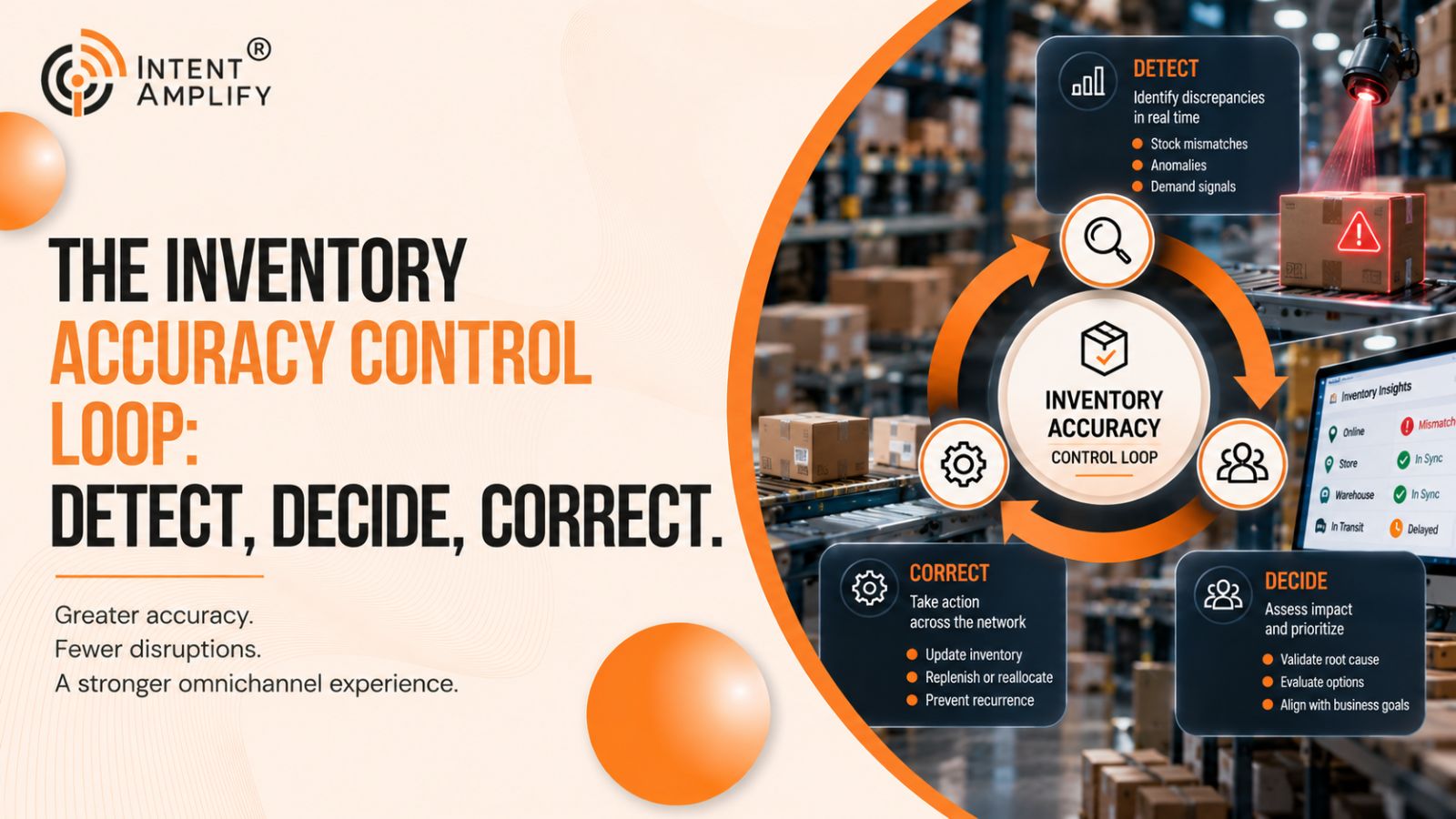
The objective of a stronger inventory model is therefore to move detection earlier in the chain. Earlier signals can include receiving mismatches, failed movement events, unexpected sales patterns, repeated pick failures, targeted counts, RFID observations, shelf intelligence, or exception rules. The best signal depends on the decision and operating environment.

The organization then needs a defined response. An alert without an owner or decision rule can simply create another queue. Inventory control becomes more effective when each material exception has a clear immediate action, a service expectation, and a path to root-cause ownership when the same condition recurs.

Challenges: What Blocks Reliable Inventory Execution

 Fragmented inventory definitions

Retailers may use terms such as on-hand, available, sellable, fulfillable, reserved, or safety stock differently across systems and functions. A number can be technically correct within one system and still be wrong for the next decision.

Late exception detection

When the first reliable signal is a failed pick or customer complaint, the organization is reacting after the promise has already been made. Late detection increases compensating work and reduces the range of available corrective actions.

High-frequency event environments

Frequent replenishment, perishability, promotions, returns, and store movement create more opportunities for record drift. Evidence from grocery research indicates that some of these operating conditions are associated with higher inventory record inaccuracy. [2]

Local workarounds

When teams do not trust the standard signal, they create buffers, manual verification, spreadsheets, overrides, or local rules. These controls can protect the operation, but they can also hide the cost of low confidence and make enterprise standardization harder.

Ownership gaps

The team that discovers or corrects an error may not control the process that created it. If exception ownership and root-cause ownership are not separated, the organization can become efficient at correcting the same problem repeatedly.

Technology without decision clarity

RFID, computer vision, AI, and real-time analytics can improve visibility, but “more visibility” is not a complete use case. Technology should be tied to a specific inventory event, decision, manual control, or recurring failure that it is expected to improve.

Opportunities: Where Better Inventory Signals Create Advantage

The strongest inventory-accuracy opportunities sit where improved signal quality changes a high-value decision.

For store operations, better detection can reduce unnecessary search, recounting, and repeated exception handling. For supply chain and replenishment, more reliable inventory can improve the inputs used to trigger orders and interpret demand. For ecommerce and fulfillment, stronger confidence can improve the quality of availability promises and reduce failed picks. For merchandising, it can clarify whether poor sales reflect demand or product unavailability. For enterprise systems, it can reduce reconciliation between platforms. For digital transformation and AI, it creates a more trustworthy foundation for automated decisions.

IHL Group’s 2026 analysis highlights how inventory intelligence, RFID, and AI are increasingly interconnected. [4] The practical opportunity is to use technology to shorten the time between physical change, digital recognition, and operational action.

Standardized identification is part of the same foundation. GS1 India emphasizes that consistent barcodes and product identifiers improve visibility across retail and FMCG inventory flows. [5] This is not glamorous infrastructure, but it is essential to reliable event capture.

The broader opportunity is confidence. Retailers do not need every inventory number to be perfect at every moment. They need to understand the reliability of the signal for the decision being made, know when that confidence is compromised, and have a controlled response when it is.

For a deeper operating discussion, register for RETHINK Retail’s Inventory Accuracy webinar

Recommendations: An Execution Framework for Inventory Reliability

1. Start with the decision, not the accuracy percentage

Identify the customer or operating decisions most sensitive to inventory reliability. Define which inventory value each decision uses, which system is authoritative, and what level of latency or uncertainty is acceptable.

2. Map the inventory event chain

Document the physical events that change the inventory position: receiving, movement, replenishment, picking, transfer, return, damage, sale, and adjustment. For each event, identify the expected digital representation, timing, and owner.

3. Move detection upstream

Classify current discrepancy signals by when they appear. Prioritize signals that can identify divergence before a customer promise or downstream task fails. Use targeted counting, event exceptions, RFID, shelf intelligence, or other tools where the decision impact justifies them.

4. Separate immediate correction from root-cause ownership

Assign an exception owner to restore the current operating state and a process owner to investigate recurring causes. Routine discrepancies should not require leadership escalation when the operating model already defines the response.

5. Measure recurrence and decision impact

Track inventory record accuracy alongside exception aging, repeat discrepancy patterns, detection-to-correction time, failed fulfillment attempts, and manual verification load. Activity metrics such as counts completed should not be the only evidence of progress.

 6. Target technology to a defined control problem

Before deploying RFID, computer vision, AI, or another inventory technology, state which event becomes more visible, which decision becomes more reliable, which manual control can be removed, and what evidence will determine whether the investment should scale.

7. Pilot within a bounded operating scope

Choose one category, location cluster, fulfillment flow, or exception type. Establish a baseline, define the intervention, preserve the same metric definitions during the test, and review both intended benefits and unintended consequences before scaling.

Conclusion

The state of inventory accuracy in grocery retail is defined by a widening gap between the sophistication of downstream decisions and the reliability of the inventory signals those decisions consume.

Retailers are building more digital promises, more automated replenishment, more omnichannel fulfillment, more intelligent store operations, and more AI-assisted customer experiences. Each capability increases the value of knowing what inventory is actually available—and increases the operational cost when the record is wrong.

The evidence shows that inventory record inaccuracy is shaped by real operating conditions. It is associated with factors such as replenishment frequency and perishability in grocery environments, and targeted correction can have measurable commercial effects within studied settings. [2] At the same time, customer availability requires a broader view than system accuracy alone. [3]

The next stage of inventory improvement will not be won by retailers that simply count more often. It will be won by organizations that can connect physical events to trustworthy digital signals, detect divergence early, route exceptions consistently, learn from recurrence, and use technology only where it improves a defined operating decision.

Inventory accuracy is therefore not one metric. It is a control capability and increasingly, a prerequisite for reliable omnichannel and AI-enabled retail execution.

Interactive Operations Assessment: From Evidence to Action

The RETHINK Retail webinar gives retail leaders a next step from market evidence to their own operation. Following the session, attendees can opt into an interactive assessment designed to surface hidden inventory gaps and identify where unreliable inventory is creating the greatest operational friction.

The assessment is intended to help leaders connect inventory evidence to practical execution: where the physical and digital record diverge, which customer or operating decisions are affected, where compensating work has accumulated, and which high-impact operational fixes should be prioritized.

Attendees can also review their assessment results one-to-one with Tom Enright, a retail supply chain expert and former lead Gartner analyst, creating a direct path from webinar insight to a retailer-specific discussion of inventory gaps, priorities, and potential ROI.

References

1. RETHINK Retail (2026) How to Build the Inventory Accuracy Every Grocery Decision Depends On. Available at: https://rethink.industries/video/the-inventory-accuracy-every-grocery-decision-depends-on/ 

2. Rekik, Y., Oliva, R., Syntetos, A.A. and Glock, C.H. (2026) Inventory Record Inaccuracy in Grocery Retailing: Impact of Promotions and Product Perishability, and Targeted Effect of Audits. Journal of Business Logistics. Available at: https://onlinelibrary.wiley.com/doi/10.1111/jbl.70079

3. RETHINK Retail (2026) The Availability Paradox: How Inventory Inaccuracy is Costing Retailers More Than They Realize. Available at: https://rethink.industries/articles/the-availability-paradox-how-inventory-inaccuracy-is-costing-retailers-more-than-they-realize/

4. IHL Group (2026) How Inventory Intelligence Is Becoming the Single Biggest Divider Between Leaders and Laggards. Available at: https://www.ihlservices.com/news/analyst-corner/2026/03/how-inventory-intelligence-is-becoming-the-single-biggest-divider-between-leaders-and-laggards/

5. GS1 India (2026) Inventory Challenges in Retail & FMCG: How Standardised Barcodes Improve Accuracy & Visibility. Available at: https://www.gs1india.org/blog/inventory-challenges-in-retail-fmcg-how-standardised-barcodes-improve-accuracy-visibility

Contact
Sales