
Book a Demo
Home Platform Audience Accounts Intent Evidence Activation Solutions Industries Programs Research Pricing About Careers Press Contact Brands Trust Privacy Accessibility Demo ABM Advertising Content Demand Intent Data Sales Blog Infographics Events Product Sheets Videos Webinars White Papers E-books Customer Stories Corporate Presentation Newsletters Expert Insights Expert Analysis Research Reports
Resource

Building a Continuous Inventory Accuracy Operating Model

Building a Continuous Inventory Accuracy Operating Model
September 8, 2026 13 min read

Quick Answer

A practical framework for grocery retailers to improve inventory accuracy through reliable event capture, faster exception detection, clear ownership, controlled correction, and continuous root-cause improvement.

Executive Summary

Inventory accuracy has become a strategic operating issue for grocery retailers because the inventory record now sits inside customer-facing decisions. Availability displayed online, pickup promises, fulfillment routing, replenishment, shelf execution, substitutions, retail media, and increasingly AI-assisted shopping all depend on the organization knowing whether the product recorded in the system is actually available where the customer expects it.

RETHINK Retail’s 2026 inventory-accuracy program describes a persistent confidence problem in grocery: even at a 5% out-of-stock rate, roughly one in three baskets can be missing an item. The issue extends beyond the shelf into labor, margin, digital promise, and customer trust. [1]

The operating challenge is that inventory inaccuracy is not created by one event or one function. Receiving, put-away, replenishment, transfers, picking, returns, damage, shrink, adjustments, and system synchronization can all cause the physical and digital positions to diverge. A cycle count can correct the record, but it does not necessarily correct the process that allowed the record to become wrong.

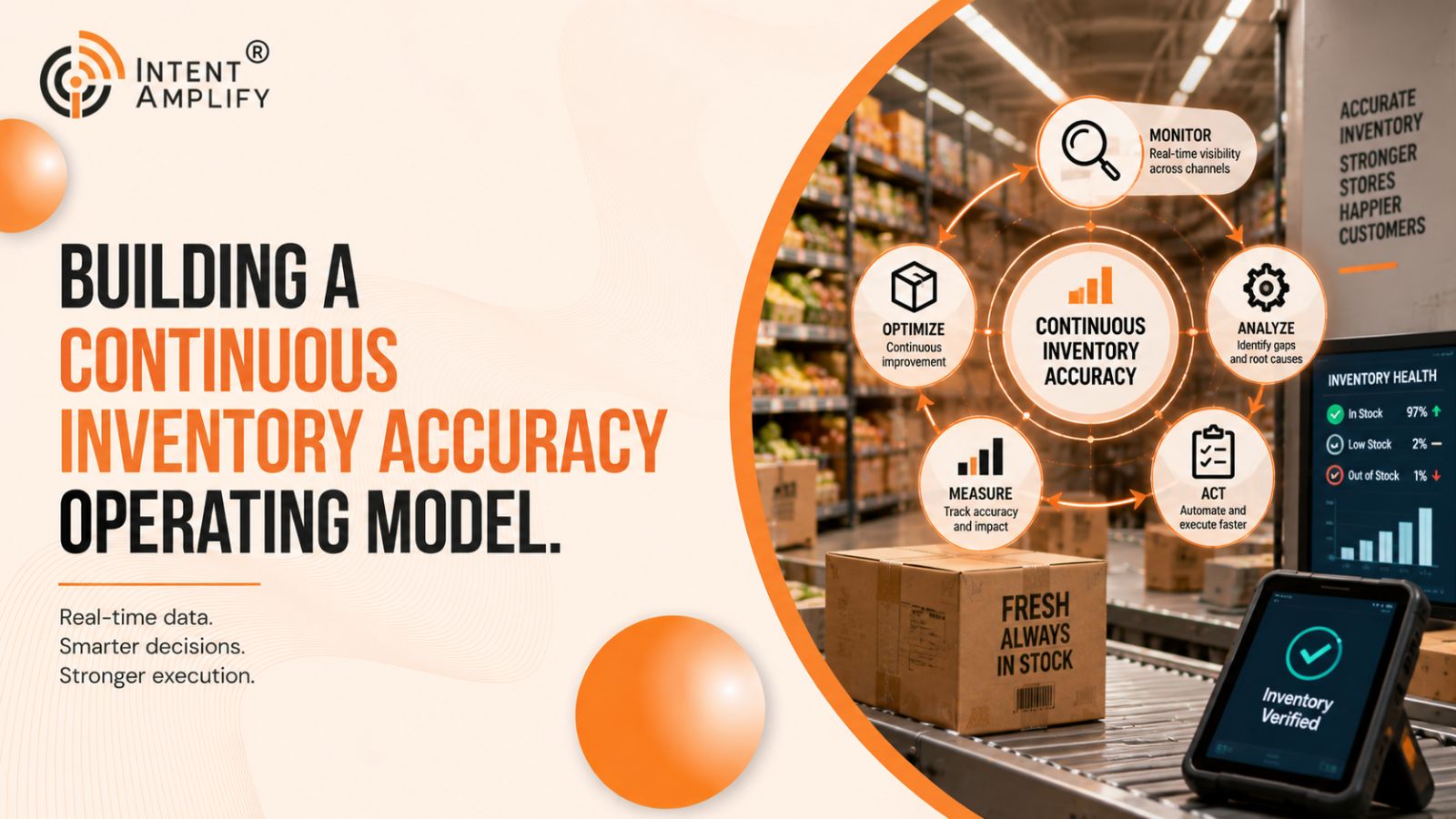
A continuous inventory accuracy operating model therefore needs five connected capabilities: reliable event capture, timely detection, explicit decision rules, controlled correction, and structured learning from recurrence. The model should also distinguish between immediate exception ownership and root-cause ownership so that frontline teams do not become permanent owners of problems they can fix but cannot prevent.

Recent evidence reinforces the business significance. A 2026 Journal of Business Logistics study covering about 24,000 SKUs across 11 grocery stores found that inventory record inaccuracy was associated with operating conditions including average inventory level, restocking frequency, and perishability. The same research found that targeted inventory audits had a material effect on sales, with the effect concentrated on items where system inventory overstated physical inventory. [2]

The implication for retail leaders is practical. Inventory accuracy should not be managed as a periodic control project. It should be managed as an operating system that connects physical events to digital signals, signals to decisions, decisions to owners, and recurring exceptions to process improvement.

Why Grocery Inventory Accuracy Needs an Operating Model

Grocery is one of the most demanding environments for inventory control. Product moves quickly. Perishable items create condition and expiry complexity. Promotions change velocity. Replenishment happens frequently. Store labor is distributed across many tasks. Online orders introduce a second customer promise on top of the shelf. Substitutions and returns create additional inventory states.

This means a record can be correct in the morning and wrong after the next poorly captured event. The relevant leadership question is no longer only, “What is our accuracy percentage?” It is, “Can the organization trust this inventory signal for the decision it is about to make?”

RETHINK Retail’s June 2026 analysis of the “availability paradox” makes this distinction explicit. The article separates inventory inaccuracy, stock showing as available in the system when it is not physically present, from customer availability, which asks whether shoppers can actually find the products the retailer has committed to carrying. It also highlights that aggregate unit-level accuracy can hide much larger SKU-level problems. [3]

This is why an operating model must begin with decisions rather than counts. Ecommerce needs to know whether an item can be promised. Store operations needs to know whether a pickup or replenishment task is executable. Merchandising needs to know whether the assortment is actually available. Planning needs reliable signals before interpreting demand. Technology teams need to know which systems and events are authoritative at each point in the flow.

When those definitions are not aligned, retailers can have accurate reports and unreliable decisions at the same time.

The Availability Paradox: When System Stock Is Not Customer Availability

Inventory accuracy and customer availability are related but not identical. A store may have ten units recorded for a style or product family while lacking the exact SKU, size, flavor, pack, or condition a customer expects. A system may show product in the building while the shelf is empty, the item is misplaced, or the unit is not sellable.

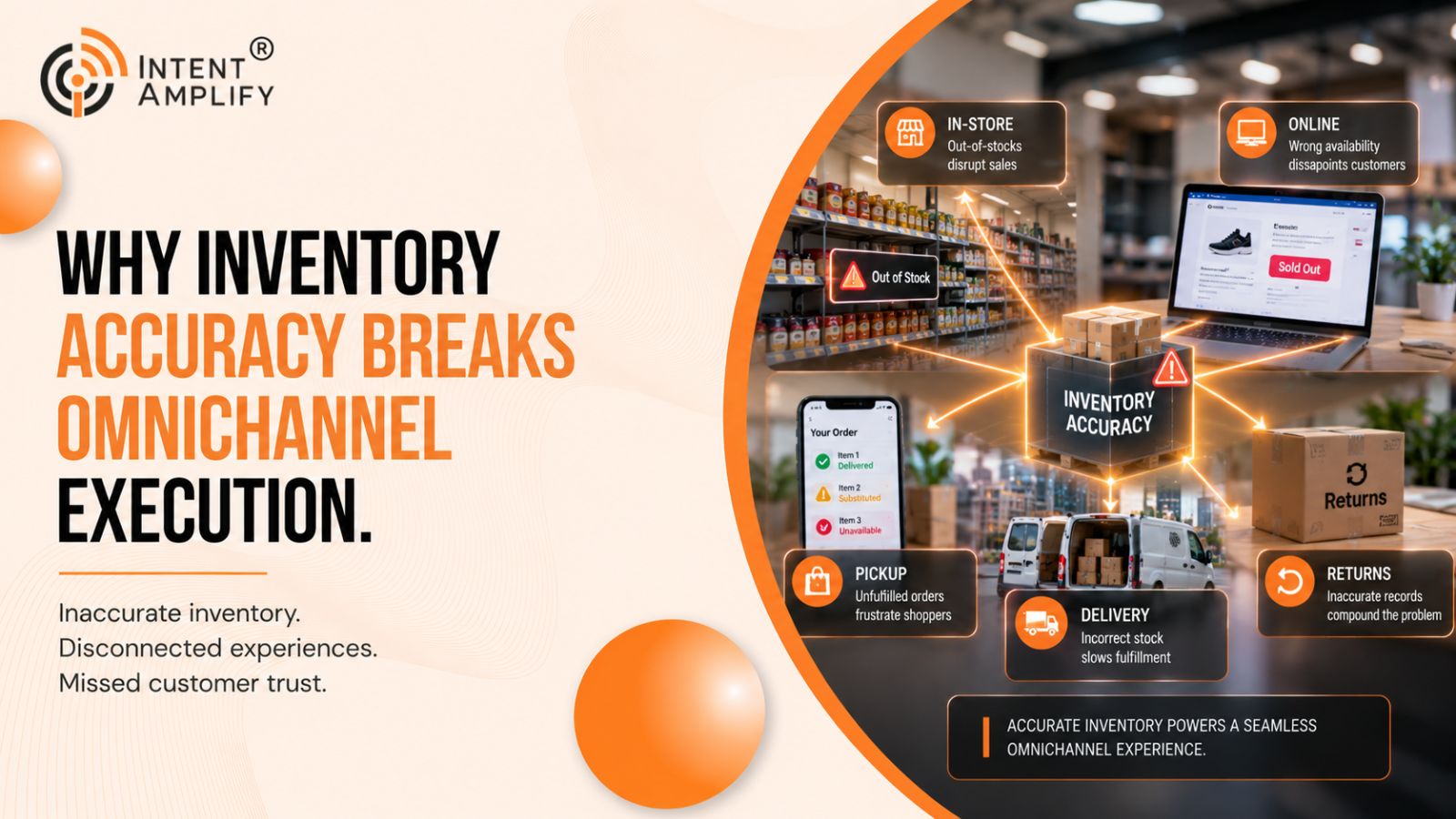
For omnichannel operations, this gap becomes more visible because digital commerce converts inventory data into a promise before an associate physically checks the shelf. The system decides whether the item can be sold, which location should fulfill the order, and whether the customer should expect pickup or delivery.

Once the promise is made, every downstream team can execute correctly and still fail if the original signal was wrong.

The result is compensating work. Store teams search. Ecommerce teams apply buffers. Fulfillment teams reroute. Customer service manages disappointment. Planners discount the signal. Managers create local spreadsheets or verification routines. These actions may be necessary, but they represent operating cost created by low confidence in the standard inventory record.

The strongest inventory program should therefore measure not only the mismatch itself but the additional work the mismatch creates.

Why Periodic Counting Cannot Solve a Continuous Problem

Counting remains essential. The mistake is assuming that more counts automatically create a reliable inventory system.

The 2026 grocery study published in the Journal of Business Logistics provides useful evidence. It found that inventory record inaccuracy varies with operating conditions and that targeted audits can produce meaningful effects. The authors also show that the impact is heterogeneous: audits matter most where negative inventory record inaccuracy exists, meaning the system shows more inventory than is physically available. [2]

That finding supports a more targeted control philosophy. Retailers should not treat every SKU, event, or discrepancy as equally risky. They should identify the conditions most likely to create decision failure and apply controls where they change the operating outcome.

A count restores the present record. A continuous operating model asks why the record drifted, whether the cause is recurring, and what must change so that the same divergence is less likely to return.

That is the shift from reconciliation to reliability.

The Continuous Inventory Accuracy Framework

A practical framework should connect six layers of retail execution.

Table 1: Continuous Inventory Accuracy Framework 

Framework Layer

Core Question

Required Capability

Executive Outcome

1. Decision Mapping

Which customer and operating decisions depend on the inventory signal?

Decision inventory, shared definitions, and ownership mapping

Connects inventory-accuracy work to customer promises and operating value

2. Event Integrity

Which physical events change the inventory position?

Accurate capture of receiving, movement, replenishment, picking, transfers, returns, damage, and adjustments

Reduces unknown sources of inventory divergence

3. Detection

How quickly can the organization identify a possible mismatch?

Cycle counts, failed-pick signals, shelf checks, RFID, and exception rules

Surfaces inventory risk before it develops into a larger operational failure

4. Decision Rules

What should happen when a discrepancy is detected?

Defined thresholds, containment rules, routing, and escalation paths

Reduces inconsistent responses and local improvisation

5. Correction & Learning

Does the business only correct the record, or also eliminate recurring causes?

Root-cause taxonomy, process ownership, and recurrence reviews

Converts inventory exceptions into continuous process improvement

6. Governance & Measurement

Who owns inventory reliability, and how is progress verified?

Scorecards, SLAs, decision rights, and cross-functional reviews

Creates accountable, measurable, and scalable inventory control

This framework deliberately begins with the business decision. Technology comes later. If a retailer does not know which decision it wants to protect, more inventory data can create more visibility without creating better control.

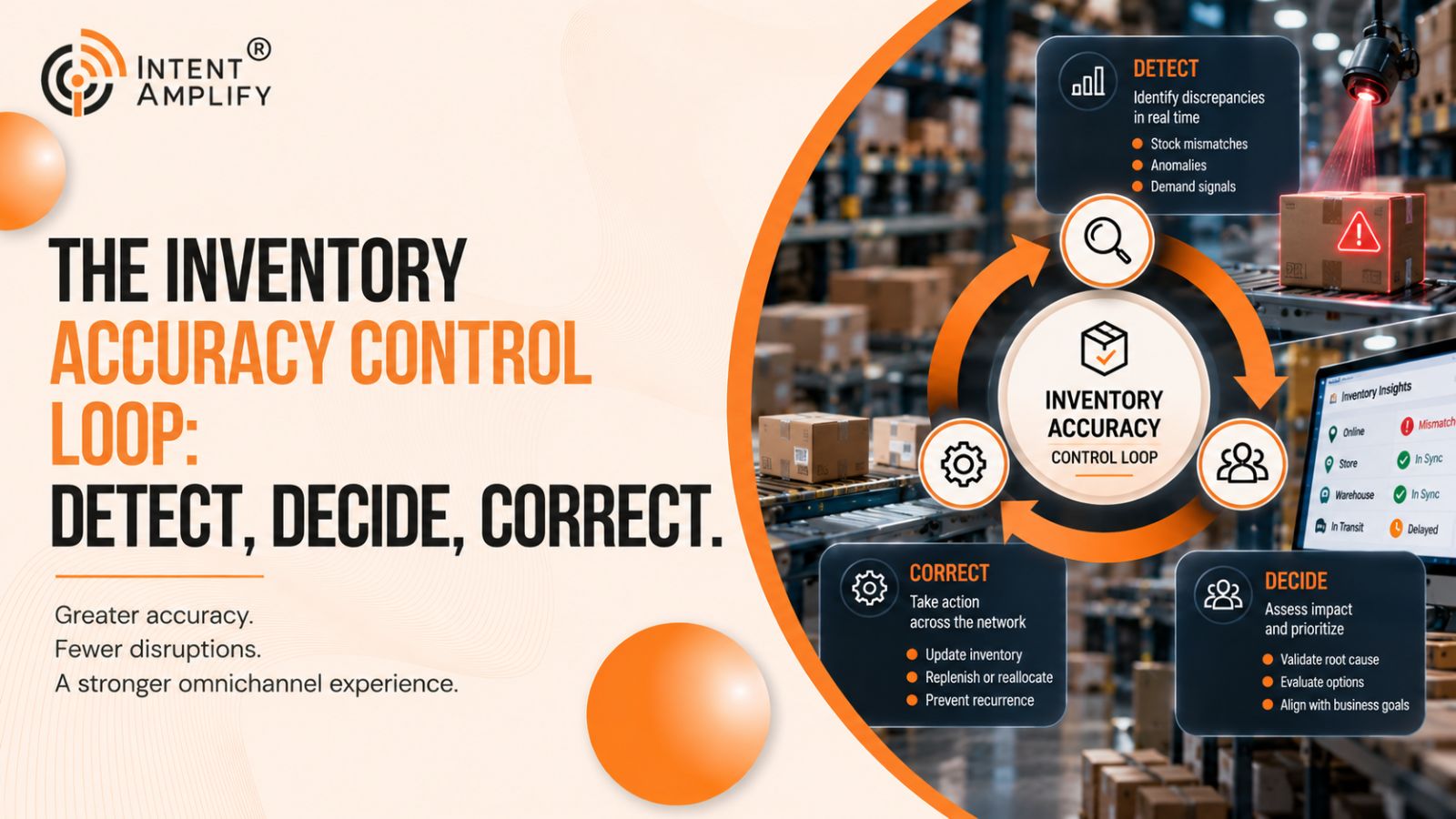
Detection, Decision, Correction, and Learning

A continuous model behaves like a control loop.

Detection identifies that the digital and physical states may have diverged. Detection can come from a cycle count, failed pick, receiving mismatch, transfer exception, return discrepancy, shelf observation, RFID event, or another operational signal. The timing matters. A failed pick is often late because a customer promise has already been made. An upstream receiving or movement signal can create an earlier opportunity to intervene.

The decision determines what the exception means operationally. Should inventory be temporarily protected from promise? Should a recount occur? Should a replenishment task be generated? Should another location fulfill the order? Should the issue be escalated to a process owner? An alert without a decision rule simply creates another queue.

Correction restores the immediate operating state. That may mean updating quantity, completing a transfer, changing sellable status, correcting a receiving event, or resolving a return. Correction protects the current transaction or customer outcome.

Learning asks whether the problem is isolated or recurring. Repeated item-location patterns, transaction types, timing conditions, or system handoffs should trigger root-cause review. Without this stage, the organization can become extremely efficient at correcting the same problem repeatedly.

IHL Group’s March 2026 analysis describes inventory intelligence as an increasing divider between retail leaders and laggards and highlights the interaction between item-level accuracy, RFID, AI, and replenishment. [4] The broader lesson is that better inventory intelligence matters when it changes a downstream decision, not merely when it improves a dashboard.

Cross-Functional Ownership and Governance

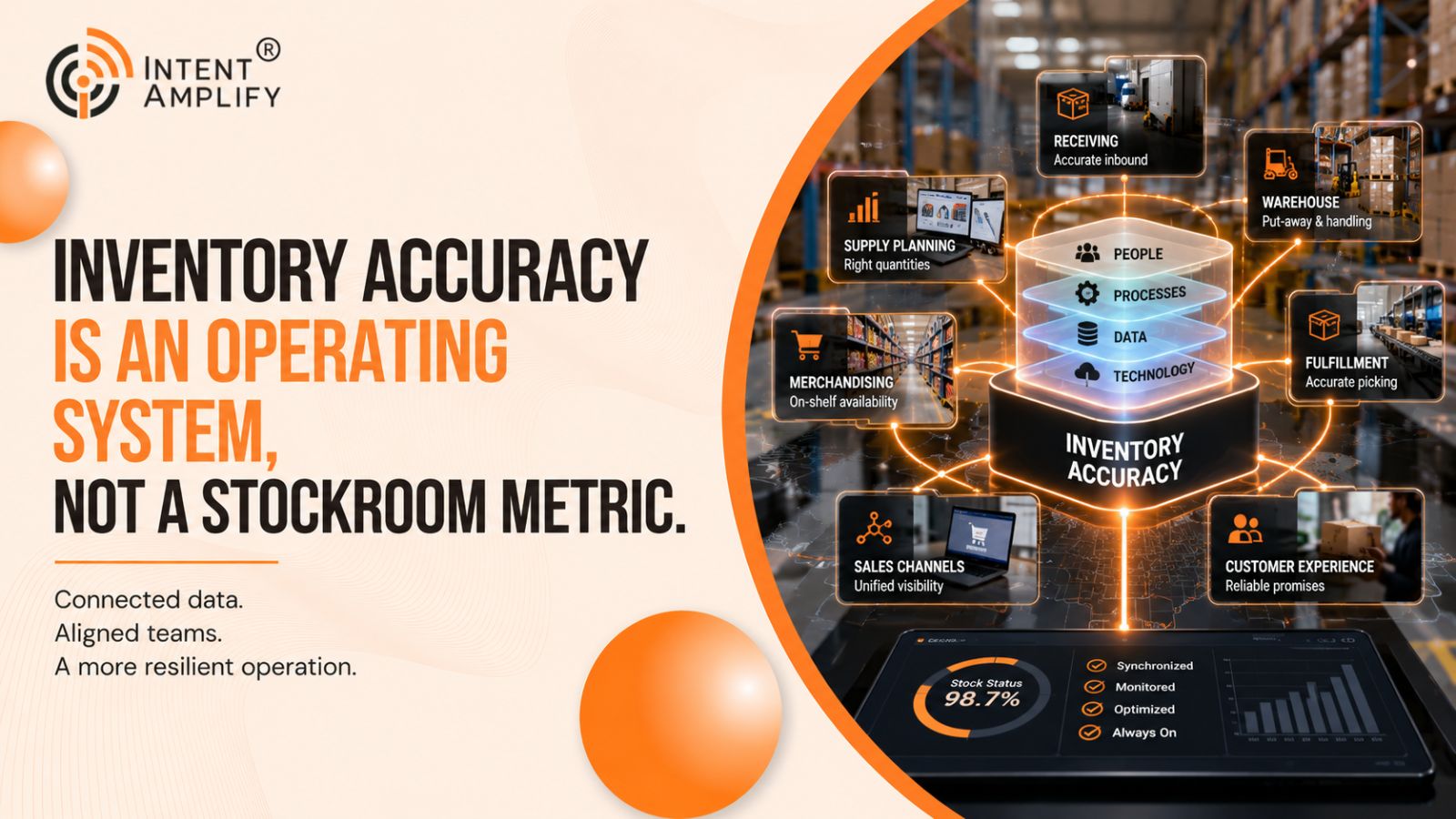
Inventory accuracy can be assigned to an inventory team, but it cannot be produced by that team alone.

Receiving may sit in operations. Replenishment may involve store operations and planning. Transfers can cross locations and systems. Ecommerce depends on availability logic. Returns affect physical and sellable inventory. Technology owns integrations and data movement. Merchandising and supply chain may influence rules that change inventory velocity and location.

A strong model separates two types of ownership.

The exception owner resolves the immediate discrepancy within an agreed service level. The root-cause owner has authority to change the process, system, rule, or control when the same condition recurs.

This prevents a common failure: inventory control becomes responsible for repeatedly correcting problems created elsewhere in the operating model.

Cross-functional governance should focus on recurring patterns, not individual transactions. Routine exceptions belong in operating workflows. Leadership attention should be reserved for issues that cross thresholds, span functions, require investment, or cannot be resolved by the current owner.

The governance question is not, “Who attends the inventory meeting?” It is, “Who has the authority to change the condition that keeps generating the exception?”

Technology, RFID, and AI: Build on Trusted Inventory Signals

Retailers are investing in RFID, computer vision, automation, AI, and unified commerce platforms to improve store visibility and execution. These technologies can shorten the detection cycle, automate event capture, and help teams prioritize actions. But automation increases the importance of signal quality.

GS1 India’s March 2026 guidance on retail and FMCG inventory challenges notes that standardized product identification and barcodes help improve inventory visibility by creating consistent identifiers across product movement and systems. [5] The operational principle applies broadly: automation requires disciplined event identity and capture.

AI introduces an additional risk. An automated replenishment system, digital recommendation engine, fulfillment optimizer, or AI shopping assistant can scale a weak inventory signal faster than a human process ever could. If the underlying record is unreliable, automation may make the wrong decision more consistently.

Leaders should therefore evaluate technology through four questions:

1. Which inventory event becomes visible earlier?

2. Which decision becomes faster or more reliable?

3. Which manual check or compensating control can be removed?

4. Which recurring cause becomes easier to identify?

Technology should retire work, not merely add another visibility layer.

Executive Scorecard for Inventory Reliability

A continuous inventory operating model needs a scorecard that measures reliability rather than activity alone.

Table 2: Executive Inventory Reliability Scorecard

Metric

What It Measures

Why It Matters to Executives

Inventory Record Accuracy

How closely the system inventory matches verified physical inventory

Establishes the baseline level of trust in the inventory record

Exception Aging

How long inventory discrepancies remain unresolved

Shows whether the operating model can respond quickly enough to protect execution

Repeat Discrepancy Rate

How often the same item, location, or process issue occurs again

Reveals whether recurring root causes are actually being eliminated

Detection-to-Correction Time

Time between identifying a discrepancy and restoring the correct operating state

Measures the speed and effectiveness of the inventory control loop

Failed Fulfillment Attempts

Orders, picks, or tasks that fail because expected inventory is unavailable

Connects inventory accuracy directly to customer promise and operational execution

Manual Verification Load

Extra searches, recounts, reconciliations, checks, and overrides required because inventory cannot be fully trusted

Makes the hidden labor and decision debt created by poor inventory confidence visible

Root-Cause Closure

Recurring inventory issues that have a named owner and a verified corrective action

Shows whether the business is preventing future problems rather than repeatedly cleaning up the same exceptions

The scorecard should use retailer-specific baselines and definitions. External evidence can illustrate the scale and mechanisms of inventory inaccuracy, but each organization should establish its own operating targets from verified internal data.

A 90-Day Path to a More Reliable Inventory Model

Retailers do not need to begin with an enterprise-wide transformation.

Days 1–30: Define and Baseline. Choose one high-friction inventory-dependent decision, such as pickup availability, replenishment, or a recurring failed-pick pattern. Align definitions. Map the physical event chain and the digital systems expected to represent it. Identify the current compensating controls and establish baseline measures.

Days 31–60: Test the Control Loop. Define detection signals, exception rules, immediate owners, and root-cause owners. Test one or two process or technology changes. Measure whether the signal becomes more reliable, the response becomes faster, or a manual control becomes unnecessary.

Days 61–90: Standardize or Stop. Review recurrence, unintended effects, and operating cost. Document the control that worked, the prerequisites required for scale, and the rollback condition if the expanded model creates new risk. Scale only what the evidence supports.

The purpose of the 90-day model is not to promise performance in 90 days. It is to create a bounded path for generating evidence before committing to broader change.

Where the RETHINK Retail Webinar Fits

RETHINK Retail’s session, How to Build the Inventory Accuracy Every Grocery Decision Depends On, focuses directly on the confidence problem behind grocery inventory. The webinar examines phantom inventory, customer availability, the need for one trusted inventory number, and practical operational fixes that do not require a wholesale technology replacement. [1]

For Director+ retail operations, supply chain, inventory, ecommerce, merchandising, and enterprise systems leaders, the session provides a useful next step from framework to operational discussion.

Interactive Operations Assessment: Turning Insight Into Action

The webinar is designed to move from industry insight into the retailer’s own operating context. Following the session, attendees can opt into an interactive assessment of their operation to surface hidden inventory gaps and identify where inventory uncertainty is creating the greatest operational friction.

The assessment creates a practical bridge from the framework in this whitepaper to action: identify where the physical and digital record diverge, examine the compensating work created by low confidence, prioritize high-impact operational fixes, and map a practical path toward potential ROI. Attendees can also review their assessment results one-to-one with Tom Enright, a retail supply chain expert and former lead Gartner analyst.

Register for the RETHINK Retail Inventory Accuracy webinar

Conclusion

Continuous inventory accuracy is not a counting project. It is an operating model.

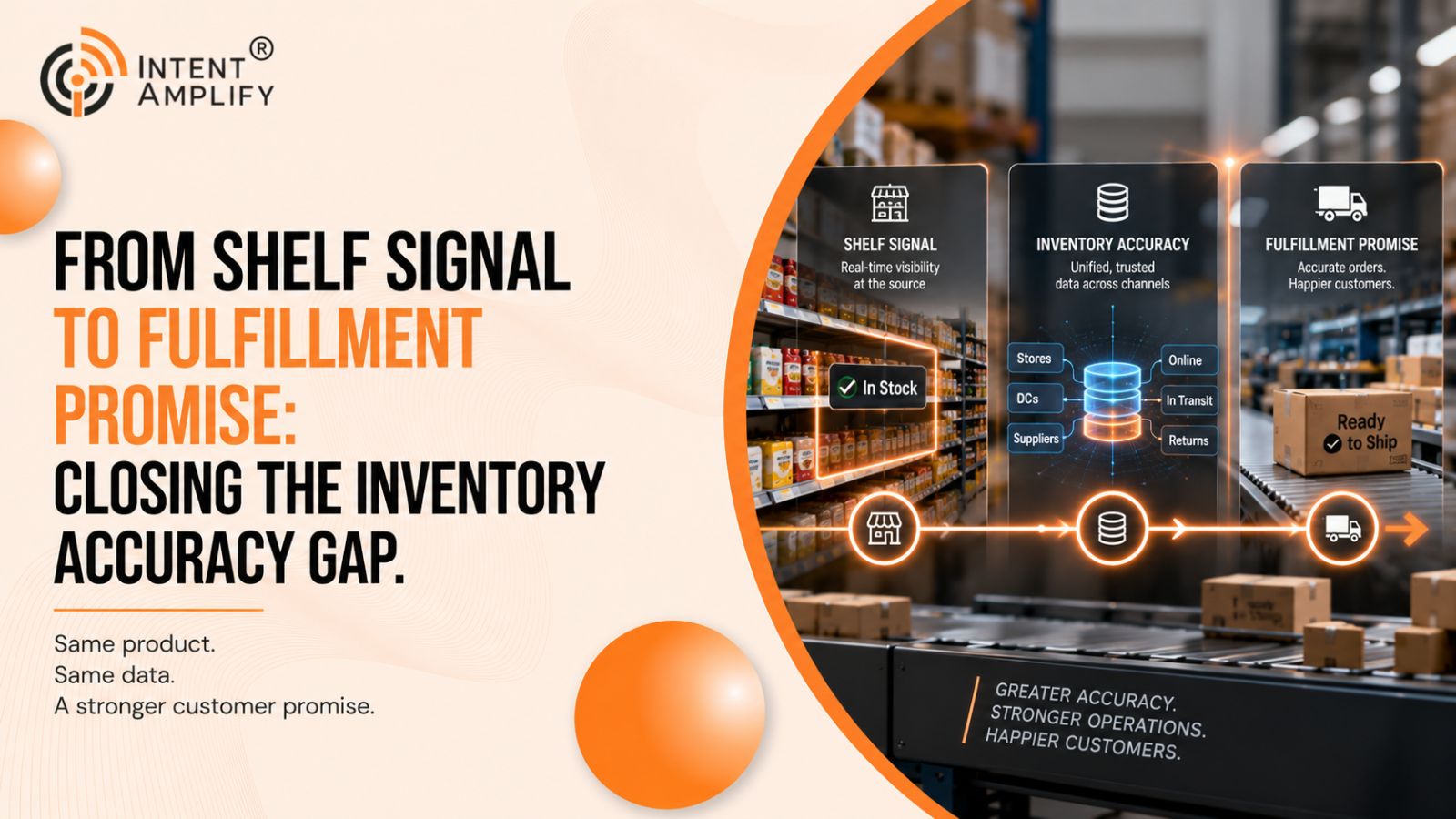
The physical product moves through receiving, replenishment, transfers, picking, returns, damage, and adjustment. The digital record must capture those events quickly enough to support customer and operational decisions. When divergence occurs, the organization needs a reliable way to detect it, decide what it means, correct the immediate position, and learn from recurrence.

The strongest retailers will not be those that claim perfect inventory. They will be the ones that know which inventory signals can be trusted for which decisions, which exceptions require action, who owns the response, and how recurring causes are removed.

That discipline becomes more important as grocery operations become more omnichannel, more automated, and more dependent on AI. Every new decision system increases the value of trusted inventory and increases the cost of getting the signal wrong.

The practical mandate for retail leaders is clear: start with the decision, map the event chain, establish the baseline, make exceptions actionable, separate correction from prevention, and scale only when the evidence supports it.

References

  1. RETHINK Retail, How to Build the Inventory Accuracy Every Grocery Decision Depends On, August 13, 2026 (https://rethink.industries/video/the-inventory-accuracy-every-grocery-decision-depends-on/)
  2. Rekik, Y., Oliva, R., Syntetos, A.A. and Glock, C.H., Inventory Record Inaccuracy in Grocery Retailing: Impact of Promotions and Product Perishability, and Targeted Effect of Audits, Journal of Business Logistics, July 7, 2026 (https://onlinelibrary.wiley.com/doi/10.1111/jbl.70079)
  3. RETHINK Retail, The Availability Paradox: How Inventory Inaccuracy is Costing Retailers More Than They Realize, June 29, 2026 (https://rethink.industries/articles/the-availability-paradox-how-inventory-inaccuracy-is-costing-retailers-more-than-they-realize/)
  4. IHL Group, How Inventory Intelligence Is Becoming the Single Biggest Divider Between Leaders and Laggards, March 2026 (https://www.ihlservices.com/news/analyst-corner/2026/03/how-inventory-intelligence-is-becoming-the-single-biggest-divider-between-leaders-and-laggards/)
  5. GS1 India, Inventory Challenges in Retail & FMCG: How Standardised Barcodes Improve Accuracy & Visibility, March 6, 2026 (https://www.gs1india.org/blog/inventory-challenges-in-retail-fmcg-how-standardised-barcodes-improve-accuracy-visibility)
Contact
Sales