
Book a Demo
Home Platform Audience Accounts Intent Evidence Activation Solutions Industries Programs Research Pricing About Careers Press Contact Brands Trust Privacy Accessibility Demo ABM Advertising Content Demand Intent Data Sales Blog Infographics Events Product Sheets Videos Webinars White Papers E-books Customer Stories Corporate Presentation Newsletters Expert Insights Expert Analysis Research Reports
Expert Analysis

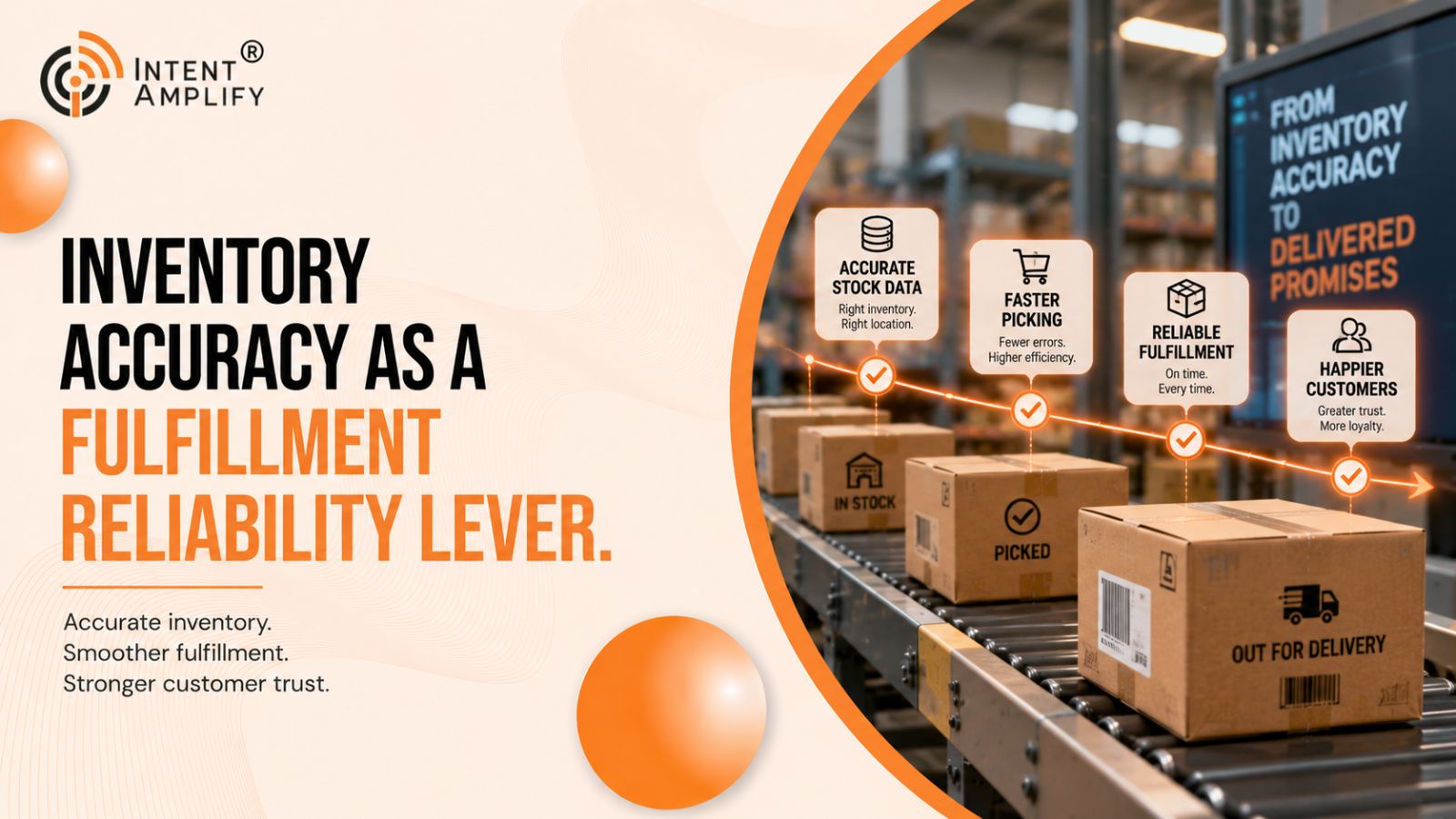
Inventory Accuracy as a Fulfillment Reliability Lever

Inventory Accuracy as a Fulfillment Reliability Lever
September 8, 2026 11 min read

Quick Answer

Explore how inventory accuracy strengthens fulfillment reliability by improving product availability, reducing phantom inventory, and creating more dependable customer promises across grocery operations.

Executive Overview

Inventory accuracy has become one of the most important reliability inputs in modern grocery execution. A retailer can optimize routing, labor, store picking, replenishment, substitutions, and digital promise logic, but if the inventory signal is wrong at the moment a decision is made, downstream execution begins from a compromised position.

RETHINK Retail’s 2026 inventory-accuracy campaign frames the issue as a crisis of confidence. Even at a 5% out-of-stock rate, roughly one in three baskets can be missing an item. The uncertainty reaches beyond the shelf into labor, margin, online availability, retail media performance, and AI-assisted shopping. [1]

This expert analysis argues that inventory accuracy should be treated as a fulfillment reliability lever rather than a stockroom metric. The operational question is not simply whether the count is correct. It is whether the inventory signal is sufficiently current, specific, and trustworthy for the next decision: promise the item, pick the item, replenish it, substitute it, transfer it, promote it, or recommend it.

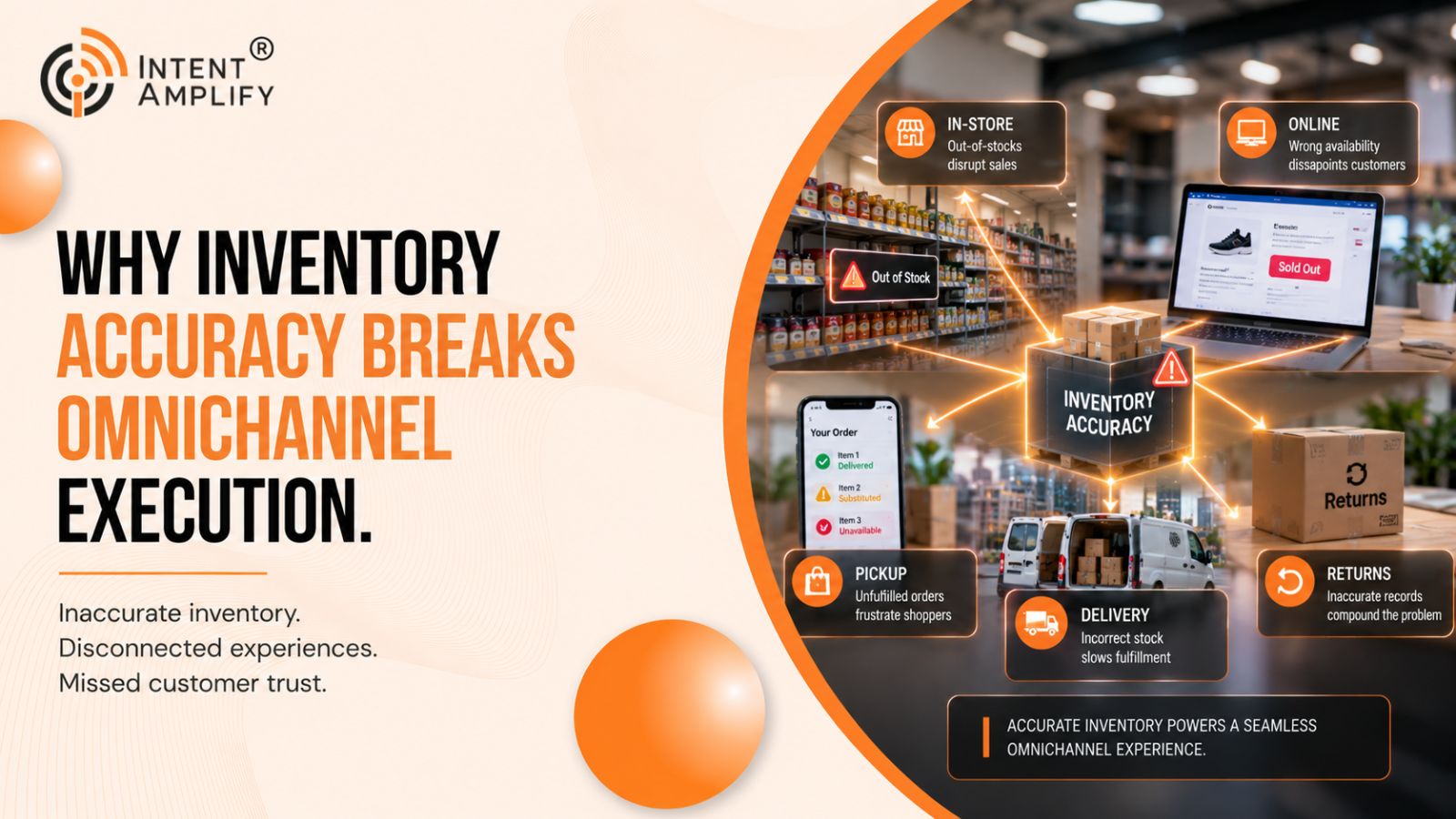
For Director+ leaders across retail operations, supply chain, inventory, ecommerce, merchandising, enterprise systems, and digital transformation, this distinction matters because inventory errors often surface far from where they originate. A receiving mismatch may become visible later as a failed pick. A transfer delay may become a broken pickup promise. A return-processing gap may become phantom availability. Fulfillment teams then absorb the consequences through search, verification, rerouting, substitution, cancellation, and customer recovery.

A stronger model traces those failures backward, separates immediate containment from root-cause correction, and measures the cost of compensating work created by weak inventory confidence.

Why Fulfillment Reliability Starts Before the Order Is Routed

Fulfillment reliability is often discussed in terms of speed, routing, labor productivity, and delivery performance. Those measures are important, but they assume the item being promised actually exists in the condition and location required for execution.

That assumption is increasingly fragile in omnichannel grocery. RETHINK Retail’s June 2026 analysis of the “availability paradox” distinguishes inventory inaccuracy from customer availability. Inventory inaccuracy means the system shows stock that is not physically available. Customer availability asks whether shoppers can actually find the products the retailer has committed to carrying. [2]

The difference matters because a technically valid on-hand number may still be unfit for a fulfillment decision. Product may be damaged, misplaced, reserved, in transfer, awaiting processing, or present in a form that cannot satisfy the specific order. Aggregate accuracy can also hide SKU-level gaps that matter to the shopper.

The fulfillment decision should therefore begin with decision fitness: is this inventory signal trustworthy enough to authorize the promise being made?

Inventory Accuracy and Customer Promise Are Now Connected

In store-only retail, some inventory discrepancies remain invisible until a physical count or shelf check. In omnichannel operations, the same discrepancy can become customer-facing immediately.

A digital channel turns the inventory record into a promise before an associate has physically verified the item. The system decides whether an item should appear available, which location should fulfill it, and whether the shopper should expect pickup or delivery. If the signal is wrong, every downstream team can execute correctly and still fail.

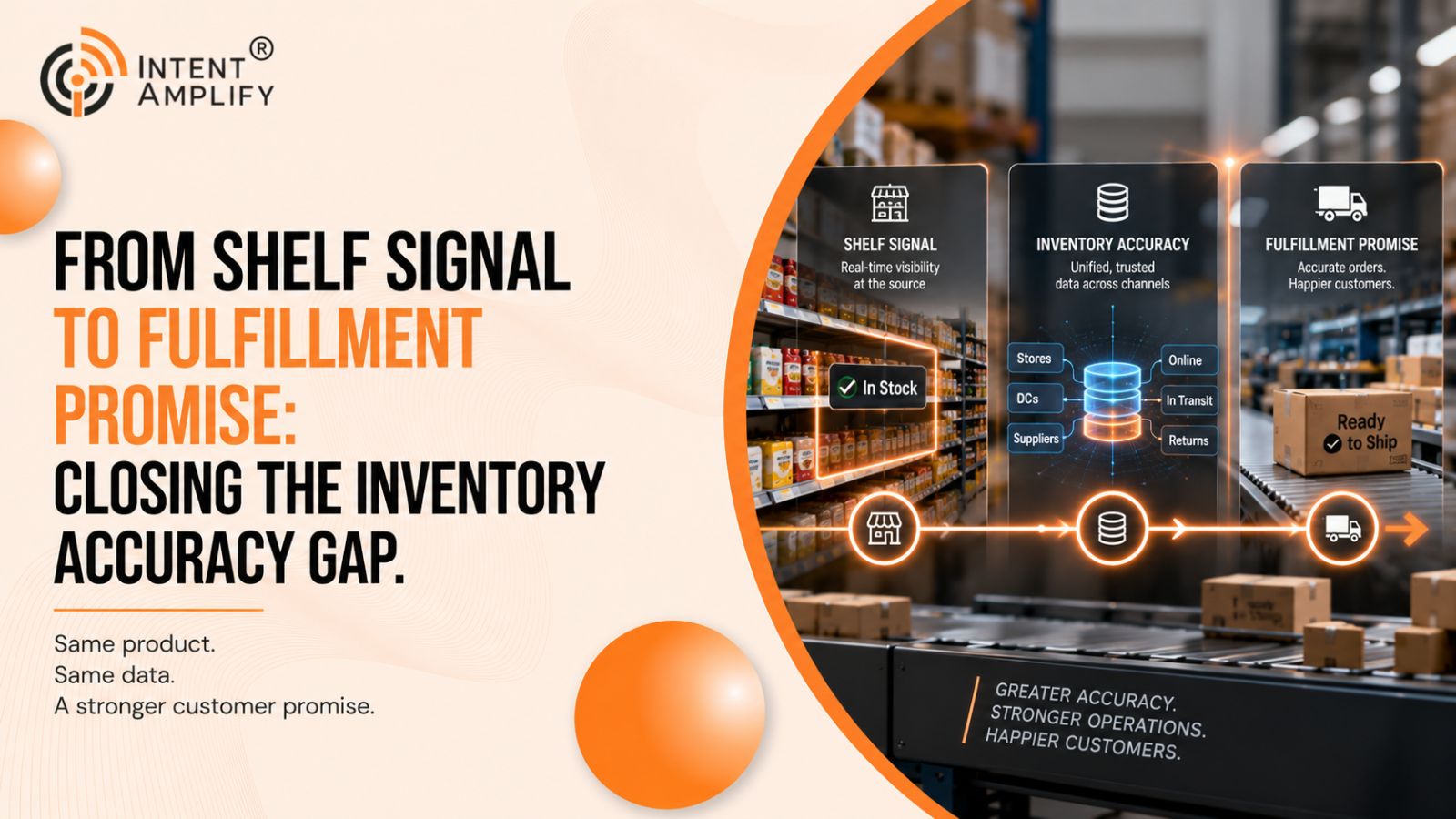
This is why reliable availability should be analyzed as a sequence rather than a single event. Leaders should identify the promise being made, the signal that authorizes it, the evidence that may invalidate the signal, and the action required when confidence falls below the threshold needed for fulfillment.

RETHINK Retail’s April 2026 grocery discussion reinforces the same operating logic. As shoppers move fluidly among stores, pickup, and delivery, consistent execution across touchpoints depends on strong back-end operations and reliable inventory data. [3]

Phantom Inventory Creates Hidden Fulfillment Work

When inventory data is unreliable, fulfillment teams become the shock absorber.

Associates search for products that the system says exist. Managers verify backrooms. Ecommerce teams suppress availability. Orders are rerouted. Substitutions are offered. Customer-service teams explain failures. Inventory teams adjust records. Planners discount the signal. None of this work appears in a simple inventory accuracy percentage.

The result is decision debt: the accumulation of manual checks, buffers, overrides, reconciliations, and escalation routines that exist because the standard inventory signal is not trusted.

Retail Dive’s August 2026 analysis of inventory data and fulfillment highlights the same underlying problem: if systems say an item is in stock but the physical reality disagrees, the customer promise becomes unreliable and downstream processes inherit the error. [4]

The executive implication is that inventory accuracy should be connected to labor and exception flow. Leaders should ask where teams repeatedly compensate for uncertain inventory and whether those compensating controls are shrinking as reliability improves.

The Failure Point Is Often Not the Root Cause

A failed pick is evidence, not necessarily the origin of the problem.

The root cause may have occurred during receiving, put-away, replenishment, movement, transfer, return processing, damage handling, shrink, adjustment, or system synchronization. By the time fulfillment detects the issue, several other decisions may already have relied on the wrong record.

A useful analysis reconstructs selected exceptions backward. Begin with the failed fulfillment outcome. Identify the inventory signal that authorized the decision. Trace the relevant event history. Determine where the physical and digital states could first have diverged. Then identify which control could have detected the condition earlier.

This prevents organizations from investing only at the point of failure. Faster recovery is useful, but earlier detection or better event capture may remove more work.

Inventory Intelligence Is Becoming Fulfillment Infrastructure

Inventory technology is increasingly moving from passive reporting toward active decision support.

IHL Group’s March 2026 analysis argues that inventory intelligence is becoming a major divider between retail leaders and laggards and highlights the role of RFID, AI, and item-level visibility in improving inventory-dependent decisions. [5]

The lesson is not that one technology solves inventory accuracy. It is that better inventory signals create value when they change the control position.

RFID may improve event visibility. Computer vision may detect shelf conditions. Analytics may identify repeat discrepancies. AI may prioritize exceptions. Orchestration may route tasks. But each capability should be evaluated against a specific question: what decision becomes more reliable, what manual work can be removed, and what failure can be detected earlier?

Technology becomes a fulfillment lever only when the operating decision is clear.

Accuracy Is Not the Same as Decision Fitness

A single accuracy percentage can create false confidence because different fulfillment decisions require different information.

A replenishment decision may need an on-hand balance and expected demand. A pickup promise may need item-level availability at a specific store. A substitution decision may need category and customer-preference context. A transfer decision may need both physical availability and confidence that the inventory will remain available until the move occurs.

Leaders should therefore define the inventory quantity and status that authorizes each decision. Terms such as on-hand, available, sellable, fulfillable, reserved, damaged, and in-transit should not be assumed to mean the same thing across functions or systems.

Decision fitness also includes timing. A record that becomes correct after the promise window has passed is operationally unreliable for that decision even if the system eventually reconciles.

Containment and Root-Cause Correction Must Be Separate

Fulfillment teams need fast containment. If the item cannot be found, the immediate goal is to protect the customer outcome through another location, substitution, delay, or cancellation path.

Root-cause correction operates on a different horizon. It asks why the inventory position was unreliable and whether the same condition is recurring.

Combining these jobs can create two failure modes. The first is slow customer response because teams investigate deeply before containing the issue. The second is shallow correction because teams update the record and move on without addressing recurrence.

A better model gives the immediate exception to the team that can protect the current outcome and sends recurring patterns to the process owner capable of changing the workflow, integration, rule, training, or control.

Reliability Thresholds Create Real Trade-Offs

Retailers often protect customer promise by using safety buffers, availability thresholds, conservative reservation logic, or manual verification.

These controls can reduce failed fulfillment, but they can also suppress inventory that might have been sellable. A permissive rule may maximize visible availability but increase downstream recovery. A conservative rule may protect promise reliability while reducing sales opportunity.

The correct threshold cannot be imported from a generic benchmark. It should be tested against the retailer’s own operating evidence.

For every protective rule, leaders should ask: what risk does it control, what evidence shows the risk is present, which inventory segment does it apply to, and what evidence would justify relaxing or tightening it?

That turns availability logic into an explainable operating decision rather than a permanent workaround.

A Reliability Scorecard Should Measure More Than Counts

Inventory accuracy remains an important measure, but it should sit inside a wider fulfillment reliability scorecard.

Useful measures include:

- Inventory record accuracy for the selected scope

- Exception aging

- Detection-to-correction time

- Repeat discrepancy patterns

- Failed fulfillment attempts associated with unavailable inventory

- Manual verification steps

- Reroutes and substitutions triggered by uncertain inventory

- Recurring causes with named corrective owners

- Compensating controls retired after reliability improves

The objective is to connect signal quality to decision quality. If inventory accuracy rises but search, verification, and overrides remain unchanged, the operating benefit may not yet be realized.

Build an Exception Economics Model From Evidence

The business case for inventory reliability should begin with observable work.

For a bounded fulfillment exception, document the recovery sequence: search, verification, customer communication, substitution, rerouting, cancellation handling, record correction, and root-cause investigation. Identify which roles participate and which steps are standard versus exceptional.

Organizations can then attach their own labor, operational, or commercial values where reliable internal data exists. Attribution should remain disciplined. Not every cancellation, missed sale, or service failure is caused by inventory accuracy, and this campaign does not provide retailer-specific economic baselines.

The stronger model identifies where inventory unreliability creates measurable friction and tests whether a specific intervention reduces that friction.

Governance Should Follow the Causal Chain

Cross-functional ownership works best when it follows the structure of the problem.

Fulfillment can own customer protection without owning the upstream event that caused the discrepancy. Inventory teams can own record integrity without owning every physical process that changes inventory. Technology can own system behavior without deciding the commercial tolerance for uncertainty. Ecommerce can own promise logic without controlling every source event.

A recurring exception should therefore move through a defined handoff: immediate containment, evidence capture, pattern identification, process-owner review, corrective action, and verification.

Governance should focus on recurring or material patterns rather than turning leadership forums into queues for routine exceptions.

What a Controlled Pilot Should Prove

Retailers do not need to redesign the entire inventory model at once.

Choose one category, store cluster, fulfillment method, or exception type. Establish the current inventory signal, decision rule, baseline exception rate, and manual recovery process. Introduce one control improvement such as earlier detection, better event capture, a clearer decision rule, or stronger ownership.

The pilot should answer four questions:

1. Did the inventory signal become more reliable for the target decision?

2. Did the response become faster or more consistent?

3. Did any manual verification or workaround become unnecessary?

4. Did the same cause recur less often within the tested scope?

Scale only when the evidence supports expansion.

What RETHINK Retail Brings to the Conversation

RETHINK Retail’s inventory-accuracy program focuses on a foundational question for grocery: how can retailers create one inventory number that teams can trust strongly enough to support everyday decisions?

The campaign is relevant because it connects phantom inventory with customer promise, labor, margin, digital commerce, retail media, and AI-assisted shopping rather than treating inventory accuracy as an isolated back-office control. It also emphasizes practical operating improvement instead of assuming that every retailer needs a wholesale technology replacement. [1]

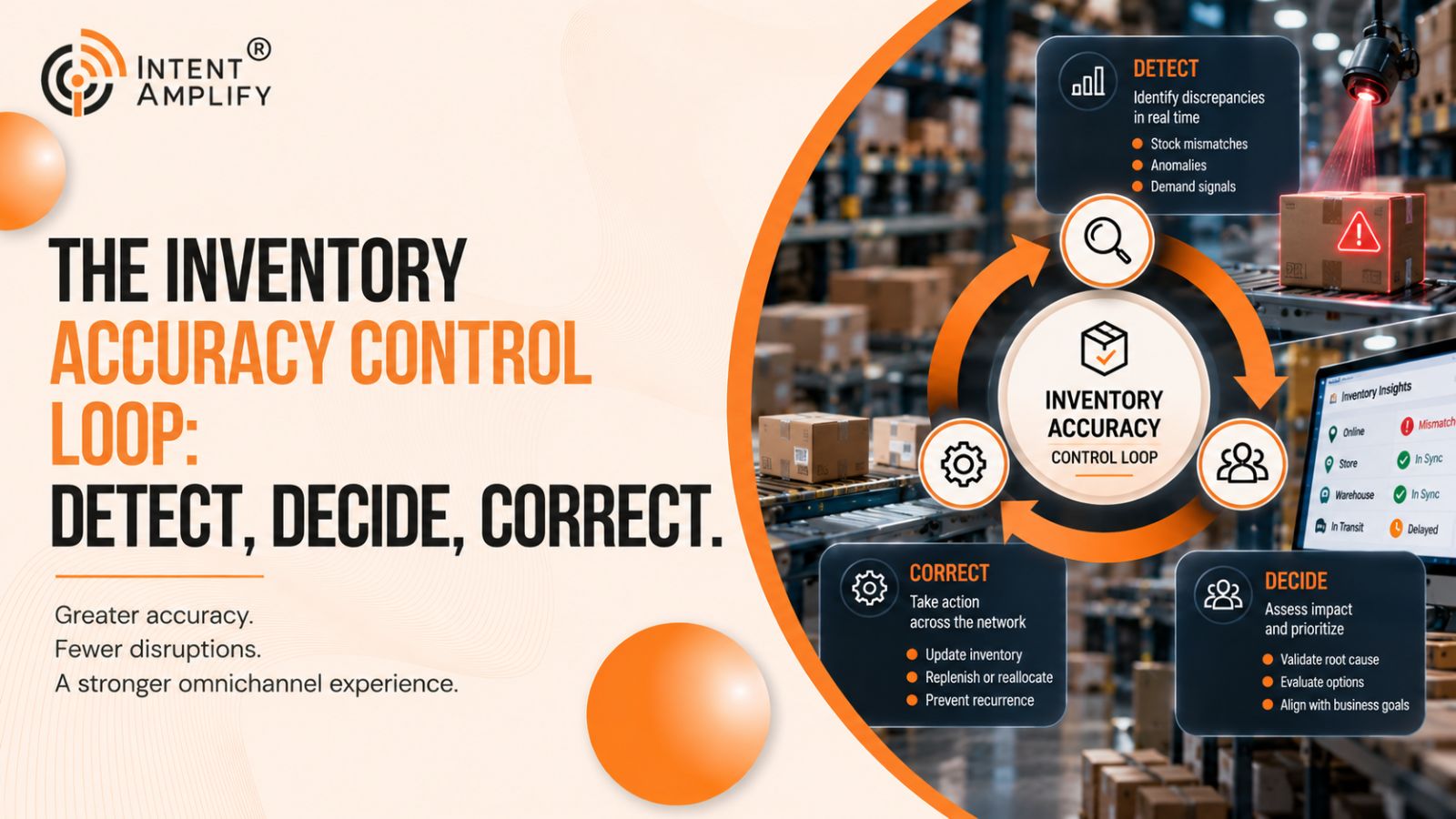
For retail operations, inventory, supply chain, ecommerce, and enterprise systems leaders, the value lies in examining the full control loop: where inventory diverges, how that divergence is detected, which decision is affected, who owns the response, and how the organization learns from recurrence.

Explore How to Build the Inventory Accuracy Every Grocery Decision Depends On

RETHINK Retail’s webinar examines why inventory accuracy remains difficult in grocery, how phantom inventory affects customer promises, and how retailers can build a more trusted inventory foundation across stores and digital channels.

Register Now

Interactive Operations Assessment

Following the webinar, attendees can opt into an interactive assessment of their own operation to surface hidden inventory gaps and map a practical path toward potential ROI. Participants can also review their results one-to-one with Tom Enright, a retail supply chain expert and former lead Gartner analyst. This extends the webinar from industry analysis into a retailer-specific examination of inventory confidence, operational friction and high-impact fixes.

Conclusion

Inventory accuracy becomes a fulfillment reliability lever when retailers connect the record to the promise, the promise to the decision rule, the exception to an owner, and the recurring cause to a corrective action.

The goal is not perfect data as an abstract objective. It is reliable enough inventory information to make and execute the next decision with less compensating work.

As grocery becomes more omnichannel, automated, and AI-assisted, the cost of an unreliable inventory signal increases. Better routing cannot compensate for inventory that does not exist. Faster picking cannot solve a promise authorized by the wrong record. More automation cannot create trust if the underlying signal remains uncertain.

Retail leaders should therefore treat inventory accuracy as part of fulfillment architecture: define decision fitness, trace failures backward, move detection earlier, separate containment from prevention, measure compensating work, and scale technology only where it strengthens a verified control point.

References

1. RETHINK Retail (2026) How to Build the Inventory Accuracy Every Grocery Decision Depends On. Available at: https://rethink.industries/video/the-inventory-accuracy-every-grocery-decision-depends-on/ 

2. RETHINK Retail (2026) The Availability Paradox: How Inventory Inaccuracy is Costing Retailers More Than They Realize. Available at: https://rethink.industries/articles/the-availability-paradox-how-inventory-inaccuracy-is-costing-retailers-more-than-they-realize/ 

3. RETHINK Retail (2026) The Future of Grocery Retail: Consumer Behavior, AI, and the Case for Better Operations. Available at: https://rethink.industries/podcast/the-future-of-grocery-retail-consumer-behavior-ai-and-the-case-for-better-operations/ 

4. Retail Dive (2026) The promise retailers keep breaking (and why the data is to blame). Available at: https://www.retaildive.com/spons/the-promise-retailers-keep-breaking-and-why-the-data-is-to-blame/825616/ 

5. IHL Group (2026) How Inventory Intelligence Is Becoming the Single Biggest Divider Between Leaders and Laggards. Available at: https://www.ihlservices.com/news/analyst-corner/2026/03/how-inventory-intelligence-is-becoming-the-single-biggest-divider-between-leaders-and-laggards/ 

Contact
Sales