
Book a Demo
Home Platform Audience Accounts Intent Evidence Activation Solutions Industries Programs Research Pricing About Careers Press Contact Brands Trust Privacy Accessibility Demo ABM Advertising Content Demand Intent Data Sales Blog Infographics Events Product Sheets Videos Webinars White Papers E-books Customer Stories Corporate Presentation Newsletters Expert Insights Expert Analysis Research Reports
Expert Insight

The Hidden Decision Debt Behind Inventory Inaccuracy

The Hidden Decision Debt Behind Inventory Inaccuracy
September 8, 2026 6 min read

Quick Answer

Explore how inventory inaccuracy creates hidden decision debt across grocery operations through manual checks, overrides, rerouting, and other workarounds, and how leaders can improve inventory reliability.

Industry Context: Inventory Accuracy Has Become a Confidence Problem

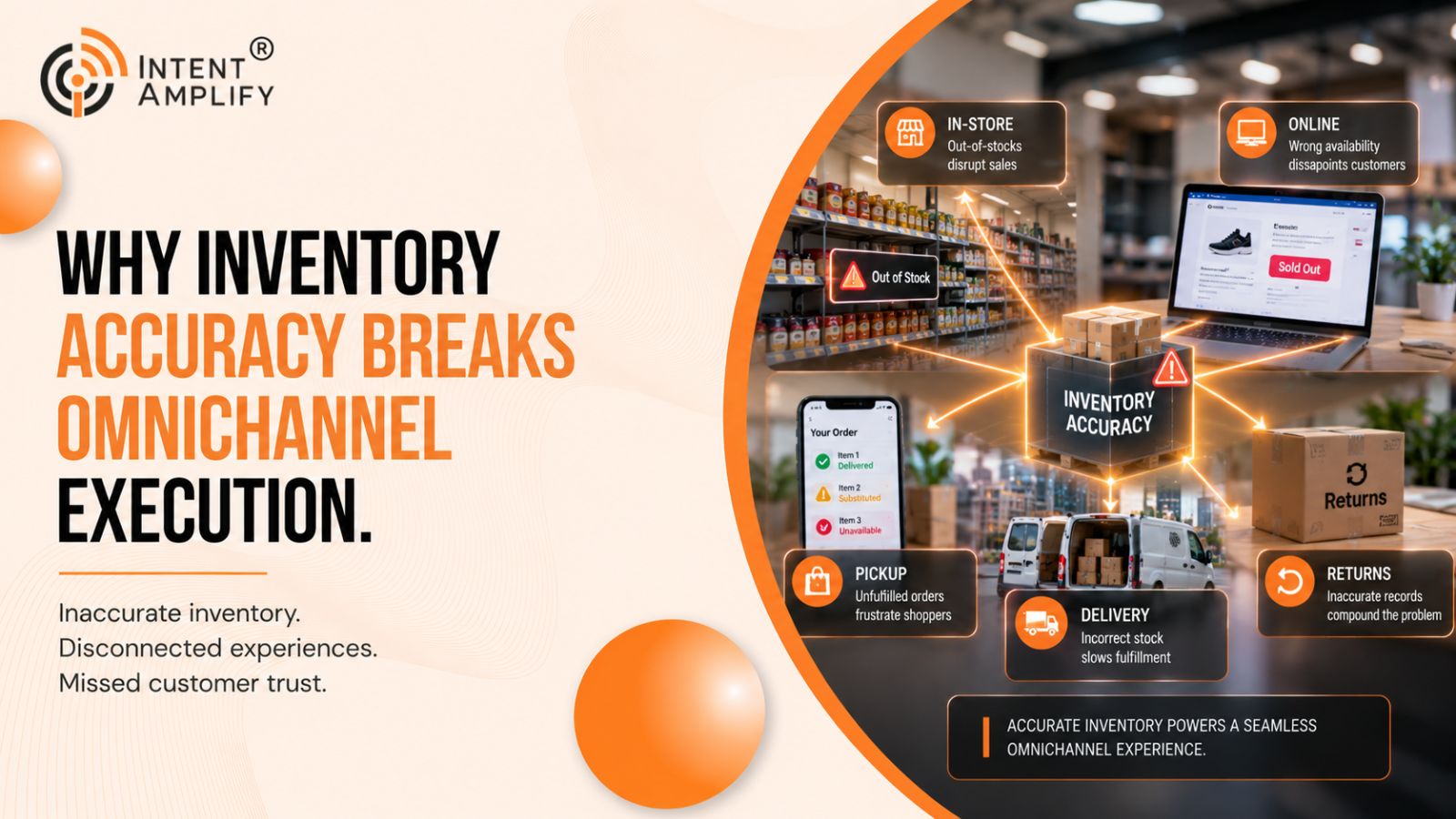
Grocery inventory accuracy is no longer an isolated stock-control metric. It sits underneath the decisions that determine whether a product can be promised, picked, replenished, promoted, fulfilled, or recommended with confidence. RETHINK Retail’s 2026 inventory-accuracy program describes a long-running confidence problem: retailers want to promise availability but cannot always be certain that the physical product and the system record agree. Even at a 5% out-of-stock rate, roughly one in three baskets can be missing an item. [1]

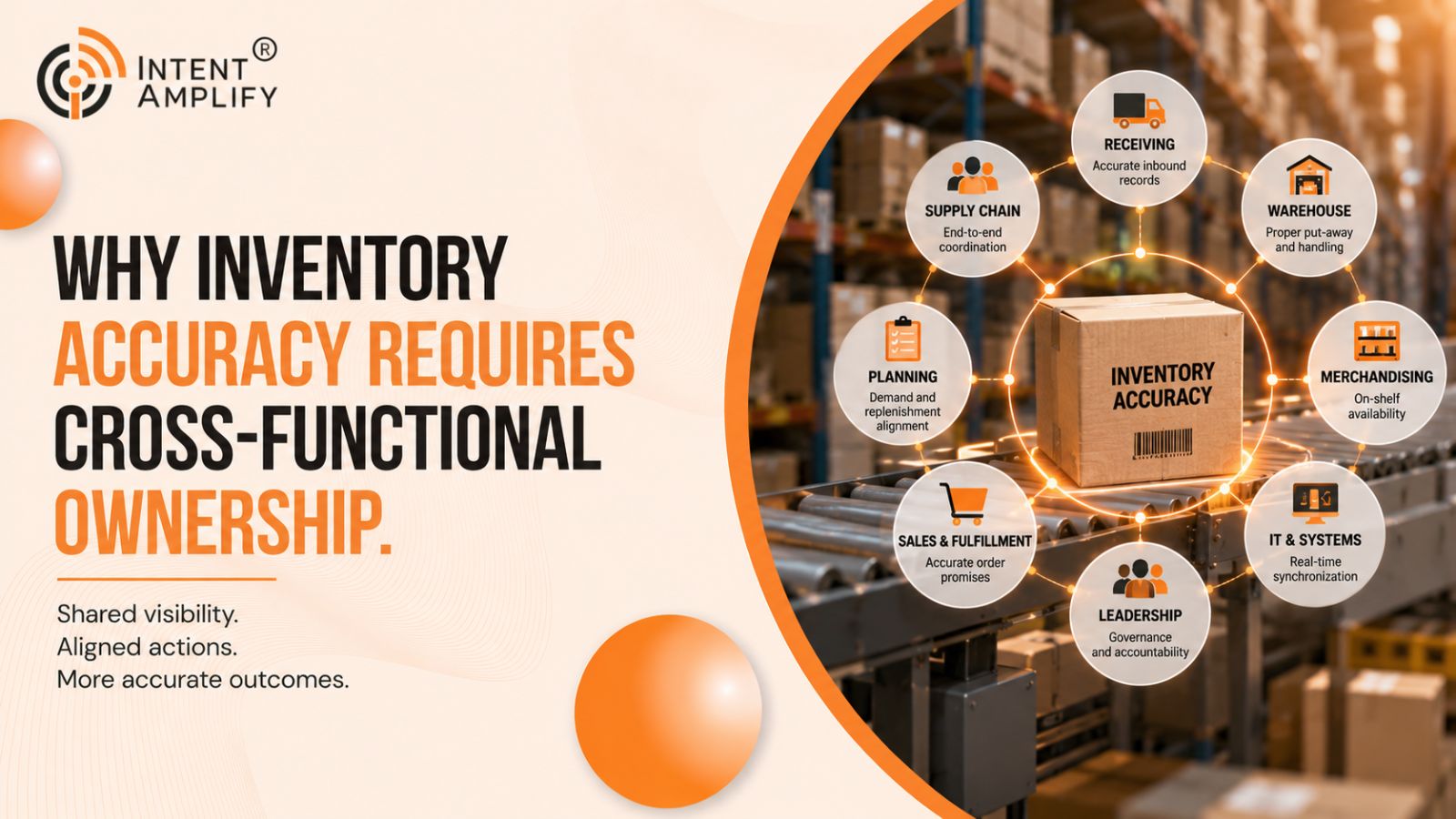
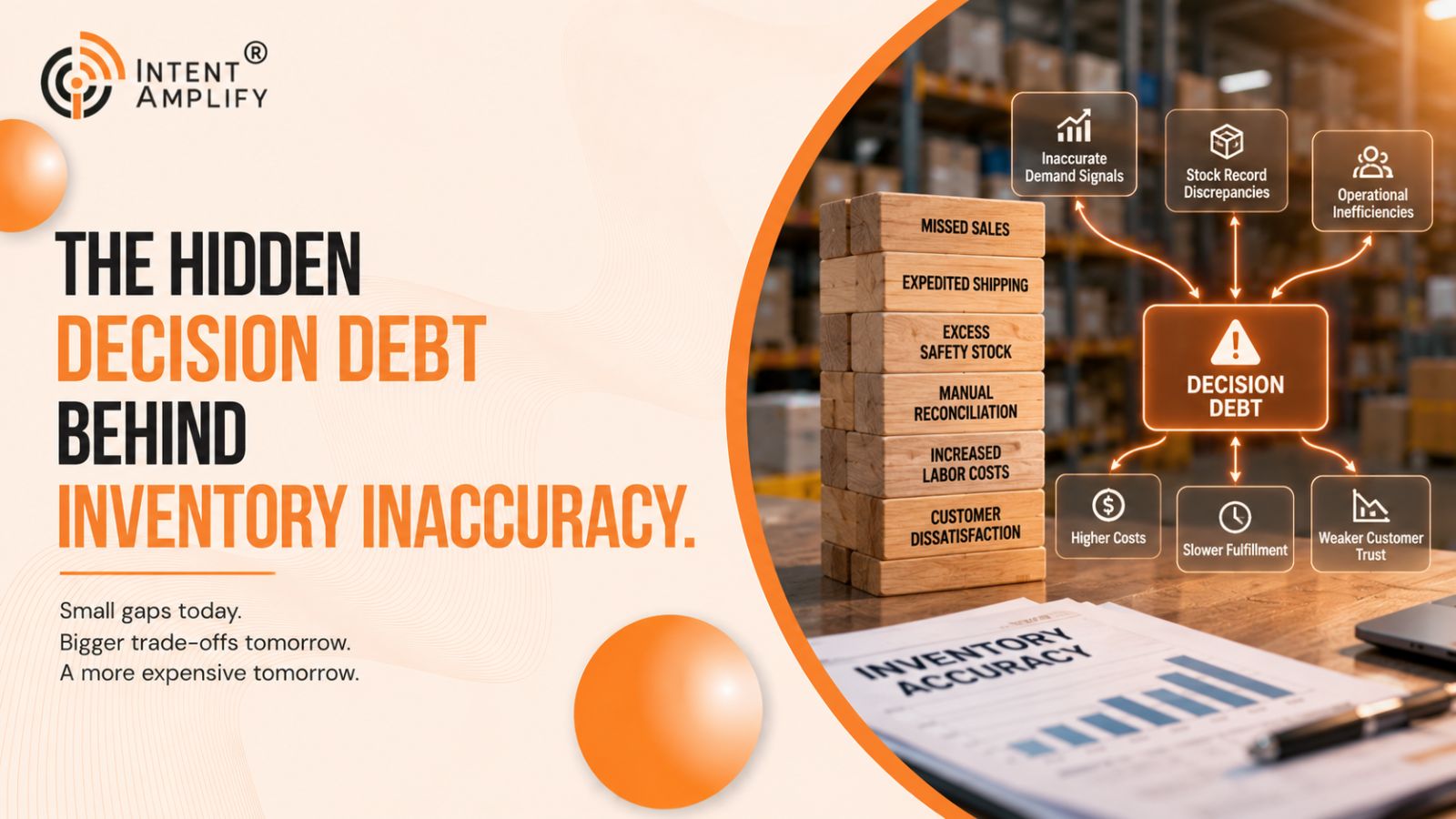
That uncertainty creates a second operational problem that is easier to miss: decision debt. Decision debt accumulates when teams compensate for an inventory signal they do not fully trust. Store associates perform extra checks. Ecommerce teams introduce conservative availability rules. Fulfillment teams reroute orders. Planners discount system signals. Managers create local exception routines. Each action may be rational in isolation, but together they add layers between the inventory record and the business decision.

For senior retail operations, supply chain, inventory, ecommerce, merchandising, and enterprise systems leaders, the question is therefore not simply whether inventory is accurate. It is how much additional work the organization performs because confidence in the inventory record is incomplete.

Emerging Trend: Retailers Are Moving From Counting Accuracy to Decision Reliability

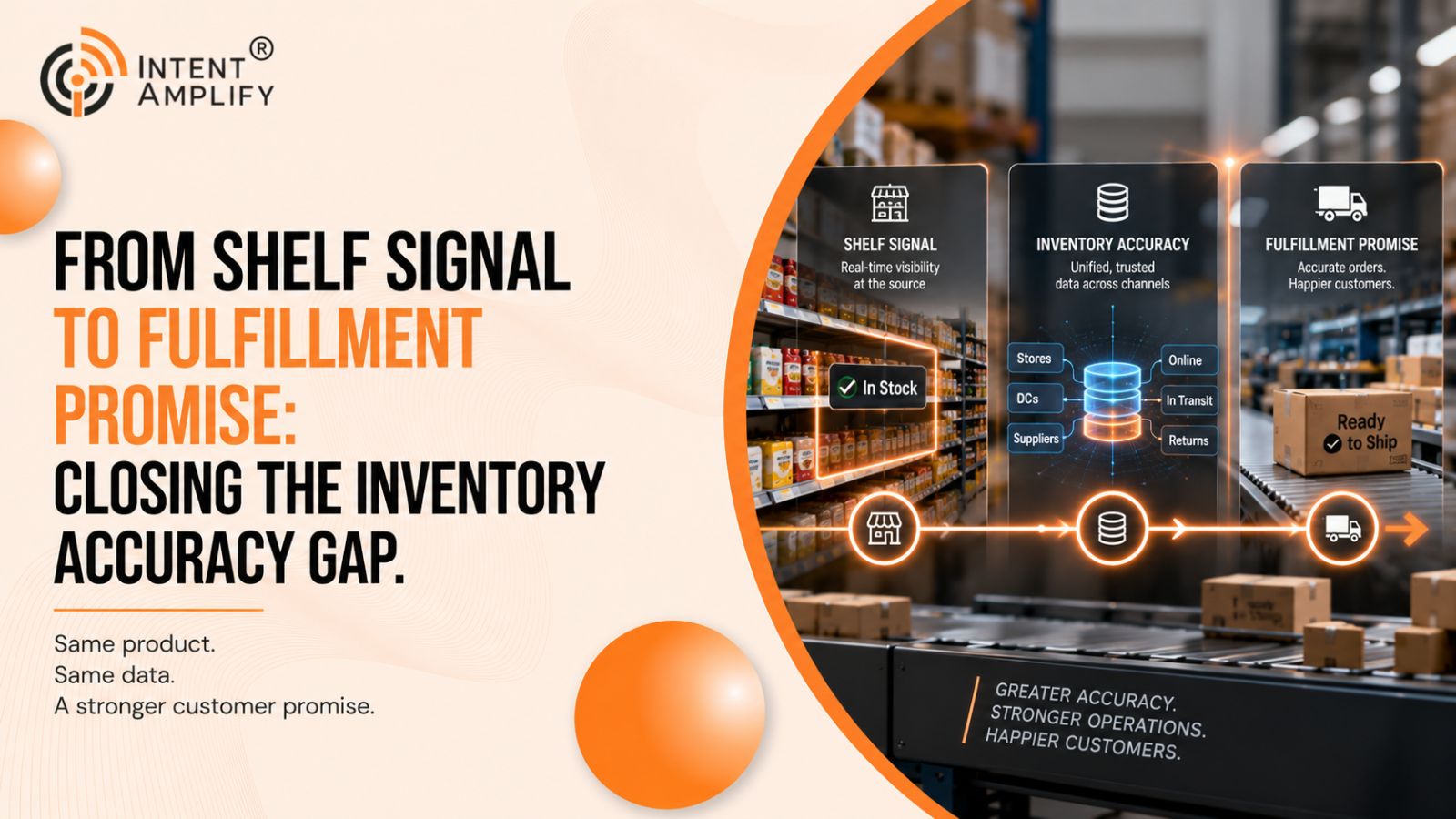
The industry is increasingly treating inventory as an operating signal rather than a periodic reconciliation exercise. RETHINK Retail’s 2026 grocery analysis argues that customer behavior is becoming more fluid across stores, pickup, and delivery, making consistent execution across touchpoints dependent on strong back-end operations and reliable inventory data. [2]

This changes the role of inventory control. A cycle count can correct a record, but it does not necessarily explain why the record became wrong. Receiving, replenishment, transfers, returns, picking, damage, shrink, and system latency can all create divergence between physical and digital inventory. When the root cause remains unresolved, teams compensate again the next time the same condition appears.

Decision debt is the accumulation of those compensating controls. The most important leadership task is to distinguish temporary protection from permanent operating design.

Expert Perspective: Make Compensating Controls Visible

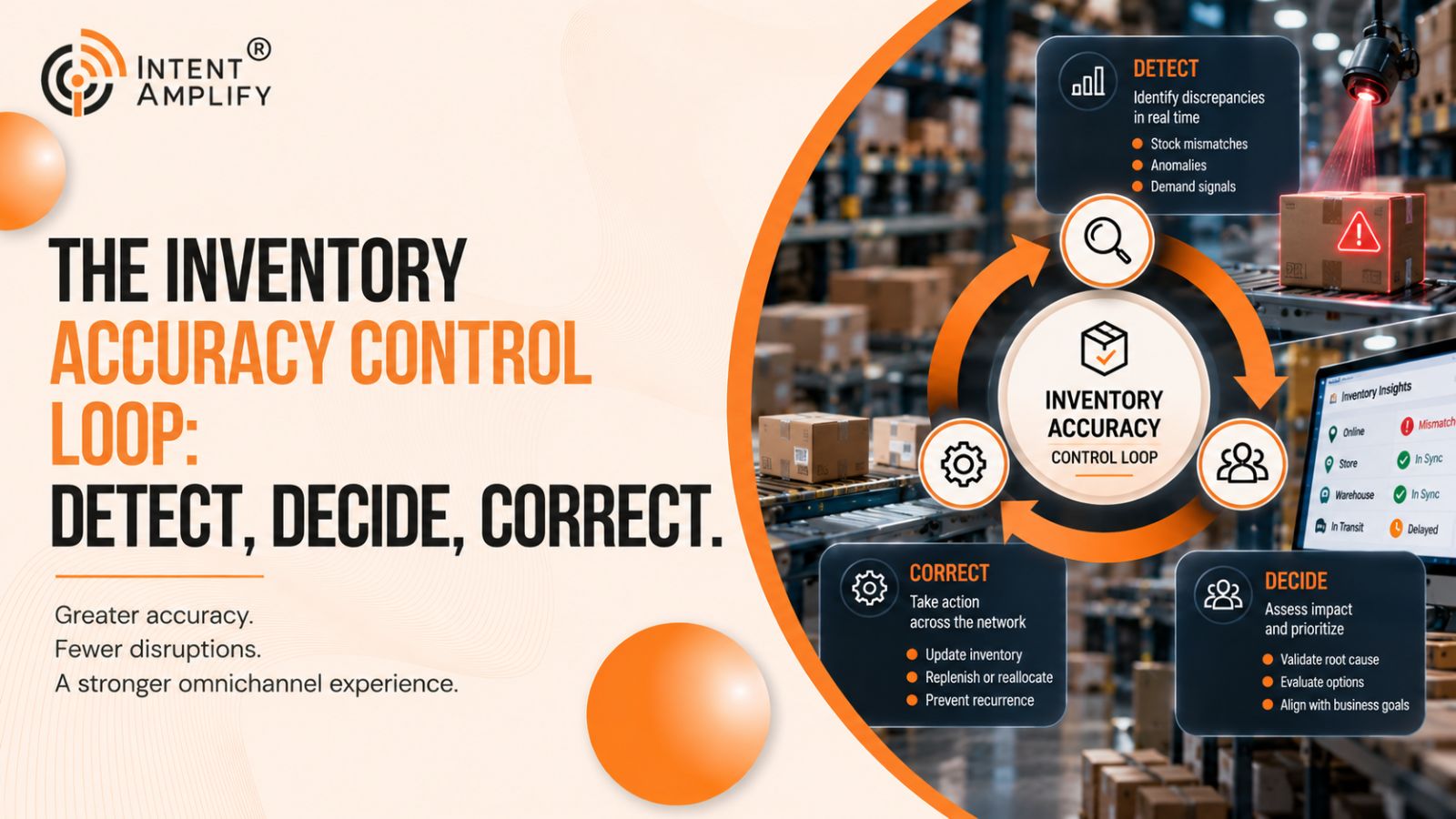
A useful diagnostic begins by mapping where teams verify, override, buffer, reroute, or escalate because they do not trust the standard inventory signal. For every compensating control, leaders should document five things: the risk it addresses, the trigger, the owner, the operating cost, and the evidence that would allow the control to be reduced or removed.

This matters because technology can otherwise add visibility without retiring work. A new dashboard may expose discrepancies earlier, but if store teams still perform the same manual checks, the operating model has not materially simplified. A better inventory signal should eventually remove unnecessary reconciliation, duplicate verification, avoidable escalation, or conservative availability logic.

Recent retail analysis reinforces this operating view. Supply Chain Management Review reported in April 2026 that outdated inventory-accounting methods can leave retailers working from inaccurate stock data, which can distort forecasts, replenishment, and wider supply-chain execution. [3]

That is the difference between measuring inventory accuracy and managing inventory reliability.

Market Implications: AI and Automation Increase the Cost of Bad Inventory Signals

The pressure to resolve decision debt is increasing as retailers add AI and automation. Impinj’s 2026 retail trends research, based on 750 supply-chain leaders and 1,000 consumers, reported that 68% of surveyed leaders planned investment in AI and automation while many still lacked accurate, real-time item data. [4]

The implication is straightforward: automation does not eliminate the need for trusted inventory. It increases it. An unreliable record can now influence automated replenishment, customer-facing availability, digital recommendations, fulfillment routing, and AI-assisted shopping at greater speed and scale.

This is particularly important in grocery, where inventory conditions can change quickly and where fresh products, substitutions, shelf availability, and store-level execution complicate the record. The objective should not be a universal accuracy number detached from the decision. Leaders need to know whether the inventory signal is reliable enough for the specific action being automated.

For a deeper discussion of the operating decisions behind grocery inventory reliability, register for the Inventory Accuracy webinar

Recommendations: How Retail Leaders Can Pay Down Decision Debt

First, choose one high-friction inventory-dependent decision. It could be a pickup promise, a replenishment trigger, a substitution decision, or a store-to-store transfer. Map the standard inventory signal and the actual decision path used by teams.

Second, identify every compensating control. Look for manual verification, buffers, overrides, duplicate checks, spreadsheets, rerouting, and escalations. Treat these as evidence of where confidence is incomplete, not as proof that teams are performing poorly.

Third, separate signal quality from decision quality. Ask whether the inventory record is reliable enough for the decision and whether the decision rule itself is appropriate. This prevents teams from changing policy to compensate for a data problem or blaming data for a policy problem.

Fourth, connect exceptions to causes. Immediate issues need resolution, but recurring patterns need root-cause ownership. The organization should be able to distinguish between containment and prevention.

Fifth, give every workaround an expiry question: what evidence would allow us to retire, reduce, or redesign this control? This turns improved inventory reliability into a measurable simplification outcome.

Recent grocery research provides a more current example of why visibility and control must be connected to operating conditions. A 2026 Journal of Business Logistics study covering about 24,000 SKUs across 11 grocery stores found that inventory record inaccuracy varied with factors including inventory levels, restocking frequency, perishability, and audit activity. [5] The lesson is not that one technology solves inventory accuracy. It is that inventory reliability performs inside a process context, and leaders need evidence about where a control changes the decision system.

Conclusion

Inventory inaccuracy creates visible exceptions. Decision debt is the less visible accumulation of work created to protect the business from those exceptions. As omnichannel execution, automation, and AI increase the number of decisions that depend on inventory data, those compensating layers become harder to ignore.

The strongest inventory operating model is therefore not the one with the most controls. It is the one that can prove which controls are necessary, resolve recurring causes, and retire work as confidence improves.

The webinar gives retail leaders a direct way to continue this analysis. Following the session, attendees can opt into an interactive assessment of their own operation to surface hidden inventory gaps and identify a practical path toward potential ROI, with the option to review the results one-to-one with Tom Enright.

Register Now

References

  1. RETHINK Retail (2026) How to Build the Inventory Accuracy Every Grocery Decision Depends On. Available at: https://rethink.industries/video/the-inventory-accuracy-every-grocery-decision-depends-on/

  2. RETHINK Retail (2026) The Future of Grocery Retail: Consumer Behavior, AI, and the Case for Better Operations. Available at: https://rethink.industries/podcast/the-future-of-grocery-retail-consumer-behavior-ai-and-the-case-for-better-operations/

  3. Supply Chain Management Review (2026) Retail Has an Inventory Accuracy Problem. Available at: https://www.scmr.com/article/retail-has-an-inventory-accuracy-problem/visionaries

  4. Impinj (2026) 2026 Retail Trends Report: Supply Chain Integrity Outlook. Available at: https://www.impinj.com/retail-trends-report-2026

  5. Rekik, Y., Oliva, R., Syntetos, A.A. and Glock, C.H. (2026) Inventory Record Inaccuracy in Grocery Retailing: Impact of Promotions and Product Perishability, and Targeted Effect of Audits. Journal of Business Logistics. Available at: https://onlinelibrary.wiley.com/doi/10.1111/jbl.70079

Contact
Sales